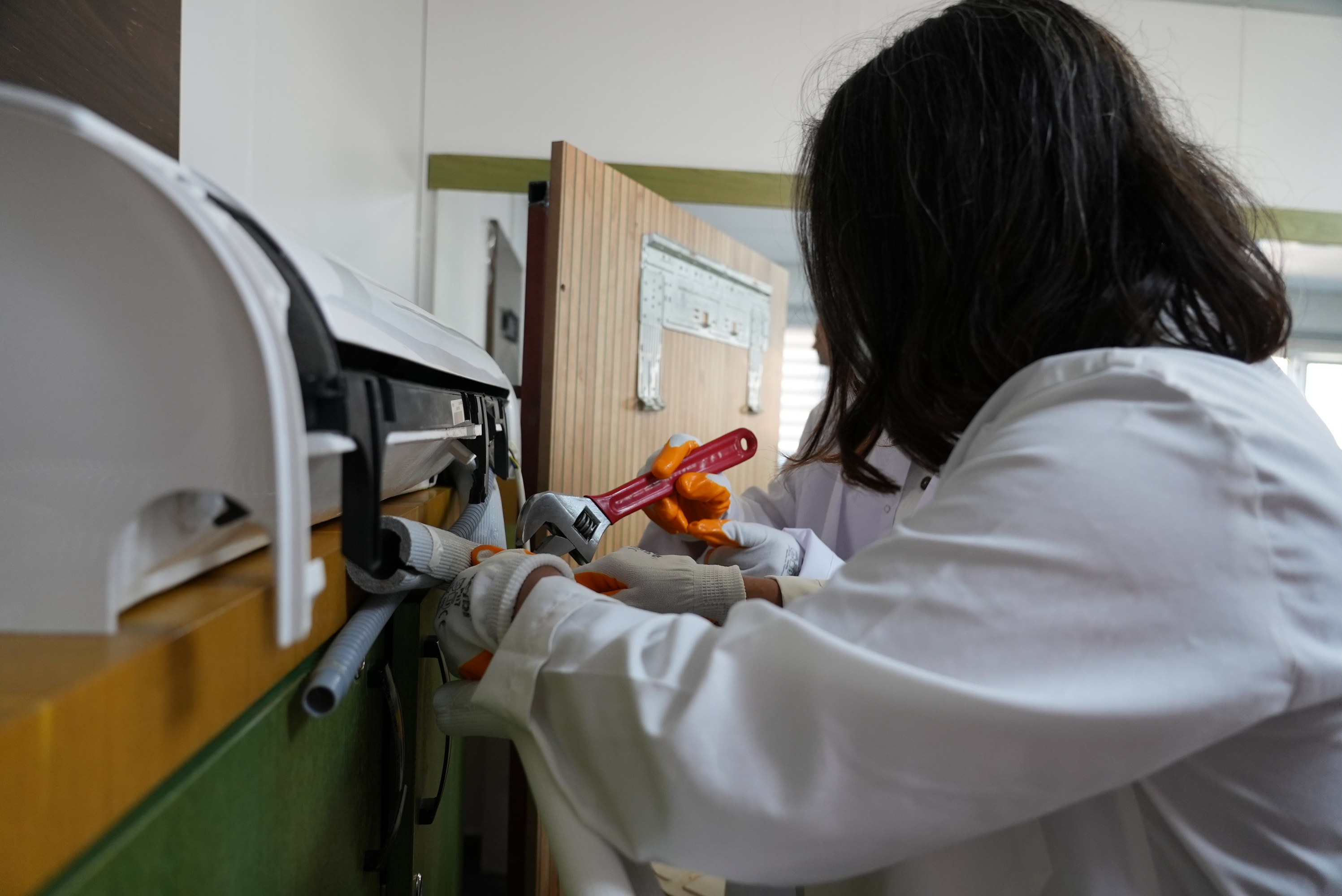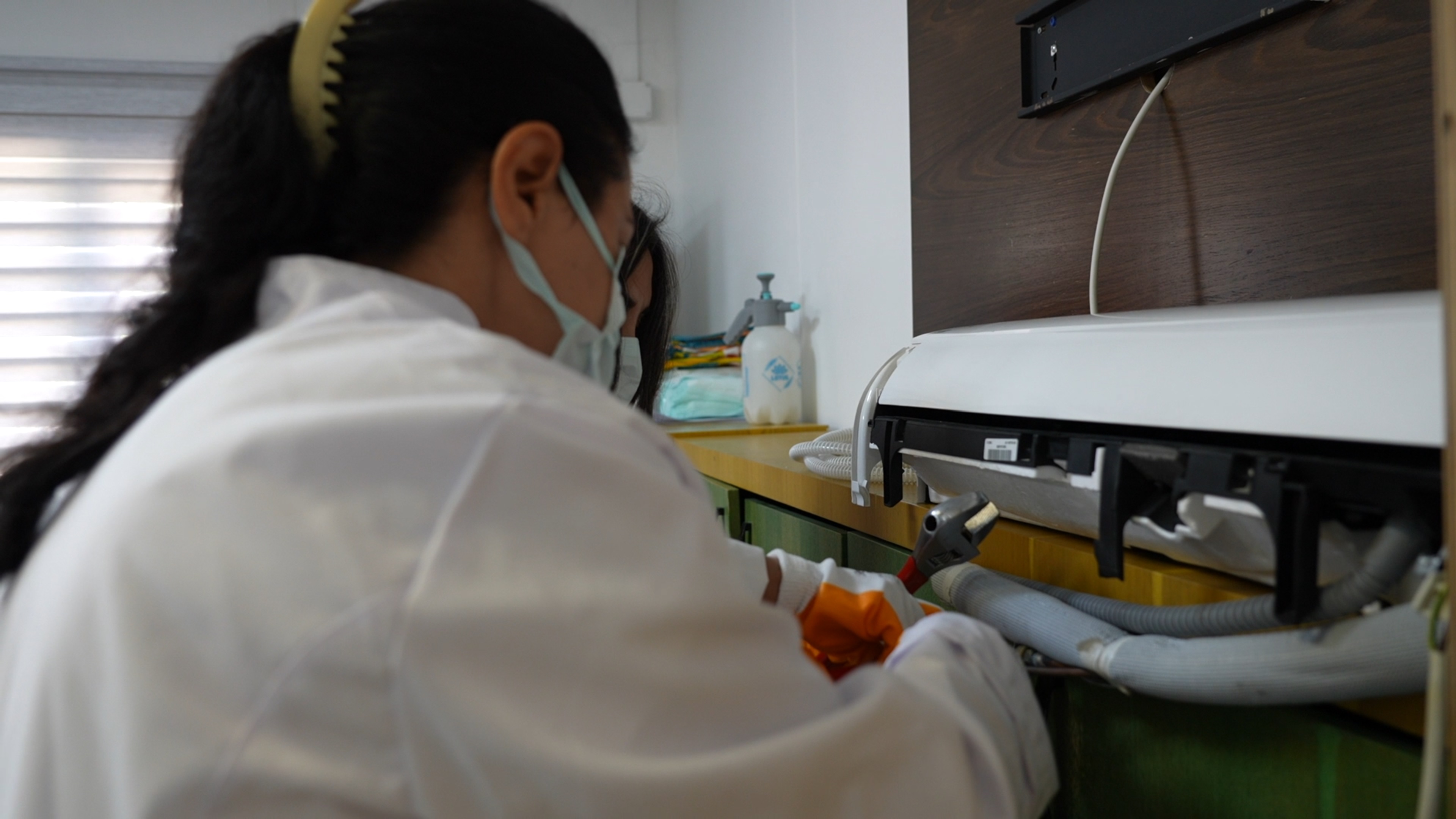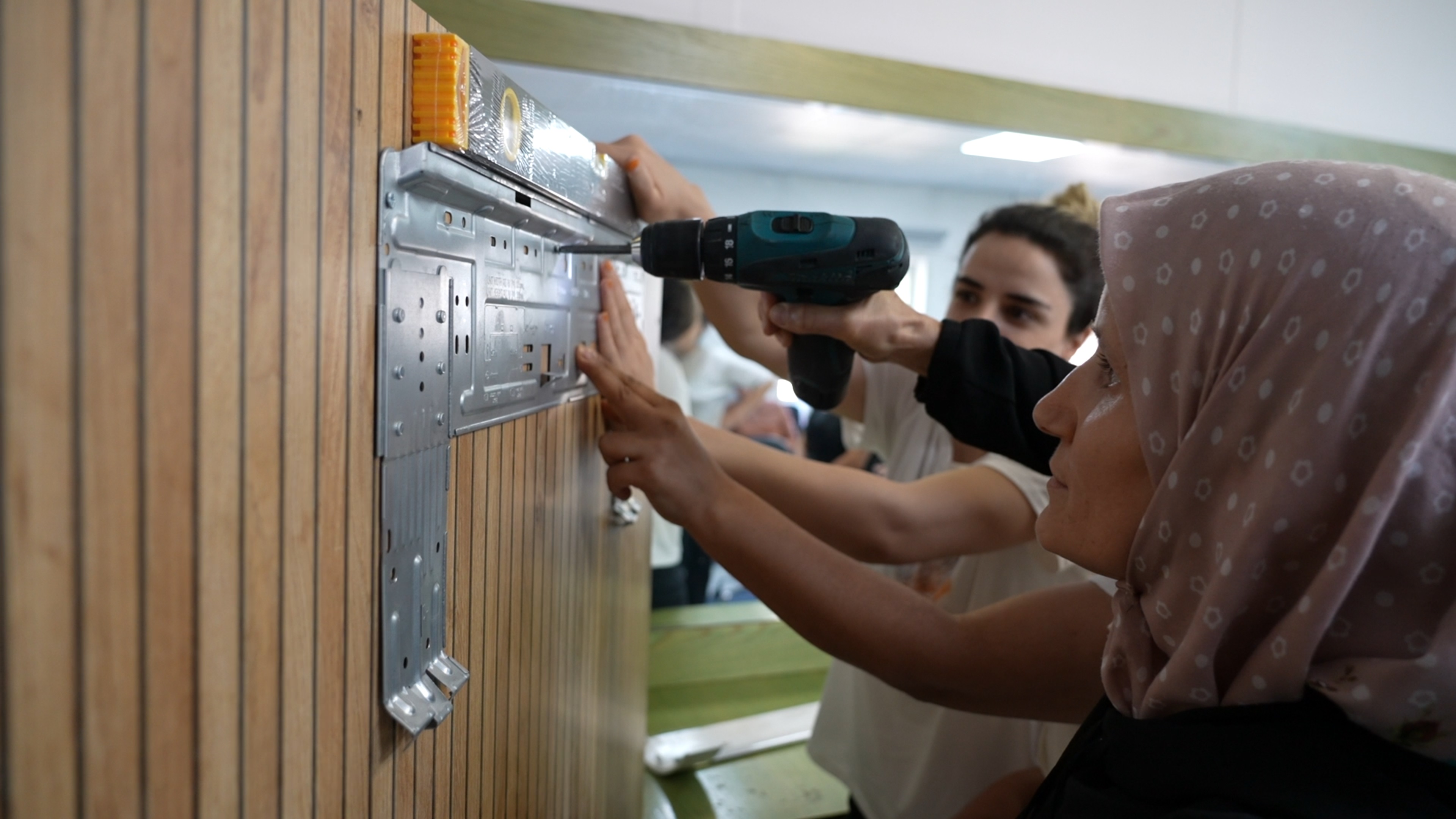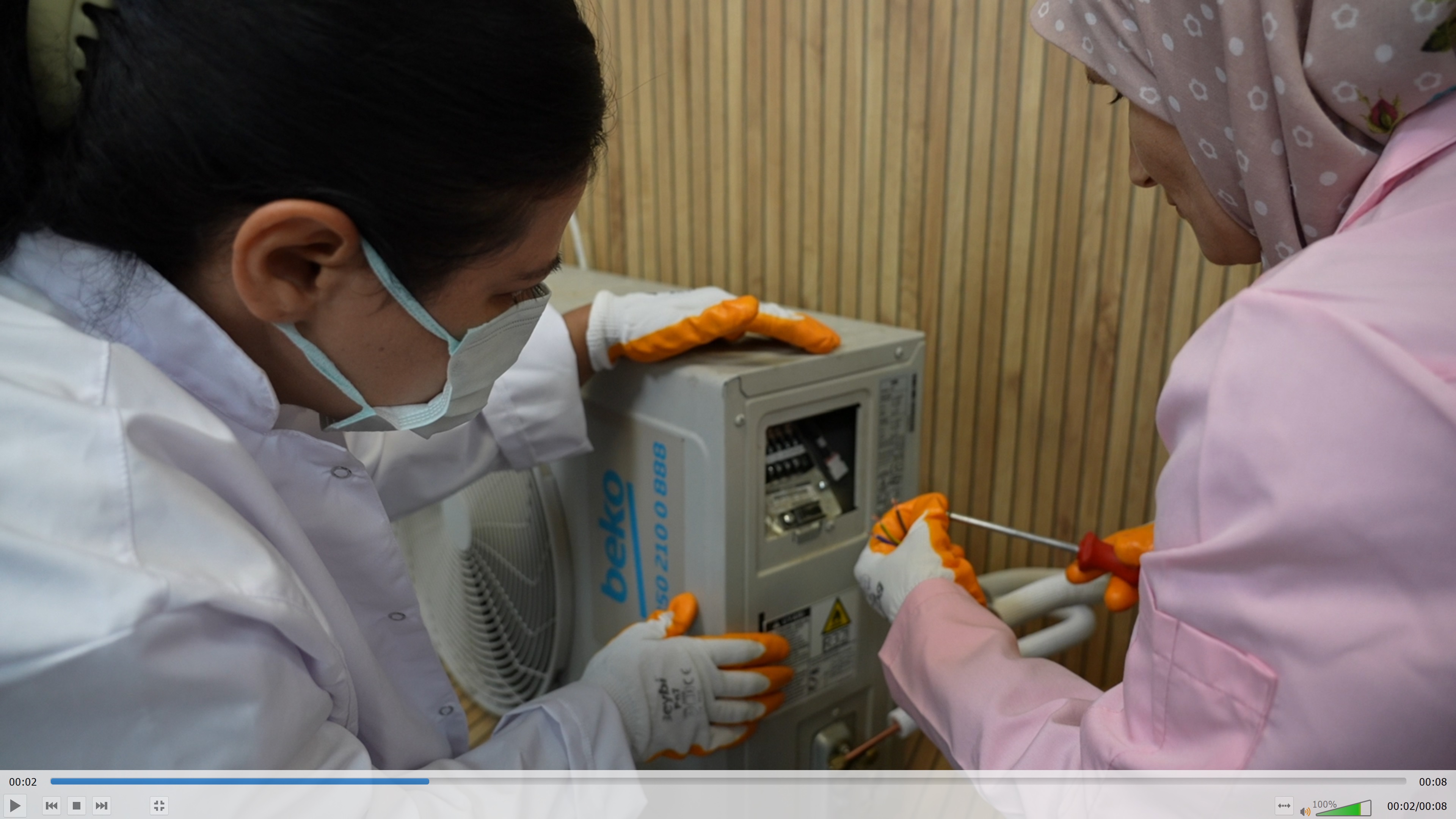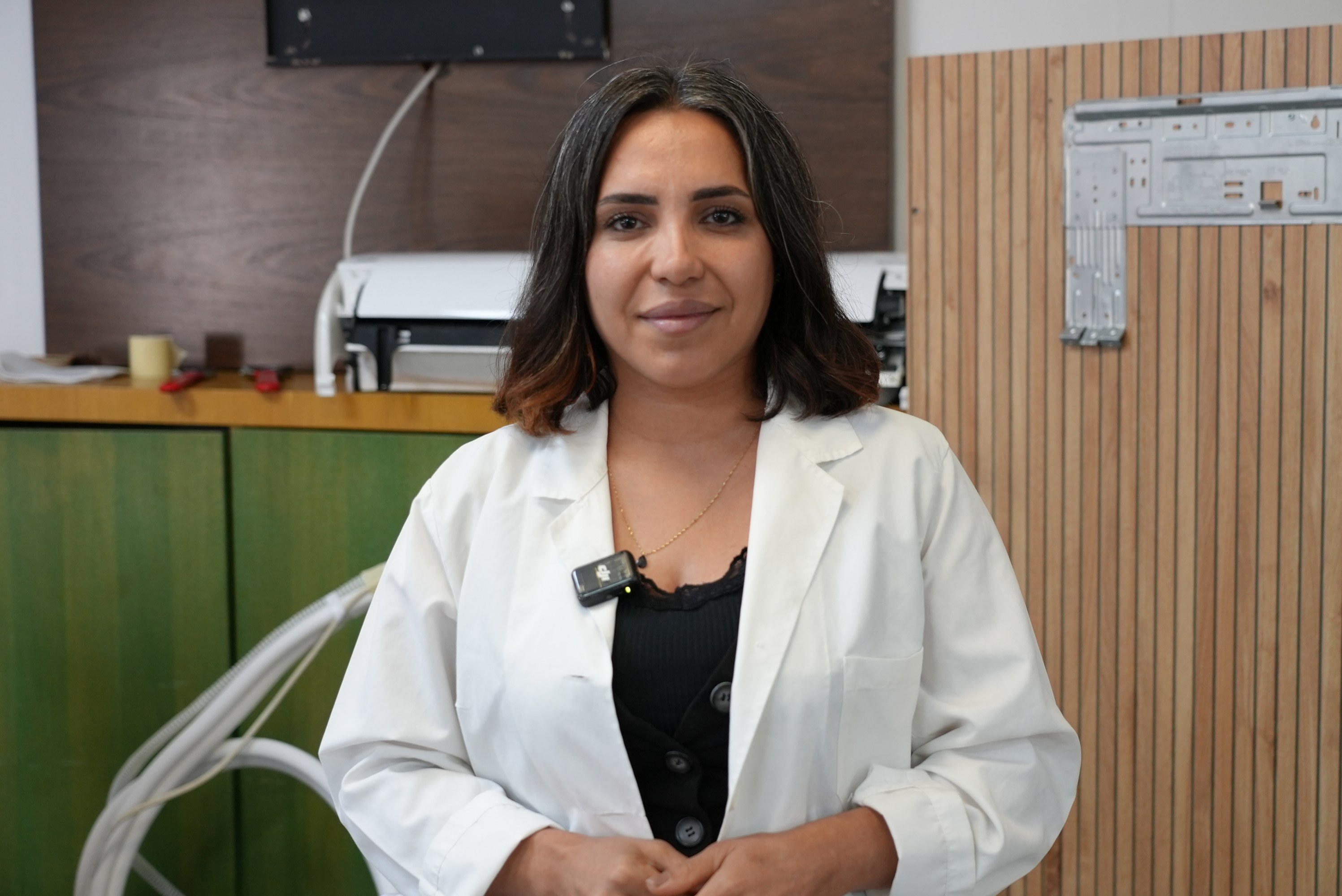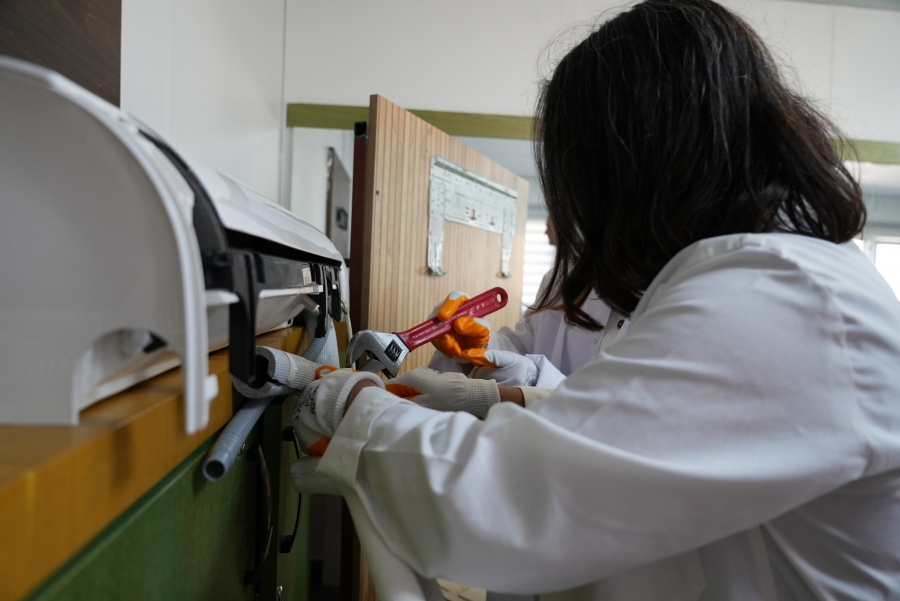
The training programme launched by Diyarbakır Metropolitan Municipality to strengthen women in technical fields and increase their visibility in these areas has attracted great interest. The programme offers training in air conditioner, boiler and radiator maintenance as well as furniture assembly and repair.
Diyarbakır Metropolitan Municipality continues to implement programmes supporting gender equality. Initiated by the Department of Women and Family Services on 1 July, the programme aims to enable women to acquire technical skills, helping them to become more independent in daily life and to gain strength in professional fields. The training, delivered at the Koşuyolu Women’s Life Centre, has been met with strong interest, with 30 women participating. The hands-on programme will last two months, and participants will receive a certificate of participation upon completion.
Women attending the course, along with the Head of the Department of Women and Family Services Özden Gürbüz Sümer, shared their views on the programme.
‘I have always been interested in technical work’
One of the participants, Birsen Düz, stated that the course had been of great benefit to them, expressing gratitude to the Metropolitan Municipality. She noted that she had been interested in technical fields since childhood, saying:
“When my neighbours or relatives had plumbing or electrical problems, I was always the one who went to fix them. I am enthusiastic about this kind of work. For example, my cousin said, ‘Come, there’s sewing and tailoring work here,’ but I have no interest in that. They say this is men’s work, but I could even work in a workshop.”
‘Women can do everything’
Another participant, Çiğdem Demir, said that with the skills she learned in the course she would be able to respond to many needs in this field, emphasising that women can do any job. She said:
“Women can be drivers, builders, painters, air conditioning technicians. A woman can do every profession.”
‘We Shape Our Work by Listening to Women’
Head of the Department of Women and Family Services, Özden Gürbüz Sümer, stated that since the establishment of the Women’s Policies Department, they have shaped their work by listening to women’s demands. Drawing attention to how women have often been confined to traditional, gendered roles and associated with certain professions, Gürbüz Sümer said:
“There have been various course requests that would both enhance women’s capacities and provide opportunities for them in new professional fields. We focused on occupational groups that could be needed in Diyarbakır and that require technical knowledge. Air conditioner and boiler maintenance was an area much in demand in the city, yet one from which women largely stayed away. For this reason, we decided to focus on this field.”
Certificates of participation to be awarded
Noting that two classes have been opened so far, Sümer explained that the training is being delivered by specialist staff working at the municipality:
“Weekly materials were prepared for the course content. These materials will be distributed, and at the end of the training, participants will be awarded a certificate of participation.”
‘The strong interest gives us strength’
Emphasising that the strong interest shown by women in the course gives them strength, Sümer continued:
“There is a perception that women cannot work or perform in certain fields. Breaking this perception is very important for us. Perhaps not all of our women friends will pursue a profession in this field after the course, but what matters is proving that they can achieve it. Many participants have already expressed this. They will gain self-confidence in this area, and for that reason they attached great importance to it. Being self-sufficient in tasks considered ‘men’s work’ within the home and not being dependent on a man is significant. This is not only vocational training but also an effort to raise social awareness. Beyond this, our work on awareness-raising and vocational training will continue. From technical fields to agricultural and artisanal sectors, we plan to move into many occupational groups traditionally dominated by men.”