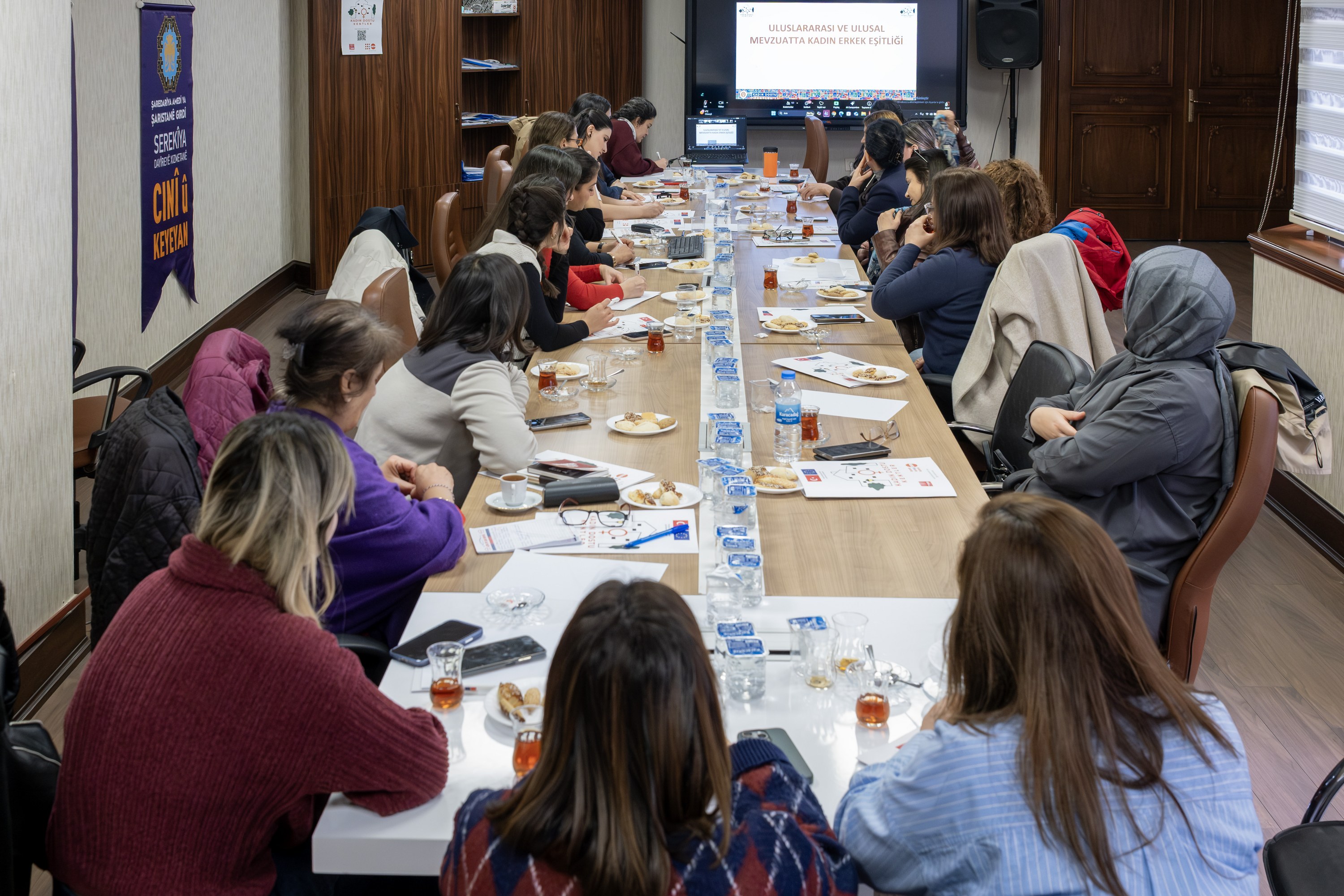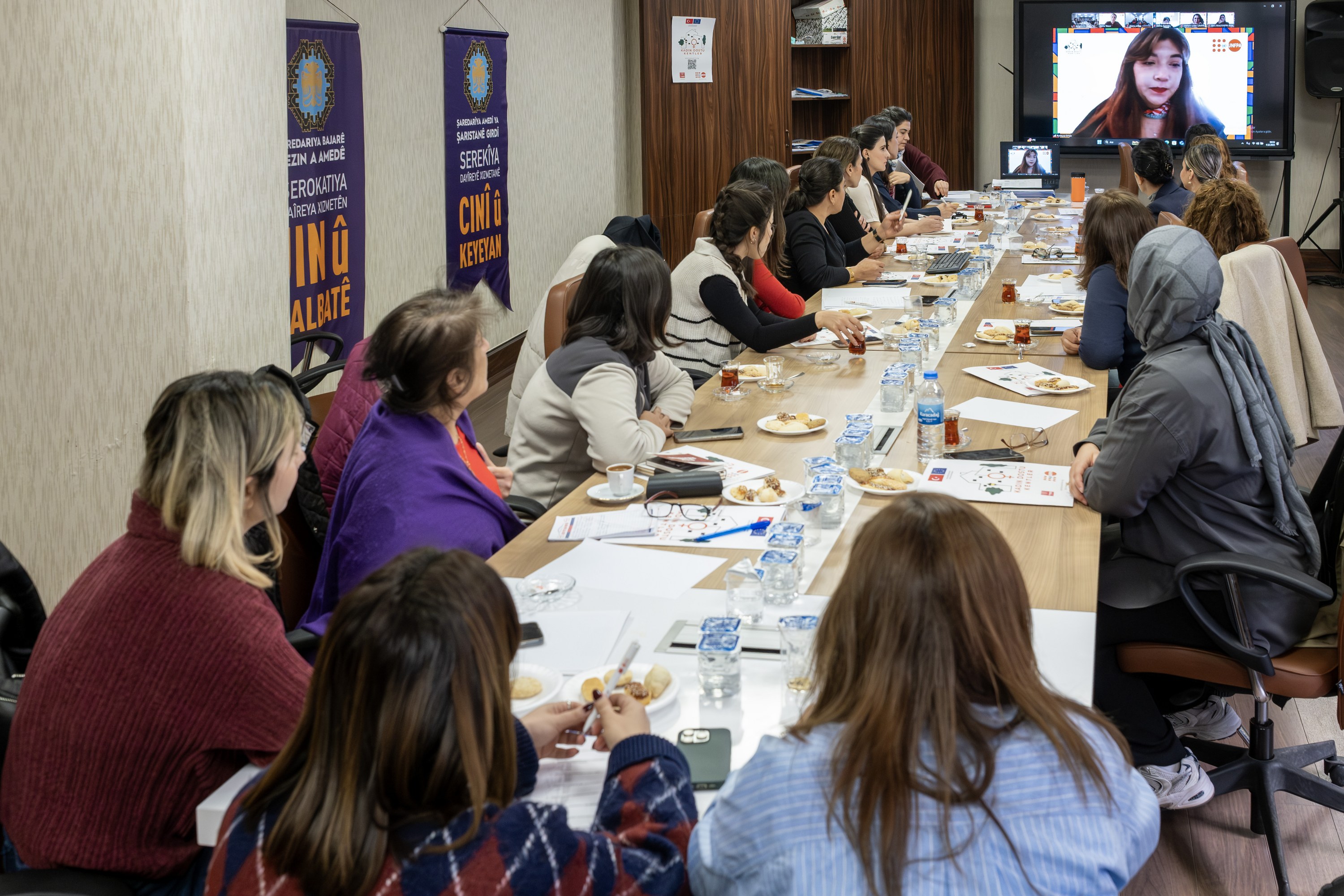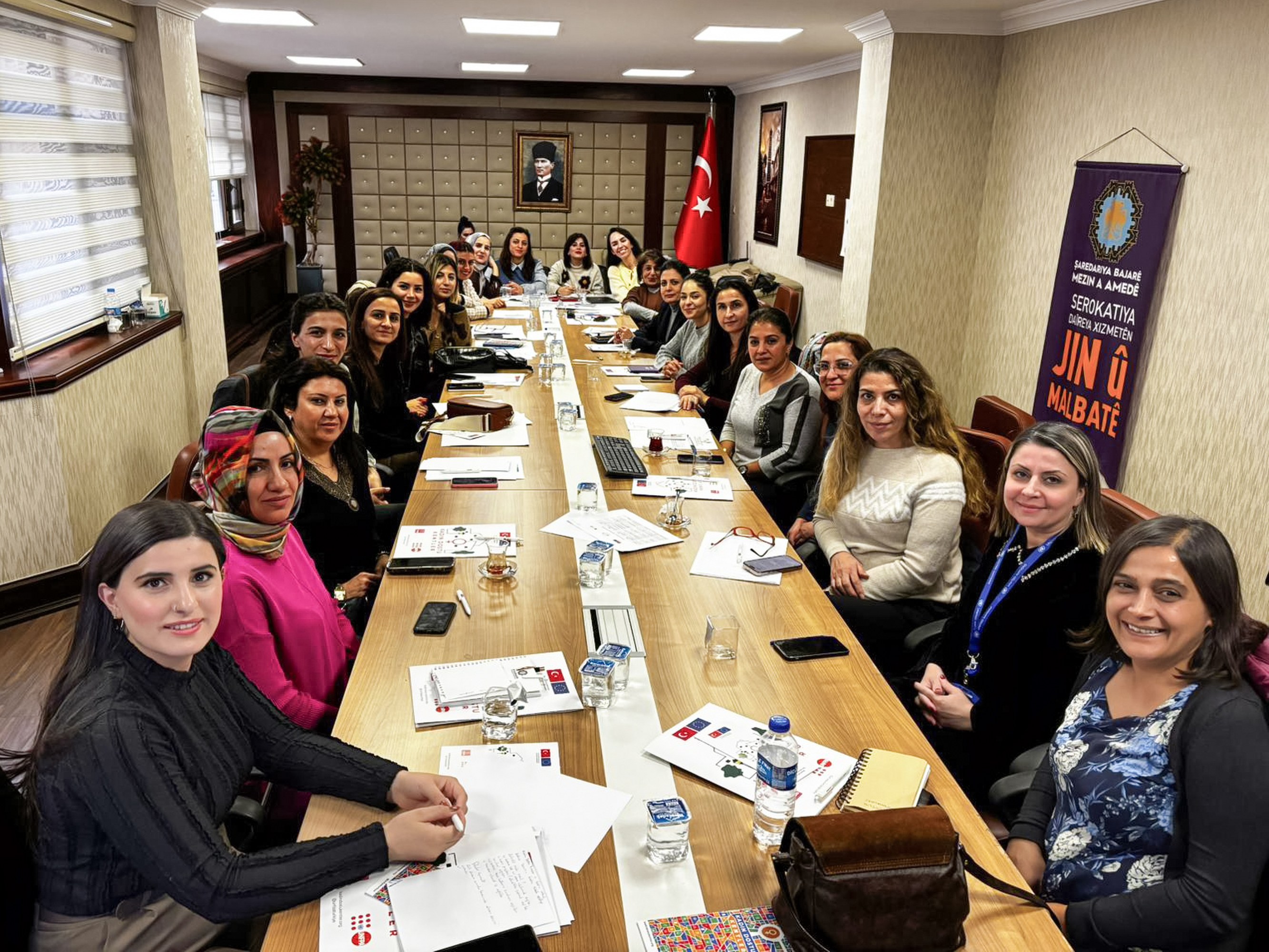
Online Training Sessions (Phase 1) prepared as part of the third phase of the Women-Friendly Cities Programme (KDK III) have begun, with the participation of municipal units and civil society representatives.
The KDK Phase 1 Online Training Sessions started yesterday. Organised by the Women and Family Services Department, which leads local coordination for KDK, and UNFPA Local Equality Specialist Roza Erdede Şaraldı, the training is being held in the Executive Committee Meeting Hall of Diyarbakır Metropolitan Municipality.
From the municipality, relevant departmental units took part, including Head of the Department of Correspondence and Decisions Muhabbet Erdoğmuş and Head of DİSKİ Human Resources Department Keziban Demir. Participation also included members of the KDK CSO Group: the Social Workers Association (SHUDER), the Mesopotamia Migration Monitoring and Research Association, the Rosa Women’s Association, the Women’s Culture, Arts and Literature Association (KASED), the KAMER Foundation, the Before Children Association, and the Justice for Children Association (ÇİAD).
Topics covered
On the first day of the training, sessions covered topics such as “Introduction to the Women-Friendly Cities Programme” and “Municipality–CSO Cooperation within the Women-Friendly Cities Programme”. The training continues today with presentations on “An Overview of the Concept of Gender Equality” and “Gender Equality in National and International Legislation”.
Technical support to be provided
Through the KDK Phase 1 Training Sessions, the aim is to provide technical support for the development of Local Equality Action Plans (YEEP) under the Women-Friendly Cities Programme, implemented in cooperation between the Union of Municipalities of Türkiye (TBB) and UNFPA. The training is intended not only to strengthen the institutional capacity of local authorities, but also to enhance the technical capacity of civil society organisations that make up the KDK CSO Group in the field of local equality.
The training is seen as an important step towards enabling CSOs to take a more active role in the future planning, implementation, monitoring and evaluation of the YEEP, and to build stronger cooperation with local equality mechanisms.