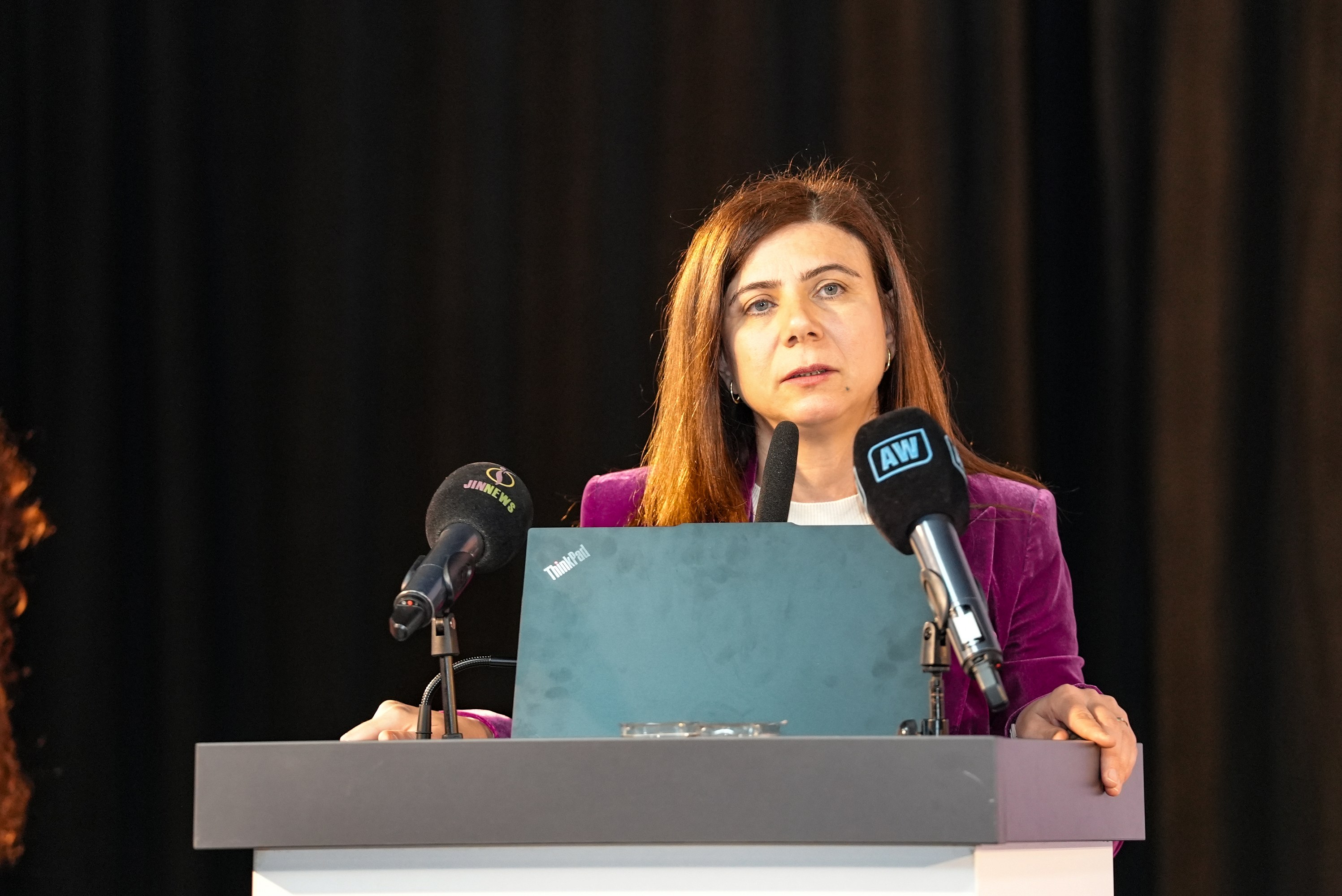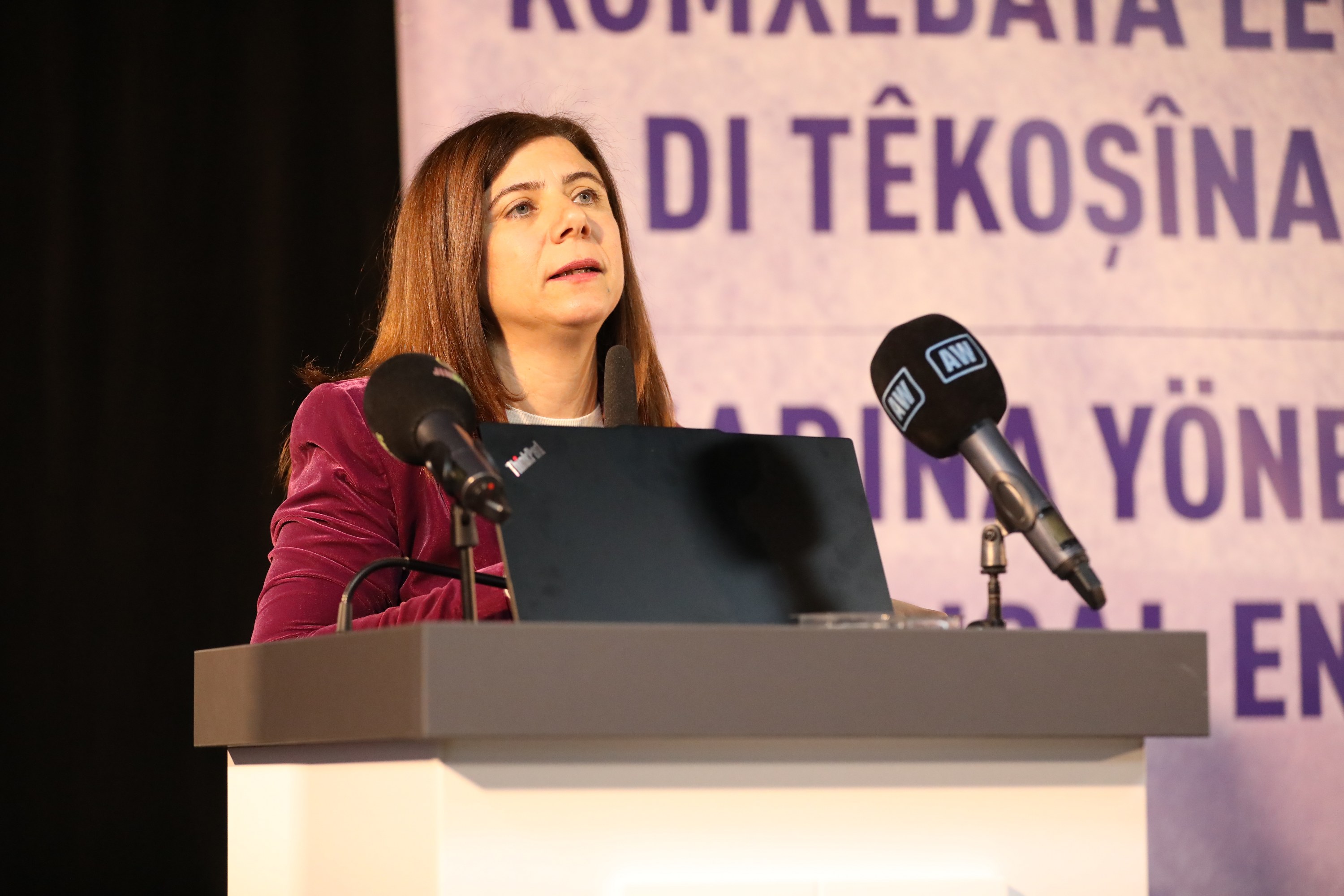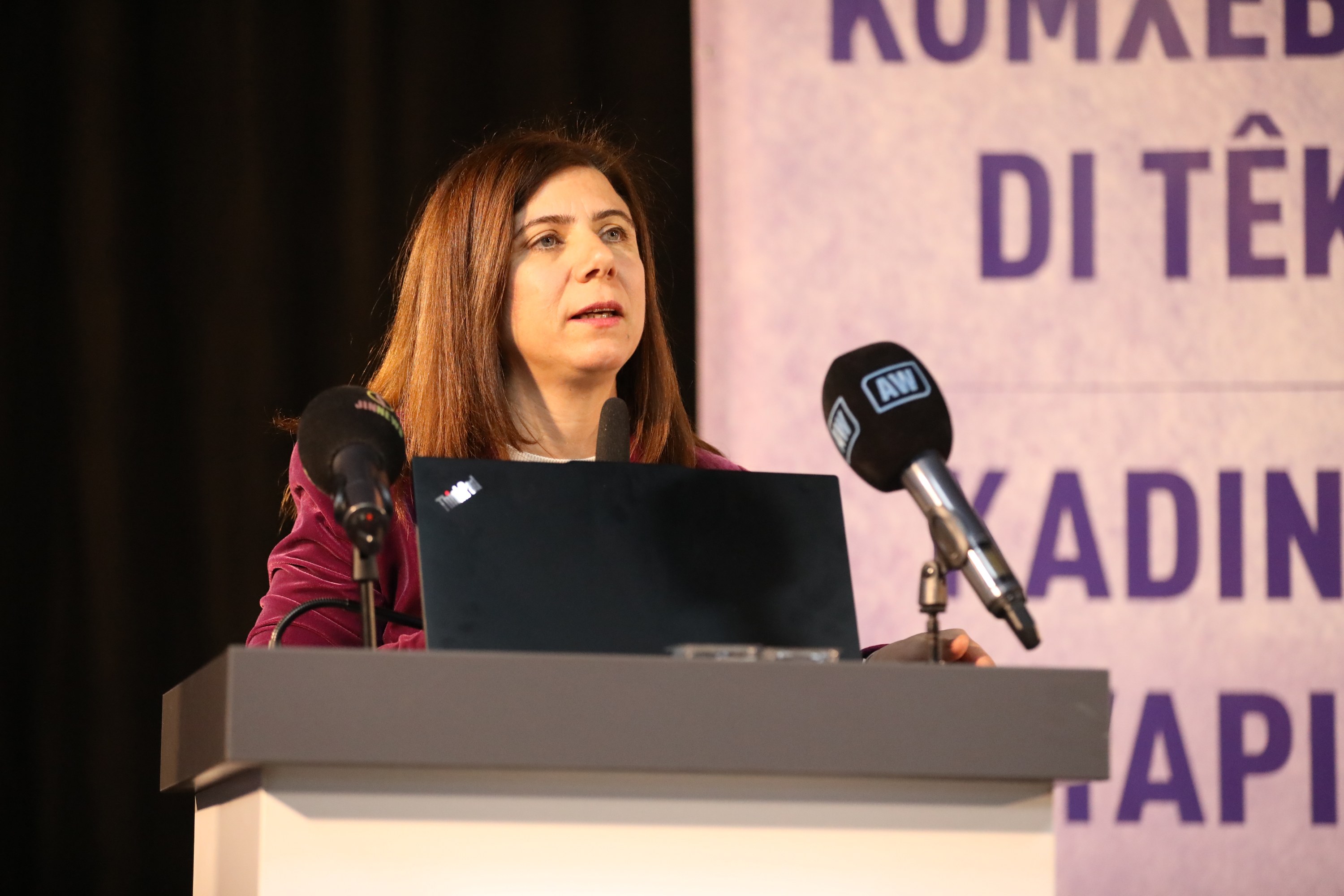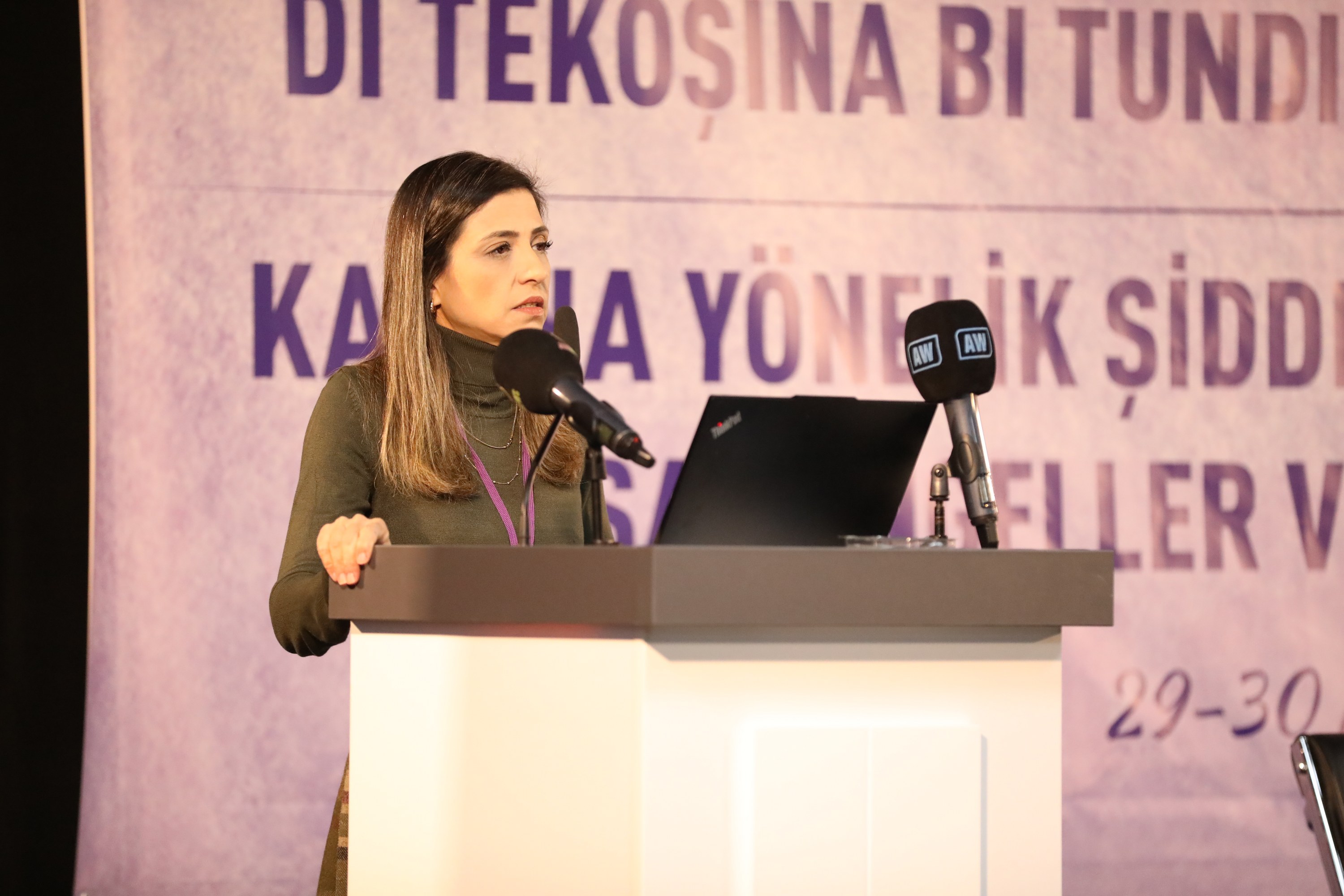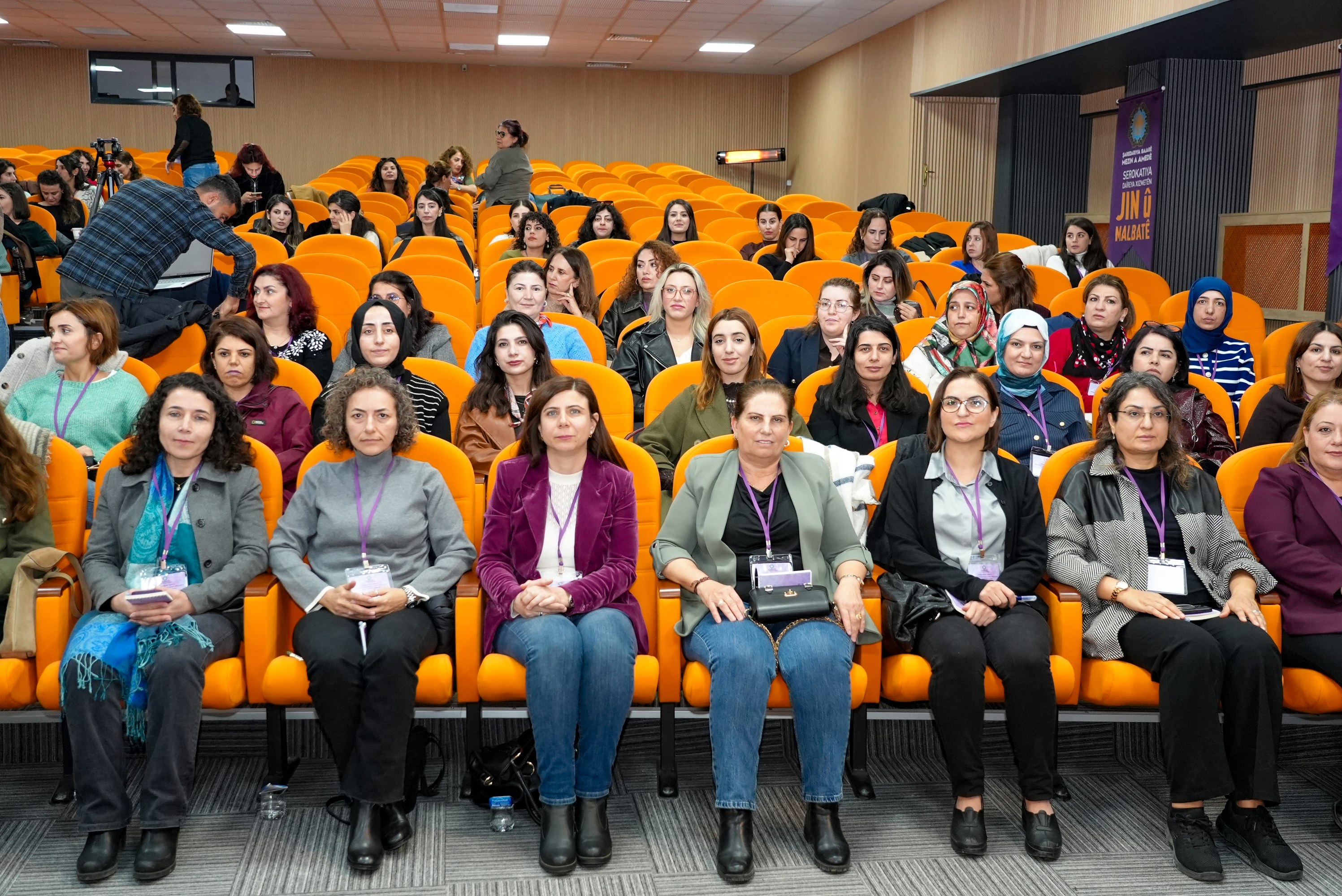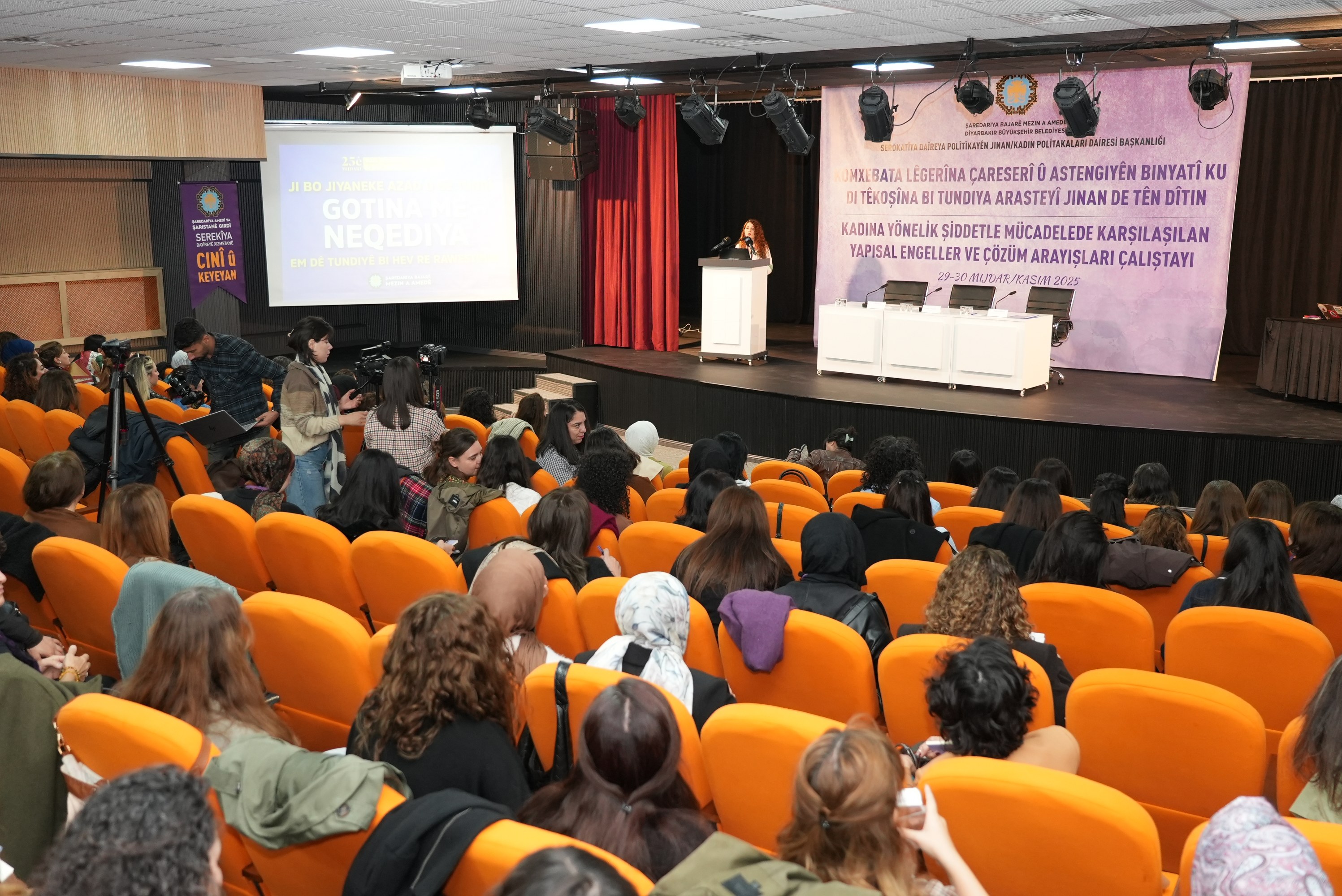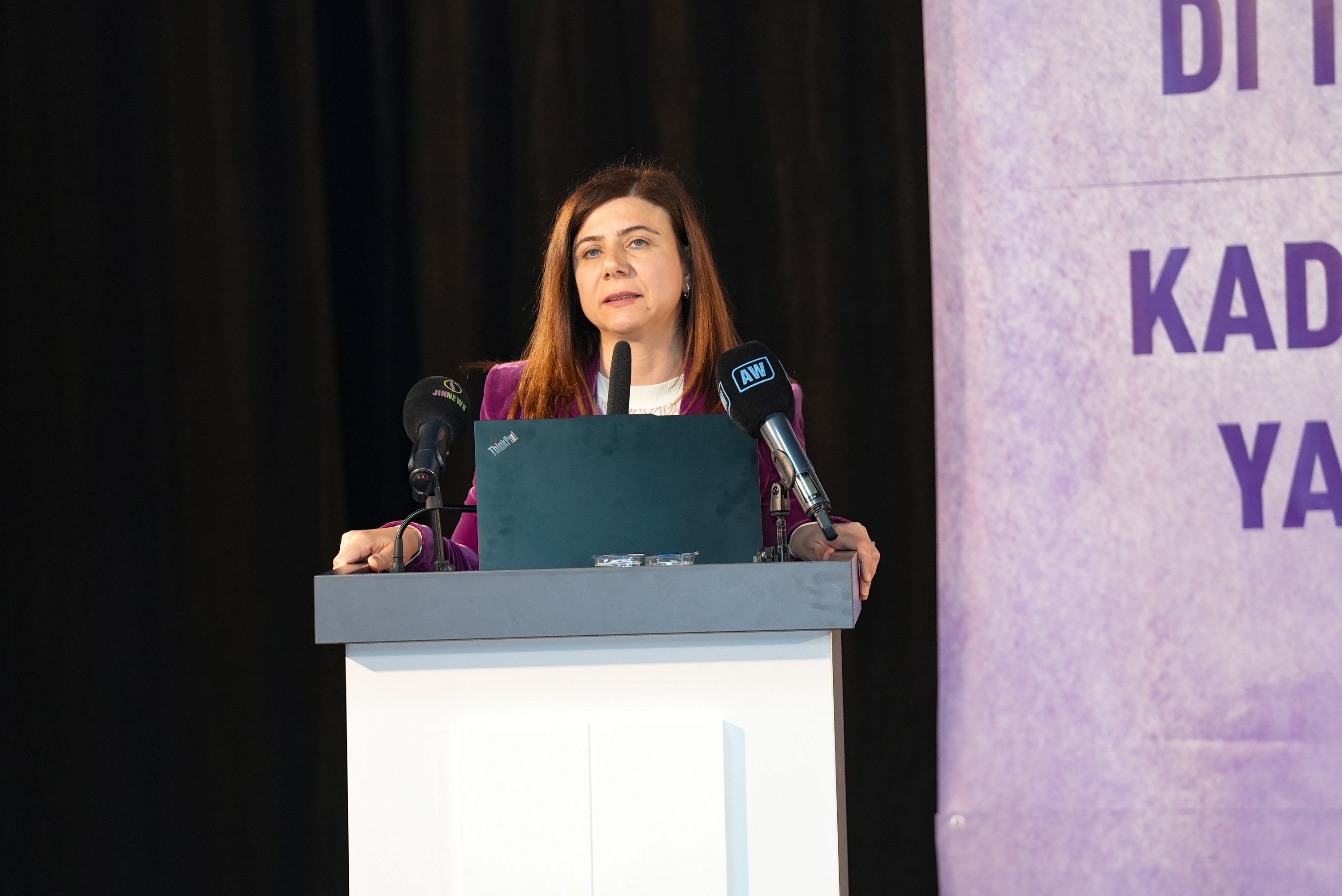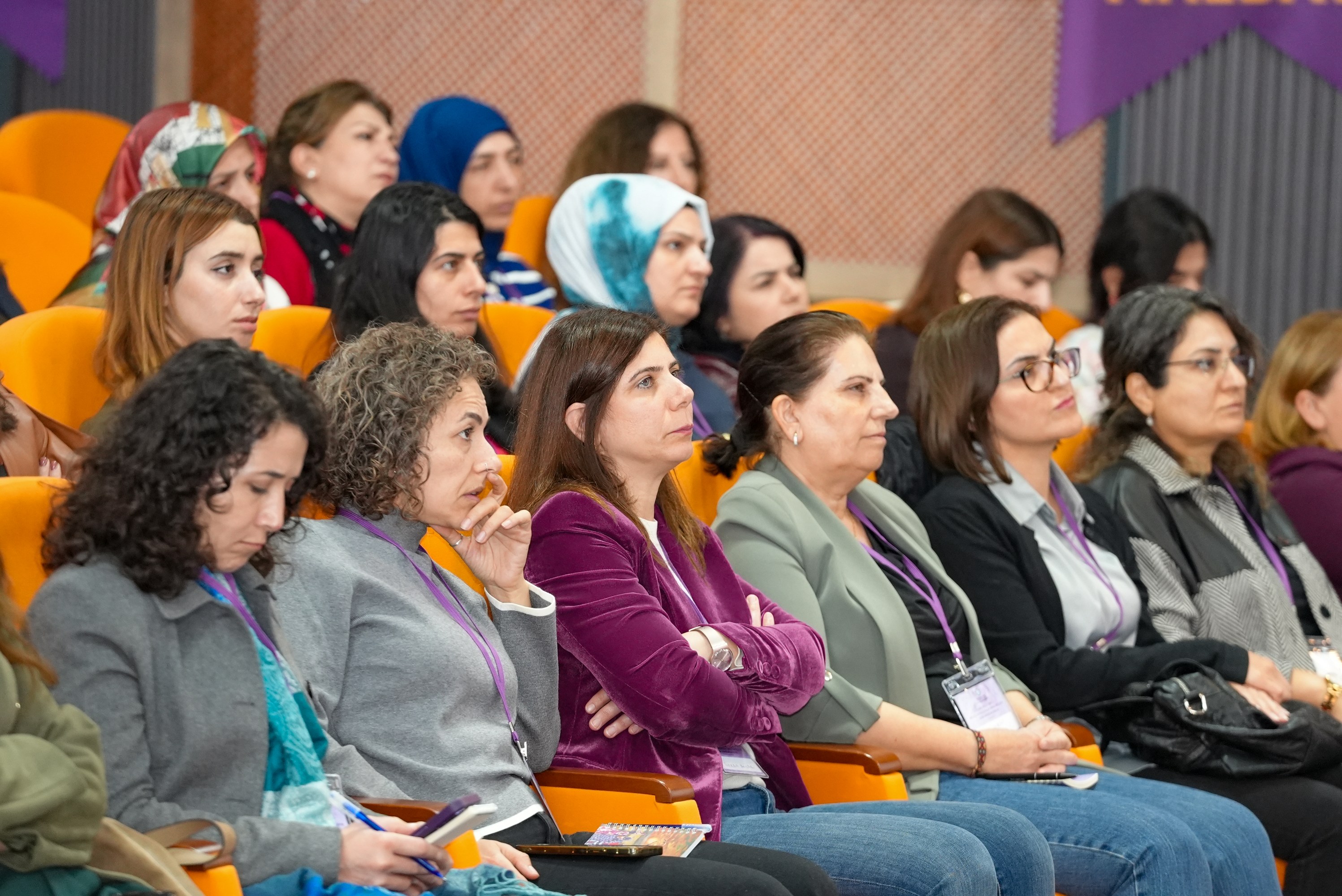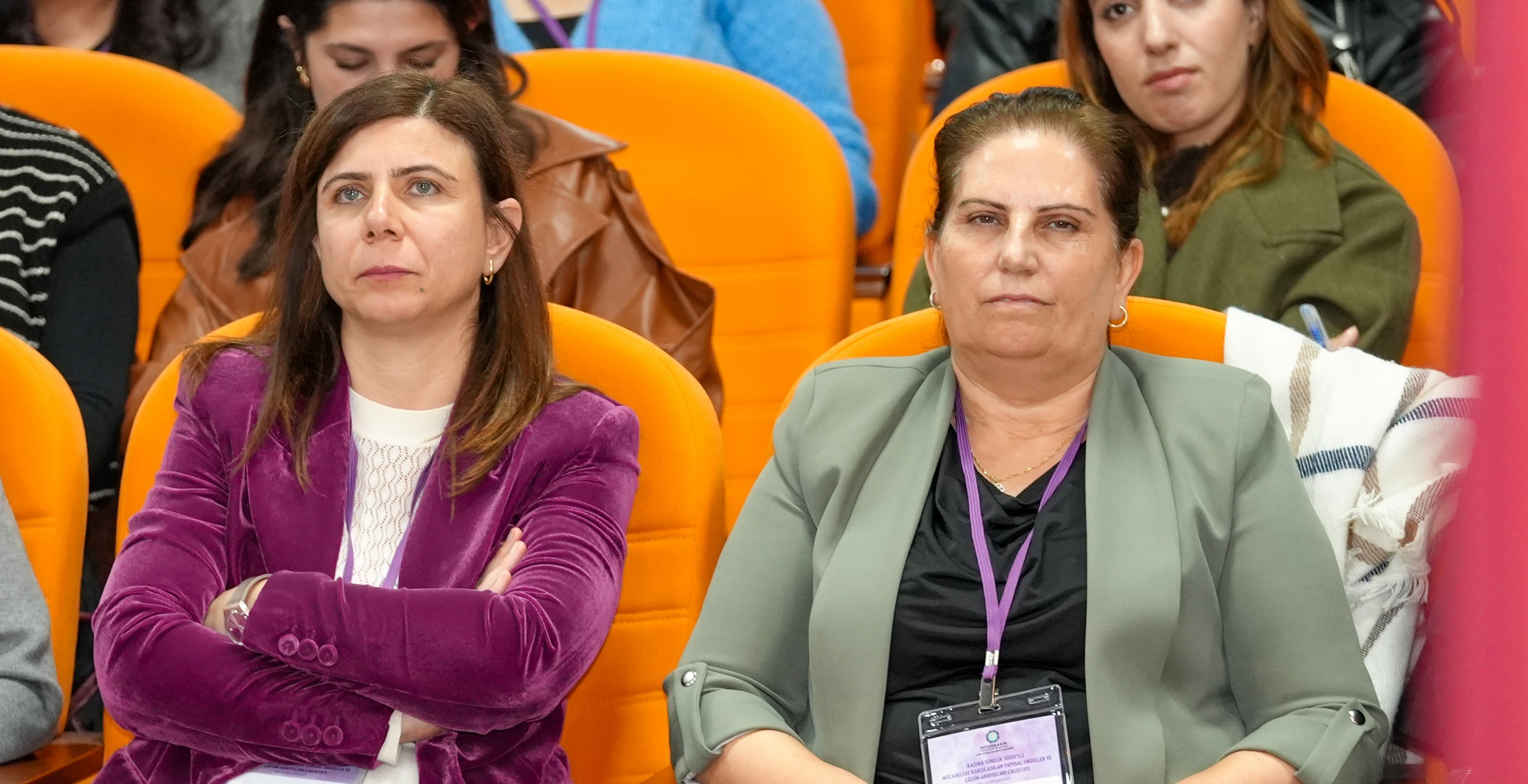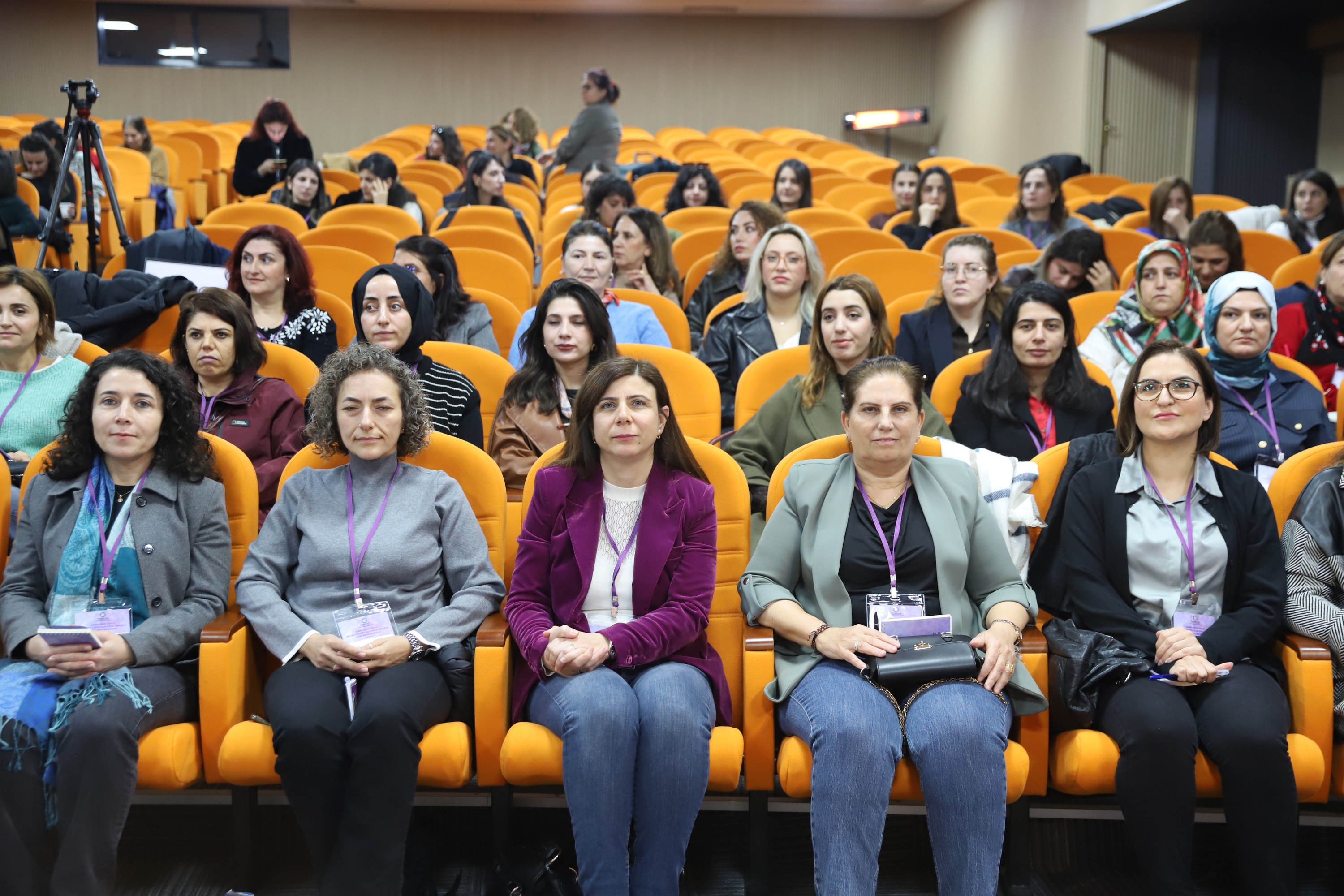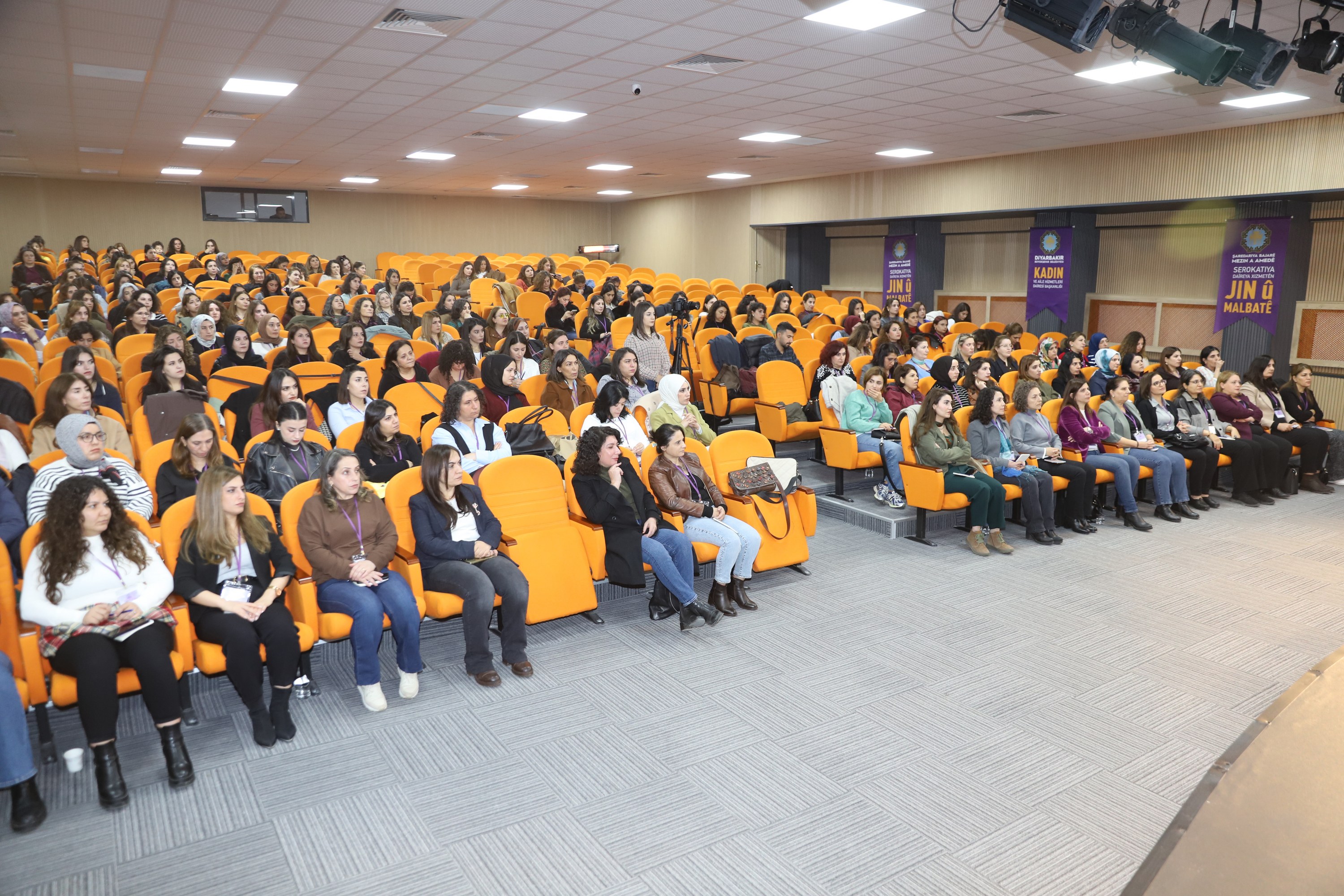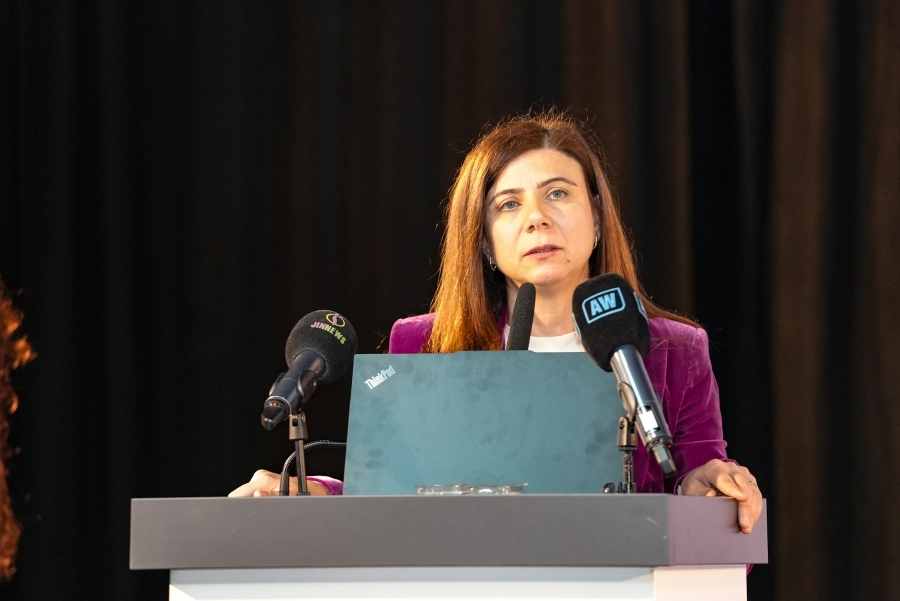
Speaking at the “Workshop on Structural Barriers Encountered in Combating Violence against Women and the Search for Solutions”, hosted by Diyarbakır Metropolitan Municipality, Co-Mayor Serra Bucak said they would strengthen women’s solidarity and organisation together, adding: “Together, we will build a free and equal society.”
Organised by the Metropolitan Municipality’s Women and Family Services Department, the workshop aimed to strengthen support mechanisms for women, address existing challenges, share proposals for solutions, and develop more effective strategies collectively. The event was held at the Ali Emiri Conference Hall in the municipal building and was attended by Diyarbakır Metropolitan Municipality Co-Mayor Serra Bucak; DEM Party Women’s Assembly Spokesperson Halide Türkoğlu; Deputy Secretary General Zerin Türk; Head of the Women and Family Services Department Özden Gürbüz Sümer; co-mayors from district municipalities; and representatives of women’s organisations.
Co-Mayor Bucak: We will discuss this together
In her opening remarks, Co-Mayor Bucak highlighted the importance of the workshop and said: “Today we will address a deeply painful issue. We will discuss it together. Violence against women—unfortunately—has become unstoppable today, despite the fact that our organised struggle is growing, despite our efforts to diversify the ways we combat it, and despite repeatedly underlining across every platform and every discussion—from politics to local government—that tackling violence against women is vital, and despite the work we are doing in this field. Looking at the last ten months of 2025, we know that nearly 350 women have been killed.”
‘We will discuss how to take our experience further’
Stating that the rise in femicides cannot be considered separately from the system, Co-Mayor Bucak continued: “The fact that femicides are happening with such intensity is, of course, not independent of the system’s policies. It is a clear expression of the state’s hostile stance—either through its policies on women or through the absence of policy. It is also closely linked to the way the judicial mechanisms, with the same hostile approach, unfortunately protect male perpetrators. We talk about and debate these issues together on every platform. In fact, we know the systemic and government-driven reasons behind the problem—the structural issues. But today and tomorrow, despite all the difficulties imposed by this system, despite its opposing stance and its polarising policies, we—as colleagues working on women’s issues and women’s rights within local government—must consider how we can revisit our own methods. How can we diversify our approaches and take the practices and experience we have built so far in tackling violence against women to a better level? That is what we will be discussing.”
‘What kind of coordination and unity will we build?’
Co-Mayor Bucak said the workshop is important in enabling everyone working in the field of combating violence against women, together with all local mechanisms, to genuinely engage with the issue, reopen the discussion, develop new methods, and agree on how these methods can be brought together. “How will we create coordination and unity—both in words and in action? This is crucial,” she said.
She added that for the past 20 months in Amed and other cities in the region, women’s coordination platforms—alongside women’s policy units, women’s directorates, and women’s commissions and policies within local authorities—have been addressing everything from training activities to the most extensive efforts to combat violence against women through coordinated work. “We will look in far greater detail at what forms of coordination and what mechanisms can enable politics and local government to work together more effectively in shaping policy and sustaining the struggle,” she said.
‘We will strengthen women’s solidarity’
Thanking all women who travelled from different cities to attend the workshop, Co-Mayor Bucak said: “Together, we will rebuild our path and our line of struggle with renewed strength. Together, we will create a free and equal society. We will strengthen women’s solidarity and organisation together—and together we will stop violence. In this spirit, I wish you all success. I hope the workshop will be productive and strong.”
‘We needed a new assessment and a workshop’
Özden Gürbüz Sümer, Head of the Women and Family Services Department, shared reflections on the purpose of the two-day workshop. Noting that their long-standing work on the ground in the field of women’s policies has made key needs more visible, Sümer said: “In many of the initiatives we have carried out to combat violence, we have seen that we face various limitations and gaps. Changing and transforming social conditions are also bringing about serious changes in the methods of violence. We have realised how much harder it has become to try to address today’s realities with the mechanisms of ten years ago. For this reason, we needed a new assessment and a workshop.”
Sümer underlined that many factors—from the economic crisis to war policies, and from shifts in digital communication to technological change—are reshaping the forms of violence against women.
Topics to be discussed
Over the two days, the workshop will address the following themes: “Problems Encountered in Combating Violence against Women; The Multi-Dimensional Barriers Faced by Women’s Organisations—Causes and Consequences; From Problems to Solutions: Proposals for Solutions and Strategies to Combat Violence against Women; Combating Violence against Women from a Political Perspective and Policy Proposals.”