Diyarbakır Metropolitan Municipality has shared its 2025 Women’s Policies Activity Report with women journalists, outlining its approach to combating violence, supporting women’s economic empowerment, and advancing the “women-friendly city” perspective.
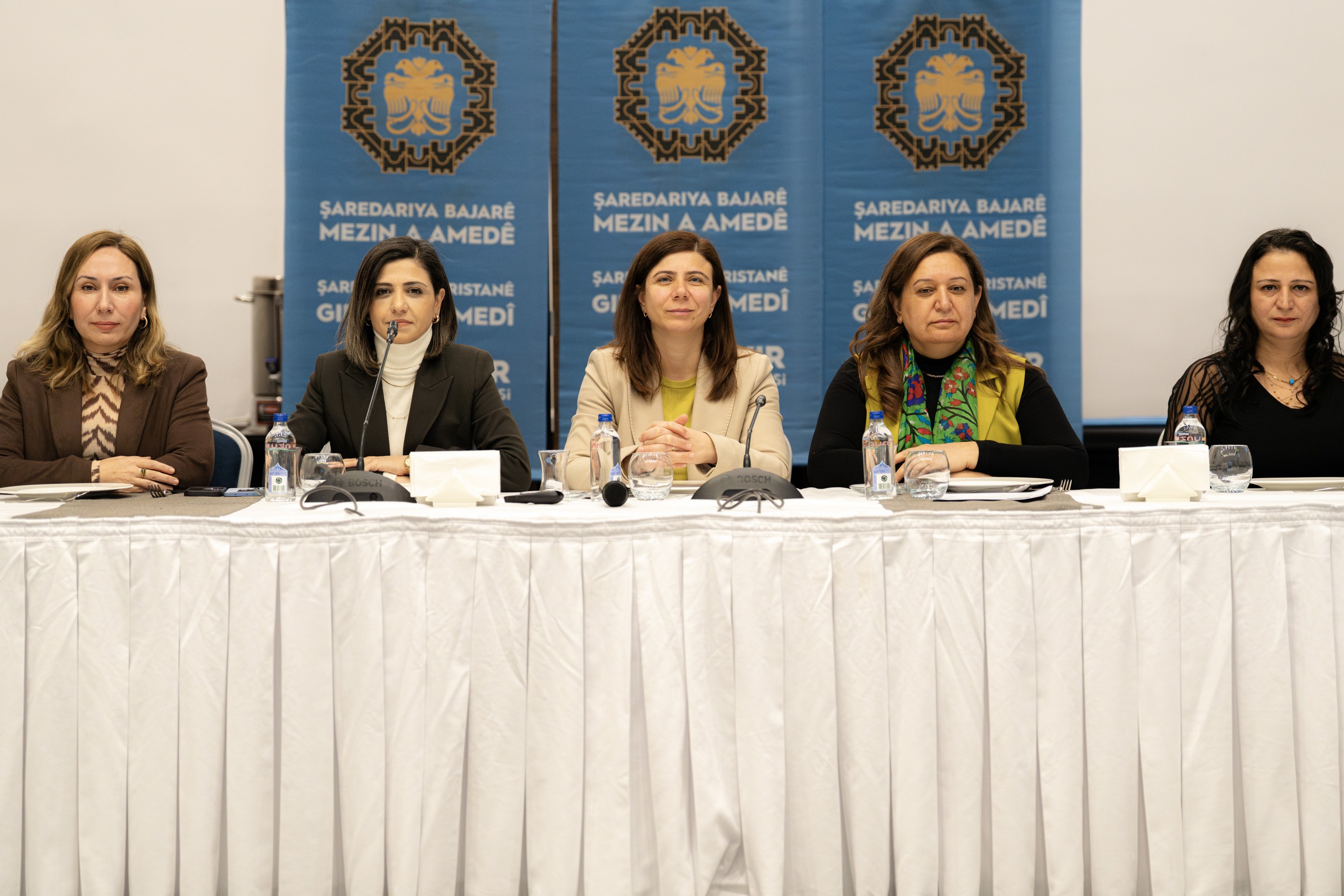
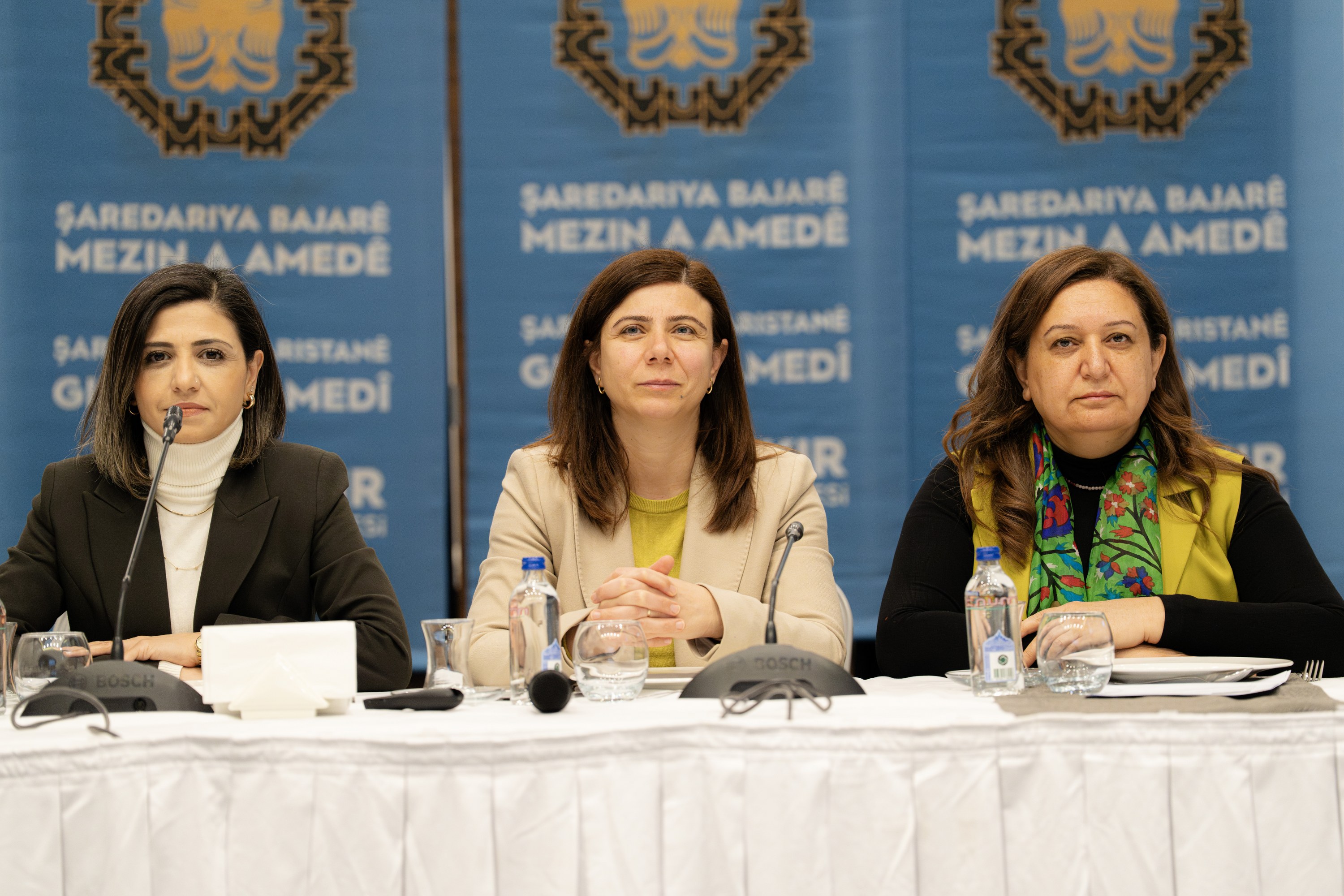
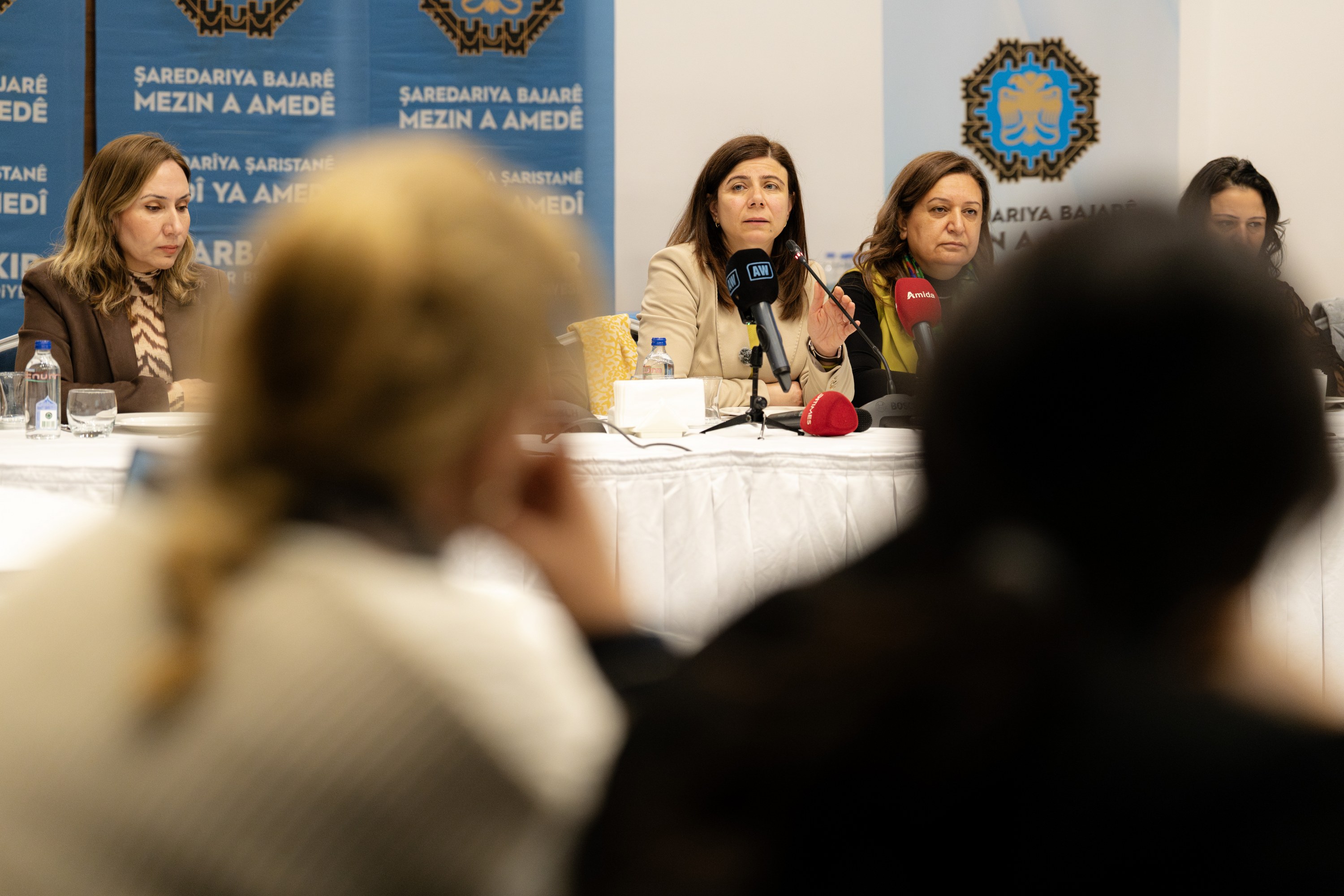
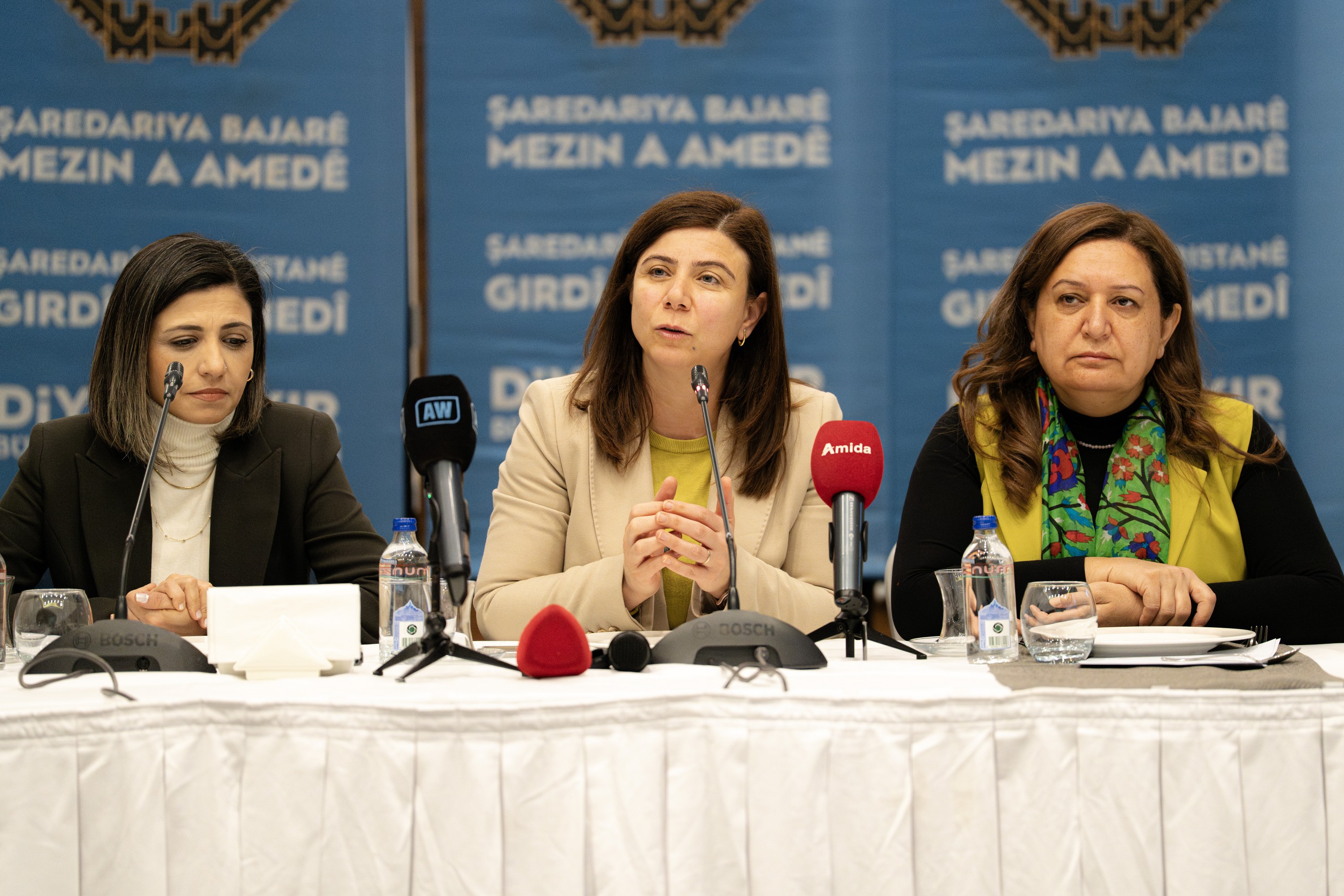
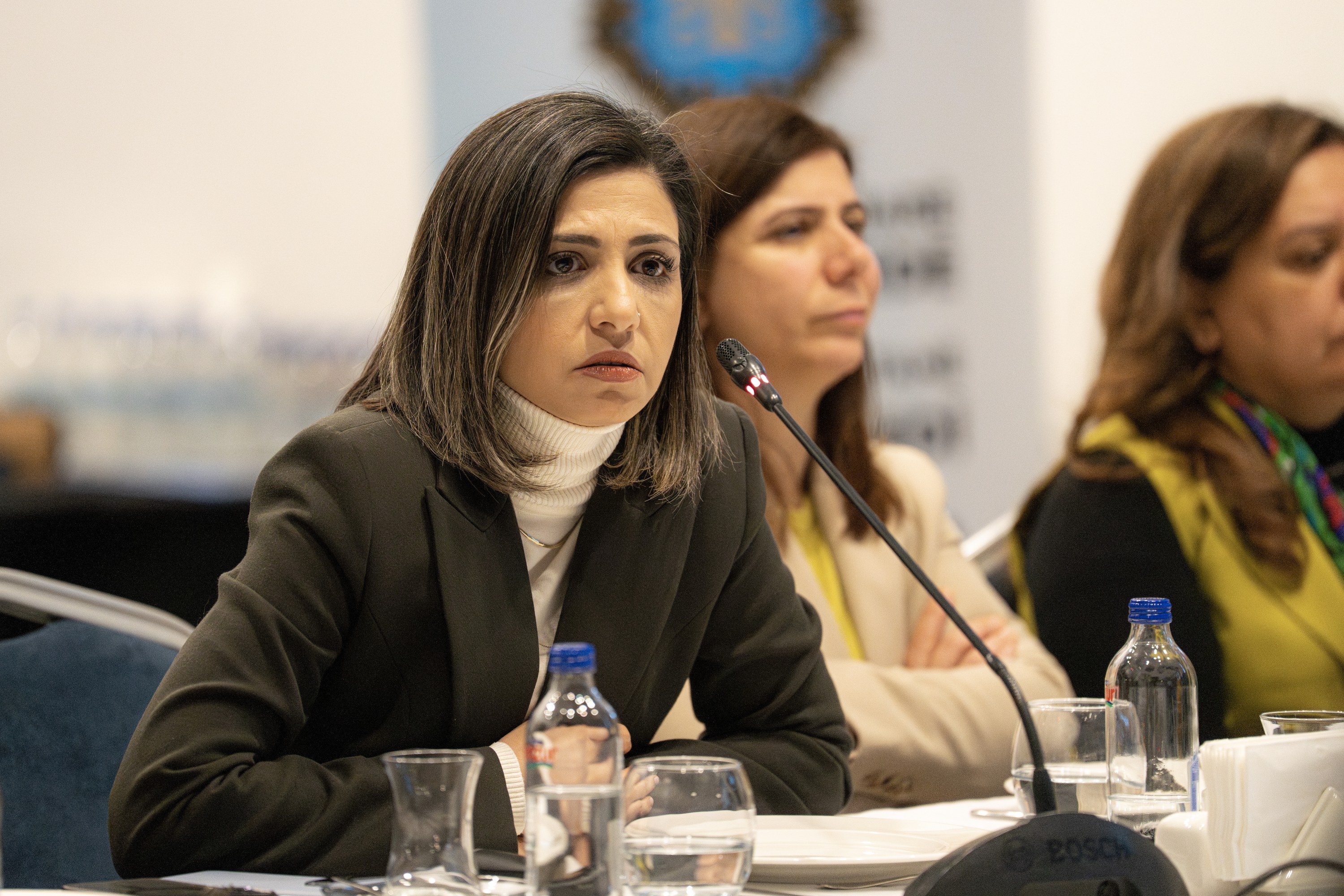
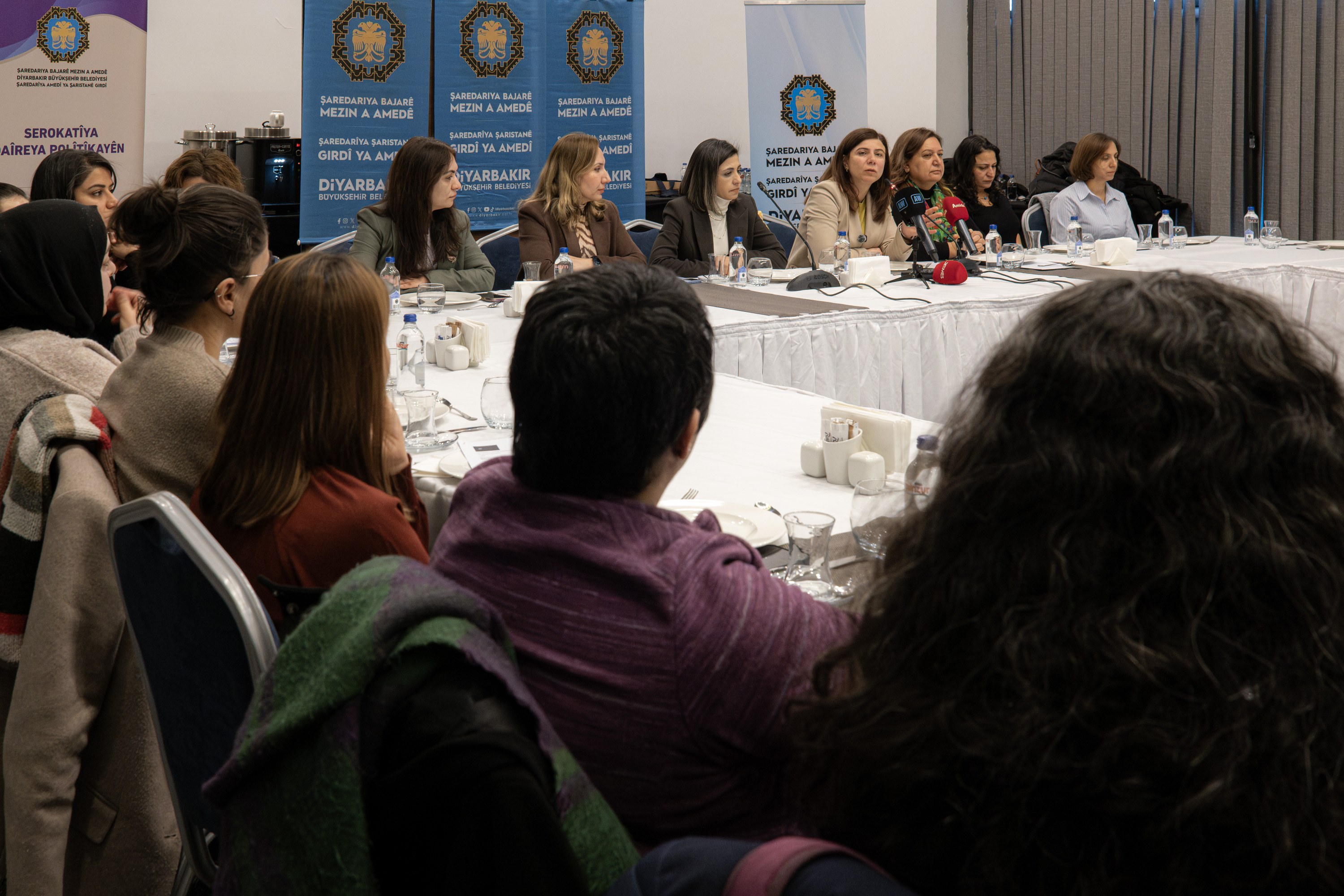
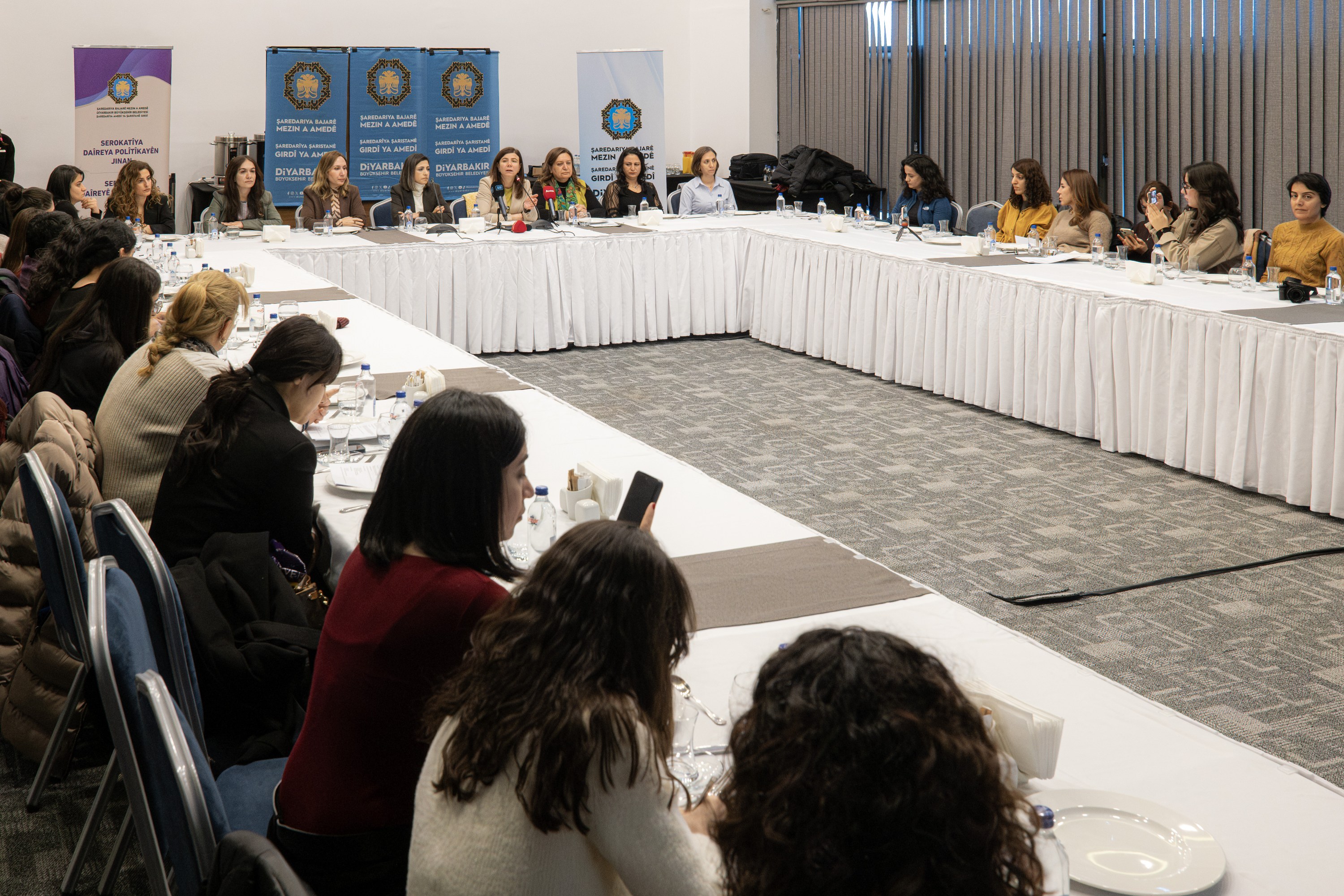
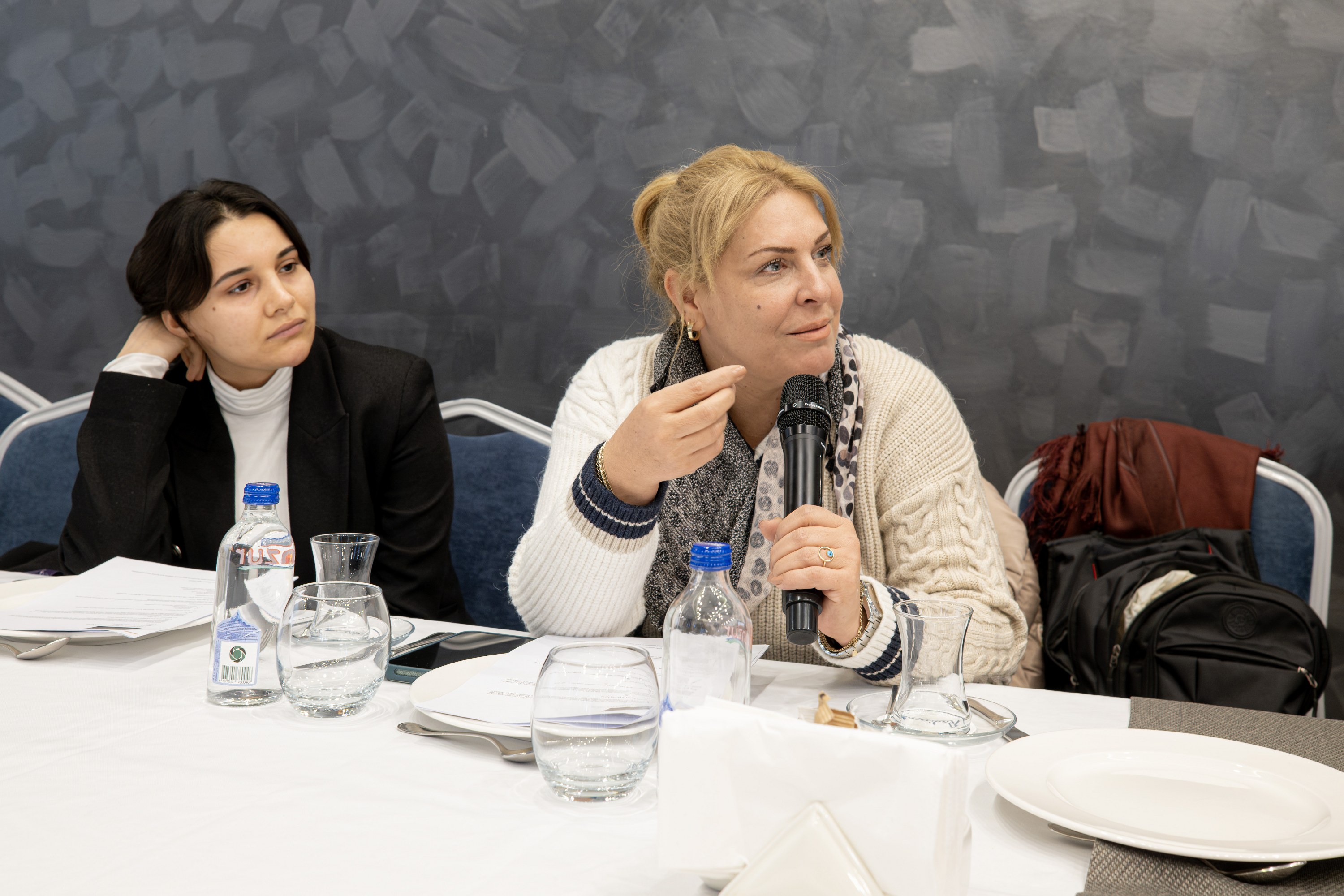
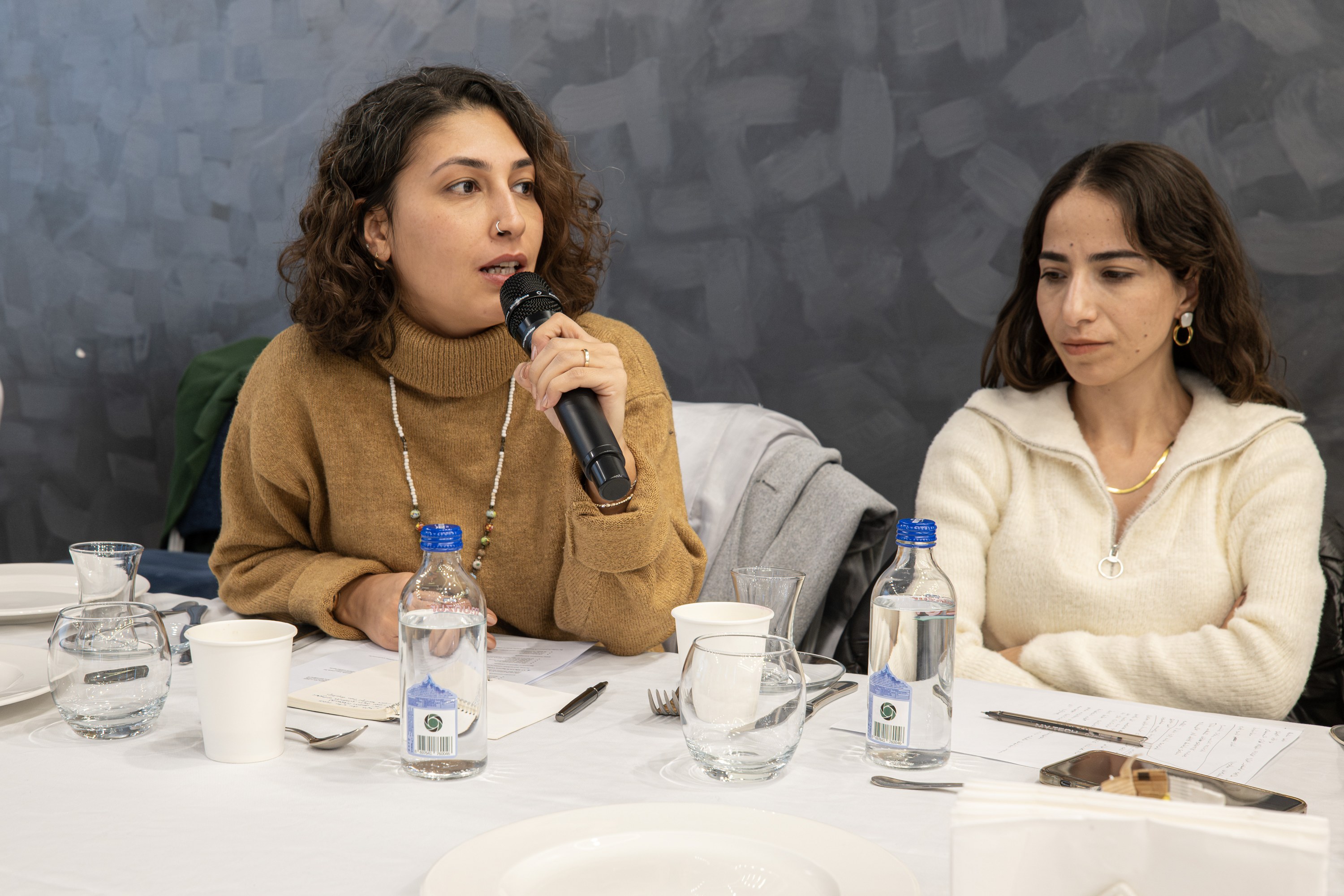
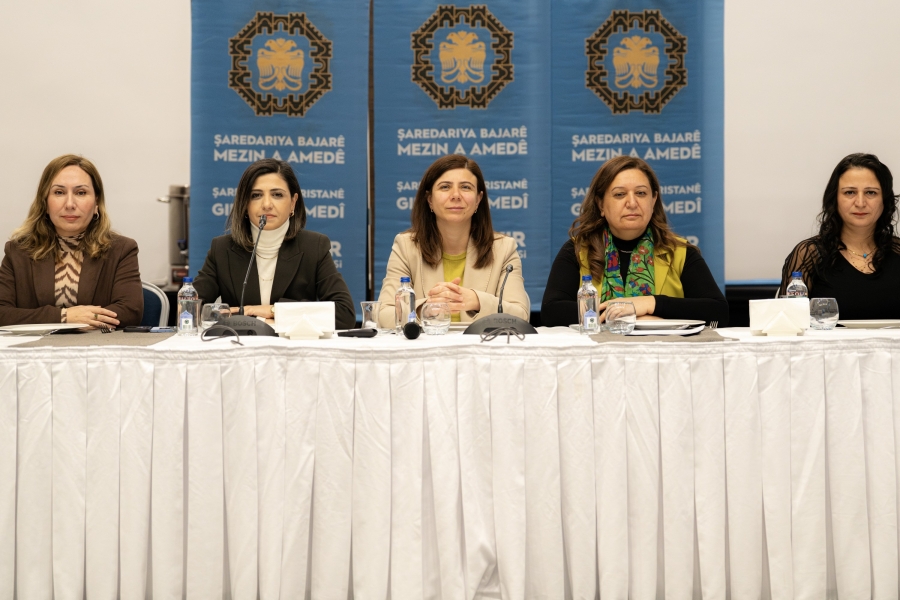
The Municipality’s Department of Women and Family Services met with women journalists working in local and national media outlets. At the meeting, the activity report covering the municipality’s work throughout 2025 was presented to the press. The gathering took place at a hotel in Kayapınar and was attended by Diyarbakır Metropolitan Municipality Co-Mayor Serra Bucak; DMM Council Co-Spokesperson Demet Ceylan; Peoples’ Equality and Democracy Party (DEM Party) Provincial Co-Chair Gülşen Özer; Deputy Secretary General Zerin Türk; Head of the Department of Women and Family Services Özden Gürbüz Sümer; and many journalists.
Co-Mayor Bucak: We want to hear your views
In her opening remarks, Co-Mayor Serra Bucak said they wished to meet women media workers as 2025 comes to a close, adding: “We have not had enough opportunity to discuss women’s policies and approaches to women’s issues together; we wanted this meeting to serve that purpose. We wanted to meet journalists who come together across all the city’s issues and news areas, who bring our women’s policies and work into the public agenda, and who make the women’s agenda part of the city’s agenda. Today, we want both to meet with you and to hear your views.”
‘We want to hear from you what we can build’
Emphasising that women journalists carry out significant work, Bucak said: “We want to listen to the problems you face; we want to hear from you what it means to be a woman journalist in this city, and what we, as local authorities, can build. We know that Amed and a number of provinces and districts have been declared women-friendly cities. We also know that Amed is the key driving force behind this. Women journalist colleagues have an important role here. Because we are asking what we can do to move towards women-friendly cities, and how we can make these cities more accessible and safer. For this reason, we need more cooperation, exchange of ideas and support.”
DEM Party Provincial Co-Chair Gülşen Özer also stated that they are aware of the efforts of women journalists and the challenges they face, and thanked them for their work.
Annual Activity Report Released
Following the meeting, Head of the Department of Women and Family Services Özden Gürbüz Sümer presented the annual activity report.
Sümer stated that the municipality has carried out wide-ranging work aimed at strengthening women’s equal and free participation in urban life, combating violence against women, and making women’s labour visible. She underlined that the work—planned from a women’s liberationist policy perspective—has been implemented with an approach that places women’s right to life, safety and social equality at its centre.
Recalling that the Diyarbakır Centre for Research and Practice on Women’s Issues (DİKASUM) has been reactivated after an eight-year hiatus, Sümer noted that the centre—founded in 2001 and closed during the trustee-appointed administration process in 2016—was reopened on 29.
Annual Activity Report Released
Following this, Head of the Department of Women and Family Services, Özden Gürbüz Sümer, presented the annual activity report.
Stating that they have carried out wide-ranging work aimed at strengthening women’s equal and free participation in urban life, taking as a basis the fight against violence against women, and making women’s labour visible, Sümer underlined that the work planned from a women’s liberationist policy perspective has been implemented with an approach that places women’s right to life, safety and social equality at its centre.
Recalling that the Diyarbakır Centre for Research and Practice on Women’s Issues (DİKASUM) has been brought back into operation after an eight-year break, Sümer said that the centre—founded in 2001 and closed in 2016 during the trustee-appointed administration period—was reopened on 29 January 2025 in order to reinstate women’s liberationist policies and services.
1,742 applications submitted
Sümer stated that a total of 1,742 applications were made to DİKASUM during 2025, adding that 420 of these were requests for psychological support, 415 for economic and social support, 311 for shelter, and 123 for legal support. Sümer said, “In declarations of violence, 230 women stated that they had been subjected to psychological violence, 175 women to physical violence, and 54 women to economic violence.”
Alo Violence Hotline
Noting that, as part of efforts to combat violence against women, the Alo Violence Hotline was reactivated on 17 September 2025, Sümer reported that the hotline received a total of 51 calls in its first three months of operation; 18 of these were direct applications relating to violence, while 33 were for social support and information.
Sümer also referred to the Position Document on Combating Gender-Based Violence, stating that the municipality has adopted a principle of zero tolerance for violence across all service areas; and that this document—which takes women’s statements as the basis and prioritises confidentiality and safety—aims to make gender equality a measurable, monitorable and sustainable policy.
2,483 women participated in training sessions
Referring also to the training programmes carried out throughout 2025, Sümer said that trainings organised for municipal employees and for women living in neighbourhoods covered topics including gender equality, Law No. 6284, types of violence, application and referral mechanisms, women’s health, literacy, sport, self-defence, disaster awareness and substance addiction, and that a total of 2,483 women took part in these activities.
Sümer noted that, within the scope of the Women’s Health Training of Trainers programme, 20 staff members working in the metropolitan municipality and district municipalities successfully completed a seven-day training course, and that participants reached the competence to implement the ten-module programme locally. As part of Breast Cancer Awareness Month, she stated that workshops were held in women’s life centres, neighbourhoods and villages; 177 women attended the workshops and 250 women attended the seminars.
Stating that vocational workshops were carried out to support women’s economic empowerment in areas such as medicinal and aromatic plant cultivation, women bus driving, 3D animation, air-conditioning and combi-boiler maintenance, furniture assembly, textiles, hairdressing and recycling, Sümer said that, within the washable pad workshops run under the title “We Transform as We Cycle” (“Döngümüzle Dönüşüyoruz”), 1,000 pads were produced together with 200 women.
Sümer reported that, within the Women Bus Drivers Project, 11 women were employed within Diyarbakır Metropolitan Municipality during 2025, and that there were a total of 2,481 participations in vocational workshops over the year.
Sümer stated that awareness-raising activities were carried out in parks, neighbourhoods, shopping centres and villages in order to make violence against women visible and to strengthen women’s solidarity; she said that 6,655 women were reached over the year, and that through cultural and arts activities, access was provided to 2,657 women and children.
It was noted that, within the scope of 25 November, the International Day for the Elimination of Violence against Women, events such as theatre and film screenings, a bicycle tour and tree planting were organised.
Noting that a workshop titled “Structural Barriers Encountered in Combating Violence against Women and the Search for Solutions” was held at the Ali Emiri Conference Hall, Sümer said that 157 women participated in the two-day workshop and that proposals for solutions were discussed.
Sümer stated that women’s labour was made visible in public space through the Amed Women’s Labour and Culture-Arts Festival, adding that more than 30 stands were set up as part of the festival and many cultural and arts events were organised.
17,000 women benefited from JINKART
The report also included the JINKART scheme, which aims to ensure equal access to the right to transport for women. Accordingly, under the scheme—applied for by 50,519 women in 2025—cards were delivered to 10,000 women. It was stated that a total of 17,000 women benefited from JINKART, and that women received monthly financial support of TRY 1,800 and annual support of TRY 21,600.
Within the scope of the “Towards Women’s Cities / Ber Bi Bajarên Jinan Ve” work, it was emphasised—through meetings held and a declaration published—that women should be decisive in all decision-making processes, from urban planning to budgeting. It was reported that, in line with the women-friendly city approach, the aim is to implement practices citywide, starting with pilot neighbourhoods.
Finally, the report stated that Diyarbakır Metropolitan Municipality has been included in the EU-supported Women-Friendly Cities III Project, noting that the work carried out with a women’s liberationist policy and the “Towards Women’s Cities” perspective will be sustained and further strengthened in the coming period.
Sümer concluded her assessment with the words: “This city changes through women’s experience; it is transformed through women’s voices.”
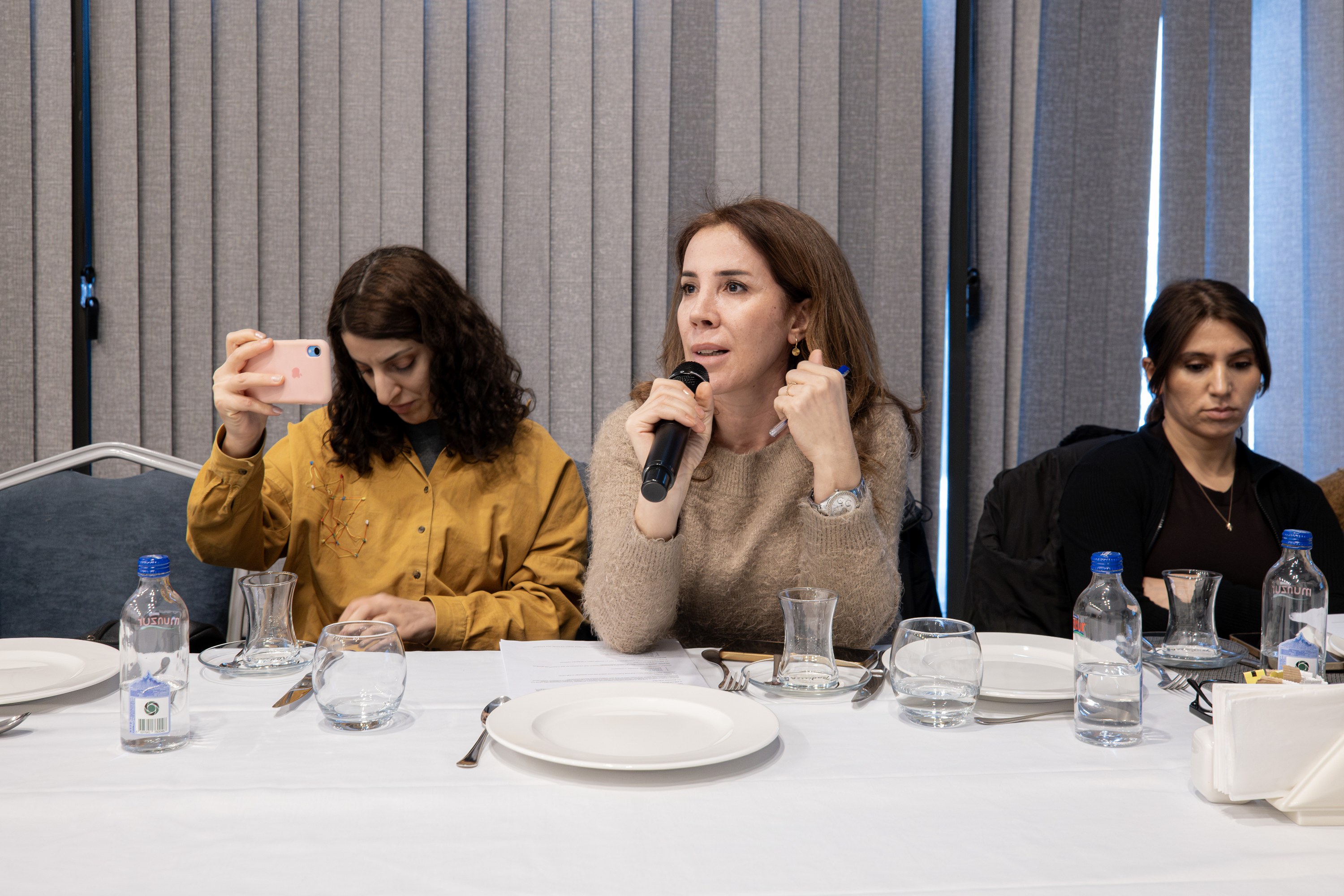
Women journalists also voiced their demands and solution proposals regarding the report and the city.