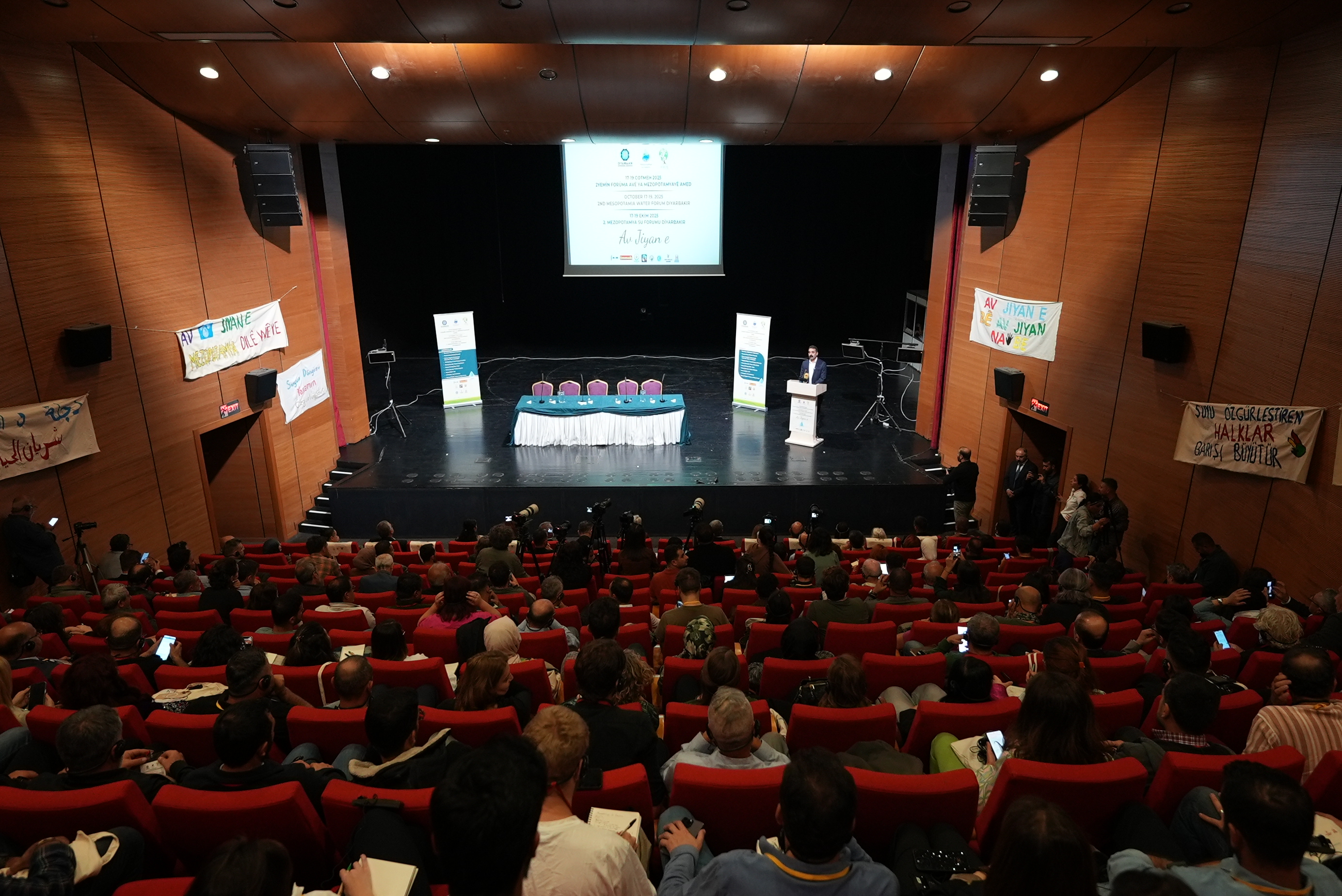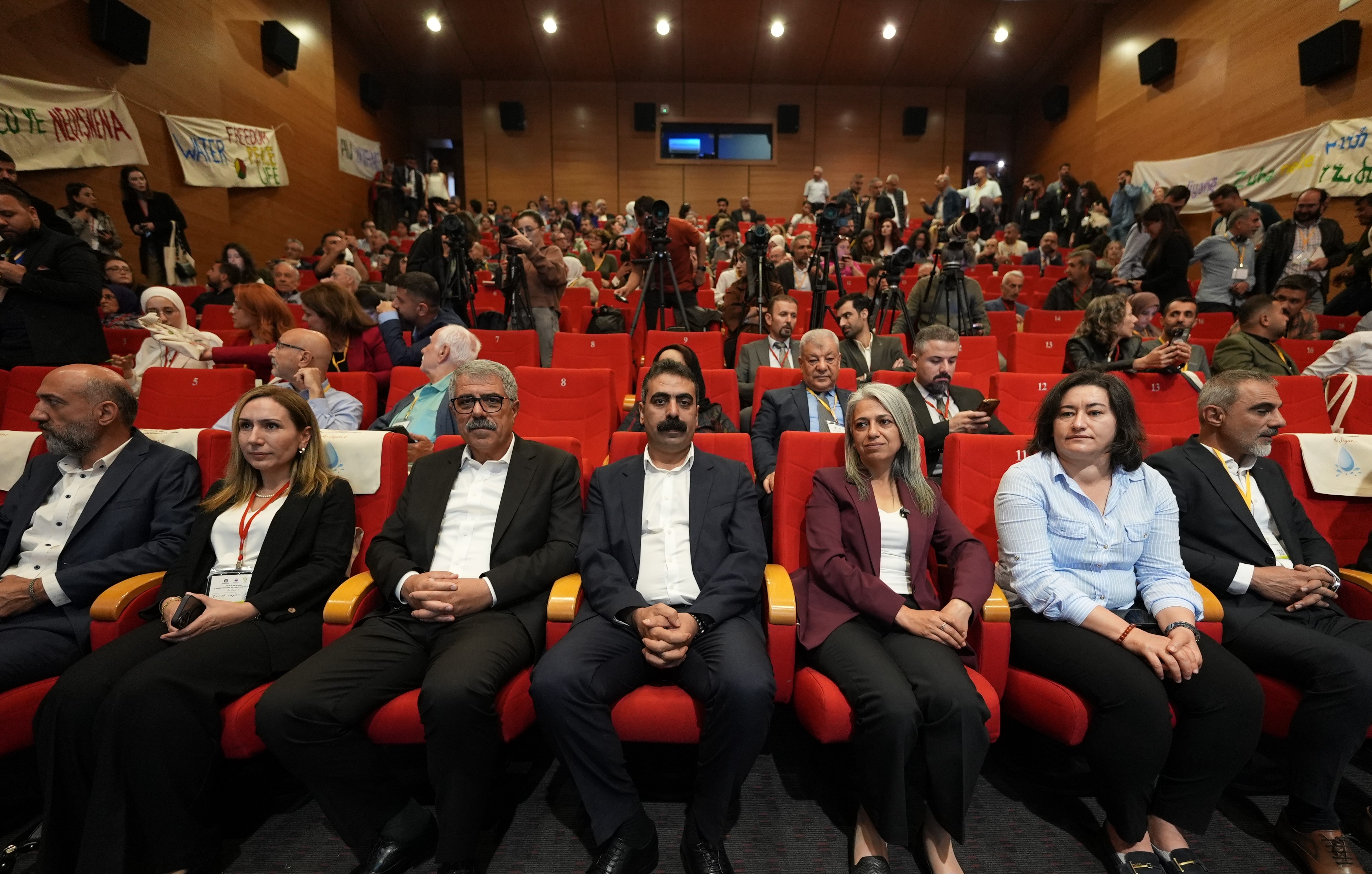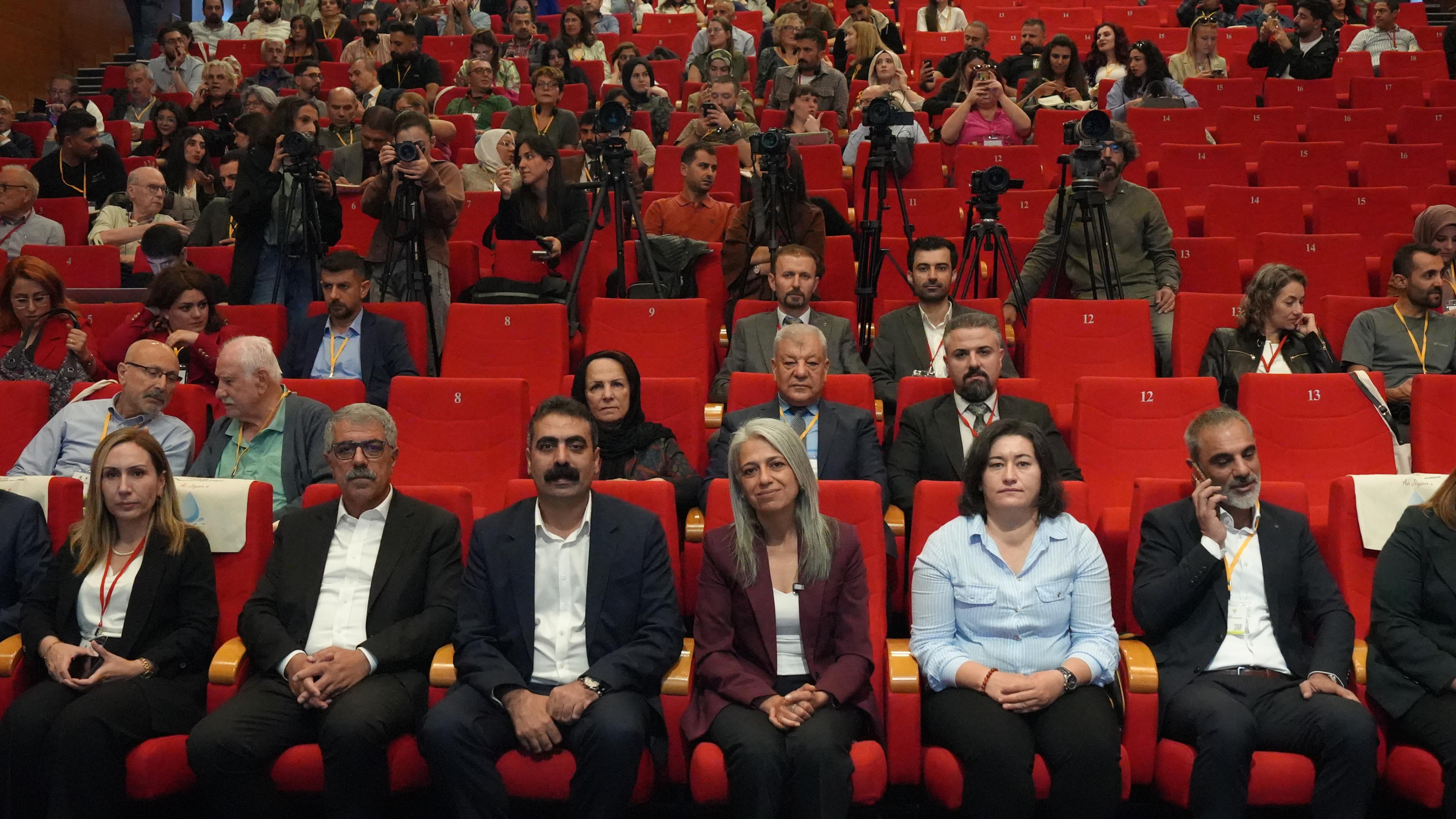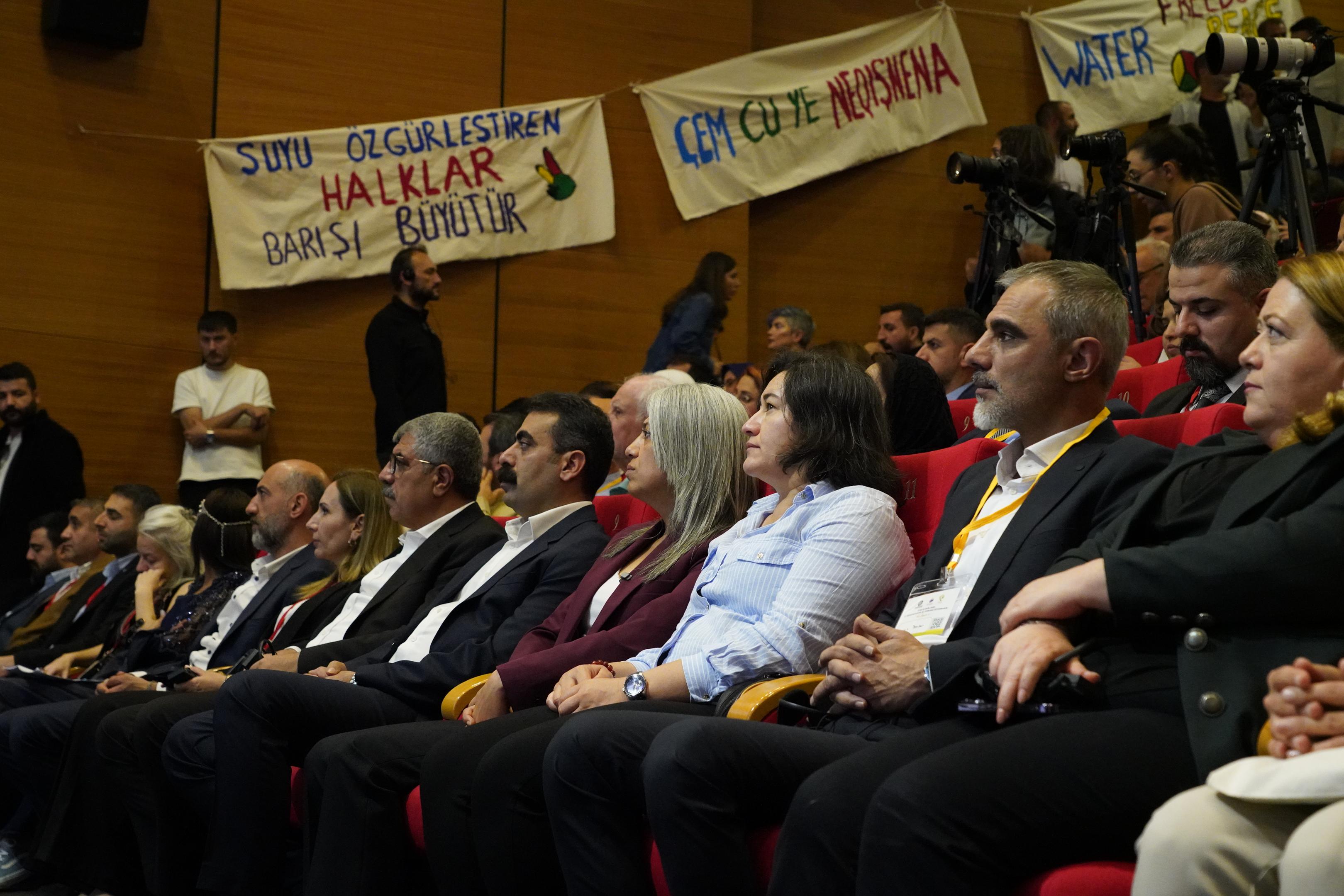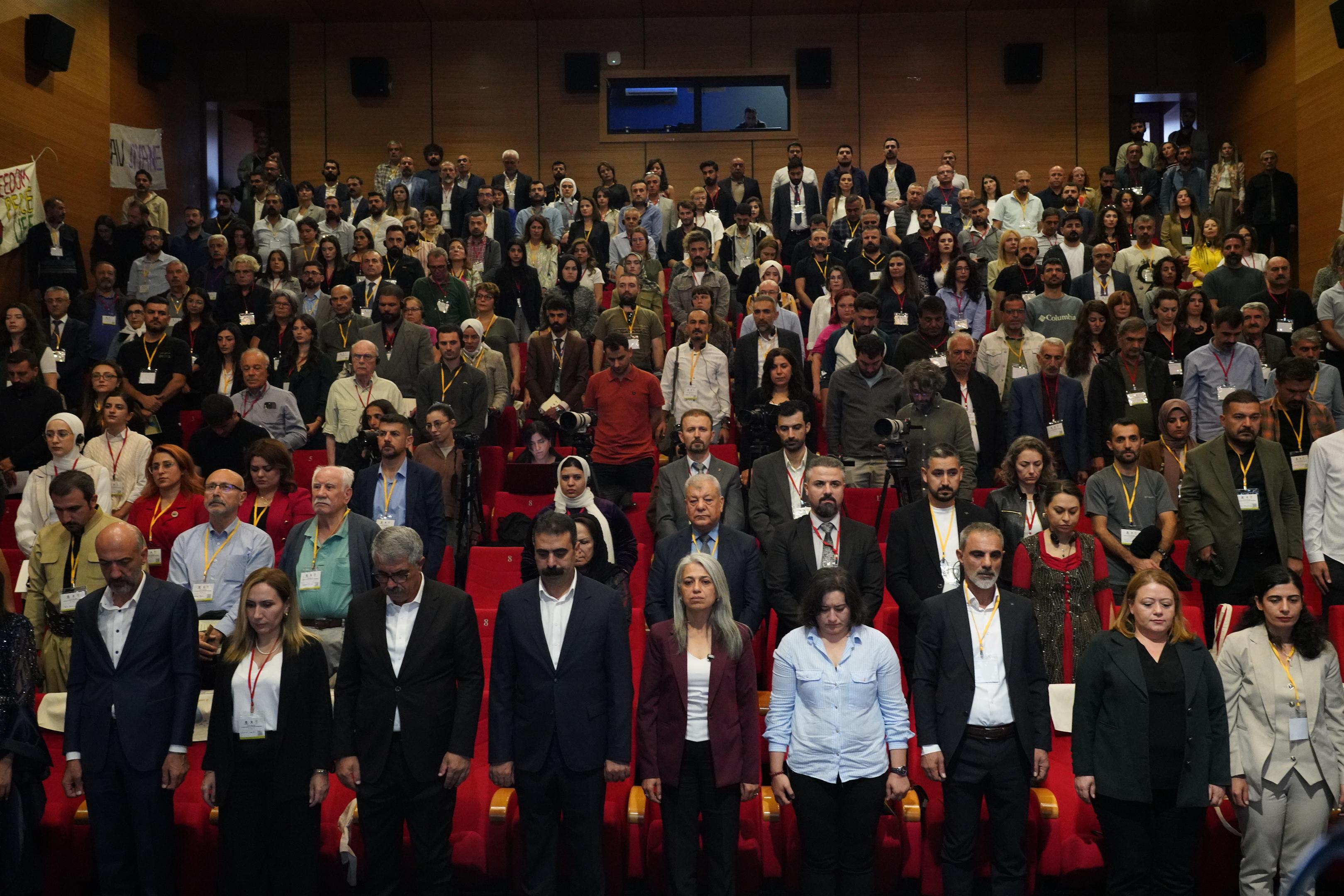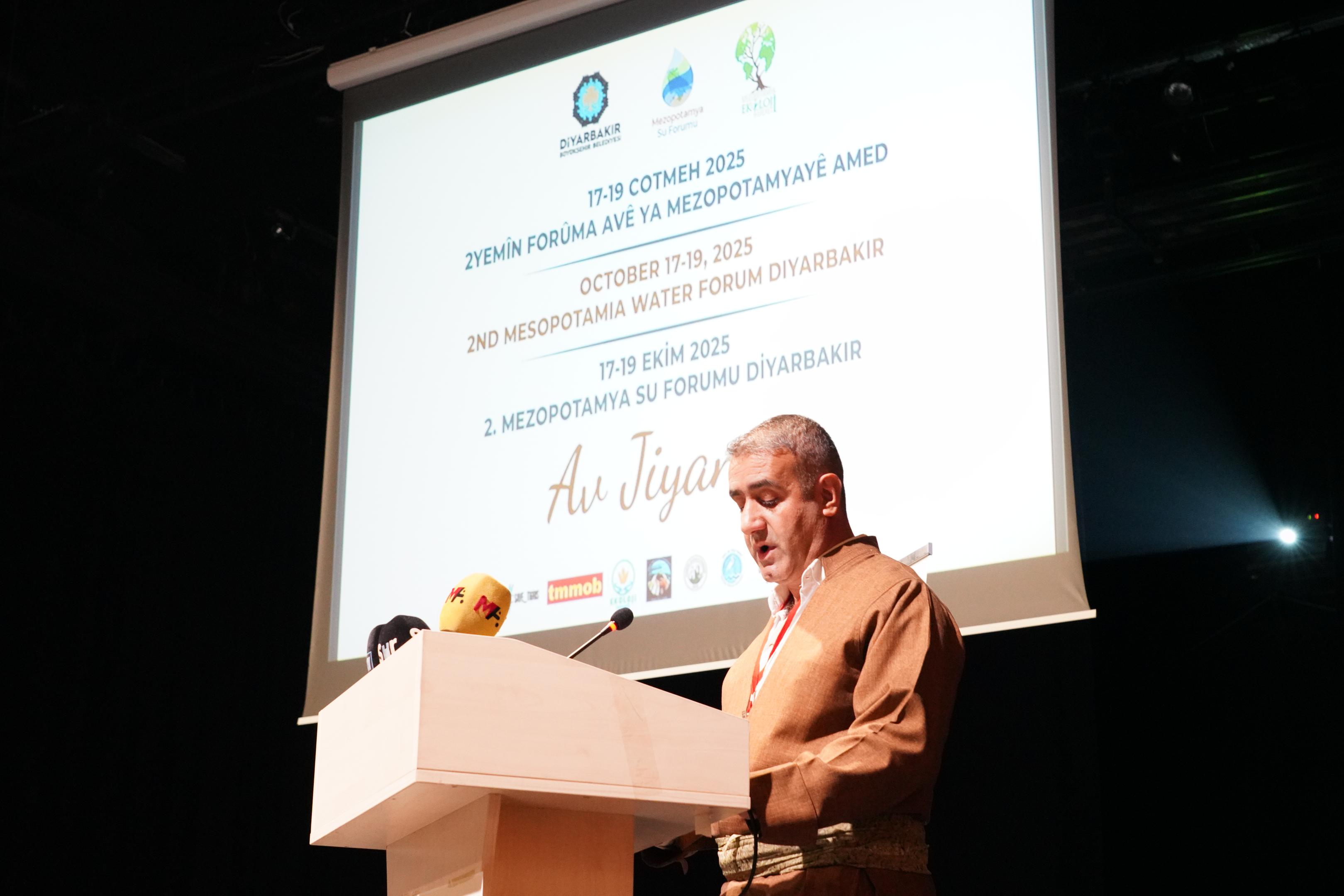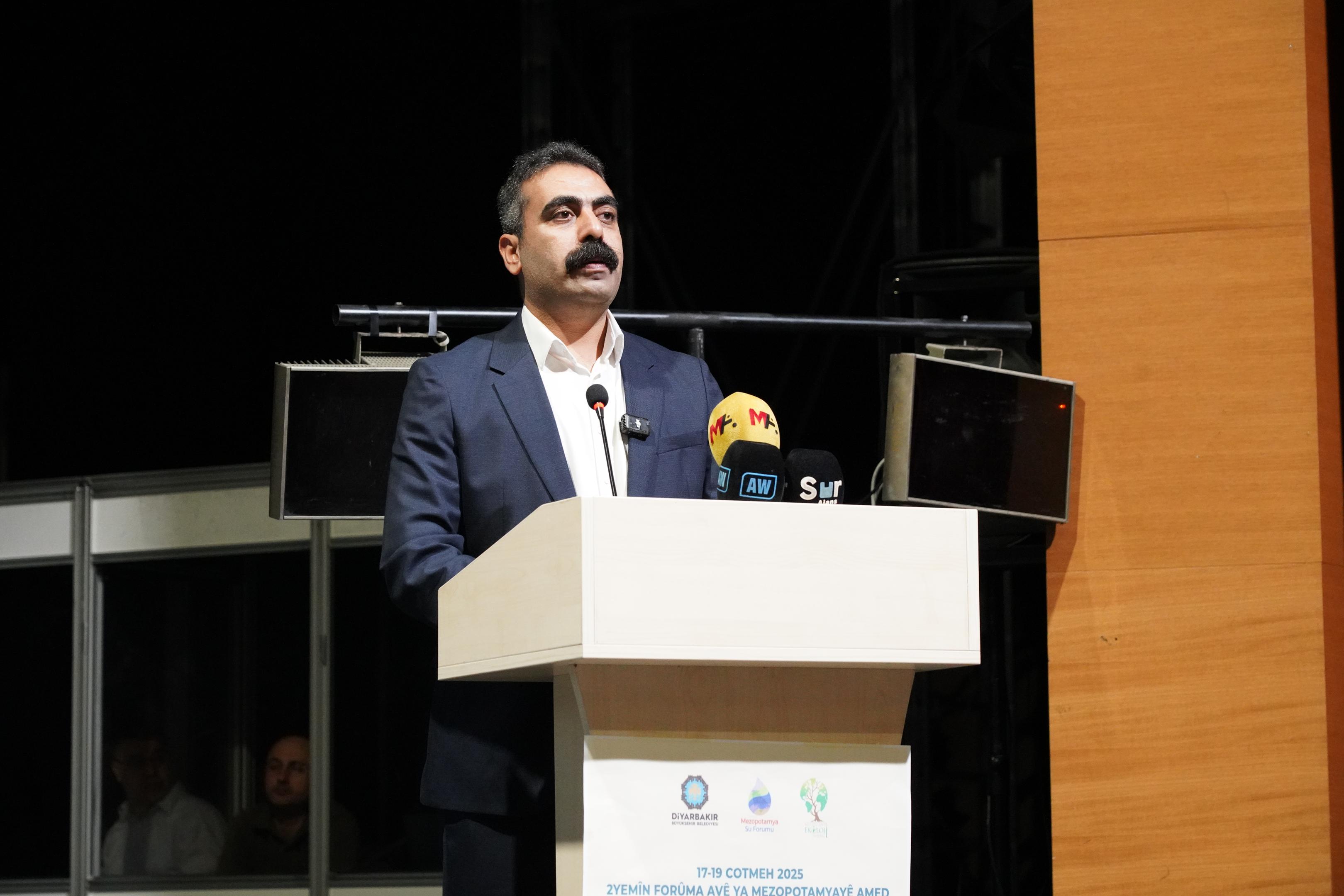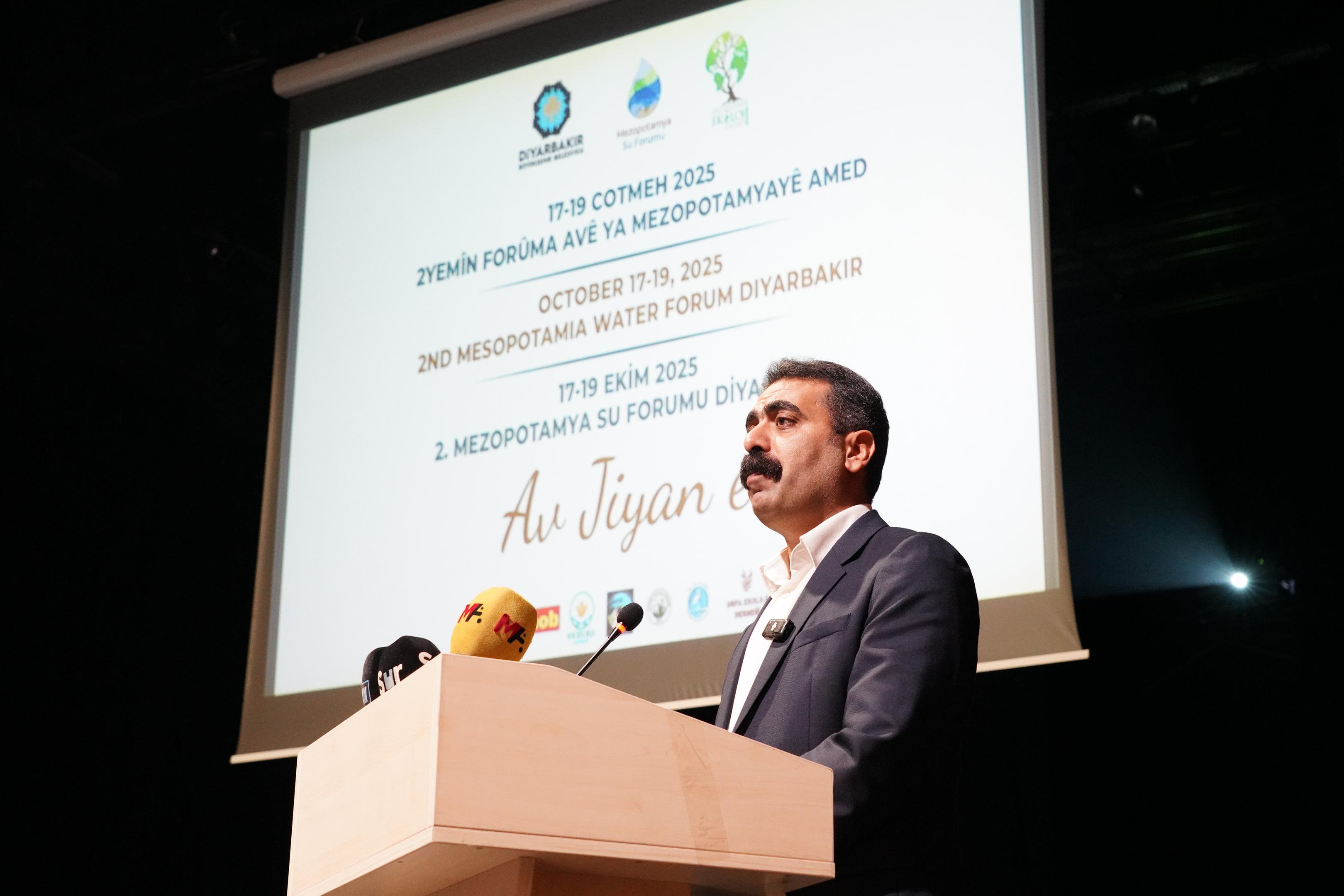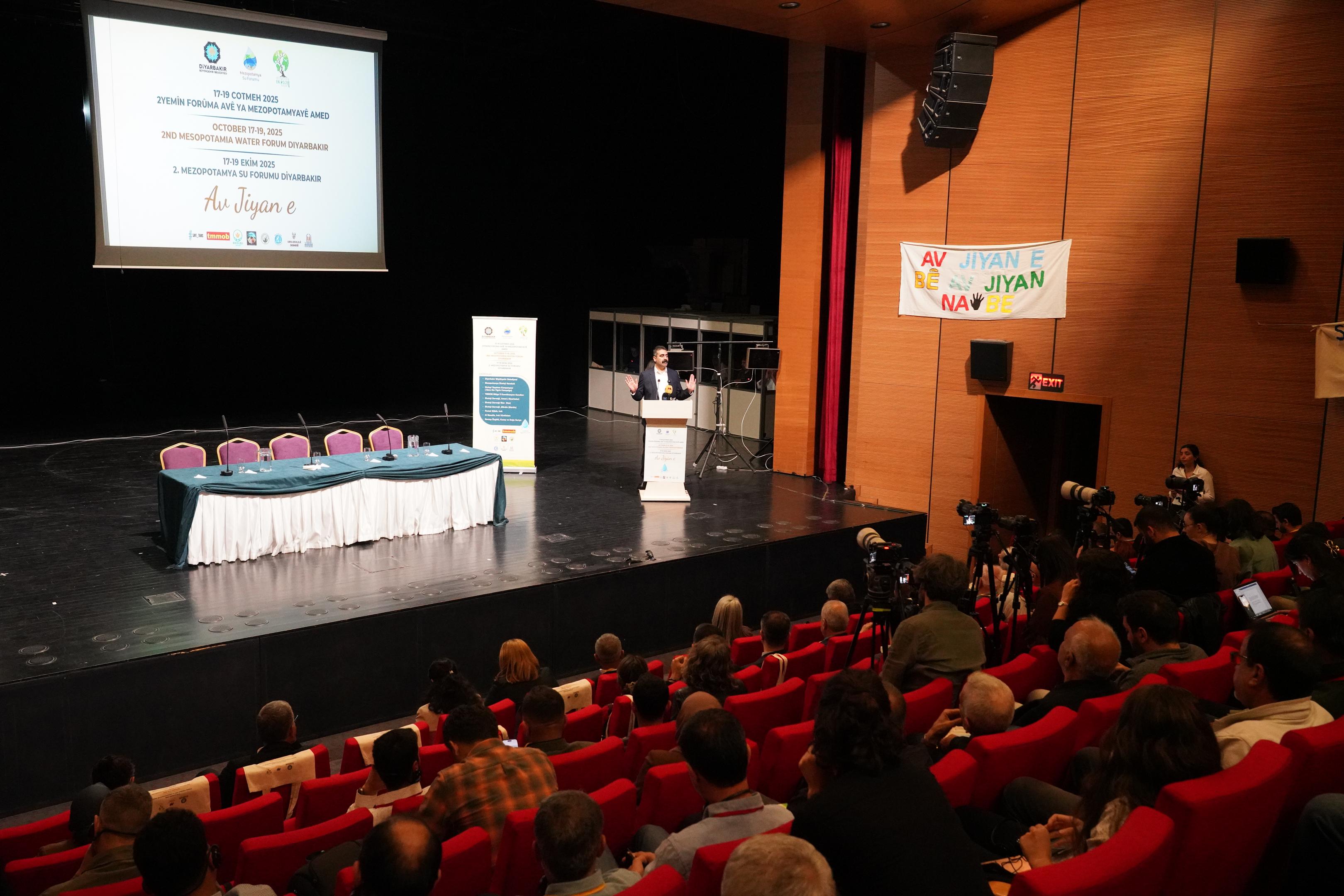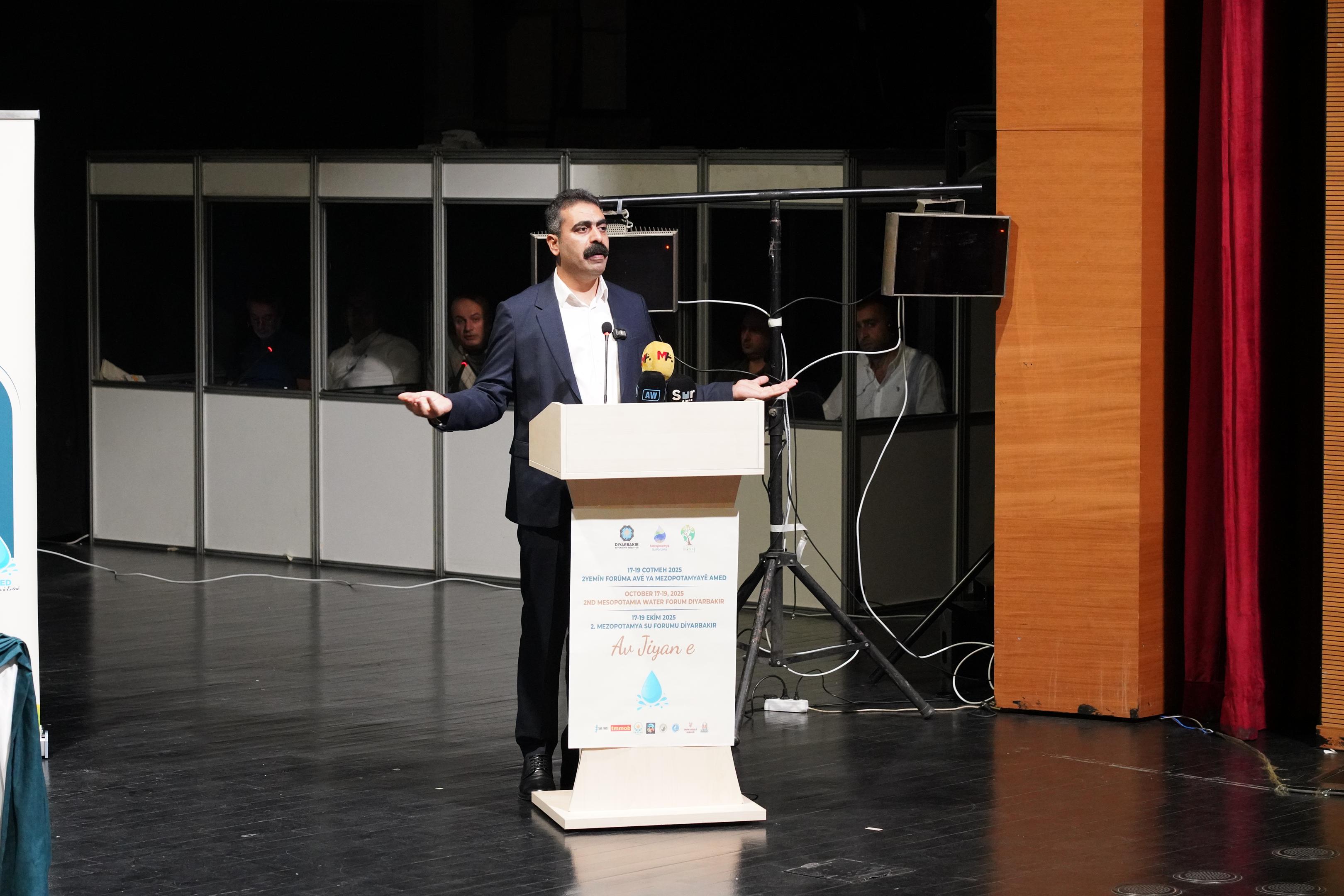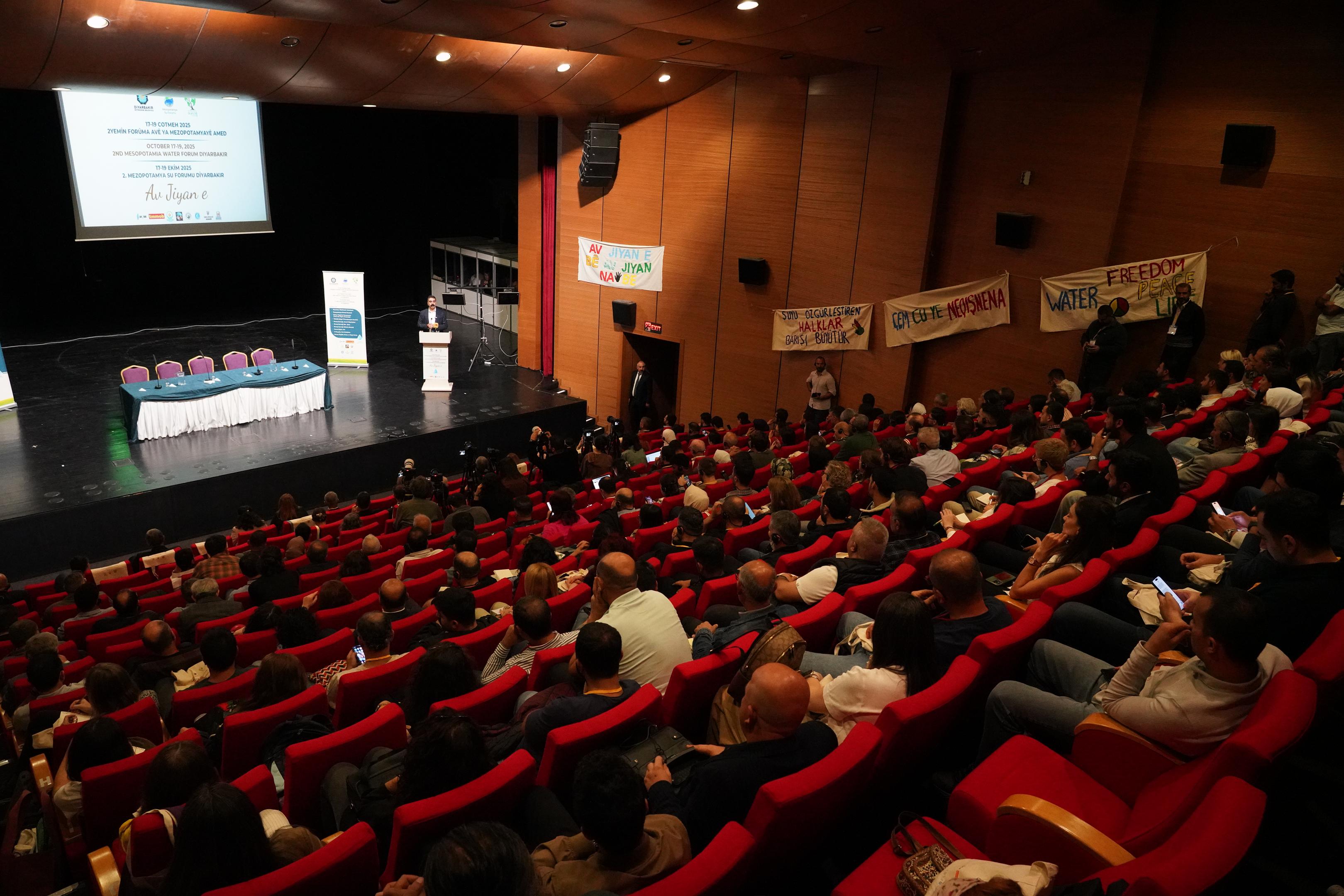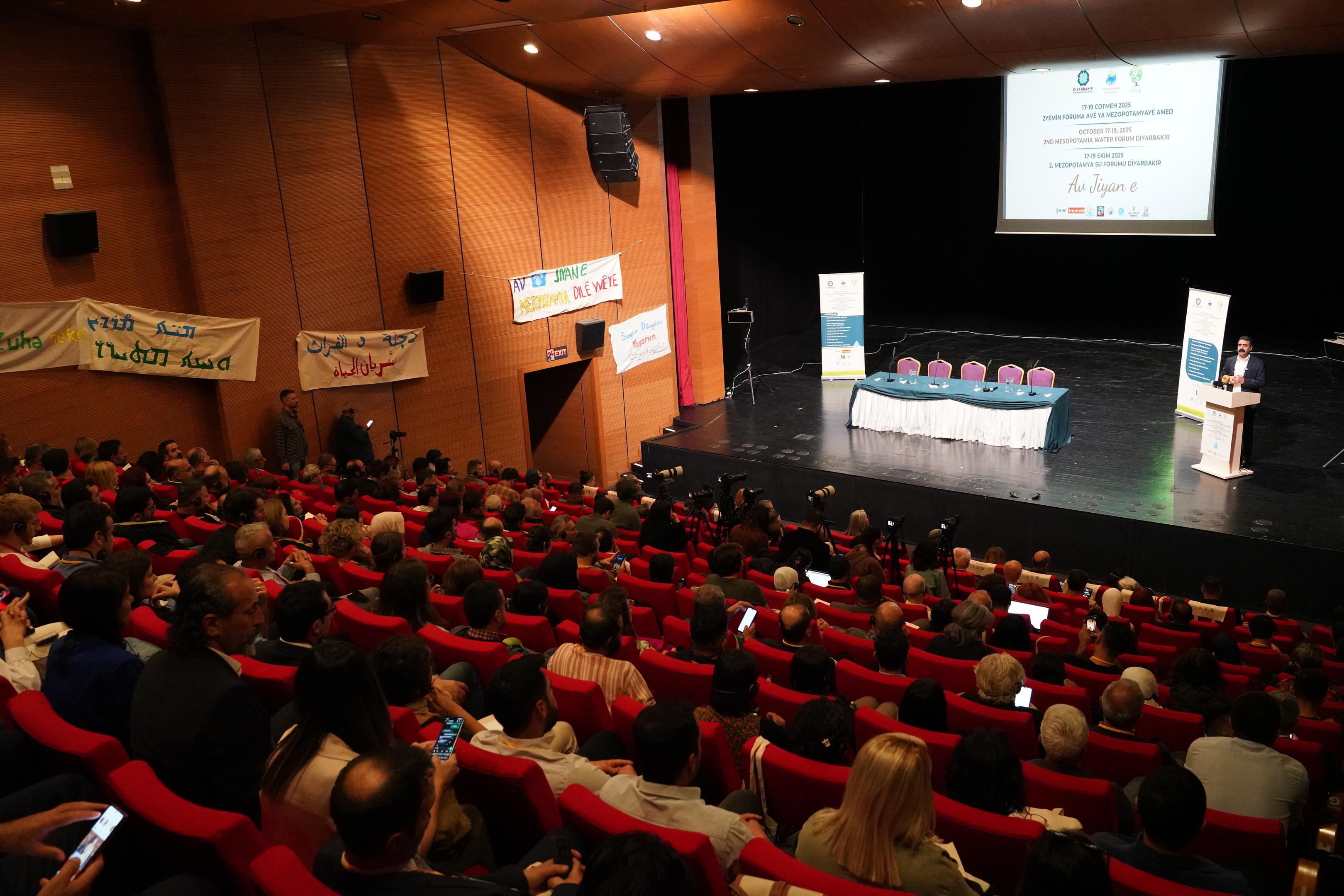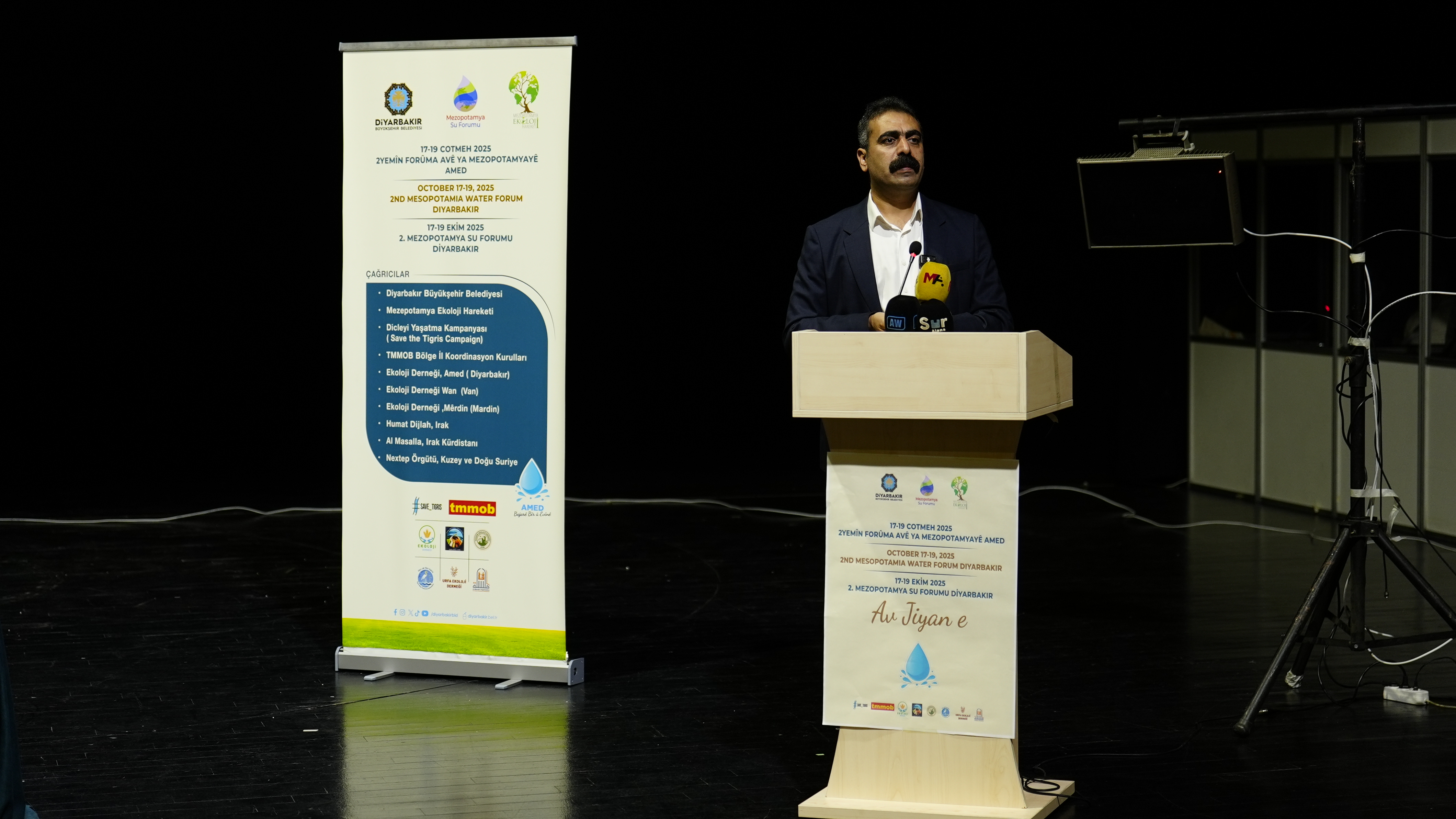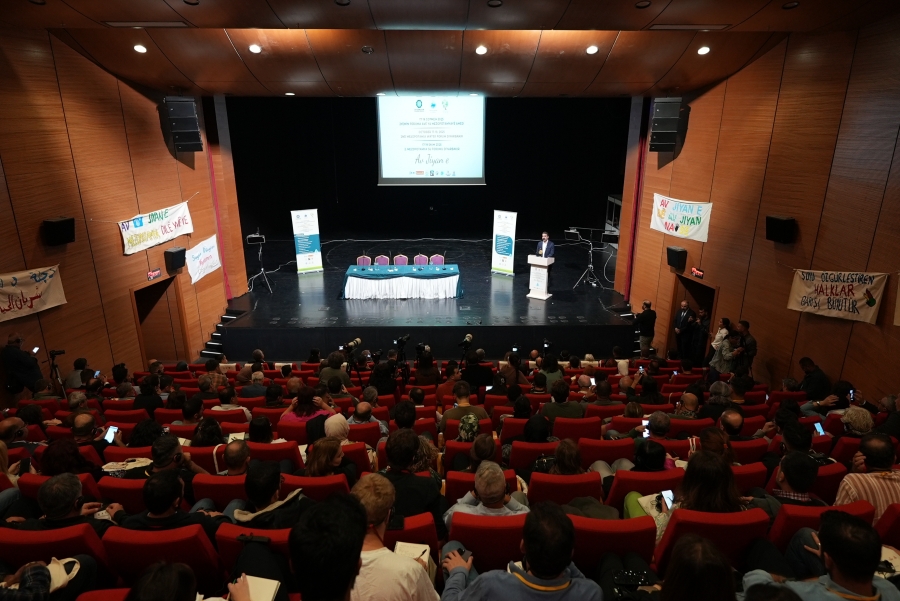
Hosted by Diyarbakır Metropolitan Municipality, the three-day 2nd Mesopotamia Water Forum has opened in Diyarbakır. Speaking at the opening, Co-Mayor Doğan Hatun said water is the freedom of all Mesopotamian peoples and stressed the need to defend it.
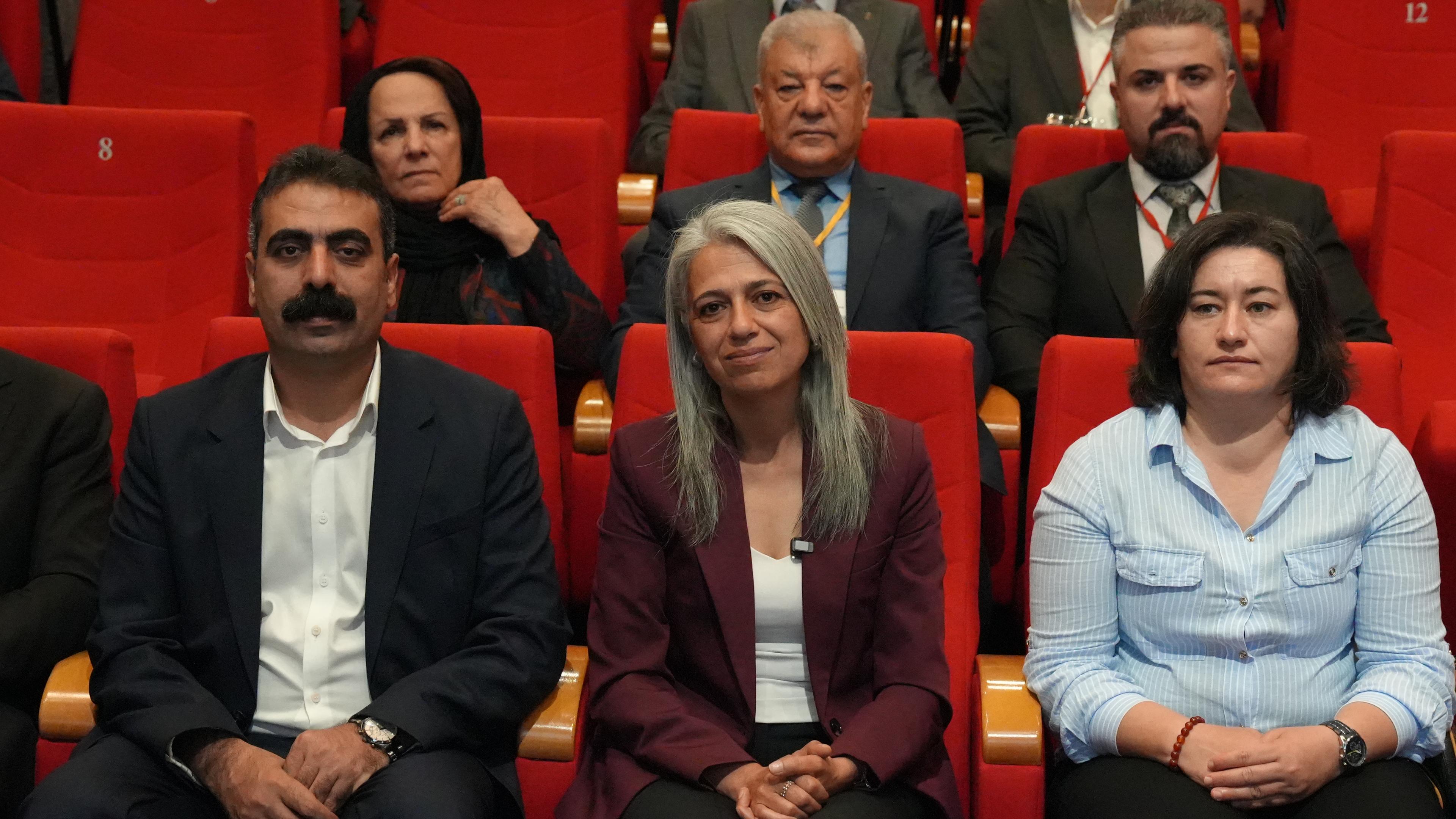
Organised in partnership with the Mesopotamia Water Forum and the Mesopotamia Ecology Movement, the gathering is taking place at the Çand Amed Culture and Congress Centre. Participants include Diyarbakır Metropolitan Municipality Co-Mayor Doğan Hatun; Democratic Regions Party (DBP) Co-Chair Çiğdem Kılıçgün Uçar; the Municipal Council’s Co-Spokespersons Demet Ceylan and Ayhan Karatekin; district co-mayors; and environmental activists, academics and civil society representatives from Iraq, Syria and Türkiye. Running until 19 October, the forum will discuss the ecological, political and social dimensions of water.
Co-Mayor Hatun: Water is life for all living beings
In his opening remarks, Co-Mayor Hatun underlined that water is the source of life and expressed his delight that the forum is being held in Diyarbakır. Recalling that the 1st Mesopotamia Water Forum affirmed that water is not a tool of power and should never be used as a weapon, he said:
“Our message was clear: water is not a tool of power and should never be used as a weapon. Water is life for nature and for all living beings. Let us protect our nature together, protect our water, protect life—only then can we protect humanity. Yet in the six years since the first forum, water is still being used as a weapon.
“These are Mesopotamian lands—the place where life for nature and living beings was first built together. People lived here 12,000 years ago and left their mark. Humanity first settled into nature in Mesopotamia; nature accepted it. They were nomadic, in search of water—indeed, in search of life. Wheat first met water and, for bread, soil here in Mesopotamia. Once again, water played the leading role.
“If we consider these 12,000 years as a civilisation, without water within nature we have no meaning. Water is more sacred than humanity. All of nature draws its vitality from water.”
“We must change our approach”
At the opening of the forum, Co-Mayor Doğan Hatun stated that various manipulations on the Euphrates and Tigris have turned the Middle East into a battlefield. He argued that, although it has not been formally named as such, what we are witnessing amounts to a Third World War, and continued:
“At its core there is neither copper, nor oil, nor land—there is, in fact, only water. Data from United Nations commissions indicate that 88% of the Middle East has reached desert-level conditions. Sadly, this is true. But who brought it to this point? Who interfered with the Euphrates and prevented it from flowing freely? Who interfered with the Tigris and prevented it from flowing freely? We did—humanity. And, in our name, the capitalist system.
“Those who would instrumentalise water must be answered. Water is not a tool of power and must never be used as a weapon. Along the banks of the Euphrates and Tigris, people once founded civilisations; we were but a speck within nature. Why, then, are we now trying to exert dominion over nature? That is where our problem lies. If we do not want the world’s lands to share Mesopotamia’s misfortune—desertification—we must change our approach. We must start with ourselves. We should not remain silent in the face of those who seek to use water to subjugate oppressed peoples; we must respond to them. For 12,000 years water has given us life. Neither nature nor life can exist without water.”
“Water is the freedom of peoples”
Emphasising that water underpins the freedom of oppressed peoples and of all the peoples of Mesopotamia, Co-Mayor Hatun added:
“We have seen and lived its example for 12,000 years. Life does not continue without water. Without water, we are not; without us, nature is not; and without nature, Mesopotamia is not. With our people we are hopeful; with our organisations we are hopeful; and we shall succeed in this peace process. When we do, let it be known that success for water is essential as well.”
Call to safeguard water
DBP Co-Chair Çiğdem Kılıçgün Uçar underlined the need to protect water resources against the depredations of capitalism, saying: “If we join hands and resist, we believe we can save nature and our water resources. We call on all democratic and patriotic circles to stand up for nature and water. In this regard, the forum is providing an invaluable service. We attach great importance to it. It is of both historical and political significance.”
Diyar Kurt of the Union of Chambers of Turkish Engineers and Architects (TMMOB), Ismael Dawood from the Save the Tigris Campaign, and Derya Akyol of the Mesopotamia Ecology Movement also shared assessments on the forum’s objectives.
Regional pathways for solidarity to be discussed
Following the opening addresses, the forum continued behind closed doors. Day one features presentations titled “The State of Waters Across All Regions of Mesopotamia”, “Iraq’s Water Policy”, and “Perspectives for Solutions to Water Policies in Syria”. Participants are examining threats facing the Tigris and Euphrates basins, the sharing of transboundary waters, and avenues for regional solidarity.
‘Rivers as a Unifying Force’
On day two, the programme will continue with workshops on “Rivers as a Unifying Force”, “Water Governance and Organising River Basins”, and “People’s Water Diplomacy”. On the third day, the forum will conclude with sessions presenting its reports, followed by a city tour themed around the Tigris River and the Hevsel Gardens.
The forum aims to frame water in the Mesopotamian basin as a right and a vehicle for peace, and to ensure that the region’s peoples have a say in water policy.