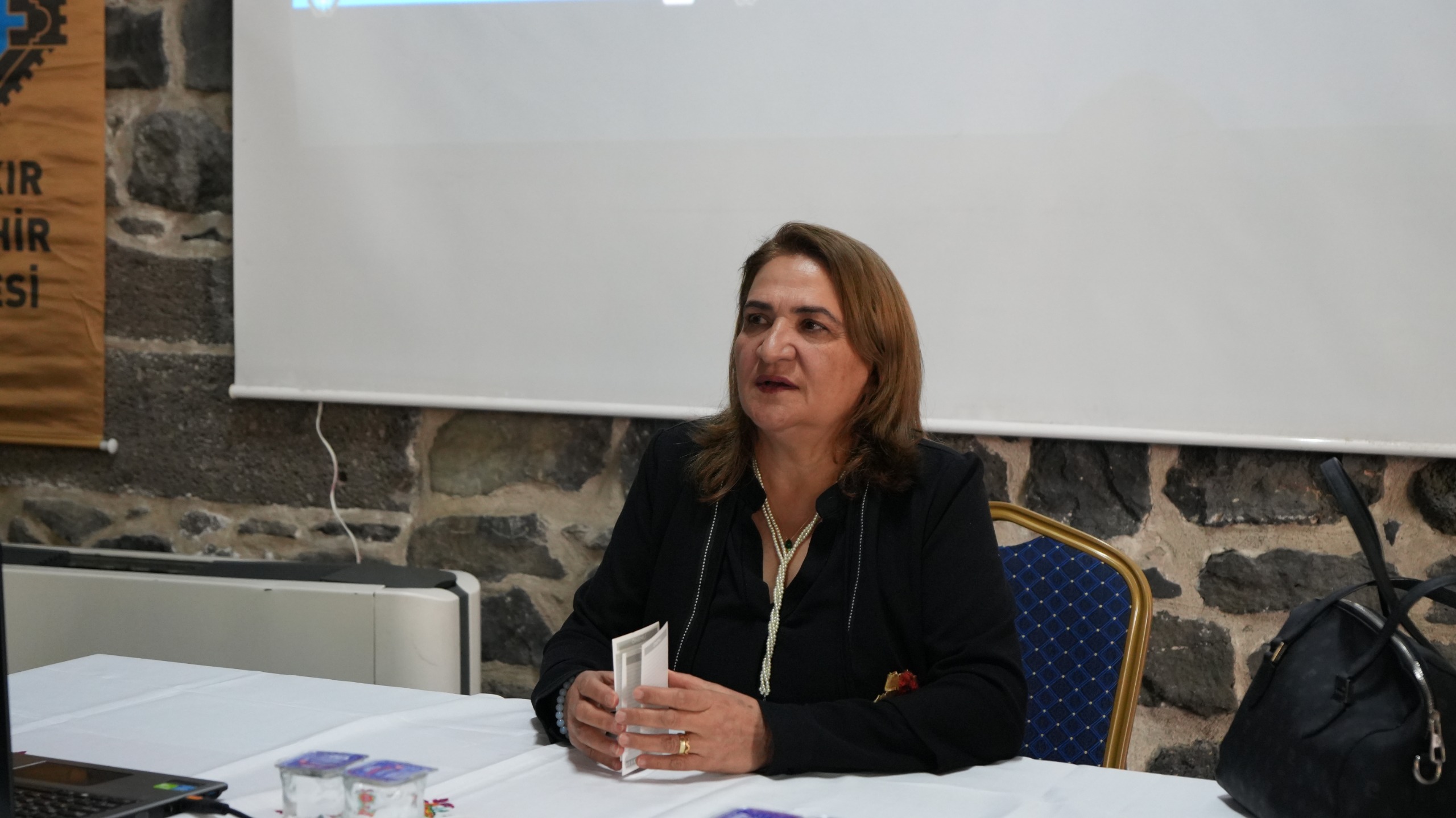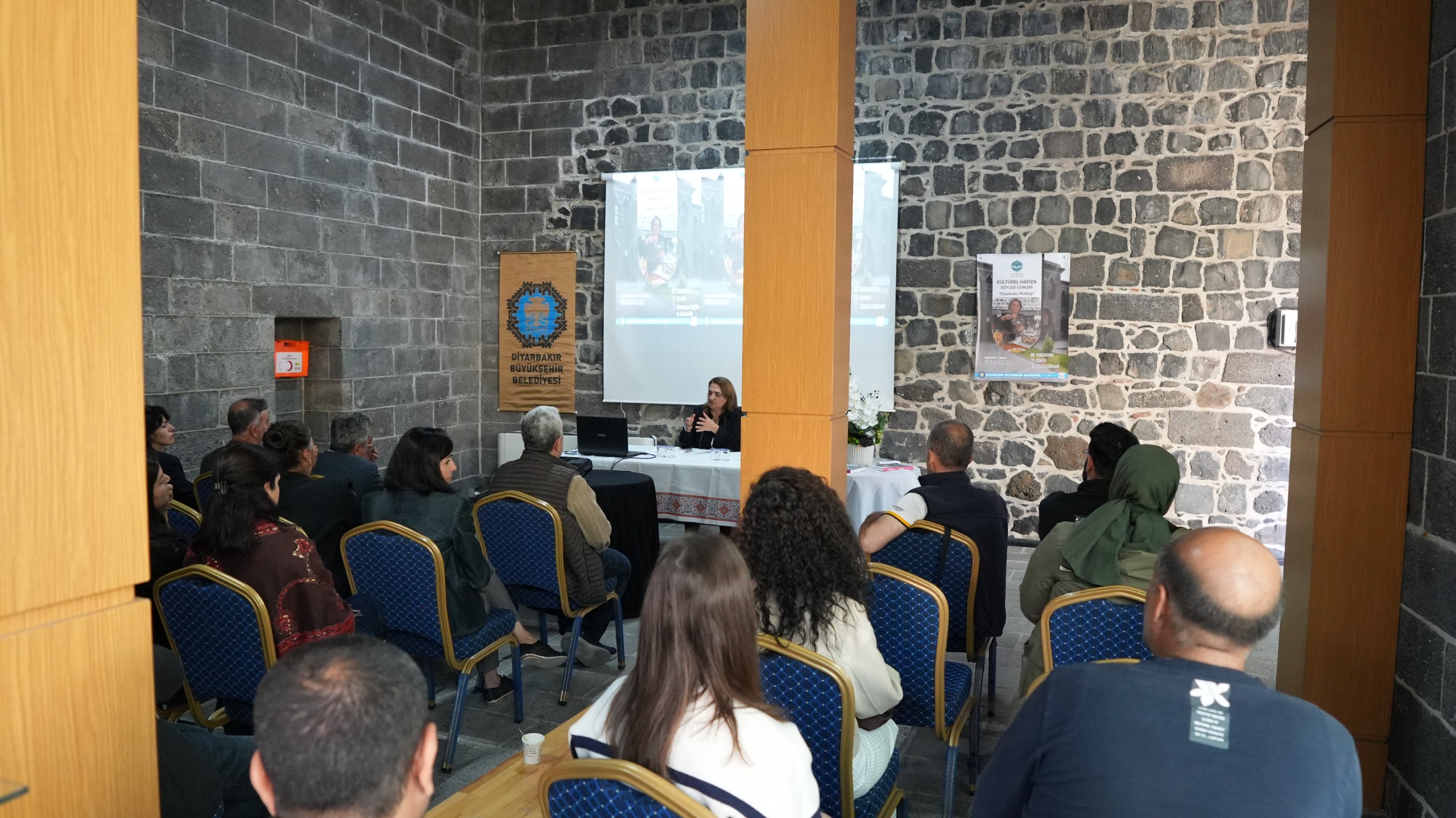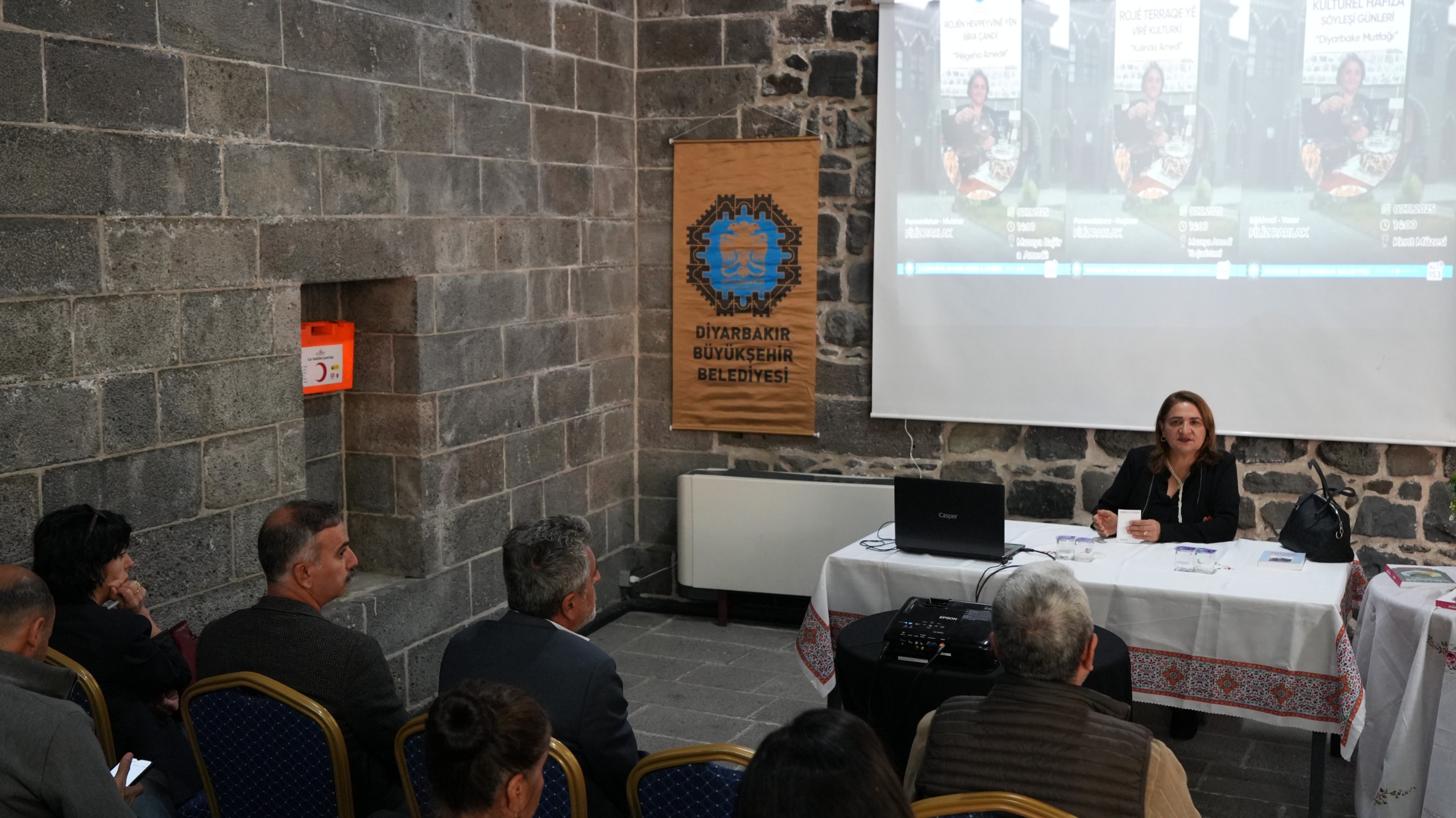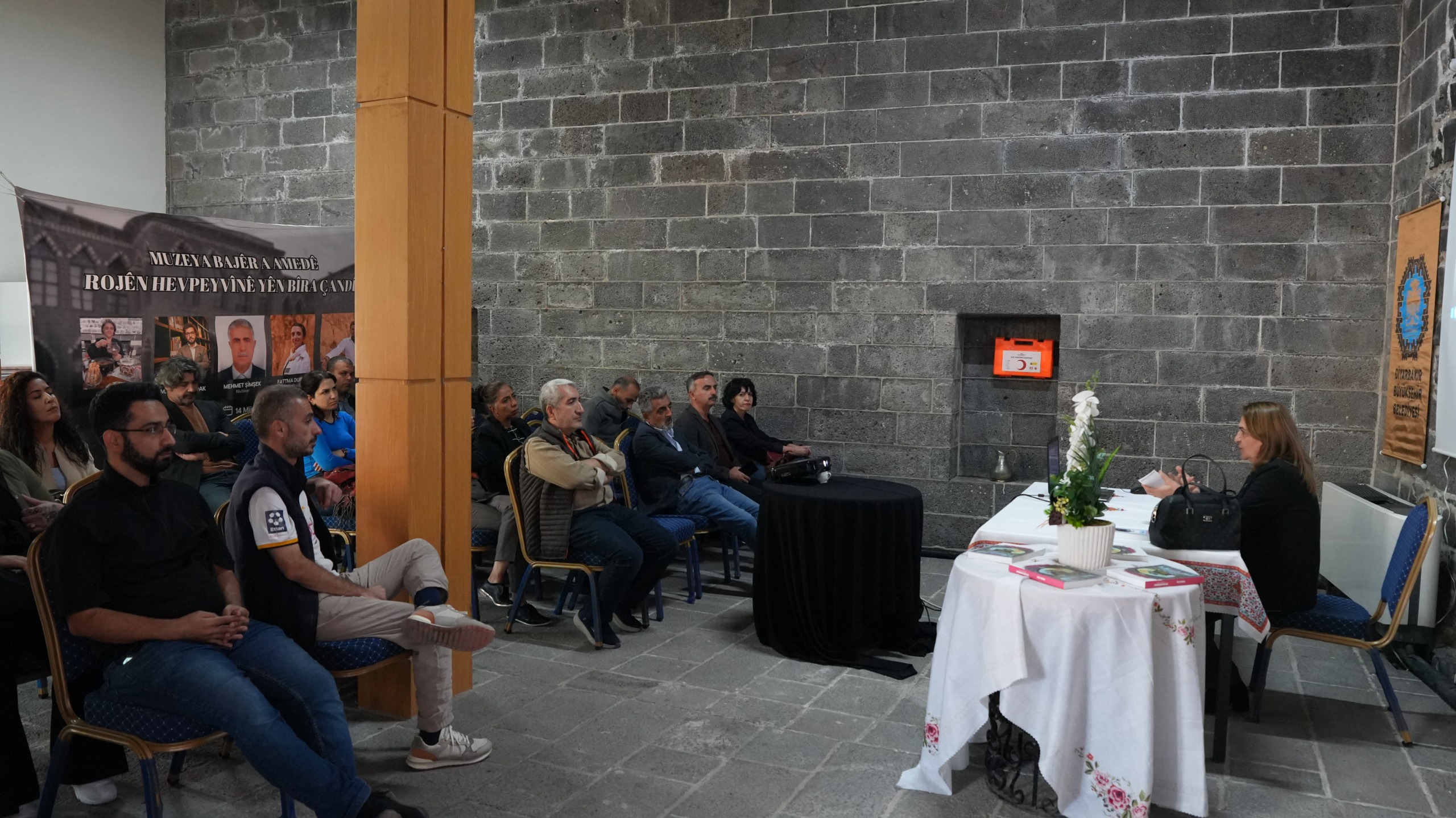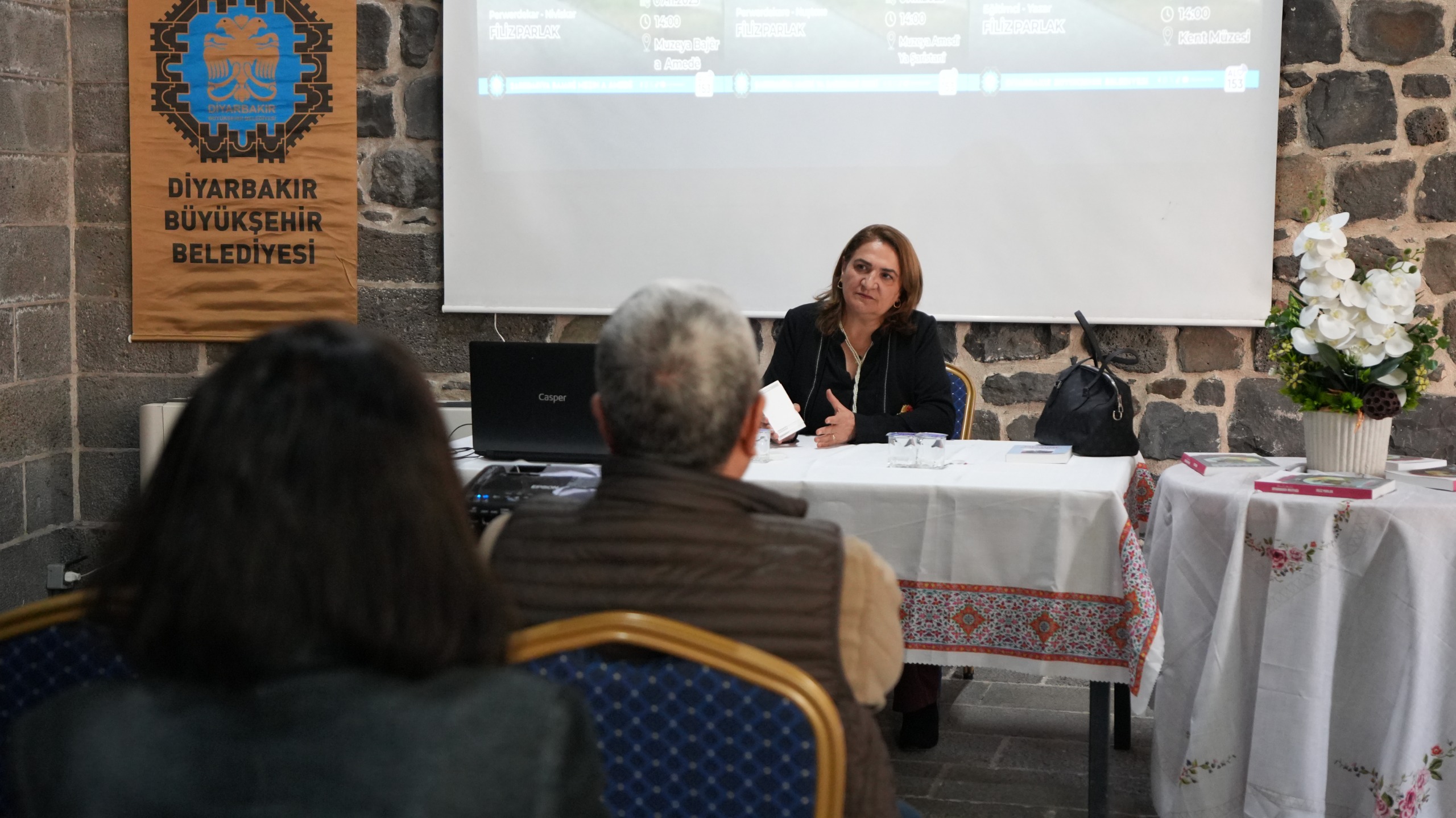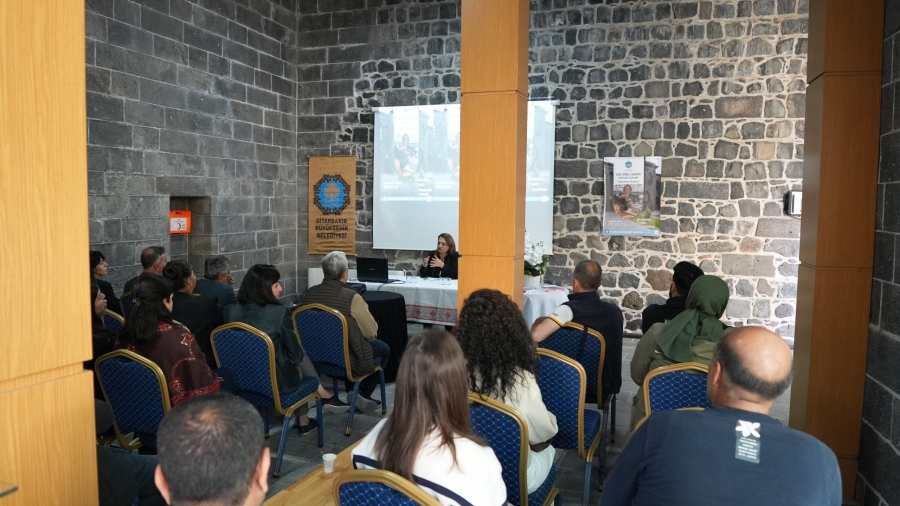
The first of the cultural memory talks to be held throughout November at Diyarbakır Metropolitan Municipality’s Cemilpaşa Mansion City Museum began with a presentation by educator and writer Filiz Parlak on “Diyarbakır Cuisine”.
The Temporary Exhibition Hall of the City Museum, which operates under the Department of Culture and Social Affairs, is hosting the cultural memory talks. In her talk entitled “Diyarbakır Cuisine”, educator and writer Filiz Parlak spoke about the traditional dishes of her grandmother and great-grandmother and introduced her book “Meftune – Diyarbakır Cuisine”, in which she presents the city’s culinary culture and richness in Armenian, Zazaki, Kurdish and the Diyarbakır dialect of Turkish.
Parlak noted that Diyarbakır, located between Karacadağ and the Hevsel Gardens, has a culinary tradition with a history stretching back many thousands of years. She explained that the city’s cuisine has been shaped by a triad of dry farming, livestock breeding and viticulture, and drew attention to the importance of Karacadağ rice, which has a rich nutritional content.
Peoples have influenced one another
Parlak stated that in Diyarbakır, where Armenian, Jewish, Arab and Turkmen communities have lived side by side, these peoples have influenced one another and share common dishes, and that such dishes feature in rituals such as weddings, condolence gatherings and religious festivals. She explained that in Diyarbakır cuisine there is a clear distinction between summer and winter dishes according to geography and climate: in summer, brothy and meat-based dishes are prepared, while in winter meals tend to be richer in fat and based more on grains.
Emphasising that sun-drying vegetables is very common, Parlak added that thanks to the strong summer sun, watermelons, melons and grapes in Diyarbakır become sweeter than in many other places.
Parlak also noted that fish consumption is widespread in Diyarbakır, recalling that fish from the Tigris River were heavily consumed before stocks declined. She added that, with its prevalence of pot dishes, fresh vegetables and meals accompanied by yoghurt-based drinks, Diyarbakır cuisine can in fact be regarded as a kind of “diet cuisine”. Parlak went on to describe methods of preserving milk, such as producing Diyarbakır braided cheese, melted cheese and butter.
The memory talks will continue on 8 November at 14:00 with a presentation by academic M. Alişan Budak on “Urban Musical Culture in Diyarbekir in the 19th and 20th Centuries”.