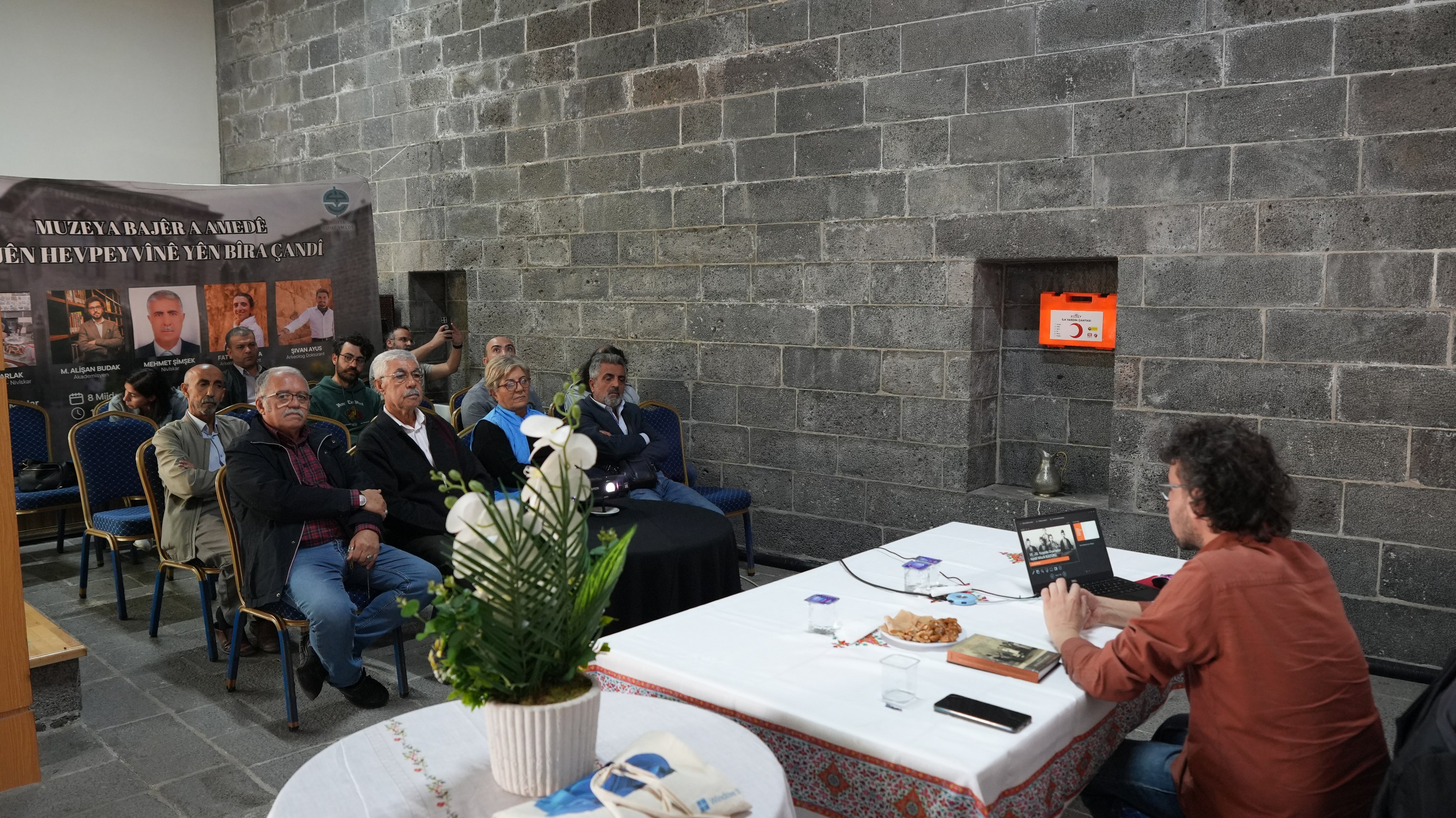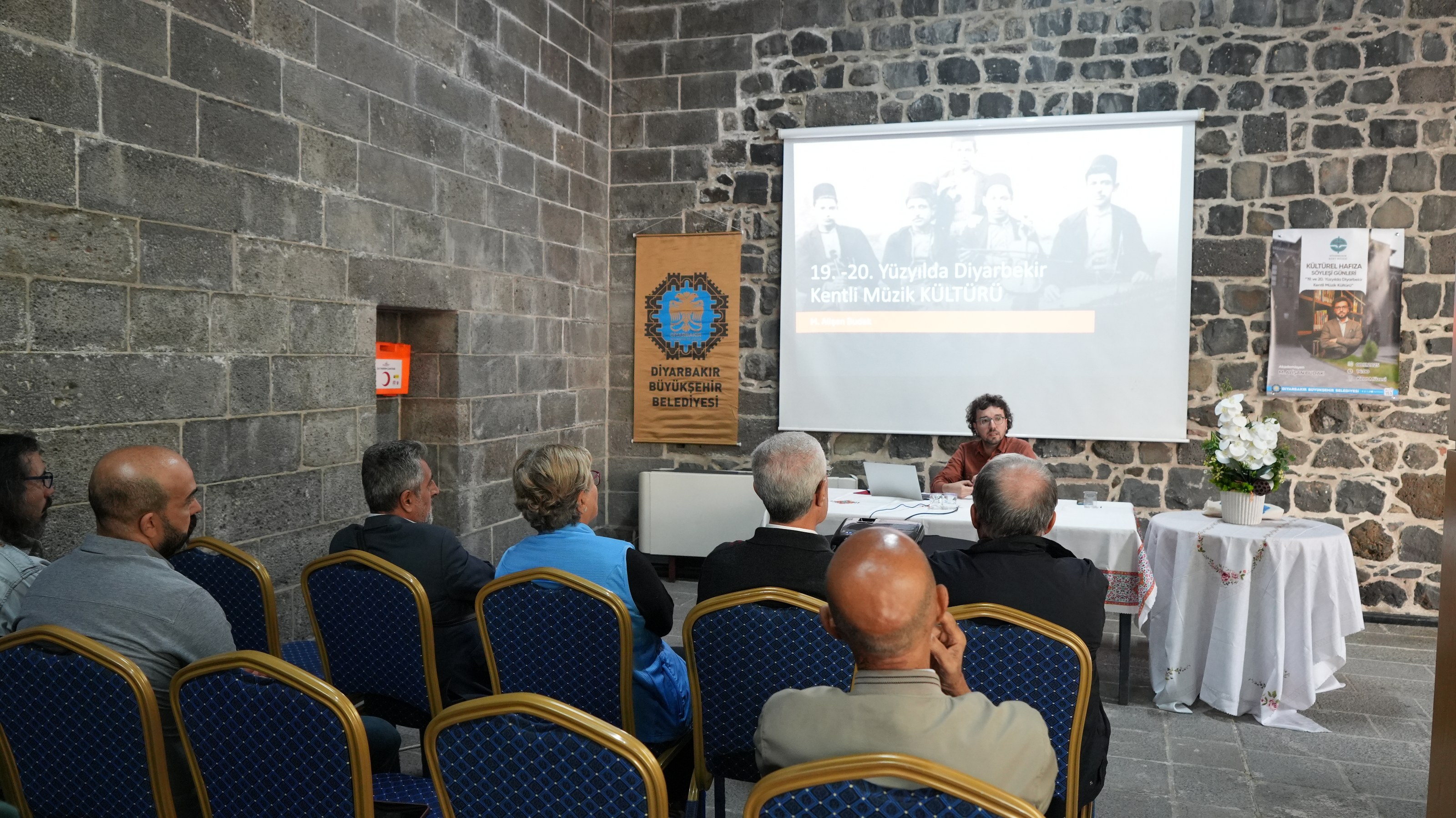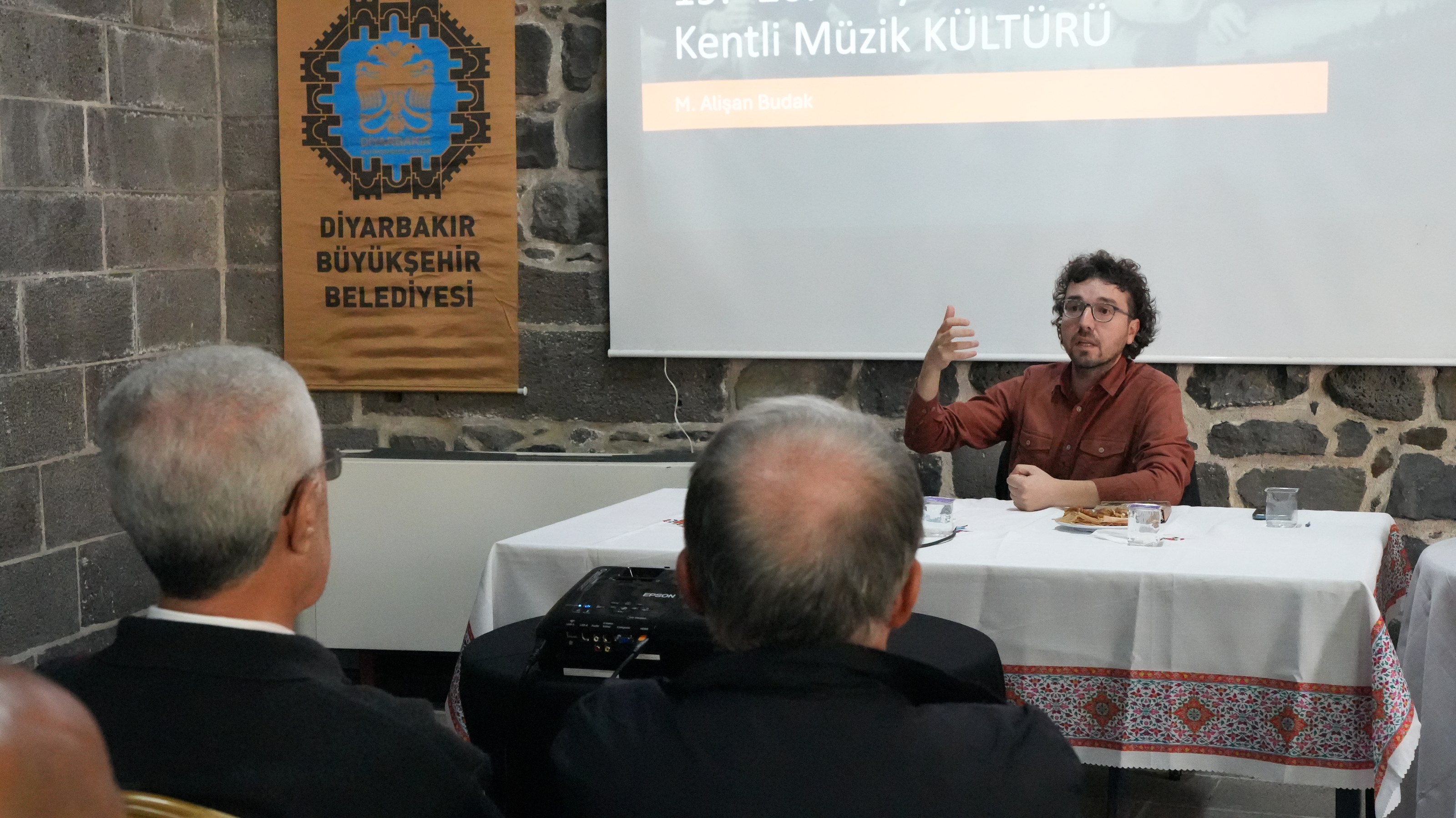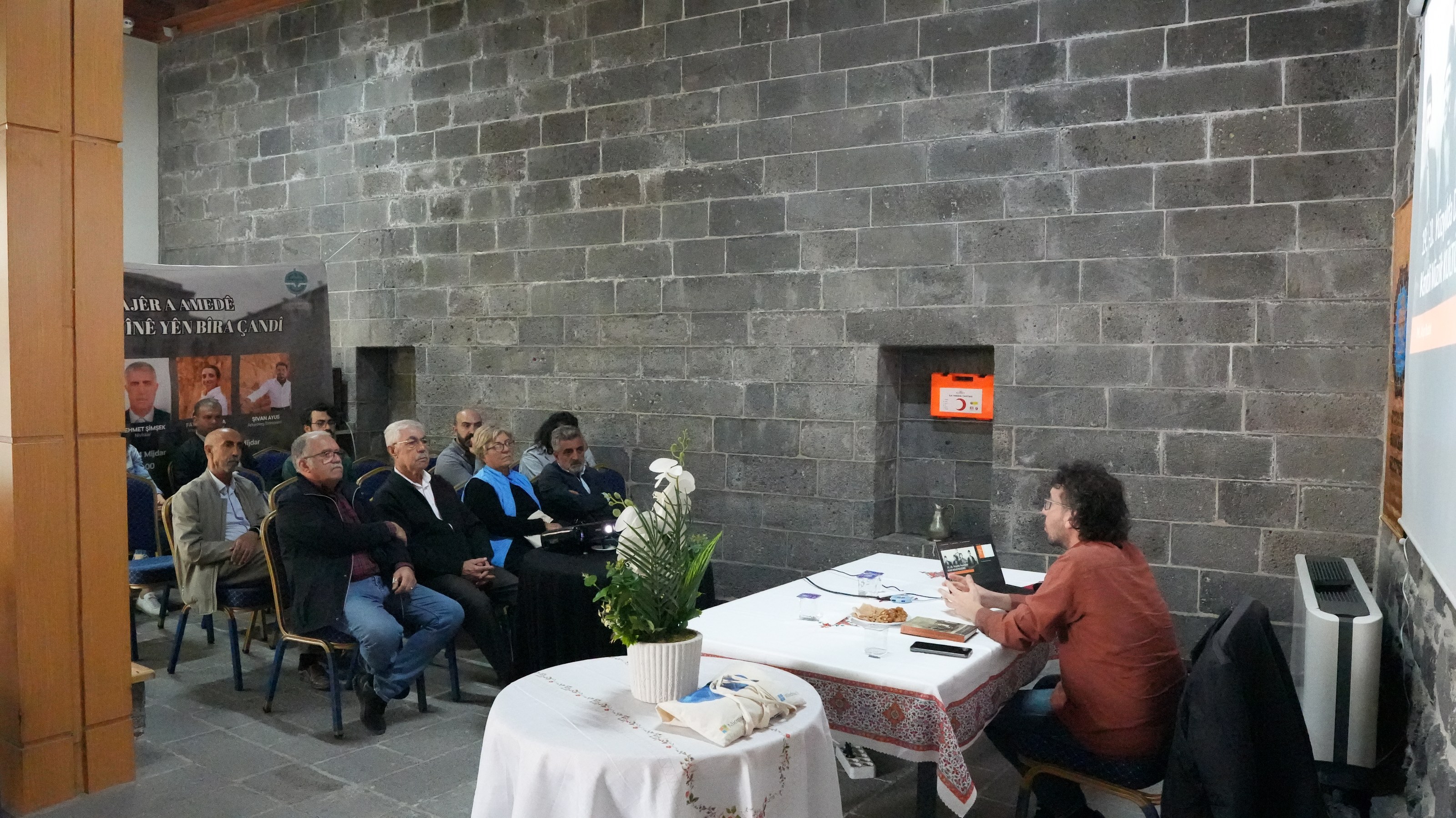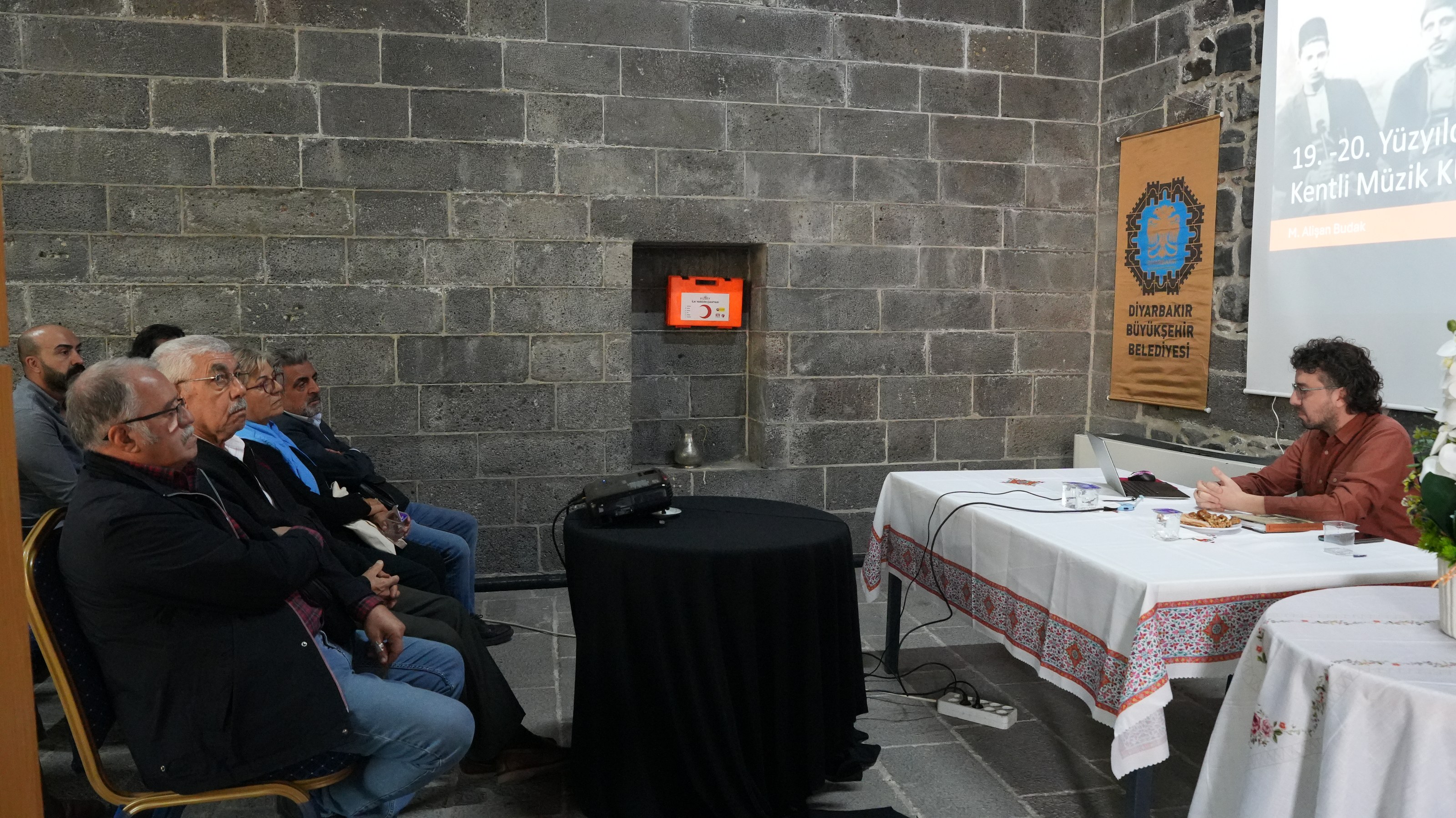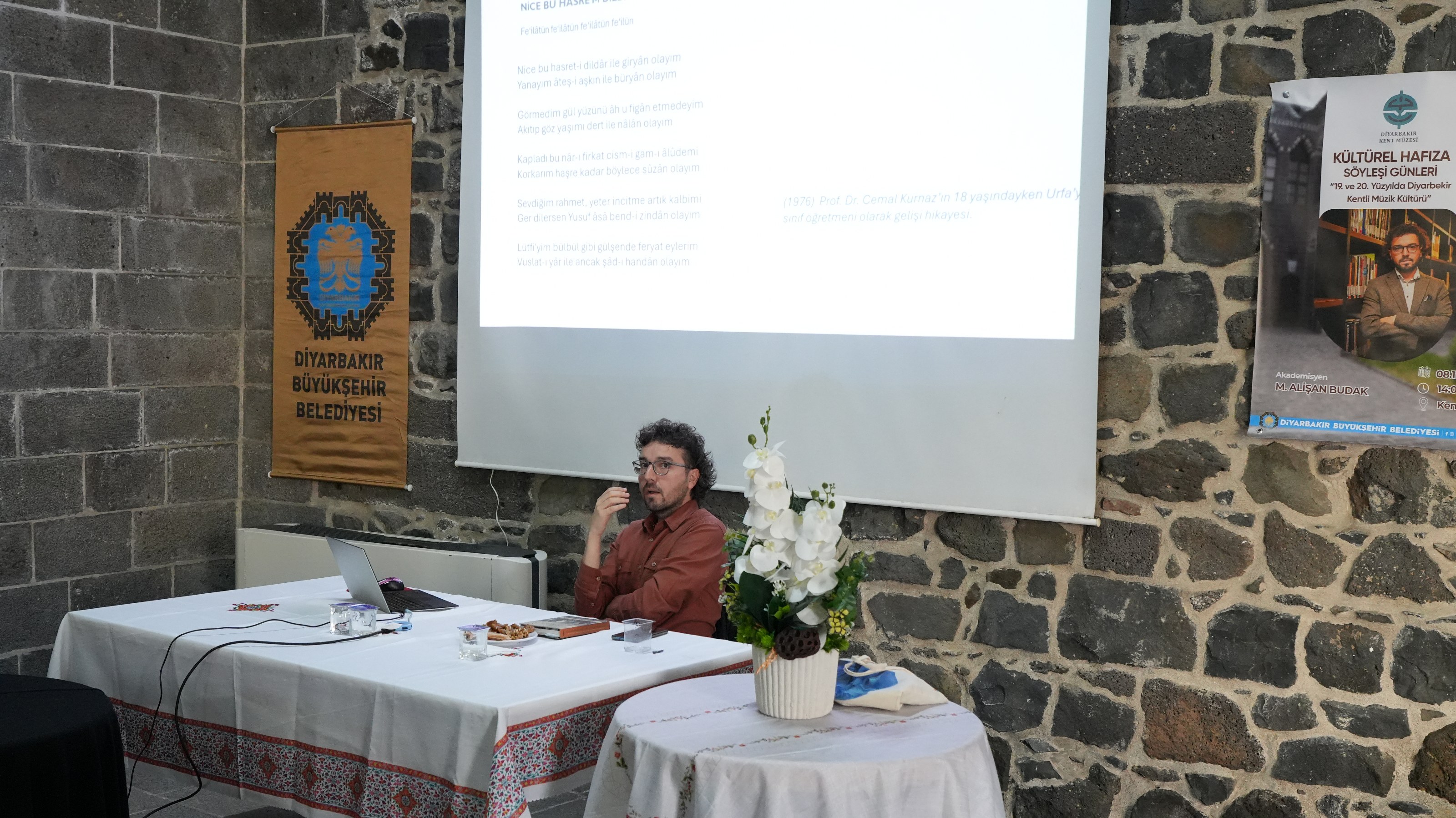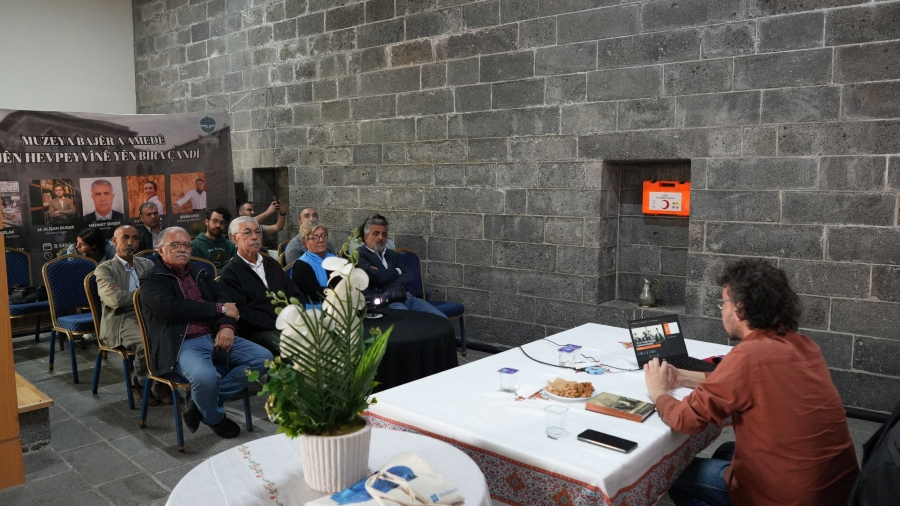
As part of the Cultural Memory Talks organised by Diyarbakır Metropolitan Municipality at Cemilpaşa Mansion City Museum, academic M. Alişan Budak delivered a talk on “Urban Musical Culture in Diyarbekir in the 19th and 20th Centuries”.
Within the framework of the Cultural Memory Talks, the Temporary Exhibition Hall of the City Museum, operating under the Department of Culture and Social Affairs, hosted a conversation with academic M. Alişan Budak on “Urban Musical Culture in Diyarbekir in the 19th and 20th Centuries”.
Budak presented sections from his MA thesis in Musicology and Music Theory, entitled “A historical and analytical perspective on urban modal music traditions in Diyarbakır, Elazığ and Urfa”, and gave a presentation on “Urban Musical Culture in Diyarbekir in the 19th and 20th Centuries”. Playing recordings from the archives of Ankara State Conservatory, he also provided information about artists from Diyarbakır.
Budak noted that the cities of Diyarbekir, Harput and Urfa, as they were historically known, have been important centres for modal (makam) music in Anatolia and Upper Mesopotamia. He pointed out that the surviving examples of these urban musical traditions display striking similarities and differences in many musical parameters. He also underlined that there is a distinct local musical terminology associated with these urban traditions and shared with participants his collected data on the historical background of the region’s music and its local musical terminology.
Investigating the definitions of the commonly used Beşiri, İbrahimi, Kürdi, Muhalif and Nevruz modes in historical theoretical sources, Budak said: “The examples of these modes from Diyarbekir were analysed using the melodic core method. Together with examples from Harput and Urfa, analytical information was obtained about how these modes are used in neighbouring geographies with which the region has been in interaction, such as Azerbaijan, Iran and Iraq.”
Budak added that a multi-layered modal structure specific to the region, and the musical forms and genres built upon this structure, have been found to share similar characteristics with modal music practices in neighbouring regions.
A dynamic city
Budak explained that, according to yearbooks from the late 19th century, Diyarbakır, with an urban population of around 35–40 thousand, was a city that experienced out-migration during the events of 1915, that it was affected by the Sheikh Said Rebellion after the founding of the Republic, by rural-to-urban migration in the 1960s, and by displacement caused by village burnings in the 1980s.
“Because it is such a dynamic city, I can only discuss musical examples by focusing on particular periods,” he said. “It is a city that constantly renews itself. In today’s Diyarbakır music, there are entirely different modes and genres. There are venues where music is performed and music schools as well.”
The talk concluded with a question-and-answer session.