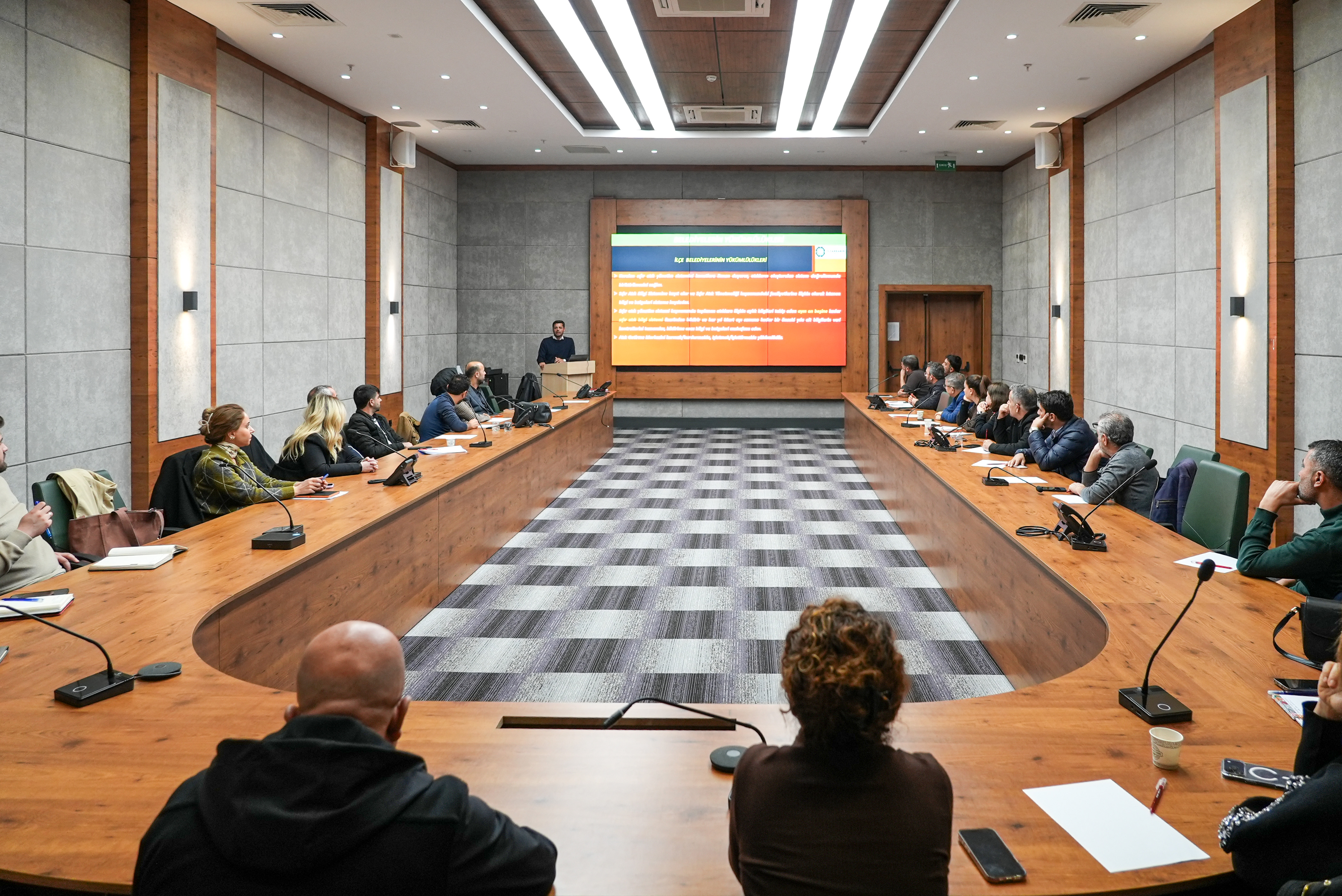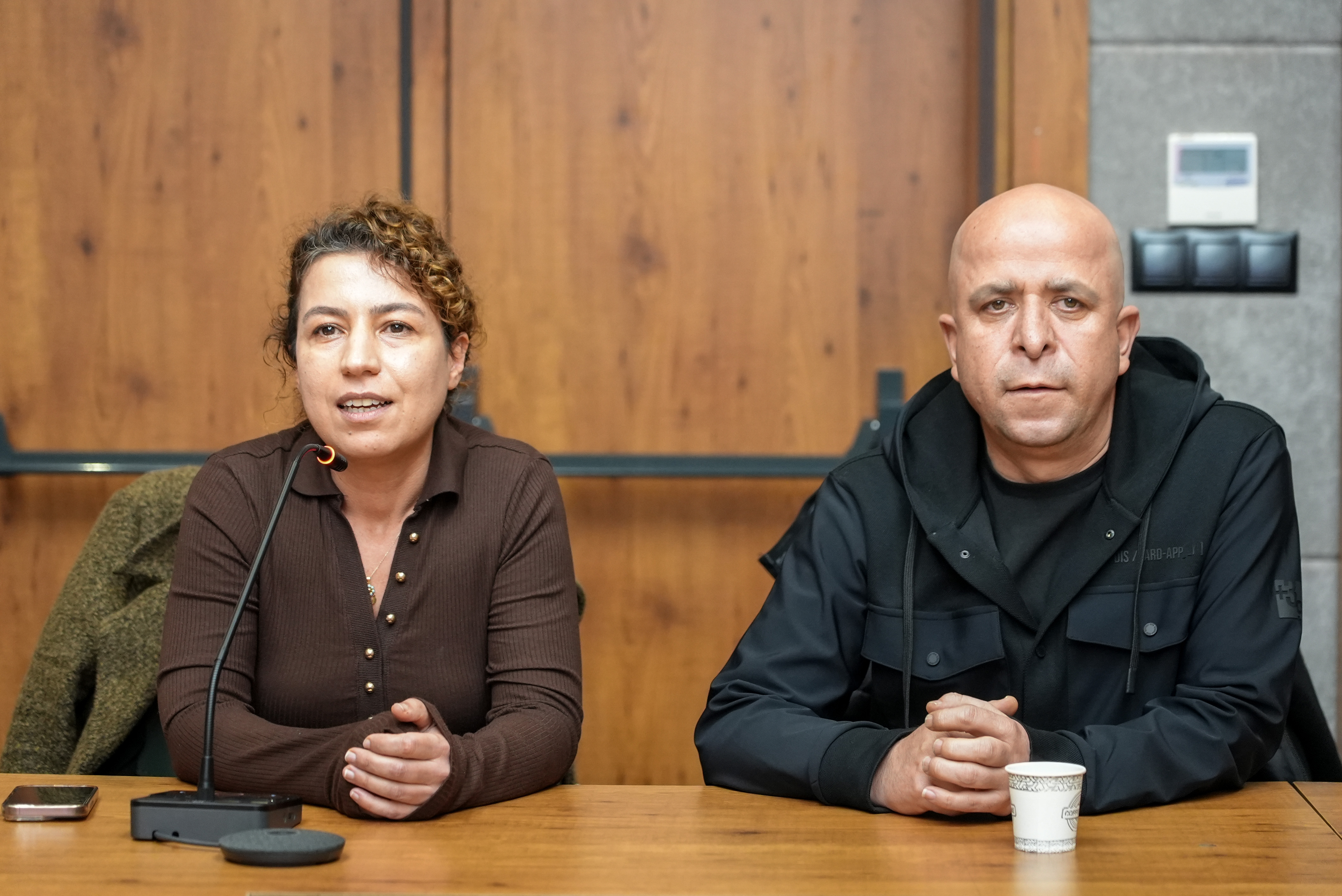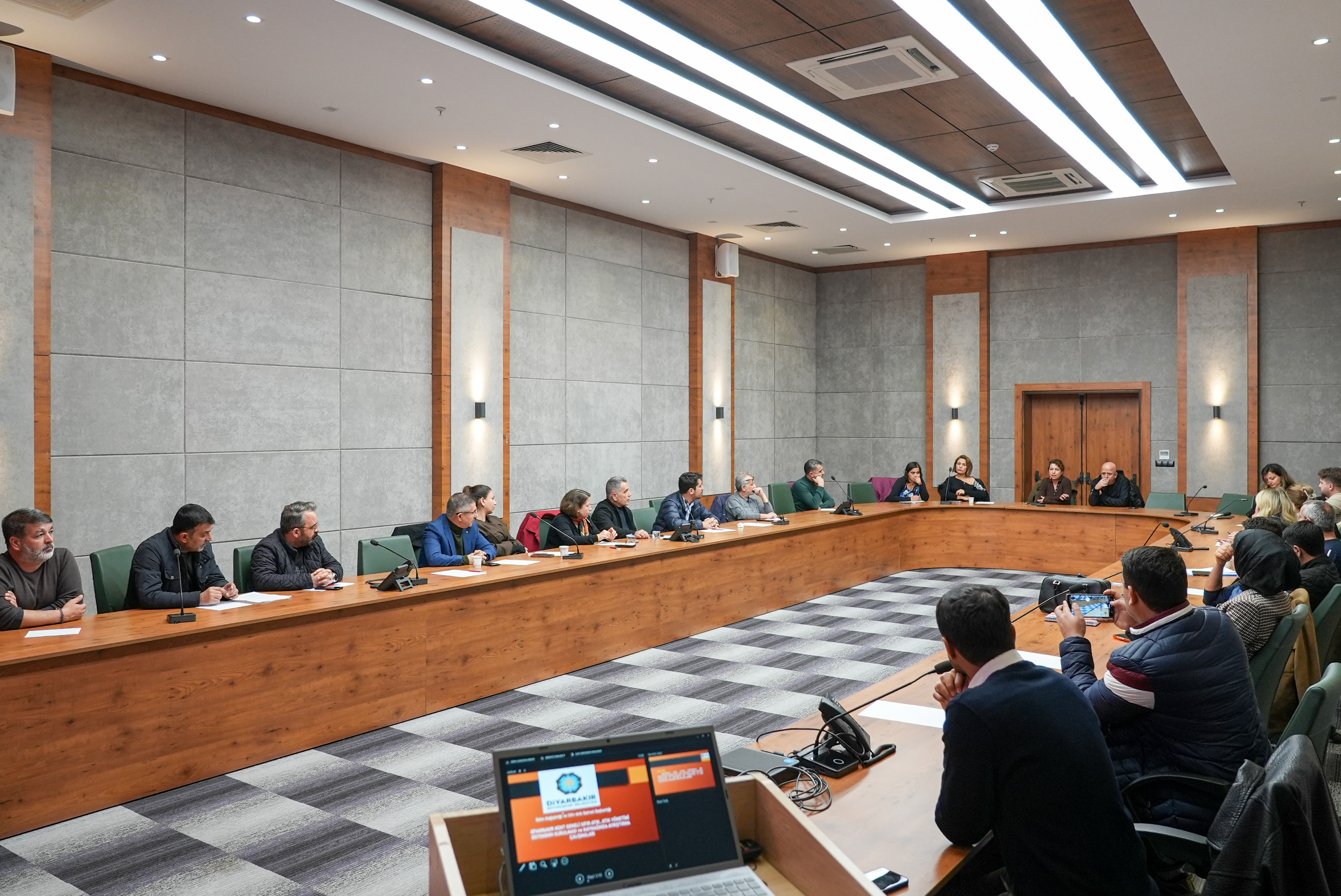
Diyarbakır Metropolitan Municipality held a coordination meeting with the participation of 17 district municipalities to establish a city-wide Zero Waste Management System, expand source separation practices, and strengthen waste management infrastructure across the city.
The Department of Climate Change and Zero Waste continues its work to scale up the zero waste management system across Diyarbakır and, in line with circular economy principles, to prevent waste, reduce it at source, and enhance recovery and recycling.
Within this framework, the Department of Climate Change and Zero Waste—supported by the Department of Environmental Protection and Control—convened a coordination meeting with the 17 district municipalities. The meeting addressed the obligations placed on local administrations under the circular issued by the Ministry of Environment, Urbanisation and Climate Change to public institutions and municipalities, as well as the Presidential Circular No. 2024/4 on Zero Waste.
Pilot implementation in Kayapınar to be expanded city-wide
Under the coordination of the Metropolitan Municipality, zero waste awareness-raising and source separation practices that were previously launched as a pilot in Kayapınar district will, in line with the decision taken, be rolled out across all districts.
At the meeting, it was agreed that all parties would act jointly—under the leadership of district municipalities—to establish the zero waste management system, develop the infrastructure for source separation, strengthen public awareness for a clean environment, and ensure effective coordination in waste management.
‘Zero Waste aims to ensure the efficient use of resources’
In the presentation delivered during the meeting, it was stated that “zero waste” is a form of waste management that seeks to use resources more efficiently, prevent or reduce waste generation, and—where waste is generated—ensure it is separately collected at source so that it can be recovered and recycled.
Within the waste hierarchy, it was underlined that the priority is to prevent waste from arising, reduce it, promote re-use, and increase recycling.
Criteria for municipalities outlined
The presentation also set out the criteria that local authorities are required to meet when establishing a zero waste management system. Accordingly, it was noted that paper, glass, metal and plastic waste generated in households must be collected separately from other waste through at least a dual-stream system; that a sufficient number of collection containers must be placed in streets, avenues and publicly accessible areas for recyclable waste and other waste; that glass banks should be positioned according to need; that systems must be established for the separate collection of waste medicines, textile waste and electronic waste; and that Waste Drop-off Centres (Atık Getirme Merkezleri) must be established in line with the Ministry’s principles and standards.
Obligations reaffirmed
During the meeting, it was stated that Diyarbakır Metropolitan Municipality is responsible for aligning its Integrated Waste Management Plan with the Provincial Zero Waste Management System Plan, improving district municipalities’ practices, and ensuring coordination.
It was further recorded that district municipalities are required to encourage residents to separate their waste at source, establish the necessary infrastructure, register with the Zero Waste Information System, enter monthly data into the system, and set up and operate Waste Drop-off Centres.
Emphasis on cooperation for waste vegetable oils
The presentation also noted that waste vegetable oils must be collected through licensed companies, that a separate household storage system should be established, and that regular notifications must be submitted to the relevant Provincial Directorate.
In this context, it was stated that, in cooperation with district municipalities, the aim is to ensure the regular collection of waste vegetable oils and to increase their recovery and recycling.
District municipalities shared the current situation
During the meeting, representatives of the district municipalities also shared the work they have carried out to date in the field of zero waste, the gaps and shortcomings they have encountered, and the projects they are planning.