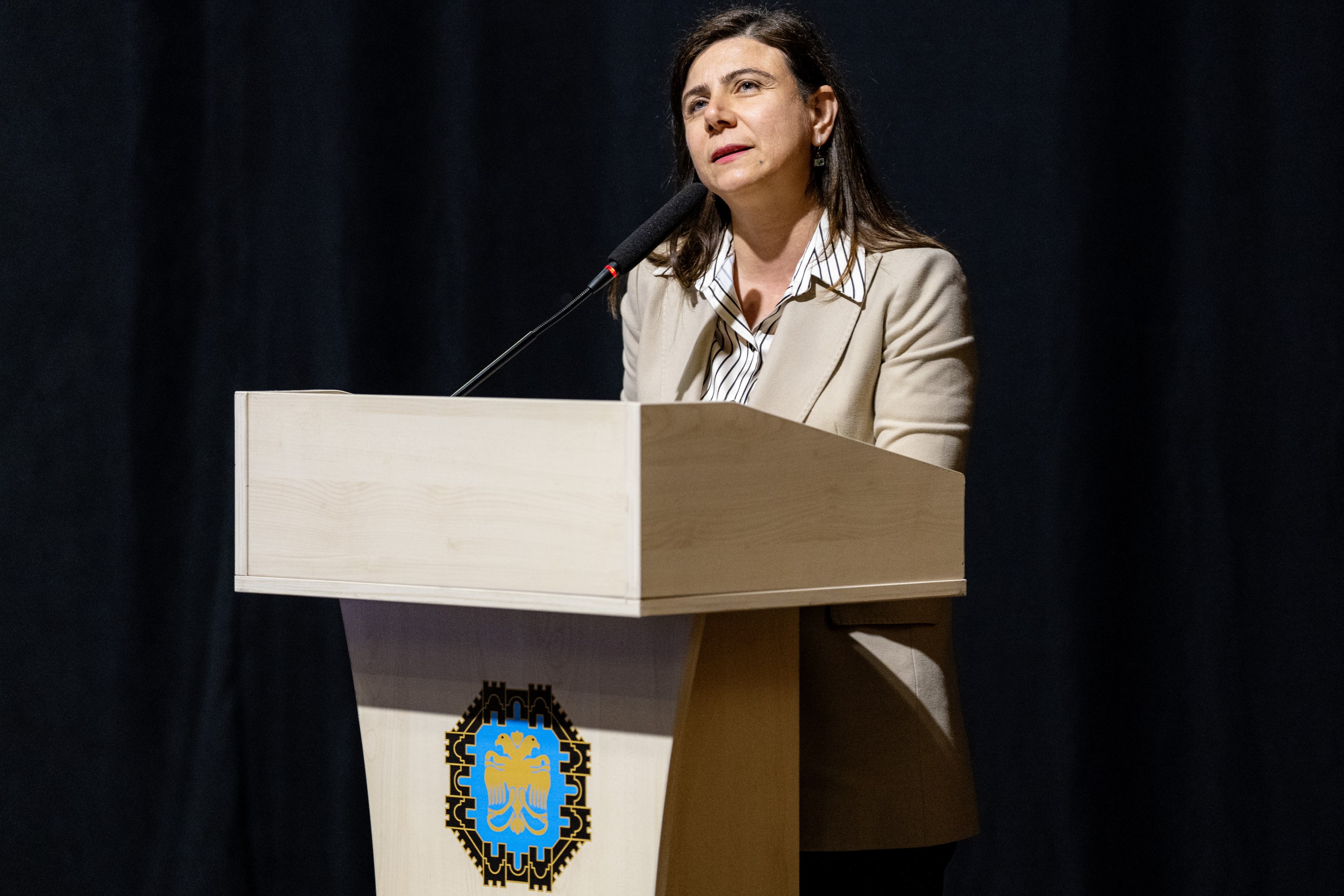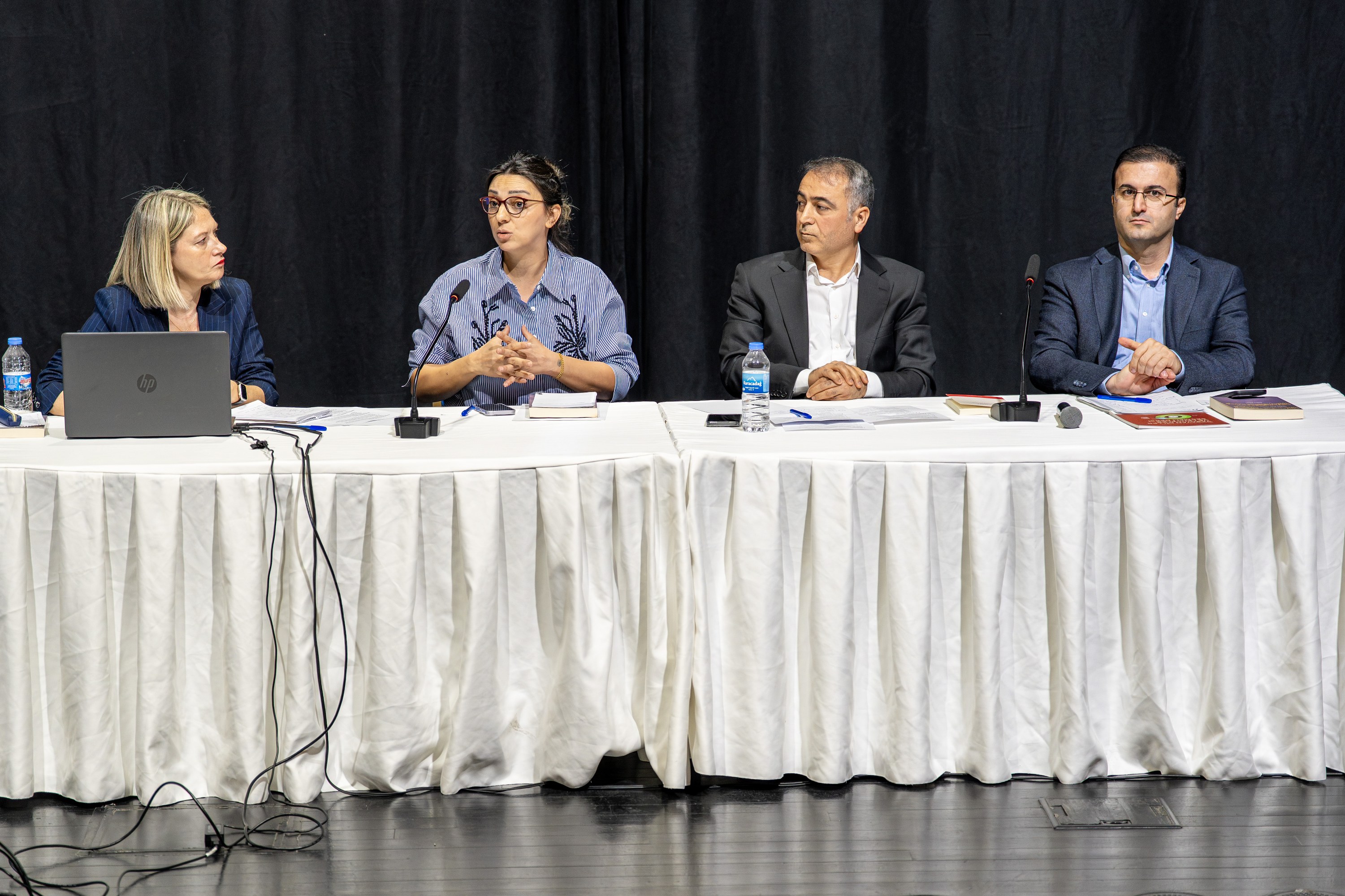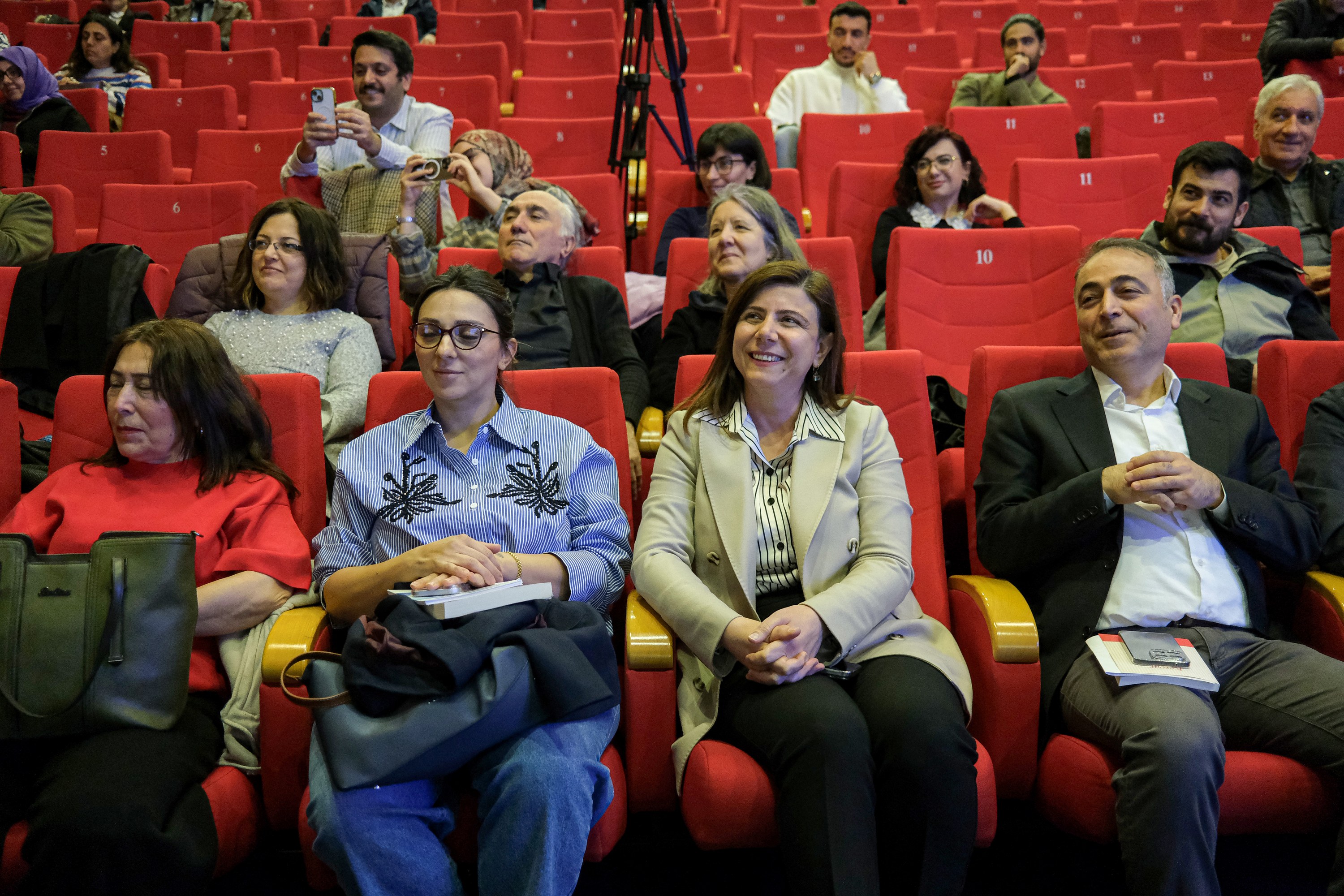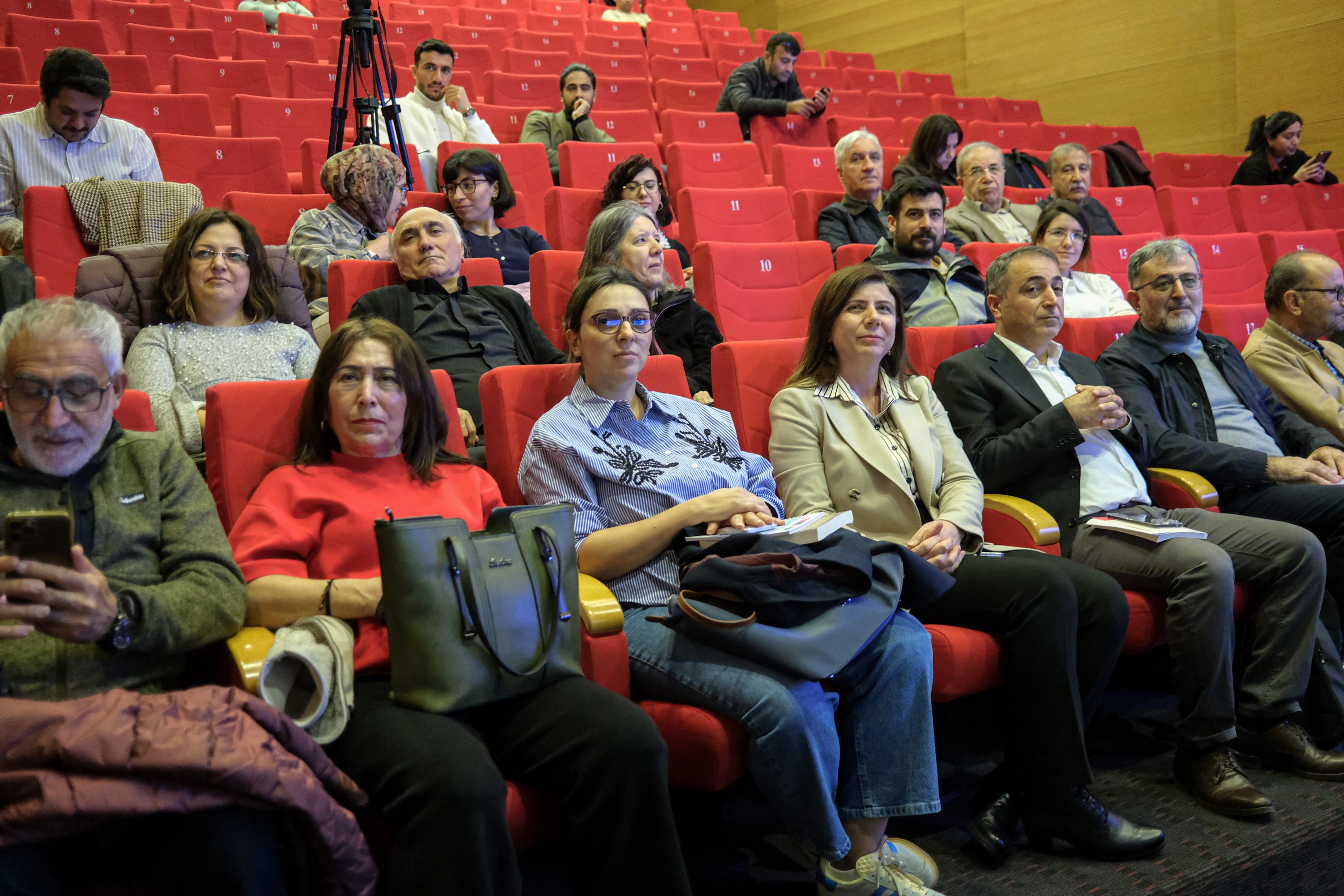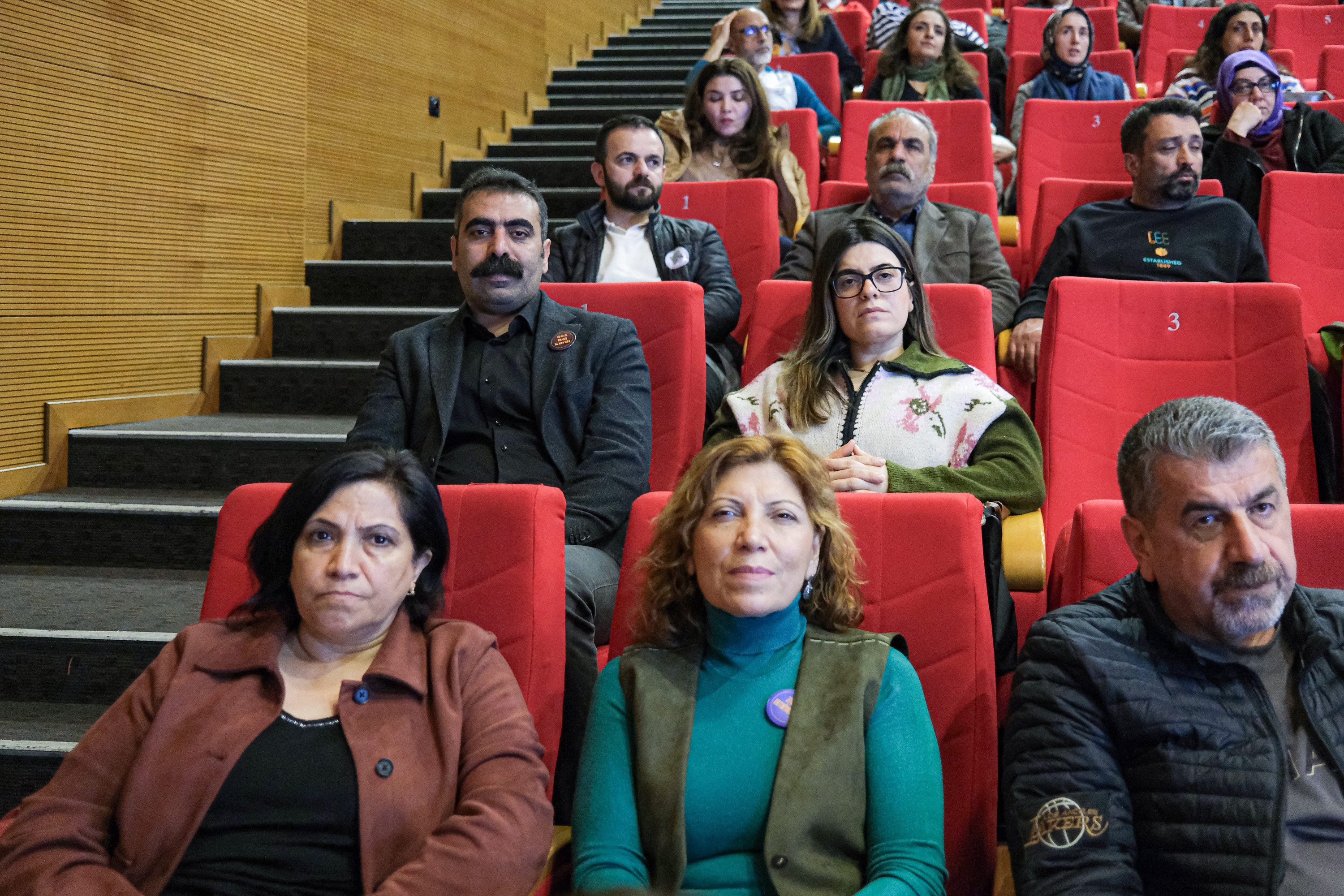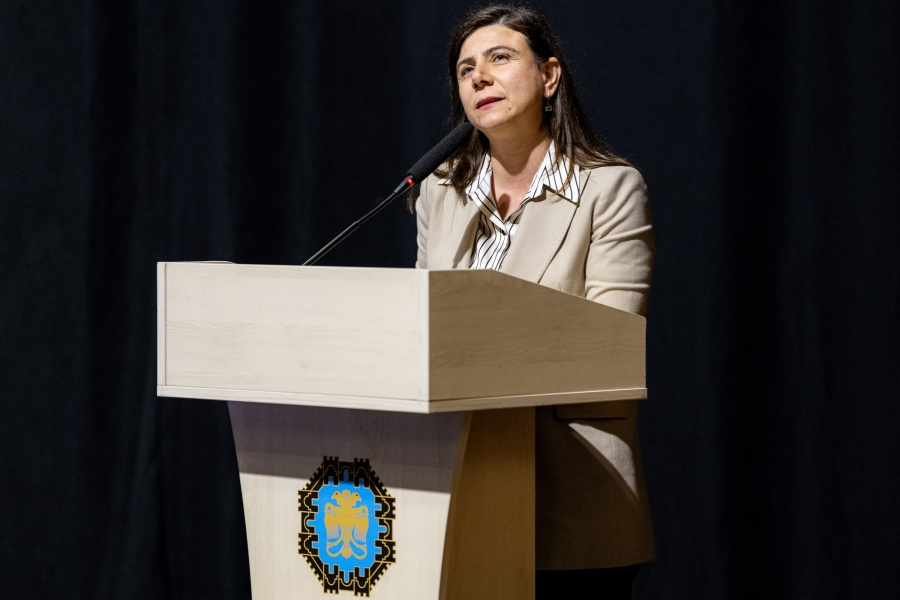
Diyarbakır Metropolitan Municipality Co-Mayors Serra Bucak and Doğan Hatun attended the panel “Mother Tongue and Education”, where the place of the mother tongue in social life and education policies was discussed from multiple perspectives. Opening the panel, Co-Mayor Bucak said they advocate multilingualism and are carrying out work in this field.
As part of the 21 February International Mother Language Day programme, Diyarbakır Metropolitan Municipality Co-Mayors Serra Bucak and Doğan Hatun attended the panel titled “Mother Tongue and Education (Zimanê Dayikê û Perwerde)”, organised by the Department of Culture, Arts and Social Affairs at the Çand Amed Culture and Congress Centre.
In addition to Co-Mayors Bucak and Hatun, the panel — which addressed the protection and development of the mother tongue and its place in education — was attended by members of the Language Rights Monitoring, Documentation and Reporting Network (DHİBRA) and linguists.
Greeting participants at the opening of the panel, Diyarbakır Metropolitan Municipality Co-Mayor Serra Bucak said, “We have distinguished guests with us today. I would like to thank all our colleagues and valued staff whose efforts made today’s panel possible.”
Co-Mayor Bucak: We are here with many commitments
Stating that the panel would discuss why education in the mother tongue is important from nursery age to university level and why it should be regarded as a right, Co-Mayor Bucak said:
“Since the day we were elected, we have been here with many commitments. We are in a process of rebuilding — from what could not be done over the past eight to ten years to egalitarian approaches and policies in the fields of language and women. We will continue our work within the roadmap we have determined together.”
‘We advocate multilingualism’
Drawing attention to the ongoing work in this field by the Language Protection and Development Branch Directorate under the Department of Culture and Social Affairs, Co-Mayor Bucak continued:
“We have various language courses. In this city, we are carrying out courses, training programmes and lexicography work to support the development of mother tongues and various dialects. Is it enough? Certainly not. In fact, we do not want it to be enough, because we are struggling to achieve our political and strategic ultimate goals and to secure status for Kurdish. While advocating status for Kurdish, we are also advocating multilingualism.”
Emphasis on a shared roadmap
Co-Mayor Bucak also noted that multilingual work is being carried out on the Metropolitan Municipality’s website, saying:
“This is a very valuable and demanding effort. However, a municipality that claims to be participatory and pluralist must allocate both time and budget to this and expand the work. Among us today are people who have laboured for Laz and Hemshin, which are not languages of education and have been confined to the private sphere. We are here today to build our shared roadmap.”
Presentations delivered at the panel
Following the speeches, Dr Yasemin Oral Sarıbaş, in her presentation titled “What Is a Mother Tongue? The Historical Background of 21 February and Today”, assessed the historical background of the mother tongue and the significance of 21 February.
In his presentation, Prof. Dr Bülent Bilmez addressed the position of languages in Türkiye within a political and social framework.
Prof. Dr Christoph Schroeder, Dr Salim Orhan, Dr Cuma Çiçek and Dr Bahar Öngüç also delivered speeches at the panel.
Forum held
Following the panel, a forum titled “Endangered Languages (Ziwanê ke Tehlûke de yê)” was held. Moderated by Dr Ronayi Önen, the forum featured Deniz Gündüz (Kirmanckî), Fırat Mercan (Armenian), İrfan Çağatay (Laz), Saliba Açı̧ş (Syriac), Emel Özdemir (Circassian) and Mahir Özkan (Hemshin) as speakers. The forum addressed the situation of endangered languages.