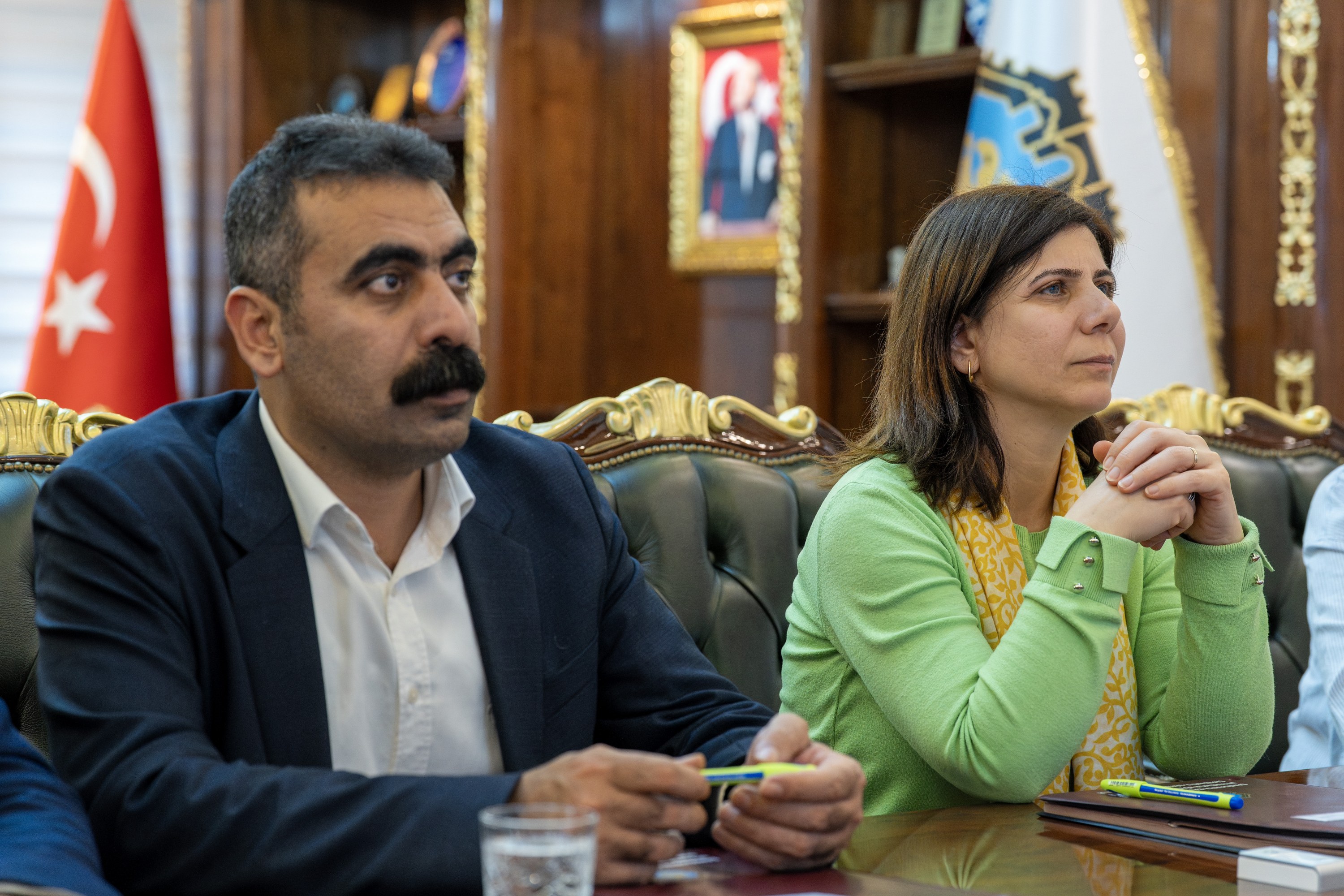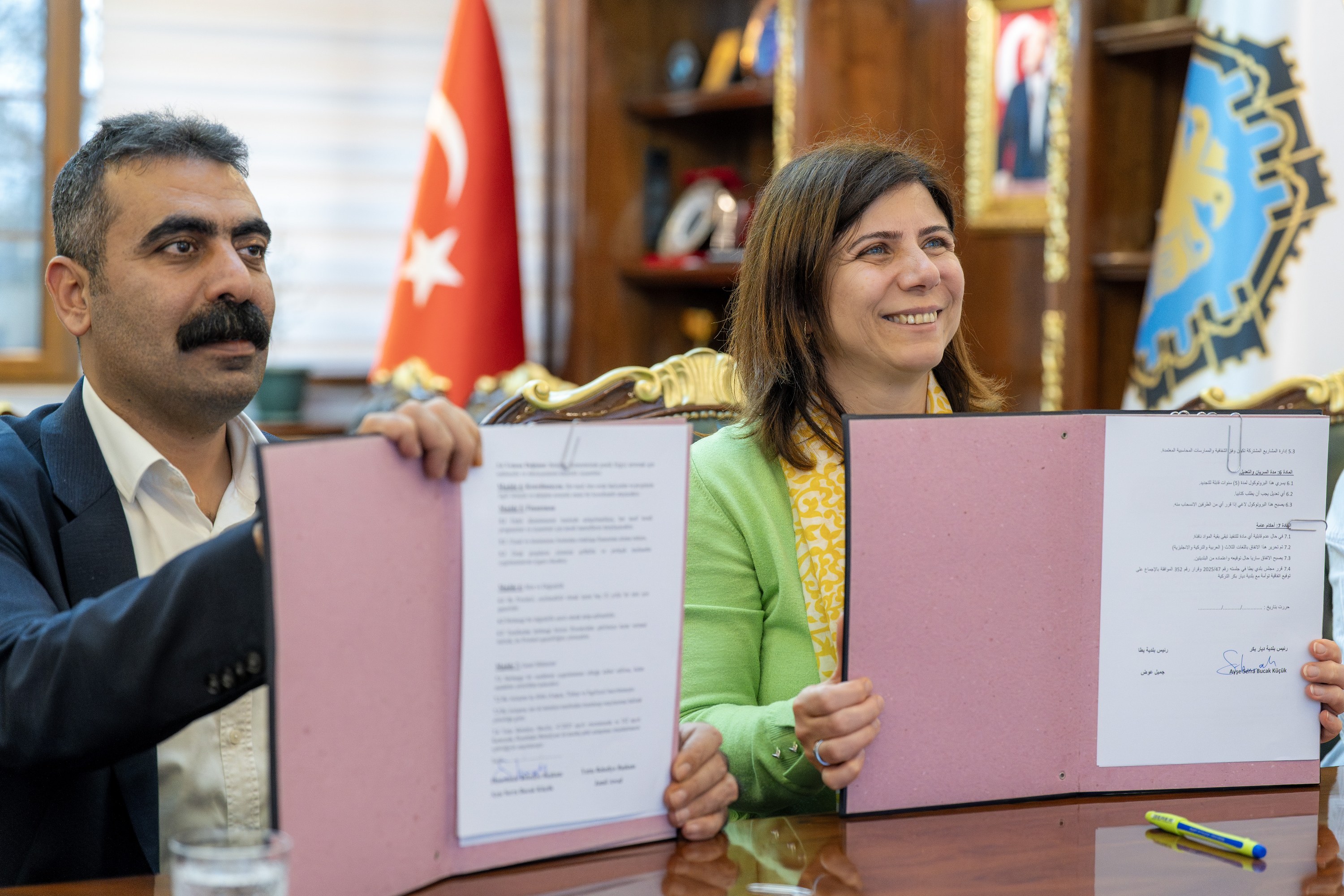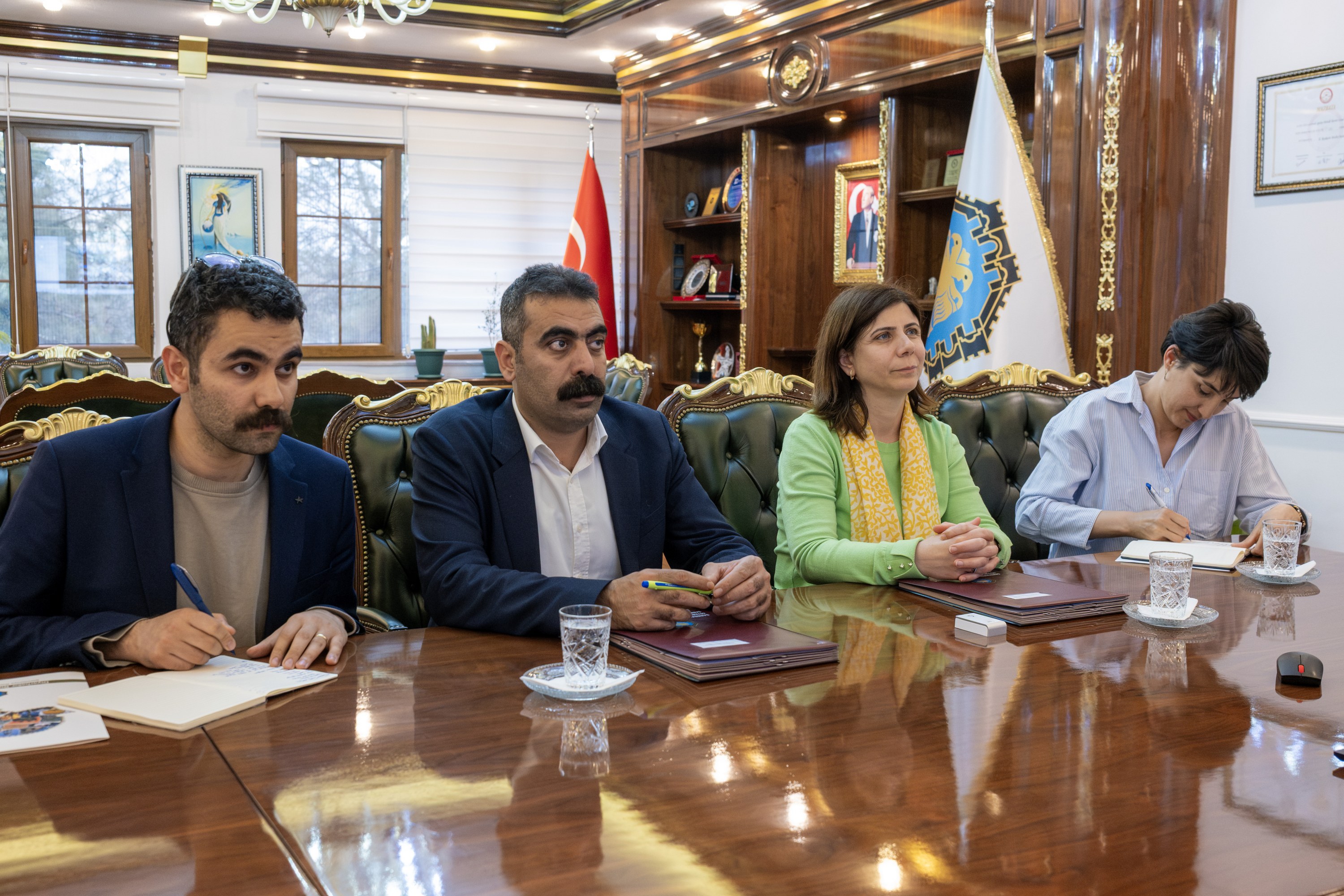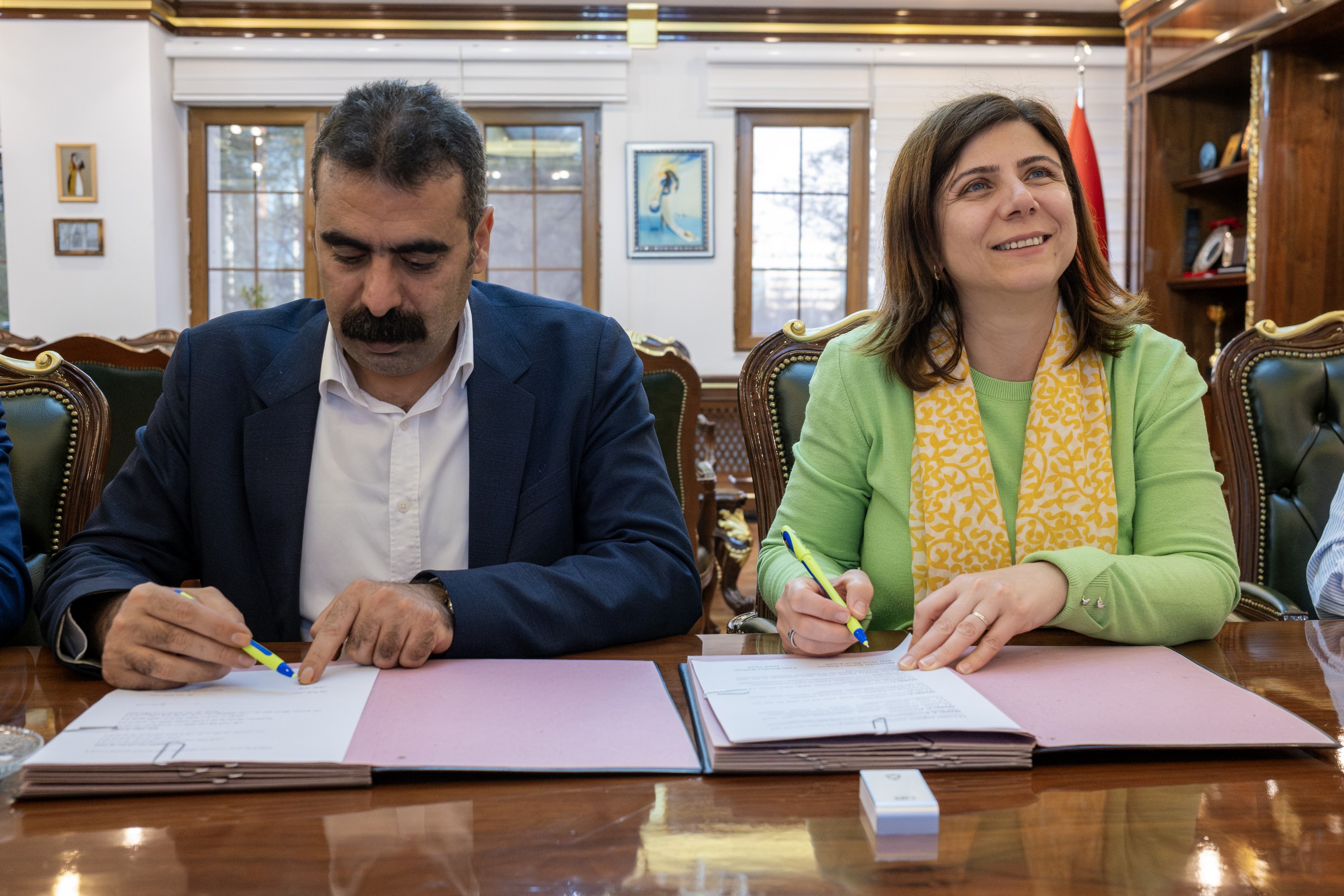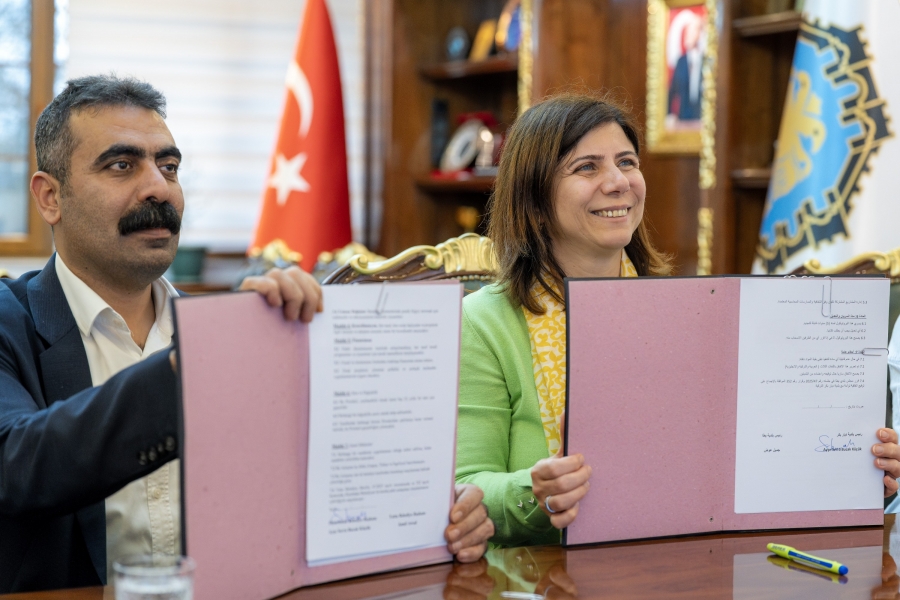
A sister-city protocol has been signed between Diyarbakır Metropolitan Municipality and the Municipality of Yatta in Palestine. The agreement sets out a broad framework for joint projects and the exchange of knowledge across a wide range of fields, from local government and culture to youth and the economy.
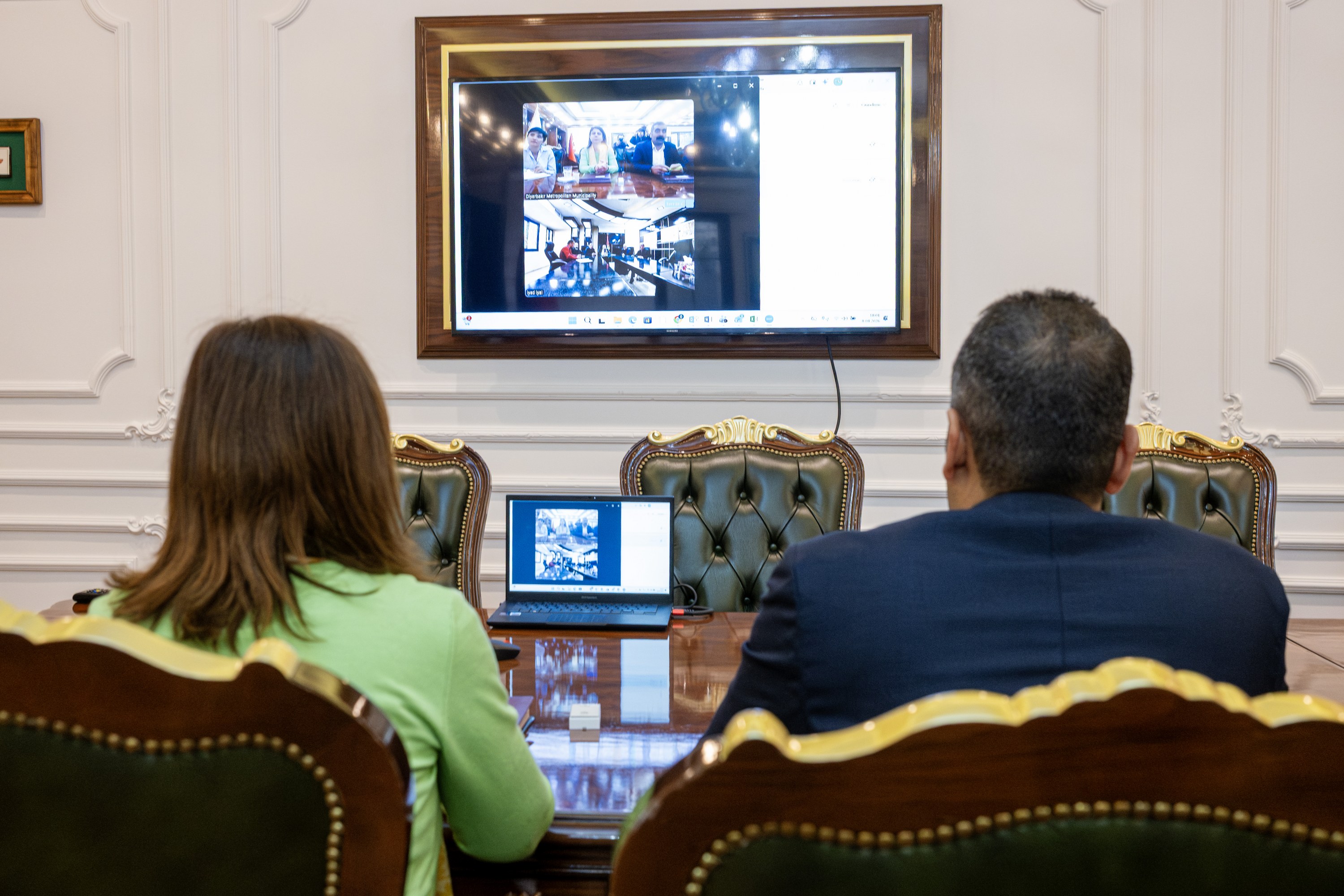
The protocol was signed between Diyarbakır Metropolitan Municipality and the Municipality of Yatta, located south of Hebron in the West Bank of Palestine. As Yatta municipal officials were unable to travel to Diyarbakır due to the conditions of war, an online meeting was held in connection with the agreement. The meeting was attended by Diyarbakır Metropolitan Municipality Co-Mayors Serra Bucak and Doğan Hatun, Yatta Mayor Jamil Awad, Strategic Planning Department official Iyad Hammad, and members of the Yatta Municipal Council.
Mayor Awad said that the Kurdish and Palestinian peoples share similar experiences and challenges, and that this had created a sense of connection between them, adding that they wished to develop relations on that basis. Co-Mayors Bucak and Hatun, for their part, stressed that peace and stability across the Middle East would carry the hope of a peaceful future for both Palestinians and Kurds. Possible areas of cooperation were also discussed during the meeting.
Following the meeting, the protocol was signed by Co-Mayors Serra Bucak and Doğan Hatun, together with Yatta Mayor Jamil Awad, and entered into force.
Scope of the protocol
The agreement provides for wide-ranging cooperation between the two cities in many areas, from local government and culture to youth and urban planning. Prepared on the basis of the historical friendship and solidarity between the peoples of Türkiye and Palestine, the protocol establishes a long-term framework for cooperation between Diyarbakır and Yatta based on mutual respect, solidarity and shared development.
Under the protocol, the two municipalities are expected to carry out joint work in the fields of municipal services, the economy, culture, education, youth, public health, the environment and urban development.
Broad cooperation from local government to culture
The sister-city protocol envisages the sharing of knowledge and experience in areas such as local government practices, good governance, municipal services and infrastructure. It also includes cooperation in the protection of cultural heritage, arts events, exhibitions, cultural days, and reciprocal visits by artistic delegations.
In the fields of youth, sport and education, the two municipalities aim to launch joint camps, entrepreneurship programmes, youth leadership initiatives, sports tournaments and inter-university partnership schemes.
Focus on smart cities and sustainable development
Urban planning, smart-city applications and sustainable development also feature prominently in the protocol. In this context, the two sides will work together on the preparation of master plans, the development of transport and communications infrastructure, the use of smart systems in municipal administration, Geographic Information Systems (GIS) applications, and emergency response and recovery planning.
In the area of economic and social development, plans are also in place to support local trade, promote traditional handicrafts, and organise reciprocal visits by economic delegations.