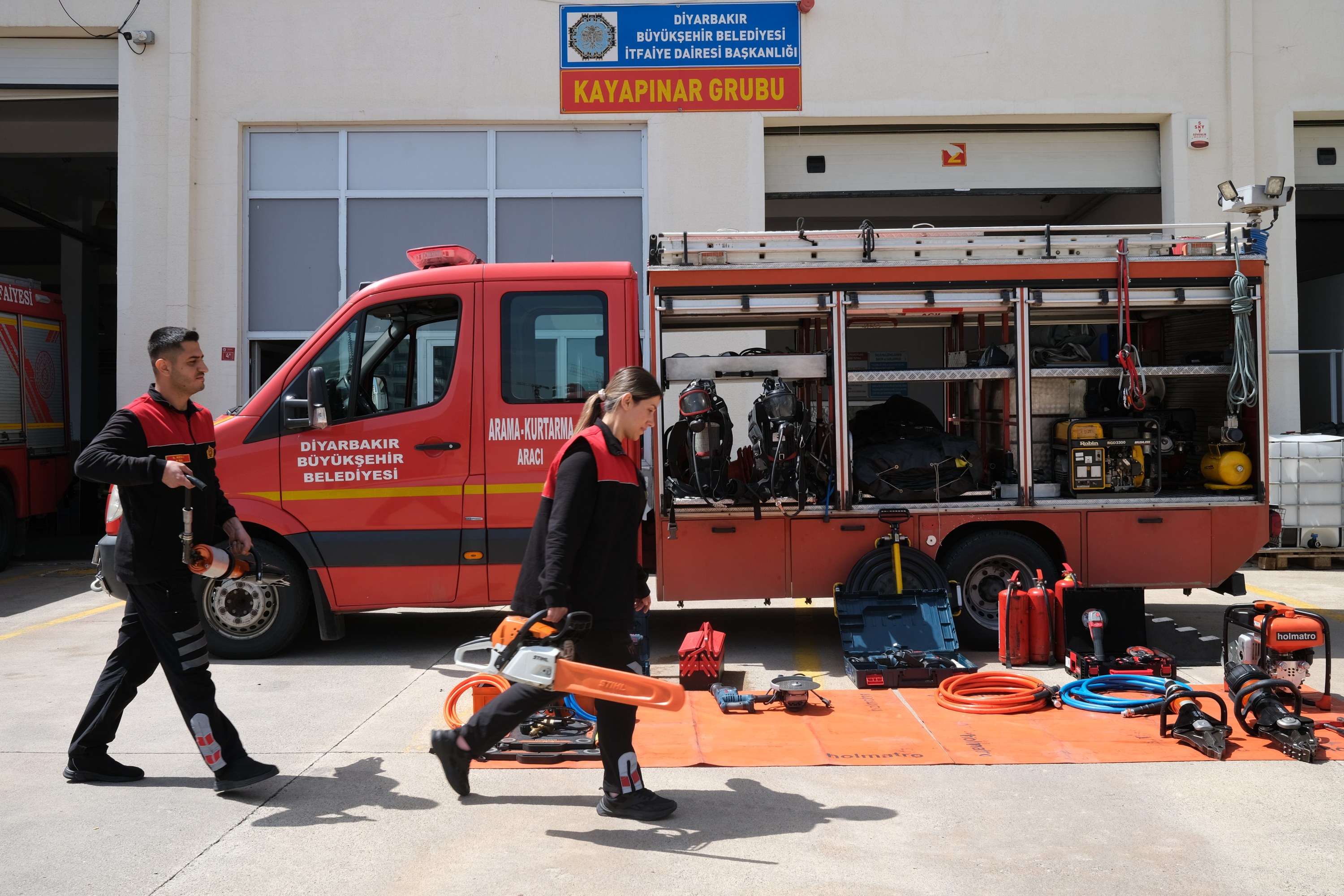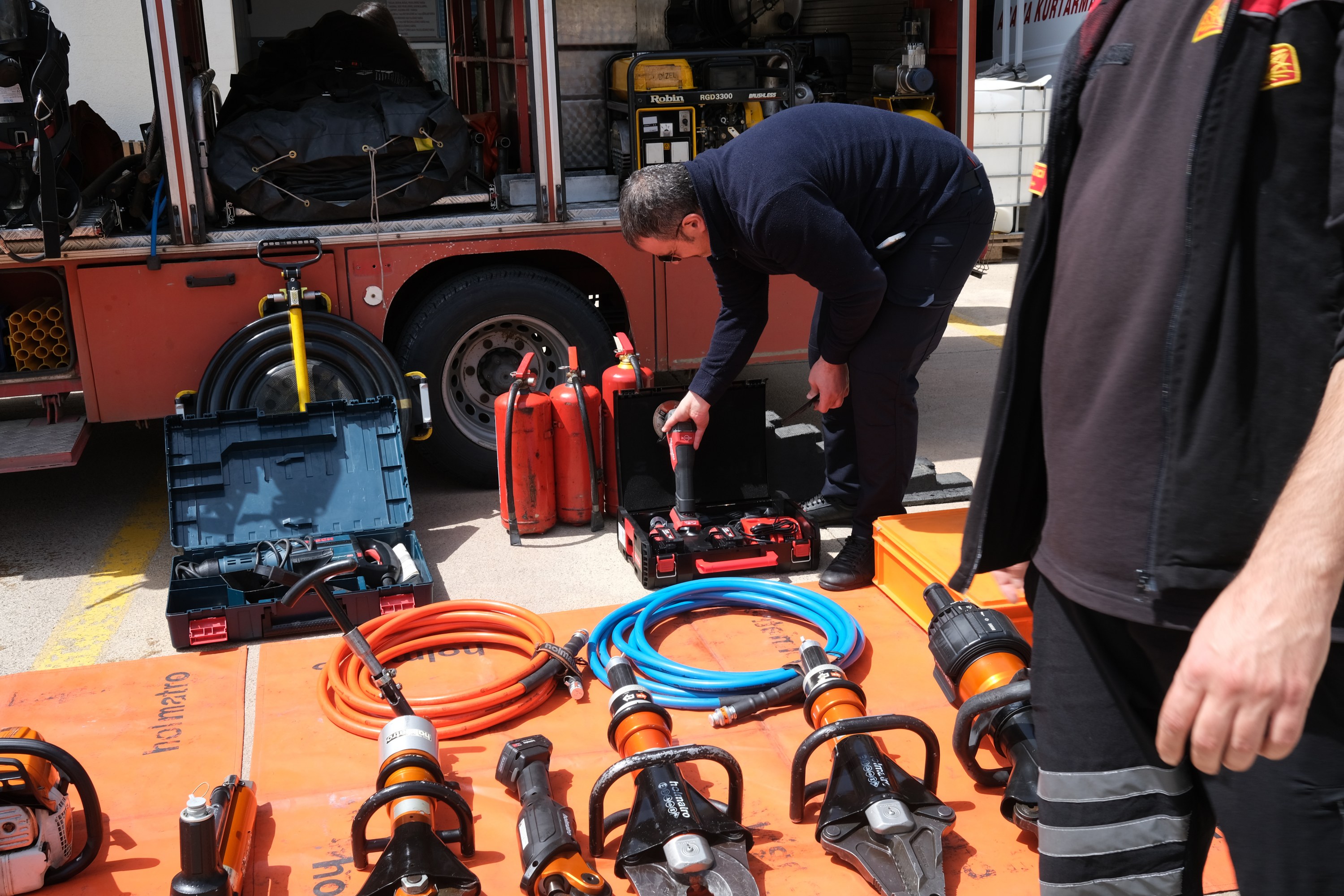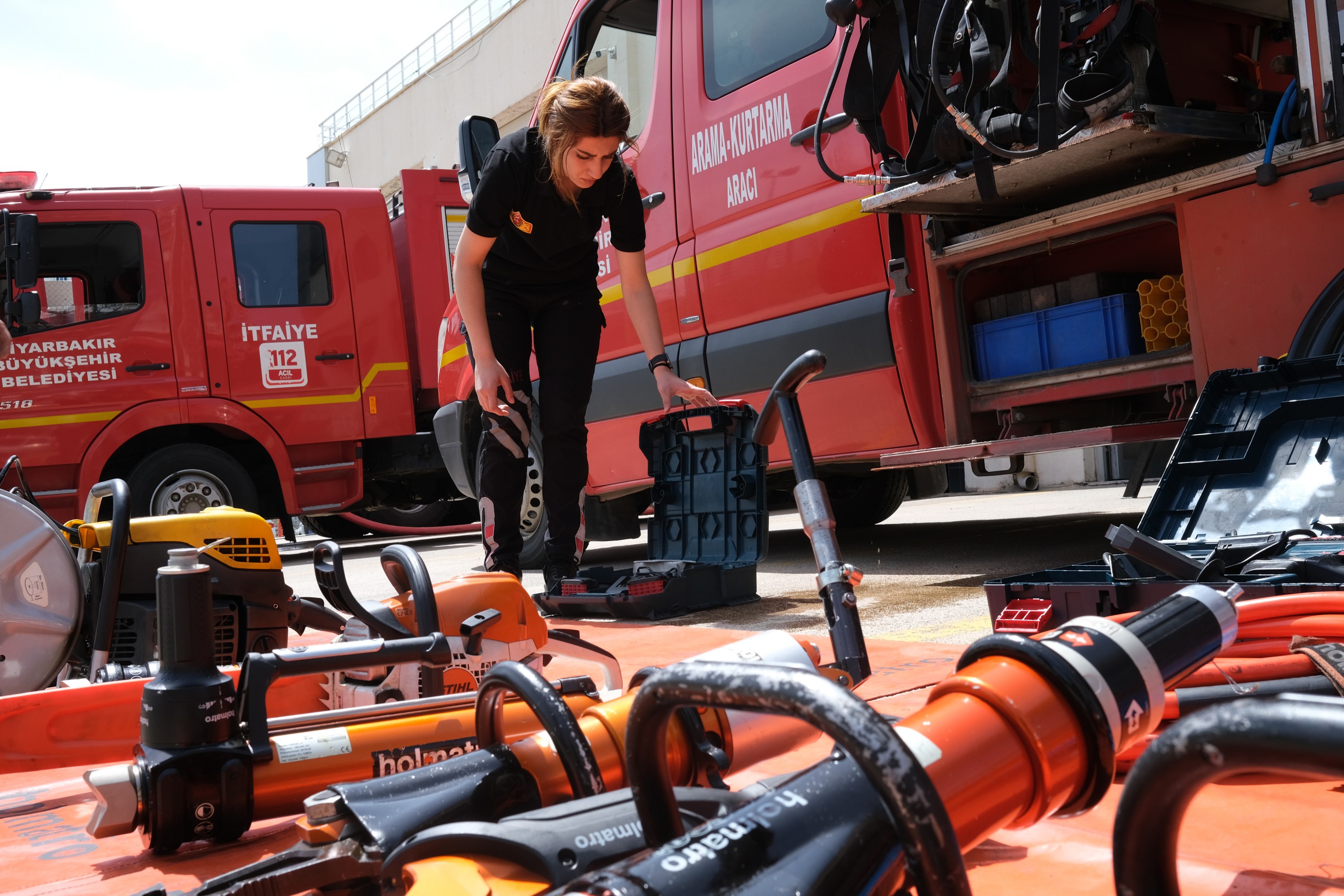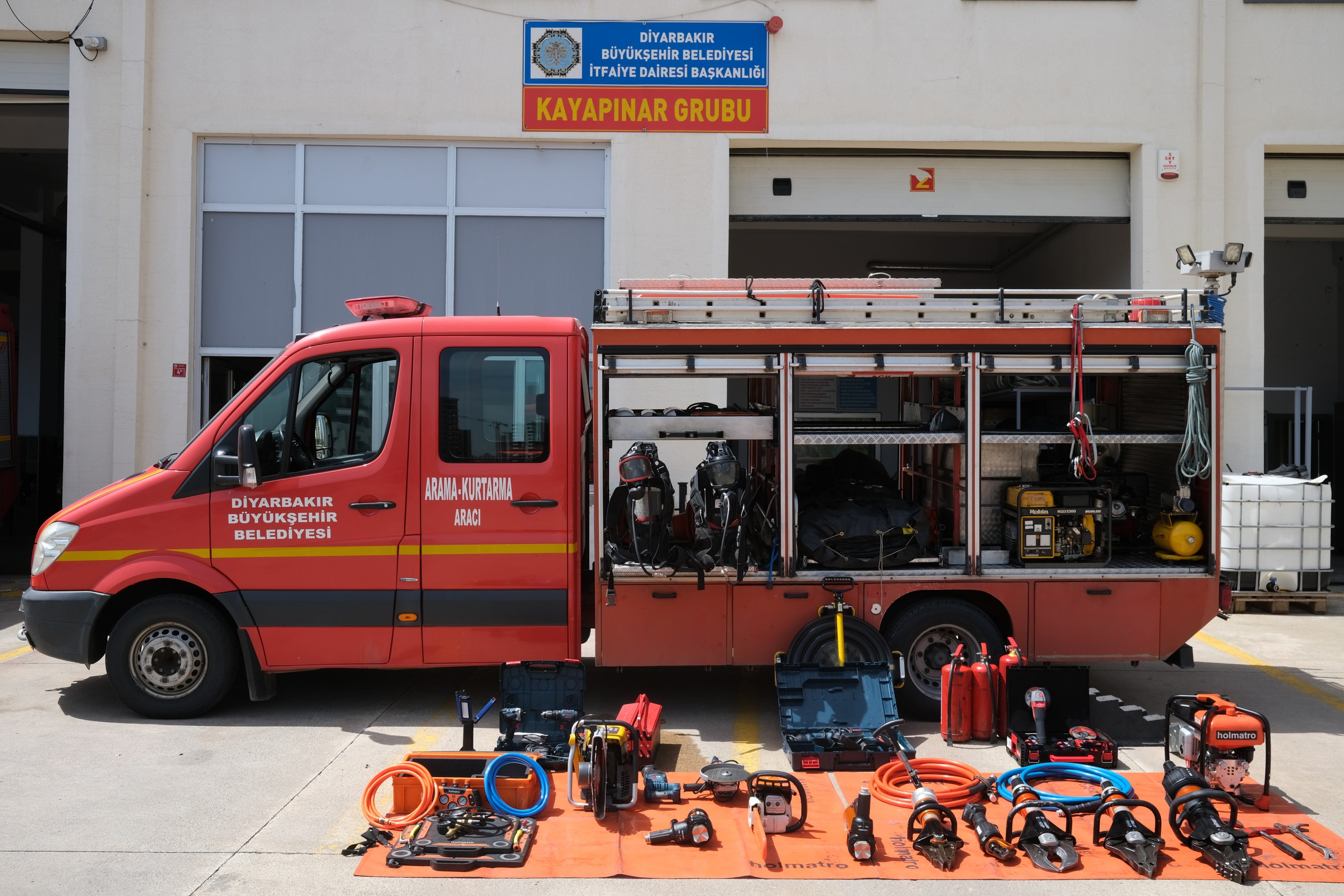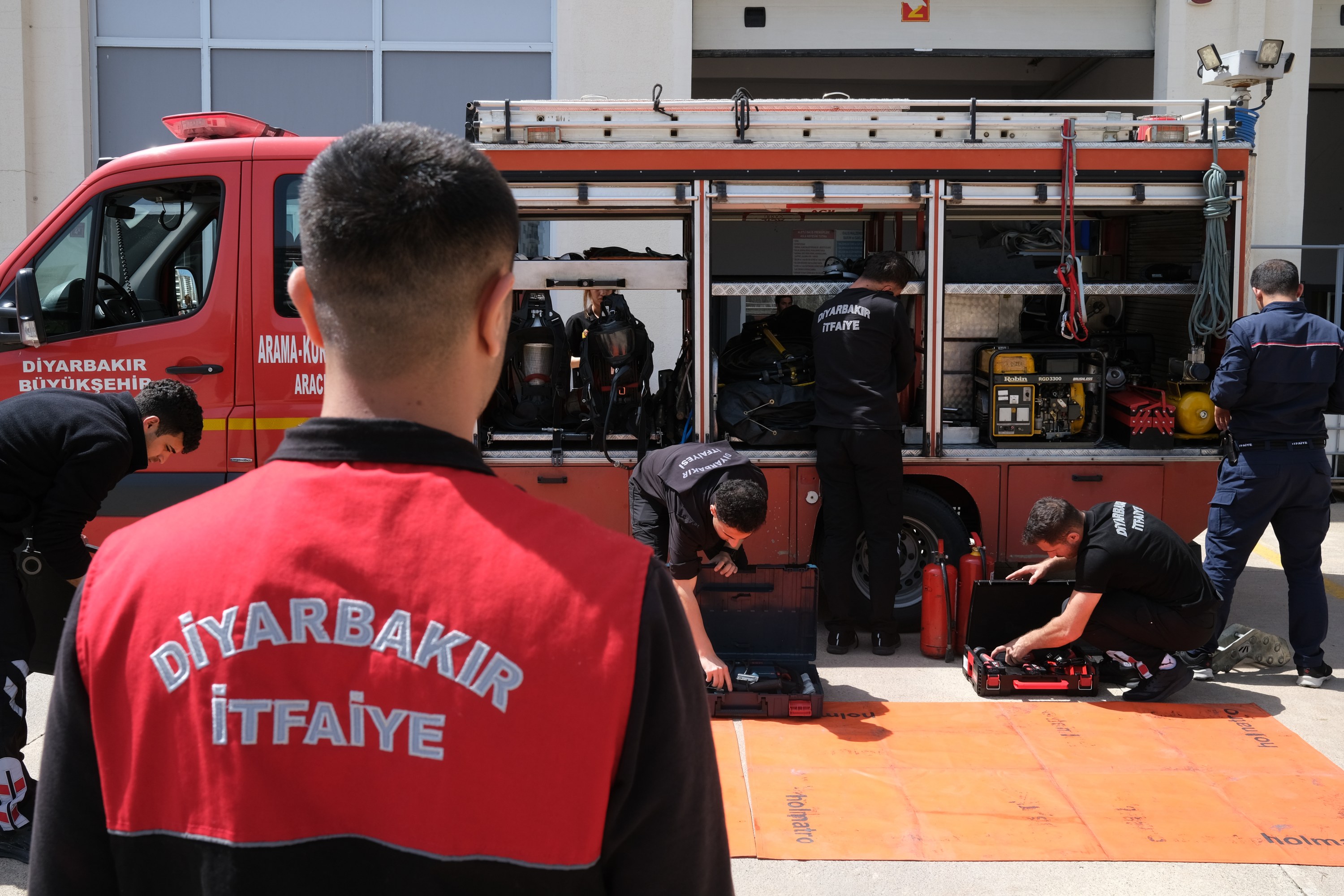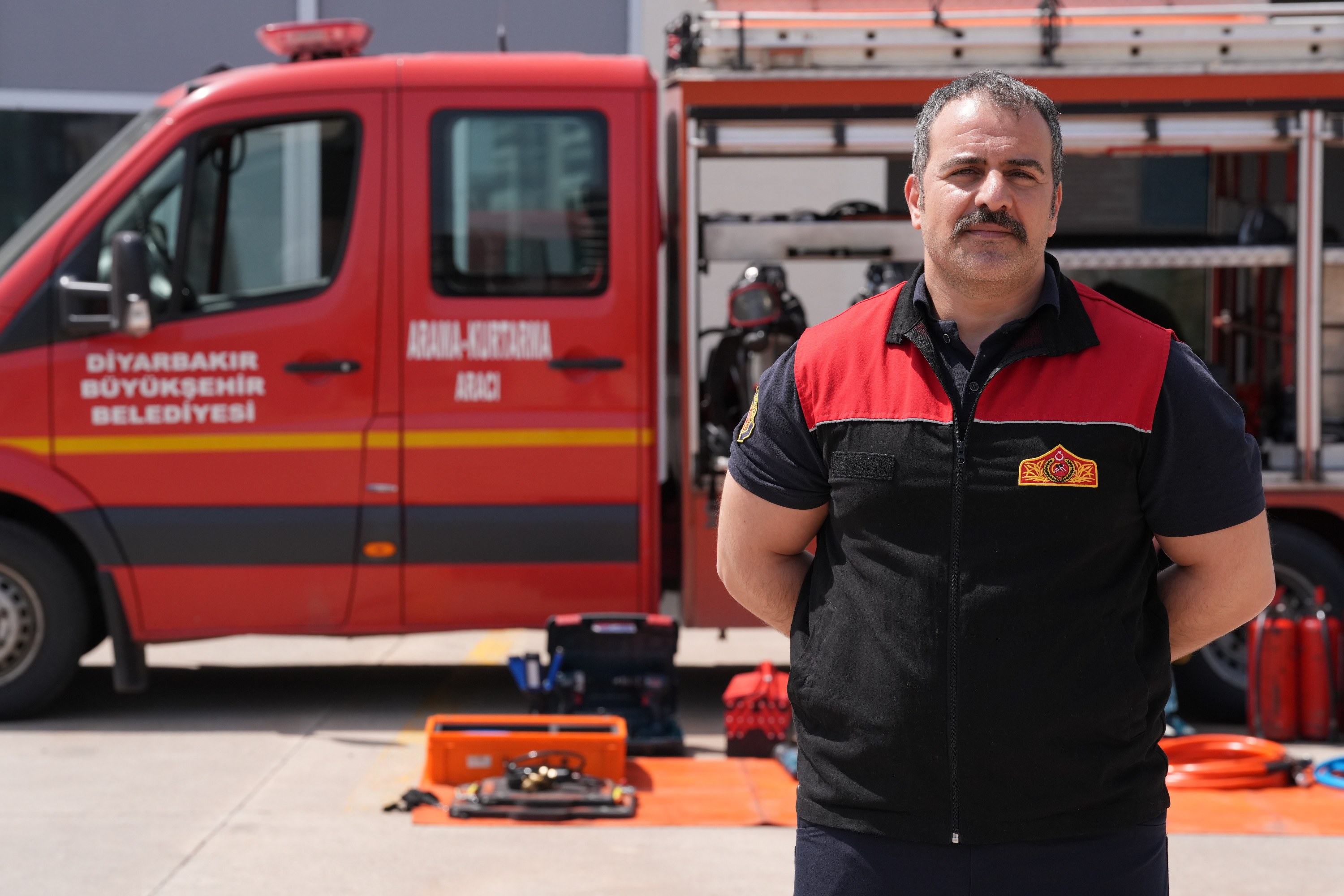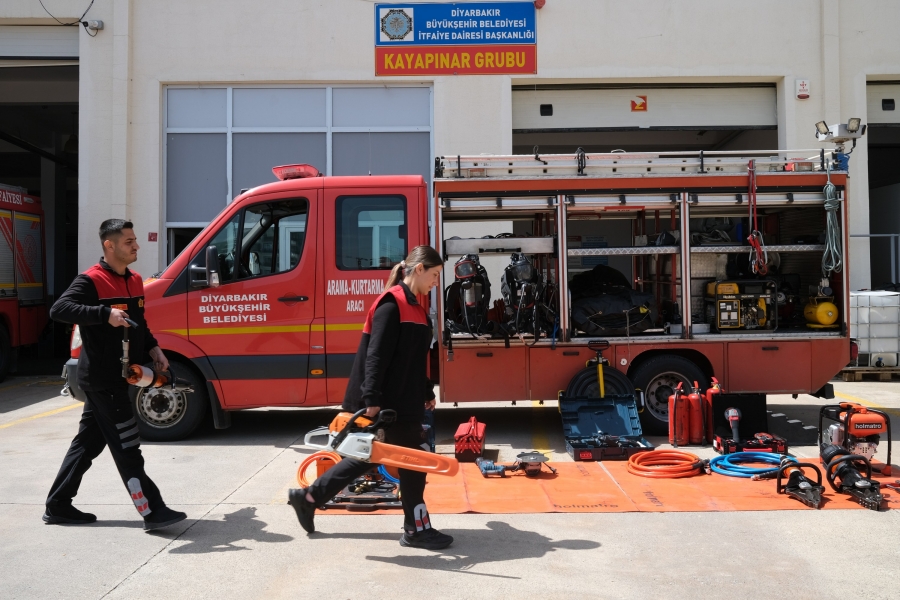
Diyarbakır Metropolitan Municipality’s Fire Department responds to accidents within seconds through advanced technological equipment and continuous training. Every rescue operation becomes a race against time to save lives.
The Fire Department uses state-of-the-art equipment on a 24/7 basis through teams established to respond to accidents across the city. New systems acquired in line with technological developments are closely monitored by the Fire Training Bureau and introduced to the relevant units.
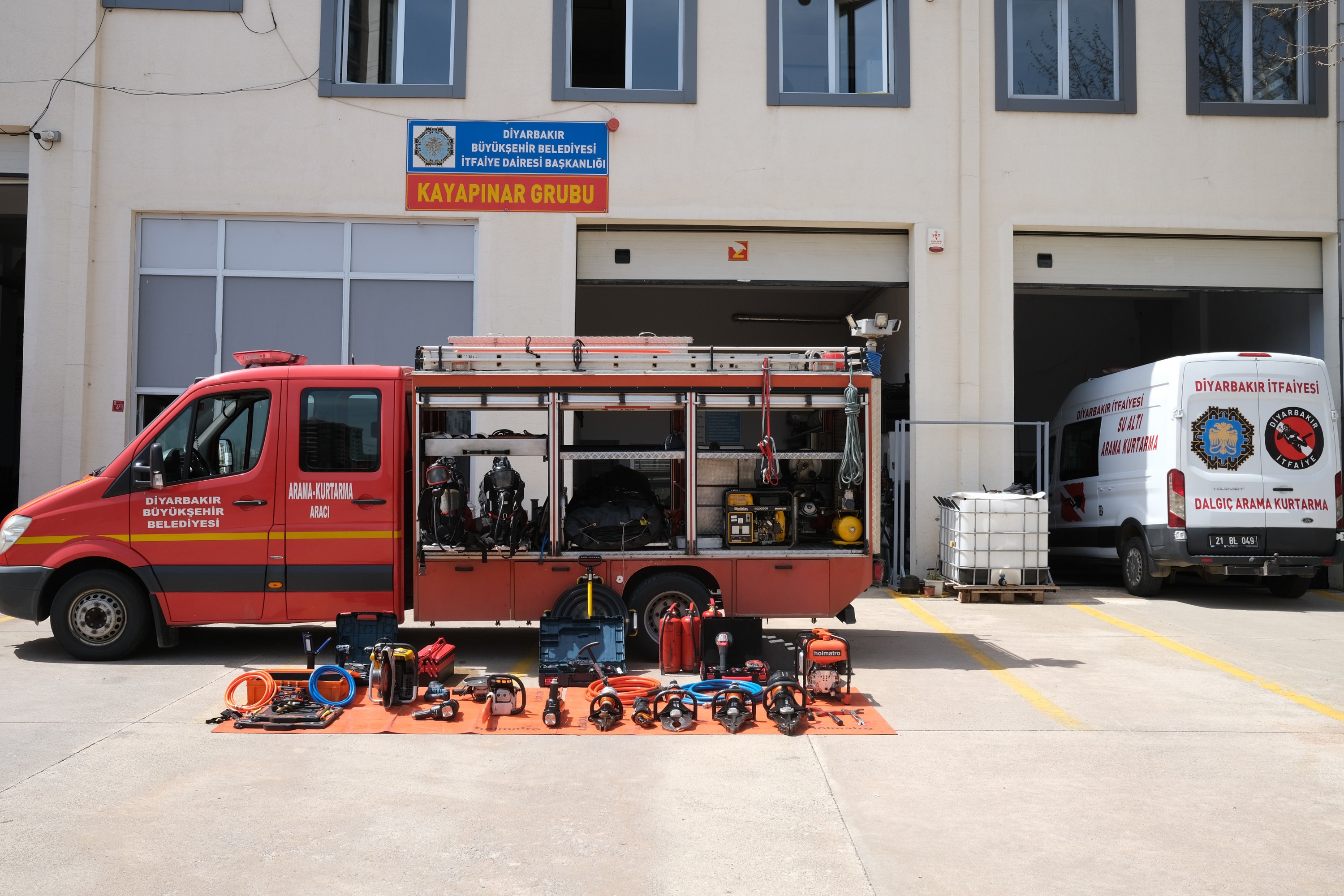
In search and rescue operations, where seconds are critical to saving lives, teams use internationally recognised electronic, pneumatic and hydraulic rescue systems when responding to citizens trapped inside vehicles in traffic accidents.
Vehicles turn night into day at accident scenes
Having expanded both its vehicle fleet and staffing levels through recent investments, the Fire Department has drawn particular attention for its crash rescue vehicles used in traffic accidents. Once teams arrive at the scene, the lighting towers and generator systems on these vehicles effectively turn night into day.
Search and rescue vehicles ready at all stations
The Metropolitan Municipality keeps multifunctional search and rescue vehicles, which play a critical role in responding to both accidents and disasters, ready at all fire stations. This ensures rapid and effective intervention in possible emergencies.
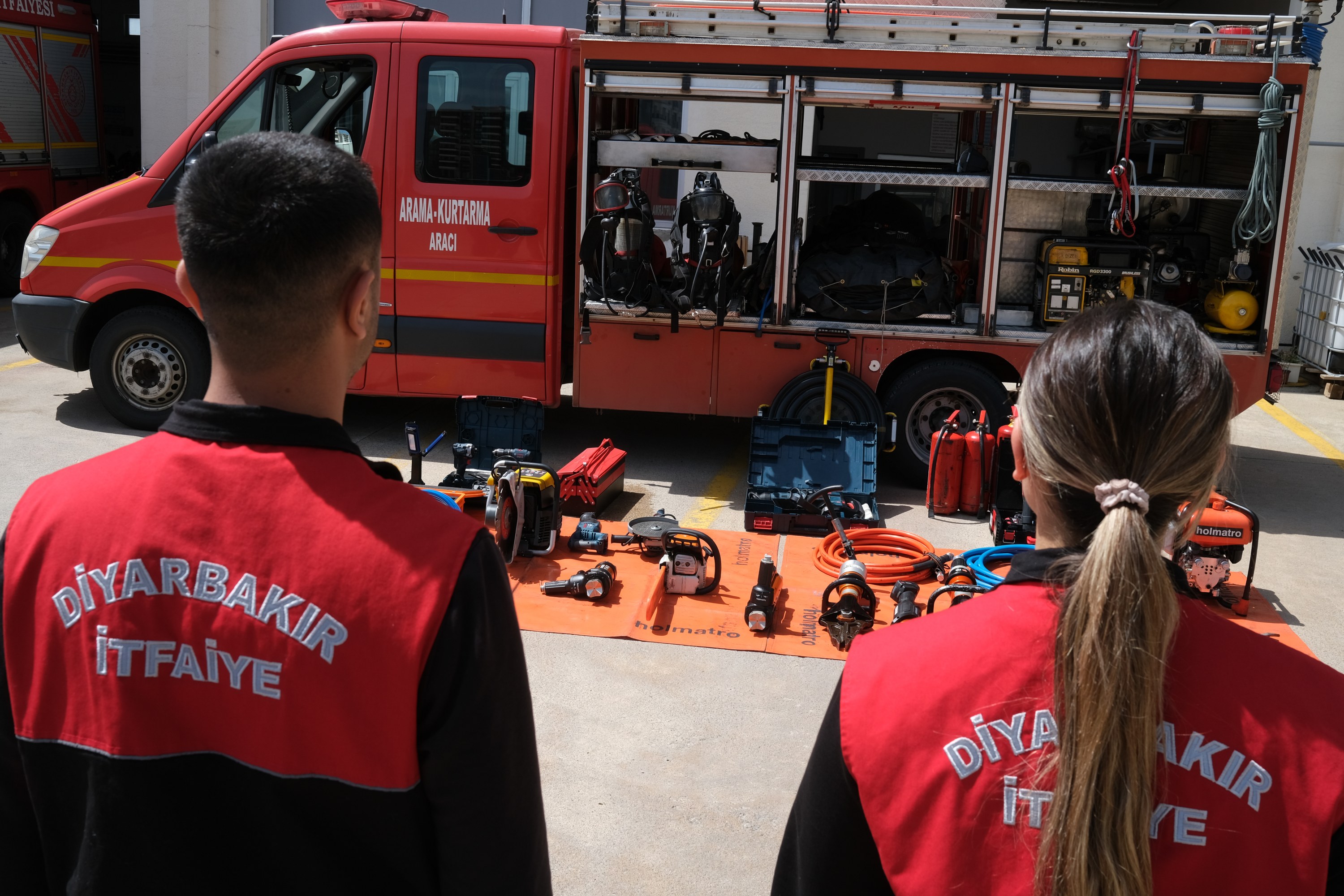
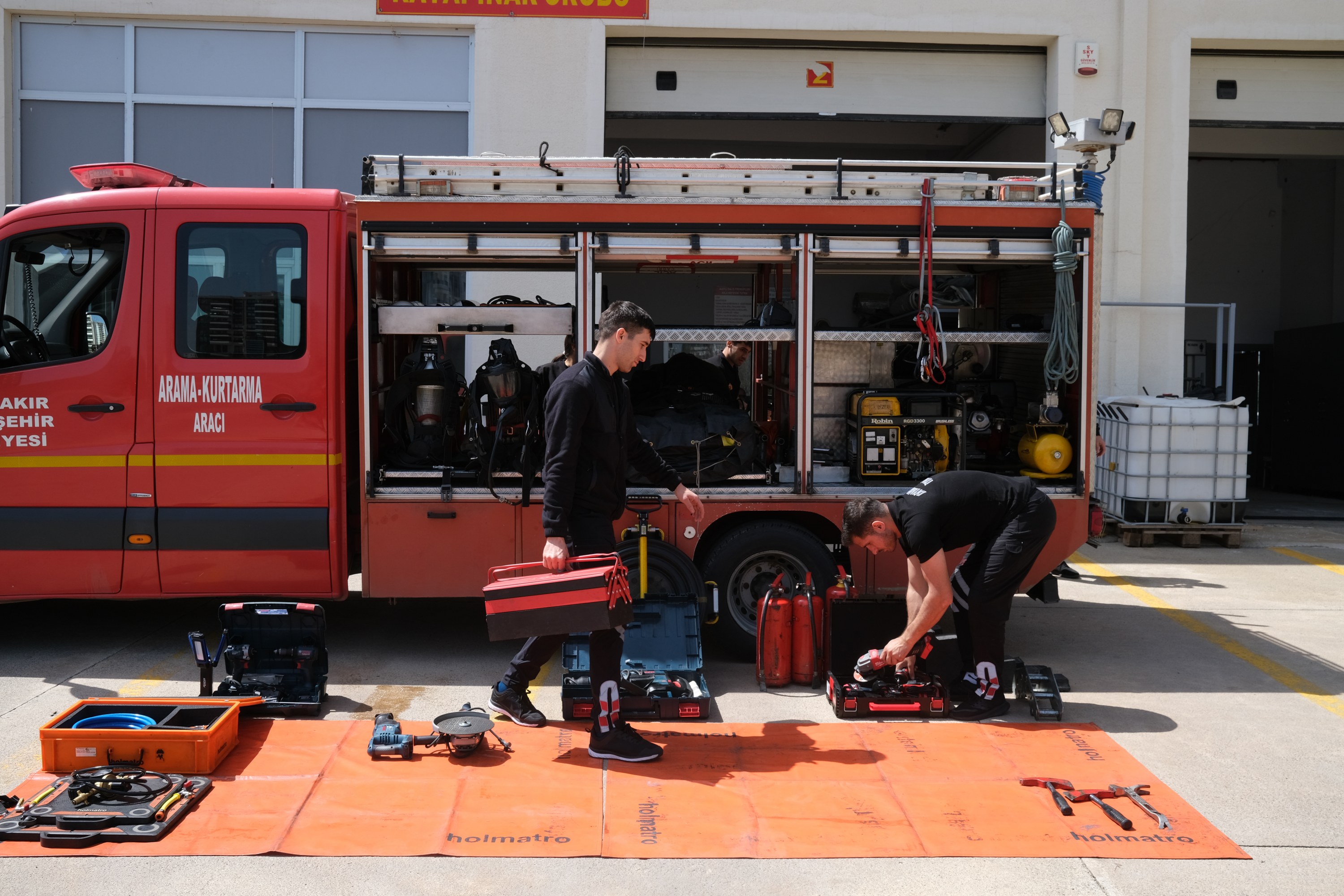
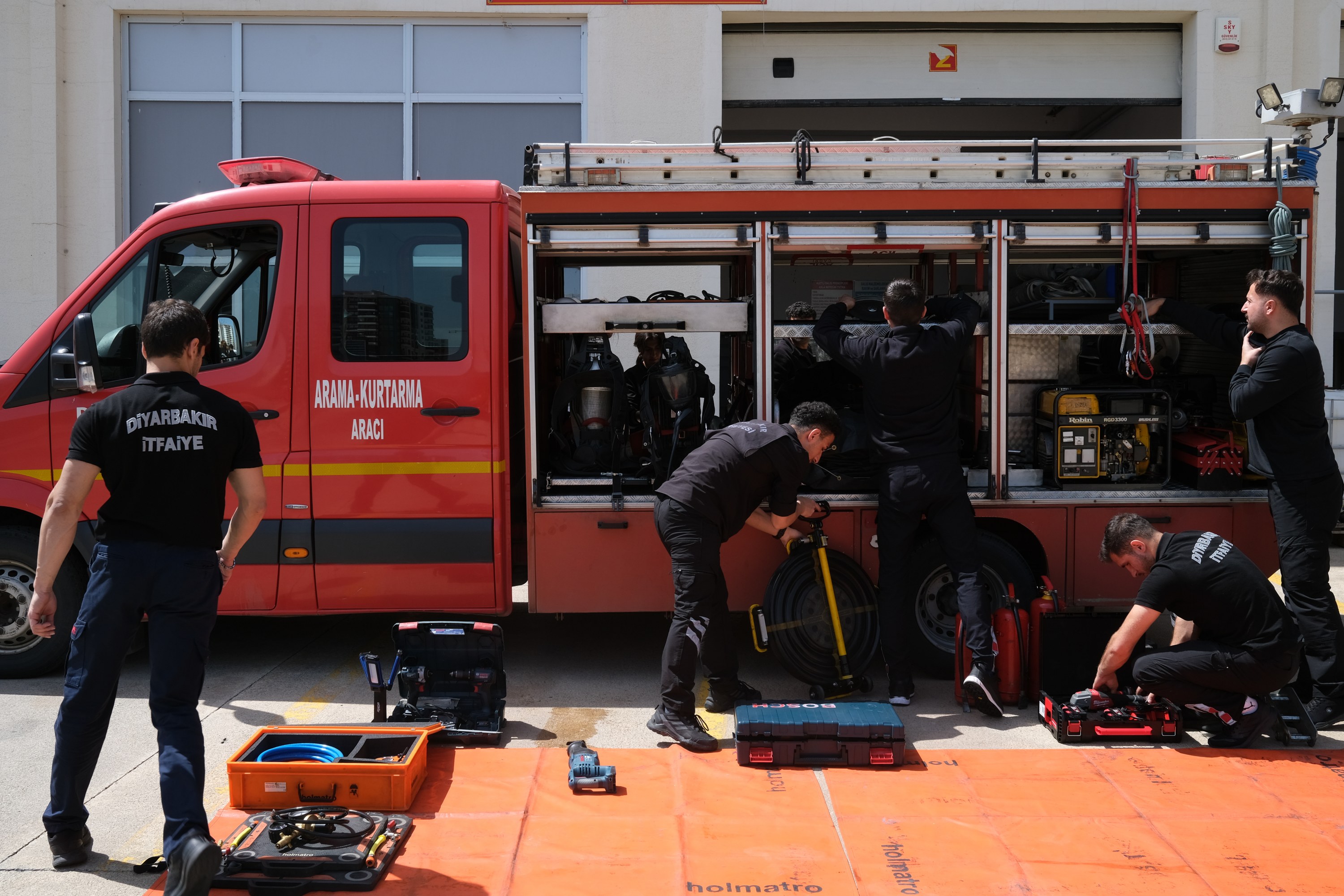
The Fire Department stands out not only for its equipment capacity but also for the quality of its personnel. Teams regularly undergo theoretical and practical training in scene safety, advanced rescue techniques and rapid evacuation.
618 accidents attended
Search and rescue teams are active not only in traffic accidents but also in natural disasters occurring both across the city and nationwide. They responded to 503 accidents in 2025 and to 115 accidents in the first three months of 2026.
Ferhat Kızıl, Chief of the Fire Training Bureau, stated that the cutting and spreading systems used in rescue vehicles for traffic accidents operate electrically and hydraulically.
‘Firefighting is a profession defined by a race against time’
Kızıl stressed that the equipment used to rescue injured people in traffic accidents significantly reduces response times, saying: “Firefighting is a profession defined by a race against time. The hydraulic systems and air-powered equipment we use at the scene give us a major advantage.”
‘Many cases require extraordinary effort’
Drawing attention to the level of difficulty involved in the incidents they encounter, Kızıl said: “In some situations, the task demands performance beyond ordinary human capacity. The most important factor that makes this possible is the equipment we use. That is why the quality of our equipment is of vital importance to us.”
Equipment is constantly being renewed
Kızıl stated that work to improve equipment within the Fire Department is ongoing, adding that technology continues to advance every day and the systems in use are updated regularly. He said that much of the equipment used in Europe is actively deployed in the field, and noted that ergonomics and lightness are also treated as key criteria.
Personnel are trained by specialist teams
Kızıl said that, following their basic training, fire service personnel receive specialist instruction in search and rescue, and that this training, delivered by expert teams in the field, is supported by both theoretical and practical applications. He added that personnel who complete their training go on to serve in the field and build operational experience.
‘The way an incident is handled is decisive’
Kızıl stated that response time is particularly critical in traffic accidents and natural disasters, stressing that not only reaching the scene quickly but also applying the right method of intervention is of vital importance. He said: “The first few minutes in traffic accidents are decisive. In cases involving serious injuries and the risk of amputation, we have to respond rapidly in coordination with medical teams. We extract the injured person safely as quickly as possible and hand them over to the medical teams. That is why seconds are of vital importance to us.”