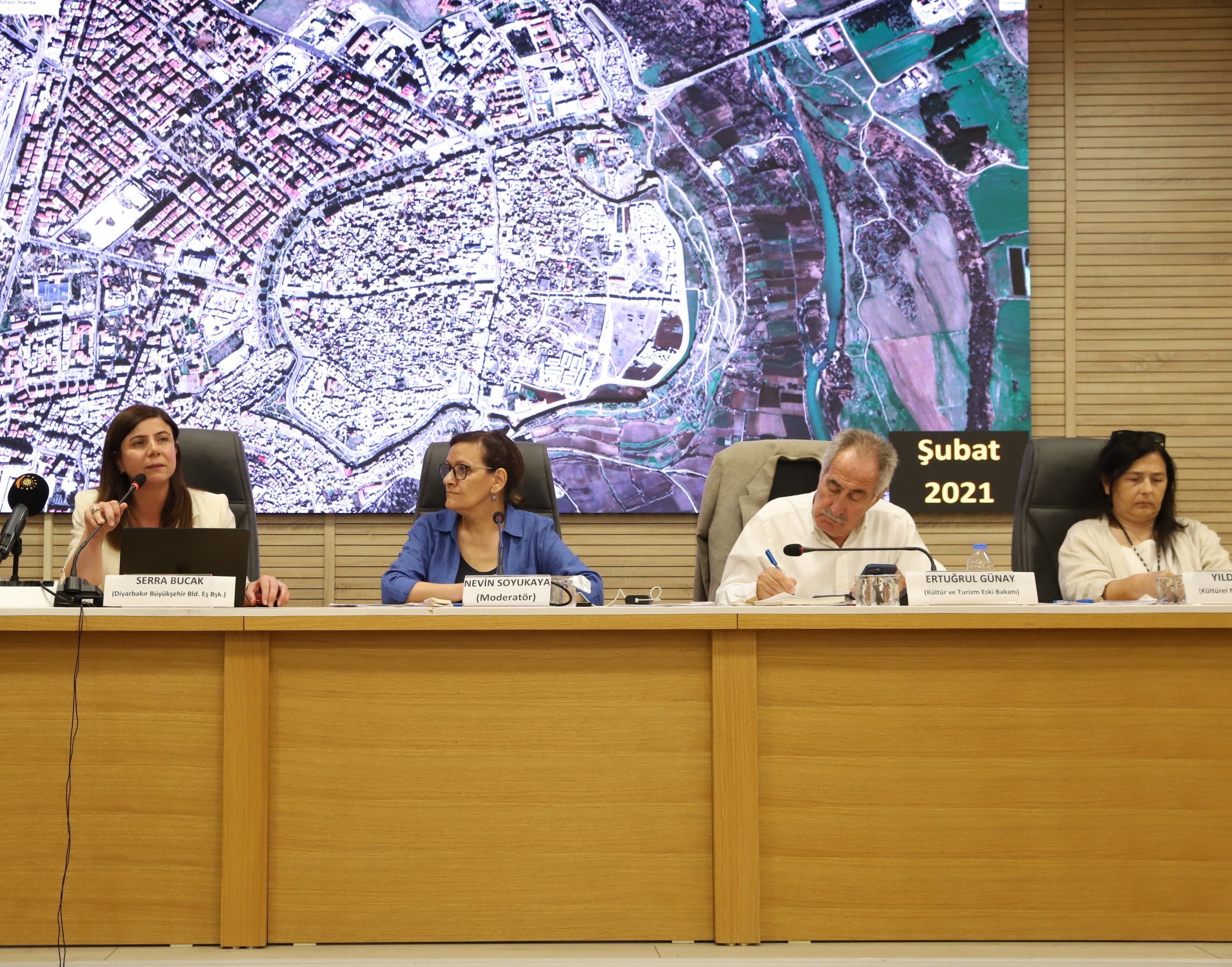
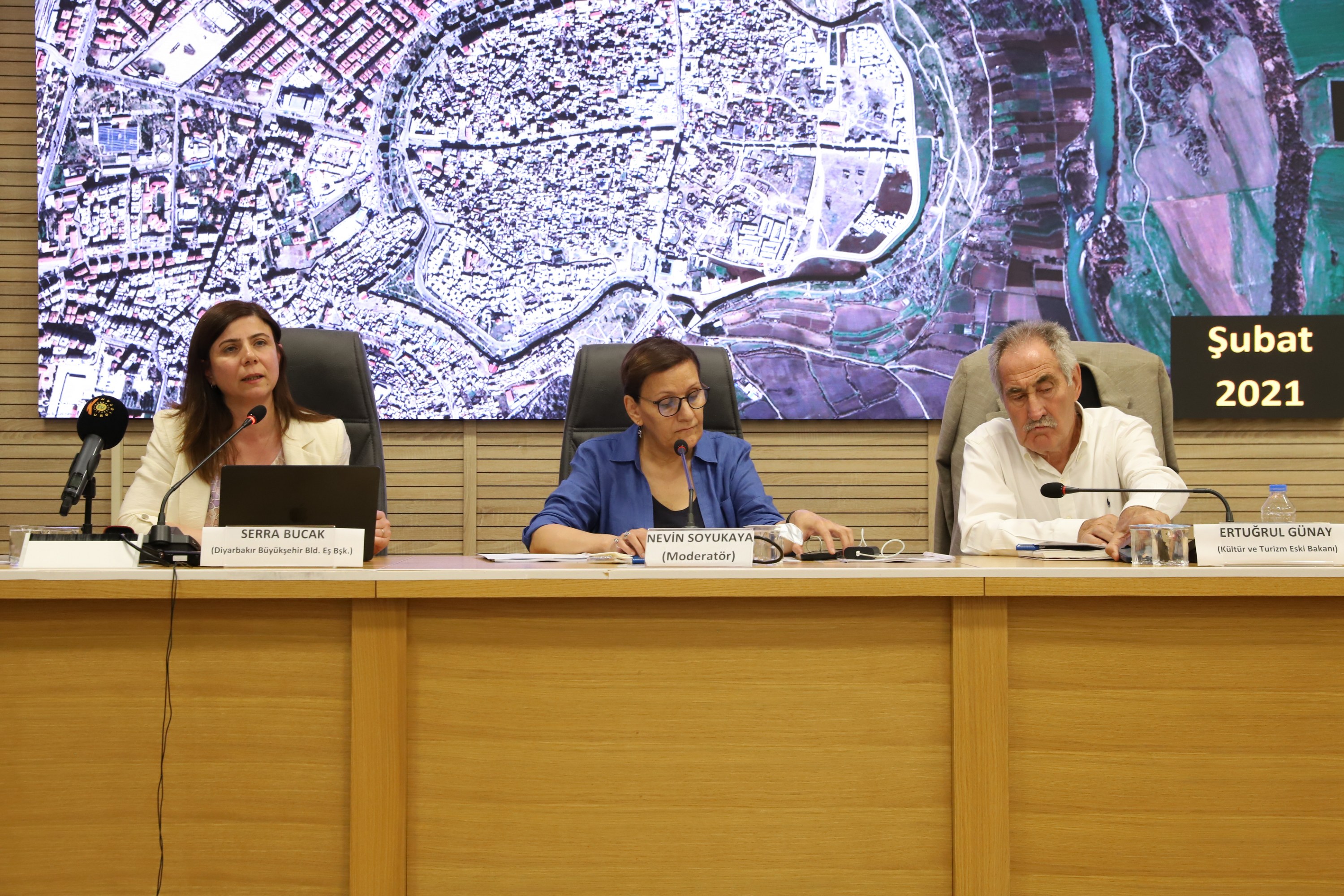
Attending the meeting on the status of Diyarbakır City Walls and Hevsel Gardens, listed as UNESCO World Heritage Sites, Diyarbakır Metropolitan Municipality Co-Mayor Serra Bucak stated that the eight-year summary of the heritage site and Sur district was one of authority confusion, adding that “we are now in days when we will reclaim the cultural heritage, memory and history of peoples.”
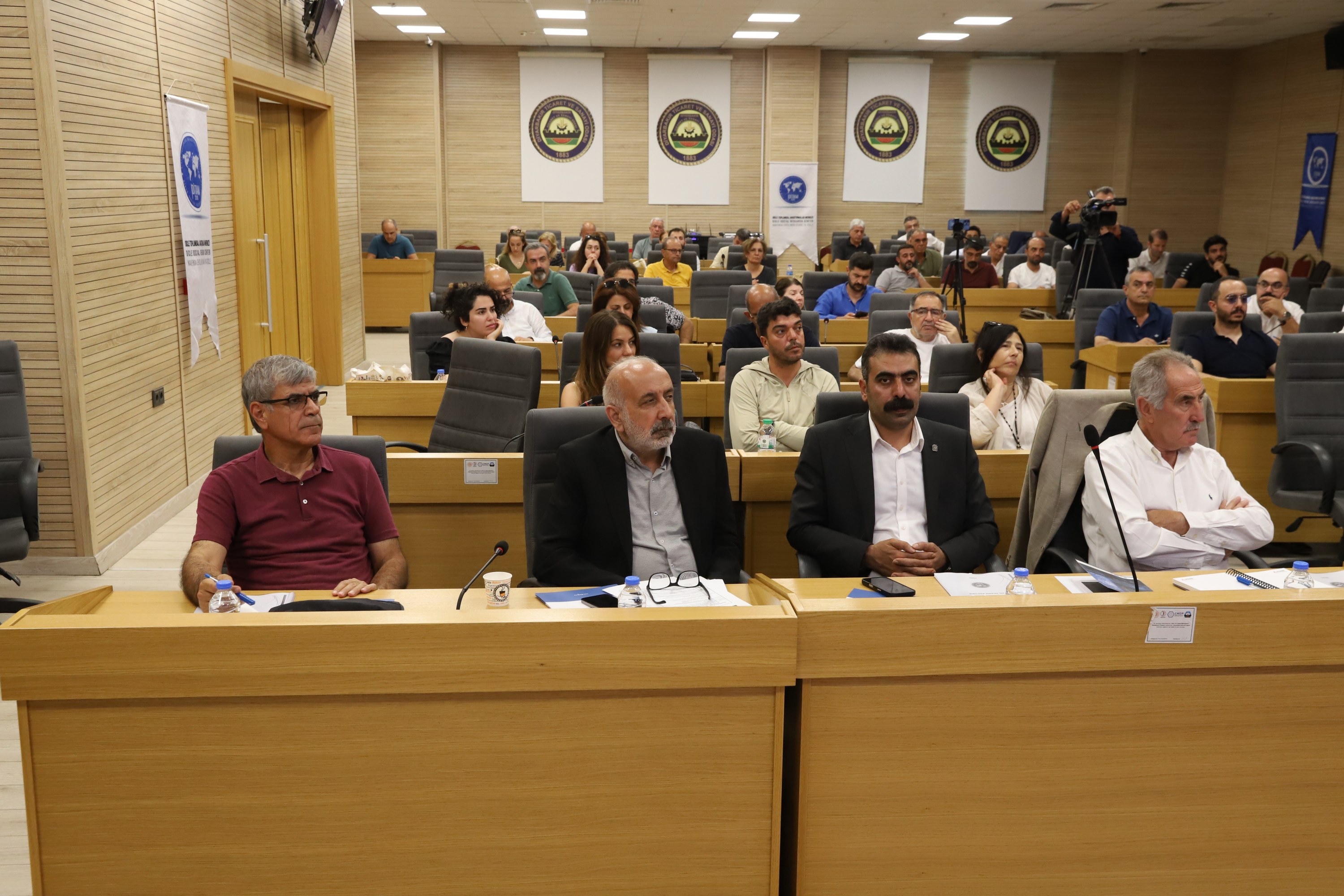
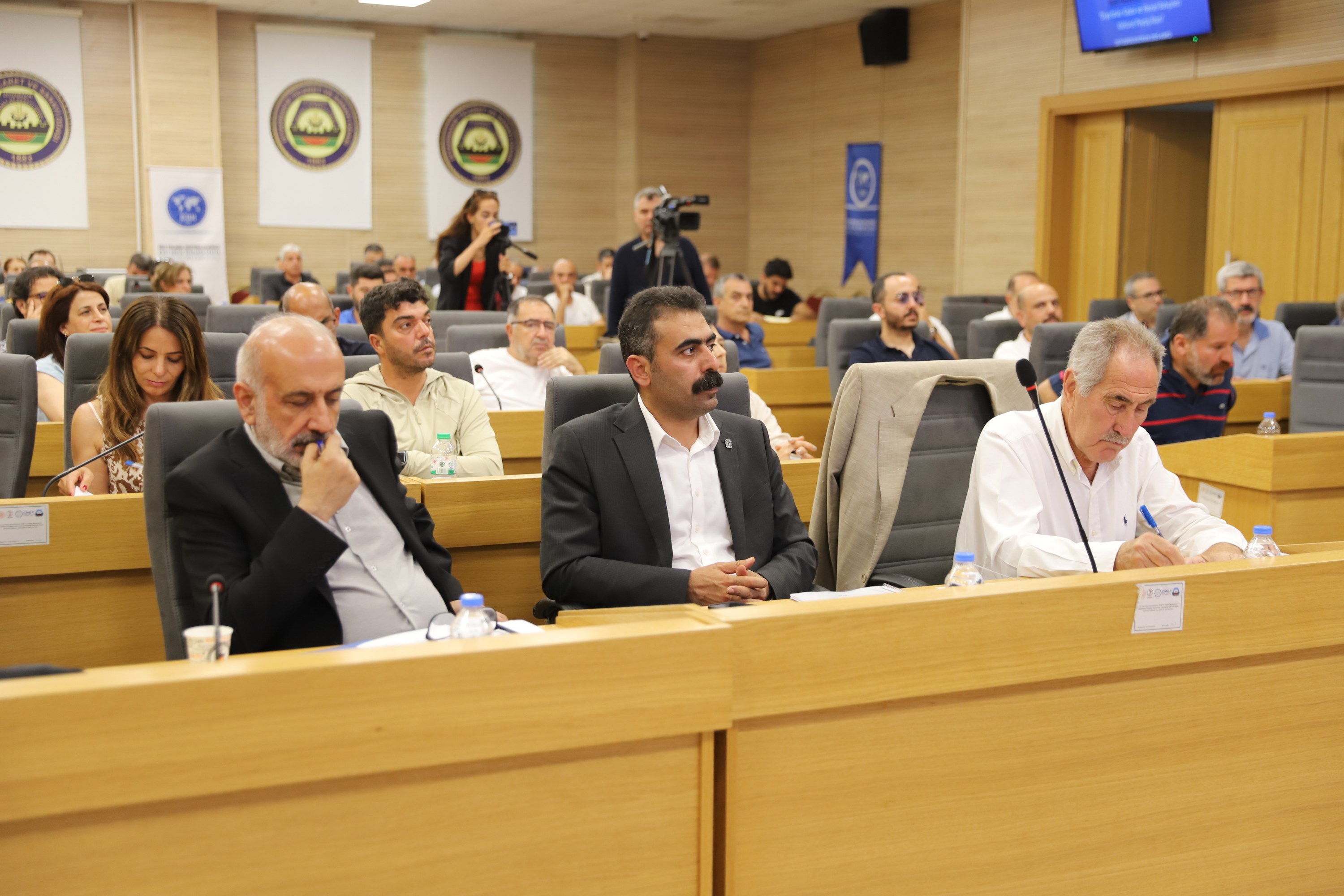
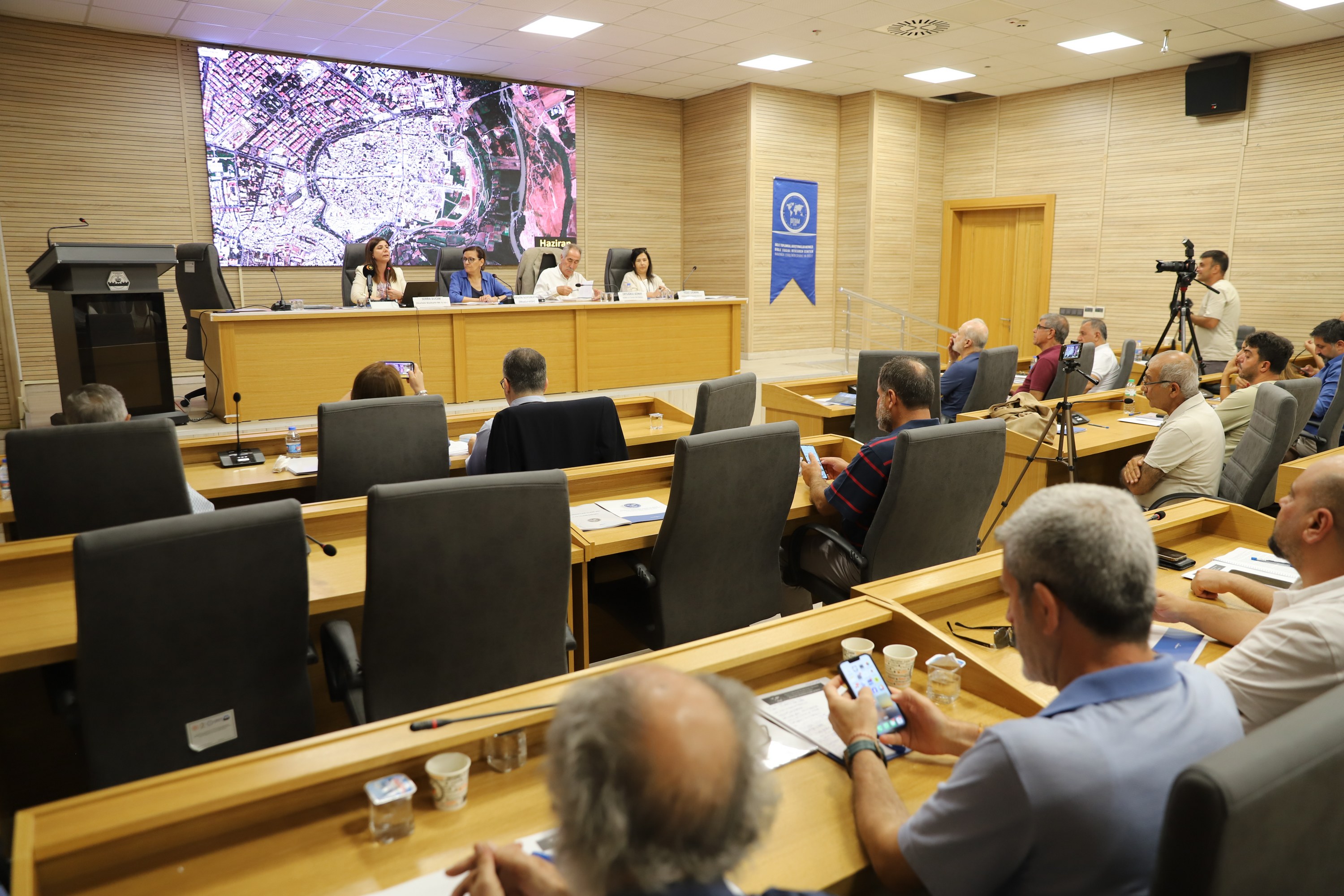
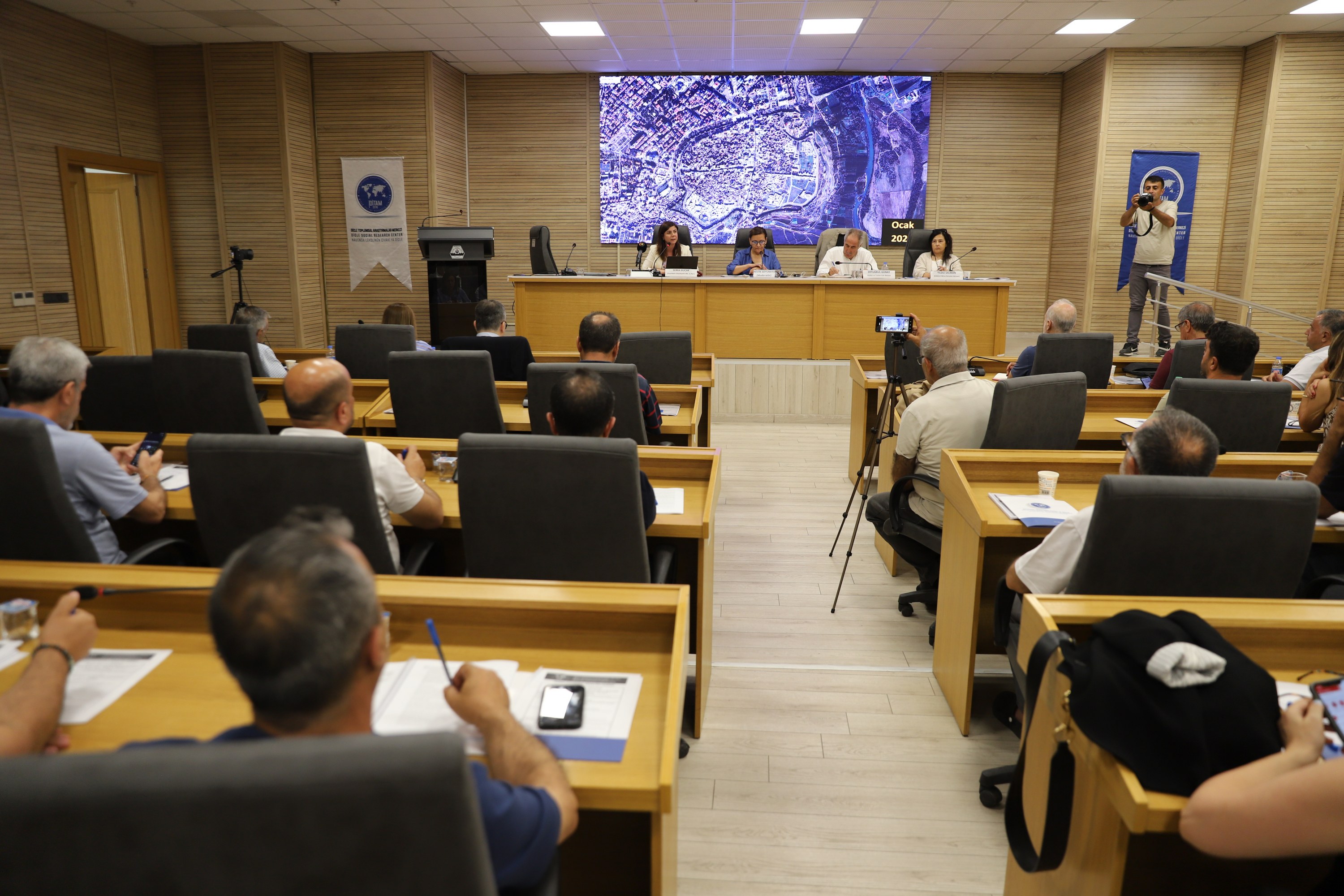
The Diyarbakır Social Research Centre (DİTAM) organised a meeting titled “UNESCO World Heritage: Diyarbakır Fortress and Hevsel Gardens Cultural Landscape Area.” The meeting, held at the Diyarbakır Chamber of Commerce and Industry (DTSO), was attended by Diyarbakır Metropolitan Municipality Co-Mayors Serra Bucak and Doğan Hatun, former Minister of Culture and Tourism Ertuğrul Günay, DİTAM administrators, representatives of civil society organisations, and academics. The current status of Diyarbakır Fortress and Hevsel Gardens, their challenges, and proposed solutions were discussed.
At the meeting, moderated by archaeologist Nevin Soyukaya, Co-Mayor Bucak gave a presentation entitled “Institutional Authority and Implementation Problems in Site Management.”
Co-Mayor Bucak: Protecting cultural heritage is the most important responsibility
Beginning her remarks by greeting the participants, Co-Mayor Bucak thanked DİTAM for organising the meeting. She emphasised that protecting the cultural heritage of this ancient city is one of the most important responsibilities of society, civil initiatives, institutions, chambers, and local governments, stating:
“Undoubtedly, this region has many different fields of struggle — identity struggle, cultural struggle, human rights struggle, and more could be added. But in fact, protecting our cultural heritage, protecting the Diyarbakır Fortress and the Hevsel Gardens, is in my view the very synthesis of all these struggles. And since our election, as local governments we have been discussing what we can do in this difficult period towards that aim.”
Local authorities holding powers
Co-Mayor Bucak stated that they were working to reassert the powers of local administrations and to play a more active role for the common heritage of humanity. Drawing attention to the importance of fostering a universal awareness regarding the protection of cultural assets, Co-Mayor Bucak said:
“There is a regulation published in the Official Gazette in 2005 on site management, the establishment and duties of the Monument and Heritage Board, and the procedures and principles concerning the designation of management areas. It stipulates that in urban conservation areas, local administrations are authorised. The year was 2005. This was of course a very valuable period, and indeed as it should be — local governments were regarded as having authority and responsibility beyond what we are even describing today. Then in 2000 the UNESCO process began. The Diyarbakır City Walls entered the UNESCO World Heritage Tentative List, and the work proceeded within the framework of these regulatory provisions.”
‘With good governance, it is possible to protect and plan the city’
Drawing attention to the approaches the city has faced, Co-Mayor Bucak said:
“Good governance is only possible with all stakeholders — elected representatives, municipalities, municipal councils, the city’s institutions, professional chambers. Only in this way can management also reflect cultural and social diversity. Likewise, the processes of planning and protecting historic cities must be made possible through the participation of the local population. This city has been subjected to a very crude and destructive approach. We are living witnesses of that period. We have multi-layered pains regarding that process. We lost lives amidst all these political and social issues and conflicts. We lost our people. Lives were lost on both sides in this geography. And in that period, our Bar Association President, Tahir Elçi, who stood at the Four-Legged Minaret declaring, ‘I stand for our city, our walls, and our historical heritage,’ was assassinated. So it was not only our cultural heritage, the Hevsel Gardens, or Diyarbakır Fortress that we lost. The destruction there unfolded before our eyes. At the same time, we lost our people, our loved ones.”
‘The 8-Year Summary of Sur is Authority Confusion’
Emphasising that the eight-year summary of cultural heritage and the Sur district is one of authority confusion, Co-Mayor Bucak said:
“It is a confusion where it is unclear who holds responsibility; where, if poor work is carried out, everyone withdraws from the area and disowns it; where matters are left unresolved; where, in terms of architecture, conservation areas, and restoration, nothing is taken care of; where enormous budgets are spent, but when poor outcomes emerge, no one is present on the ground. This is indeed a very troubling situation, one that has also caused great difficulties for us as local governments. Why? Because the power, authority, and responsibility of local administrations in this city are not only those of the municipalities over a given building. All the citizens of this city hold this responsibility and this authority, which is represented and sustained through the municipality and local administrations.”
‘The process led by the Metropolitan Municipality must be restarted’
Stressing the need to protect local identity, culture, and memory against cultural hegemony, Co-Mayor Bucak continued:
“As Amed, as Diyarbakır, as a city, we are here — ready to take an active role, together with our NGOs and associations. Unfortunately, the people of Diyarbakır have been distanced from this awareness and subjected to another form of cultural hegemony. These works must be carried out under the responsibility and leadership of local administrations. A roadmap must be drawn up to end the confusion of authority and responsibility by once again involving local administrations in the process. At the same time, by continuing the protocol we have signed with the Ministry of Culture and Tourism, we intend to restart the process led by the Metropolitan Municipality in order to re-establish our site management plan, and I would like to pledge here today that we will work to be part of this important path.”
‘Peoples Will Reclaim Their History’
Evaluating the UNESCO inscription process as both a positive and a negative turning point, Bucak said:
“The period we are currently going through is a historic process, a historic turning point. We are now in days when peoples will be able to realise their social construction in peace and democracy, and with this libertarian and communal perspective, reclaim their cultural heritage, their memory, and their history. We must work, we must come together, we must sustain this.”