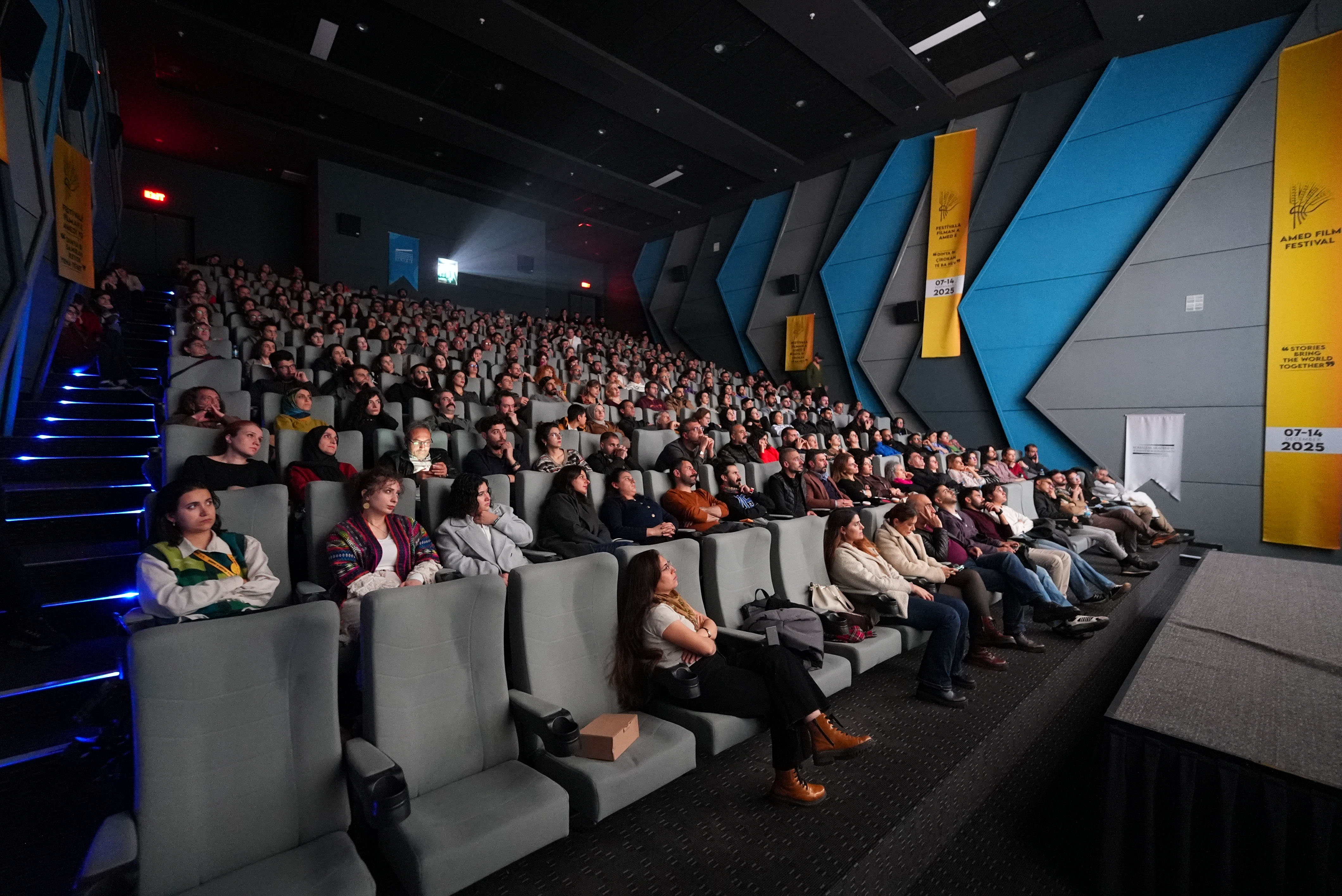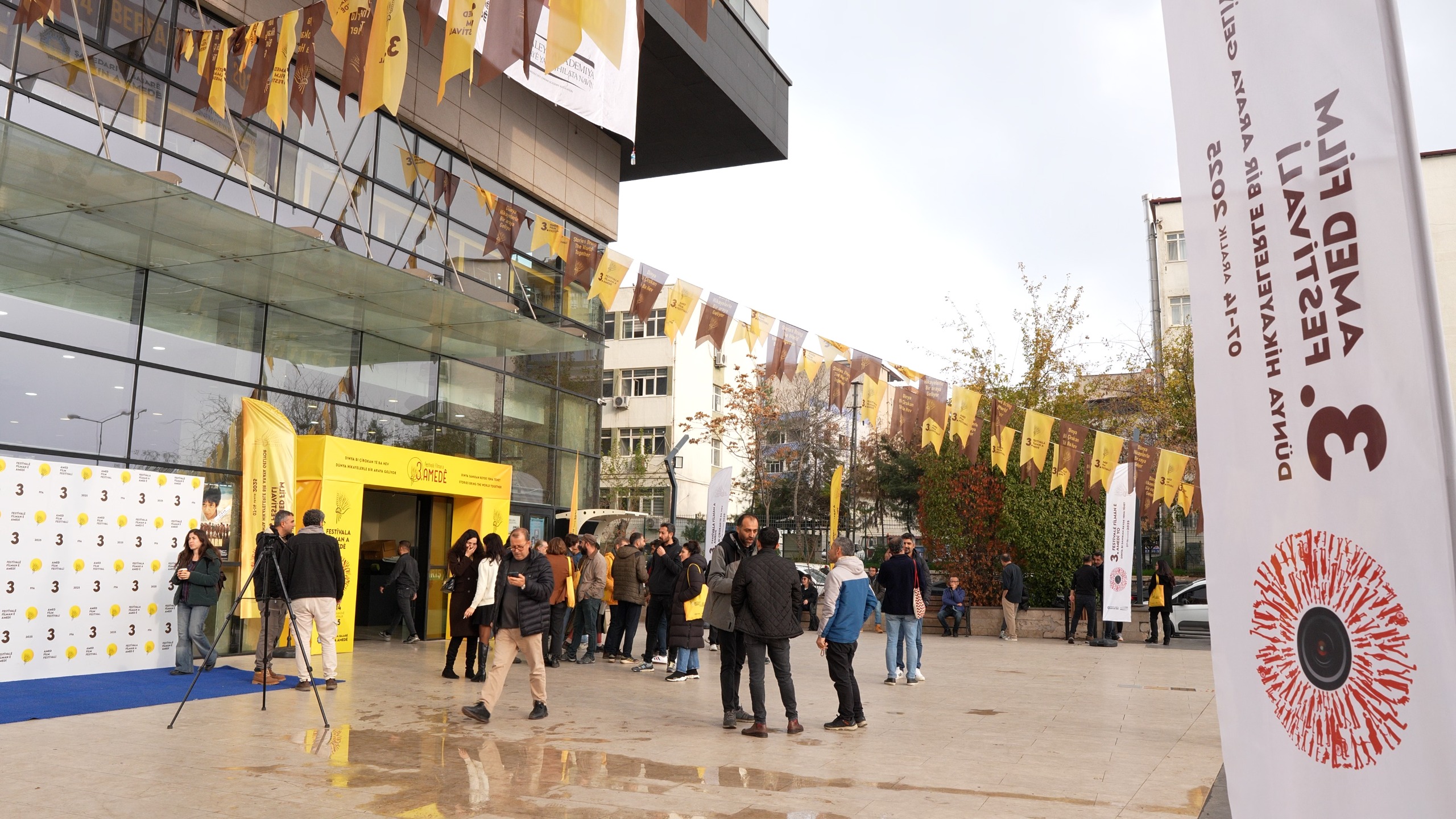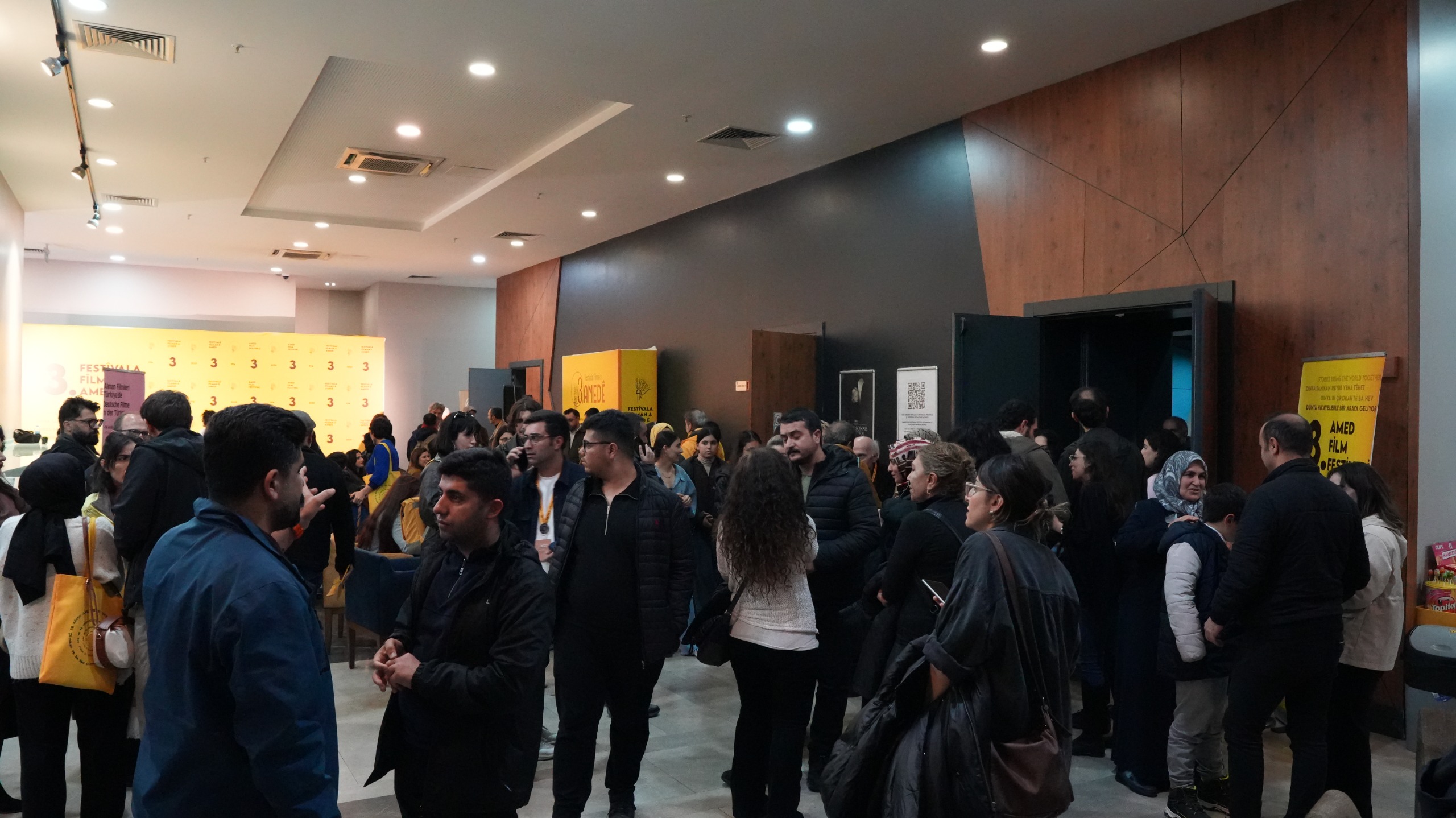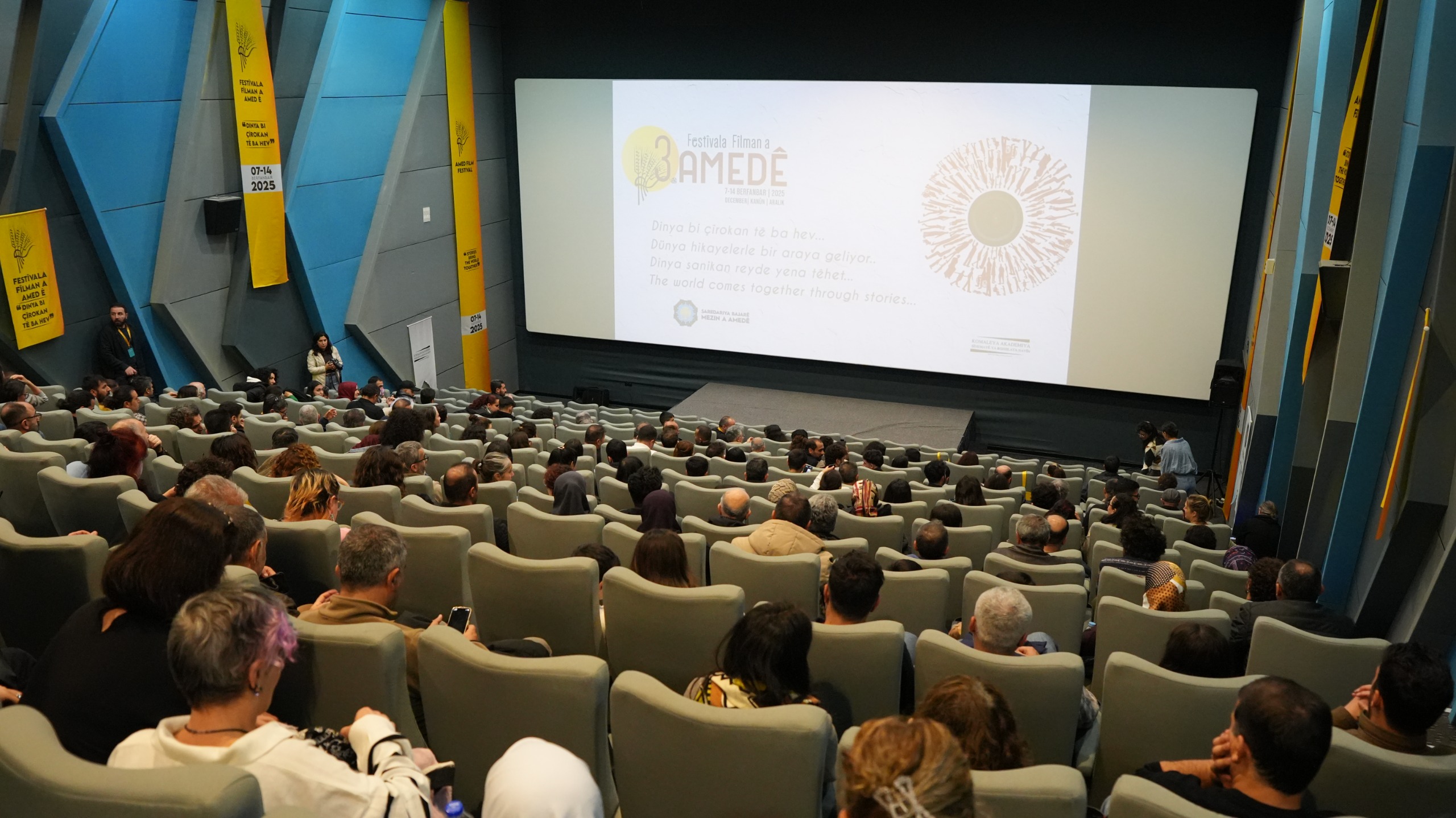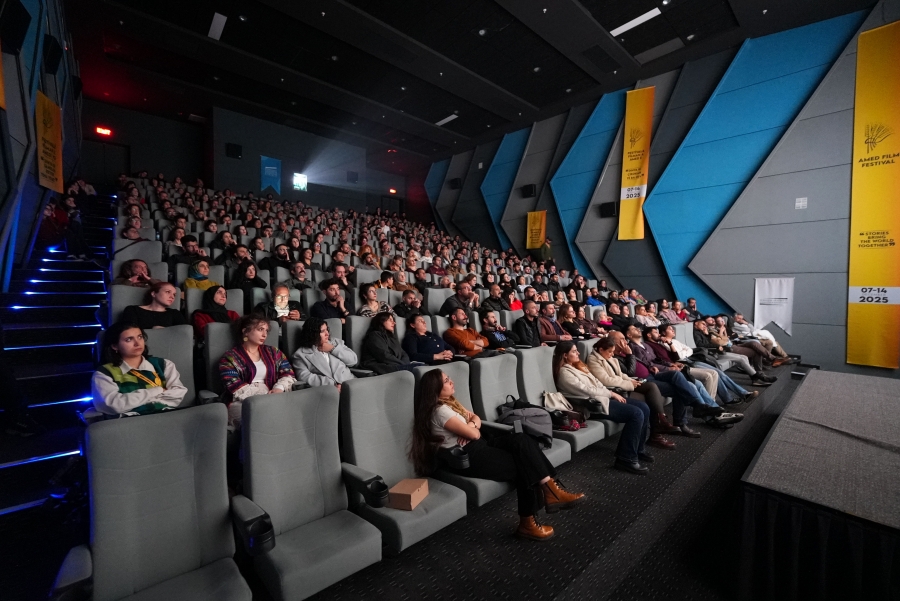
The Çand Amed Culture and Congress Centre has, following the period of trustee administration, once again become a hub for cultural and artistic activity and a meeting place for arts lovers. Opening its doors every month to thousands of people—from cinema and theatre to music and folklore—the venue brought this gathering to a high point with the 3rd Amed International Film Festival.
For nearly two years, the Çand Amed Culture and Congress Centre has served as a major cultural venue, hosting film and theatre performances, festivals, concerts, conferences and panels. With events taking place in various formats throughout the week, the centre’s foundations were laid by Diyarbakır Metropolitan Municipality in 2016 and it was brought into public service within a short time.
Before the cultural centre’s official opening could be held, the cultural and artistic activities that had been planned were halted following the appointment of trustees to municipalities. Theatre practitioners were dismissed from their posts, and the work of the Aram Tigran City Conservatoire was disrupted. Despite this, artists did not give up on producing. Diyarbakır Metropolitan Municipality City Theatre, the Aram Tigran City Conservatoire and the Cinema Unit continued their activities under different names, with the support of institutions and organisations.
After municipalities were won back through elections, the city’s residents, artists and arts audiences were reunited with what they had long missed. Today, Çand Amed brings thousands of people together with the arts every month. We spoke to director Veysi Altay—one of the participants in the 3rd International Amed Film Festival—as well as theatre practitioner Erdal Ceviz and screenwriter-director Hüseyin Kuzu, about witnessing this transformation.
“These kinds of venues should be expanded”
Director Veysi Altay highlighted the importance of the festival’s return after an eight-year break, saying: “We saw incredible energy and participation. It’s very important not only to come as an audience member, but also to engage with the films, to build dialogue with directors, and to be able to offer criticism.”
Recalling the construction phase of the Çand Amed building, Altay described the excitement of that period in these words: “When this building was still under construction, we would come and discuss what kind of halls could be set up, and where meetings and workshops could take place. Because we didn’t have a proper cinema hall. The Metropolitan Municipality had taken an important step in that direction. But the political climate and the trustee period postponed everything we had dreamed of.”
Emphasising that Kurdish filmmakers, musicians and actors continued producing despite all pressure, Altay stressed the importance of such spaces: “Diyarbakır needs places like these where art can be practised. These are venues where international artists can also come and present their work. For that reason, these spaces should be expanded, and local authorities should fulfil their responsibility to ensure access to culture and the arts.”
“An attempt was made to cut off hope”
Theatre actor and director Erdal Ceviz, drawing on his experiences in Istanbul during periods when Kurdish cultural and artistic work was prohibited, said the story began in a basement flat in Tarlabaşı. Describing it as “a story of coming up from the basement”, Ceviz said Kurdish-language theatre, music and cinema were shaped by the aim of reaching wider stages.
Ceviz noted that in the 2000s—particularly in Diyarbakır—festivals, theatres and touring productions became increasingly widespread, and stressed that the construction of the Çand Amed Culture and Congress Centre was an important step in consolidating that accumulation. Recalling that cultural and artistic activities were halted following the appointment of trustees, Ceviz said: “The intention was to cut off this momentum and this hope. The pressures were not limited to venues; they continued through arrests, detentions and bans.”
Despite this, Ceviz said, artists went on to create their own spaces again, and that theatre and music work, as well as festivals, continued in spite of all the difficulties.
“The festival needs to be remodelled”
Screenwriter-director Hüseyin Kuzu said that the relationship between Kurdish students and arts and culture began in the 1990s at the Mesopotamia Cultural Centre in Istanbul, and that this process continued through workshop programmes in Diyarbakır. Noting that a cinema workshop held in 2003 laid the foundations of Kurdish cinema, Kuzu said many people trained through that initiative are now producing work as directors and screenwriters.
Kuzu stated that, during the period of trustee administration, Diyarbakır’s creative energy shifted to other centres, but that today this energy has returned to the city. While the festival, he said, presented an overall positive picture, he also warned of the risk of becoming confined within a fixed model: “Being international matters, but preserving originality is essential. Kurds are a culture capable of such originality.”
Emphasising that festivals should no longer remain limited to physical venues alone, Kuzu said digital possibilities should also be brought into the process, adding: “If Diyarbakır is to build stronger links with the world, festivals need to be remodelled.”