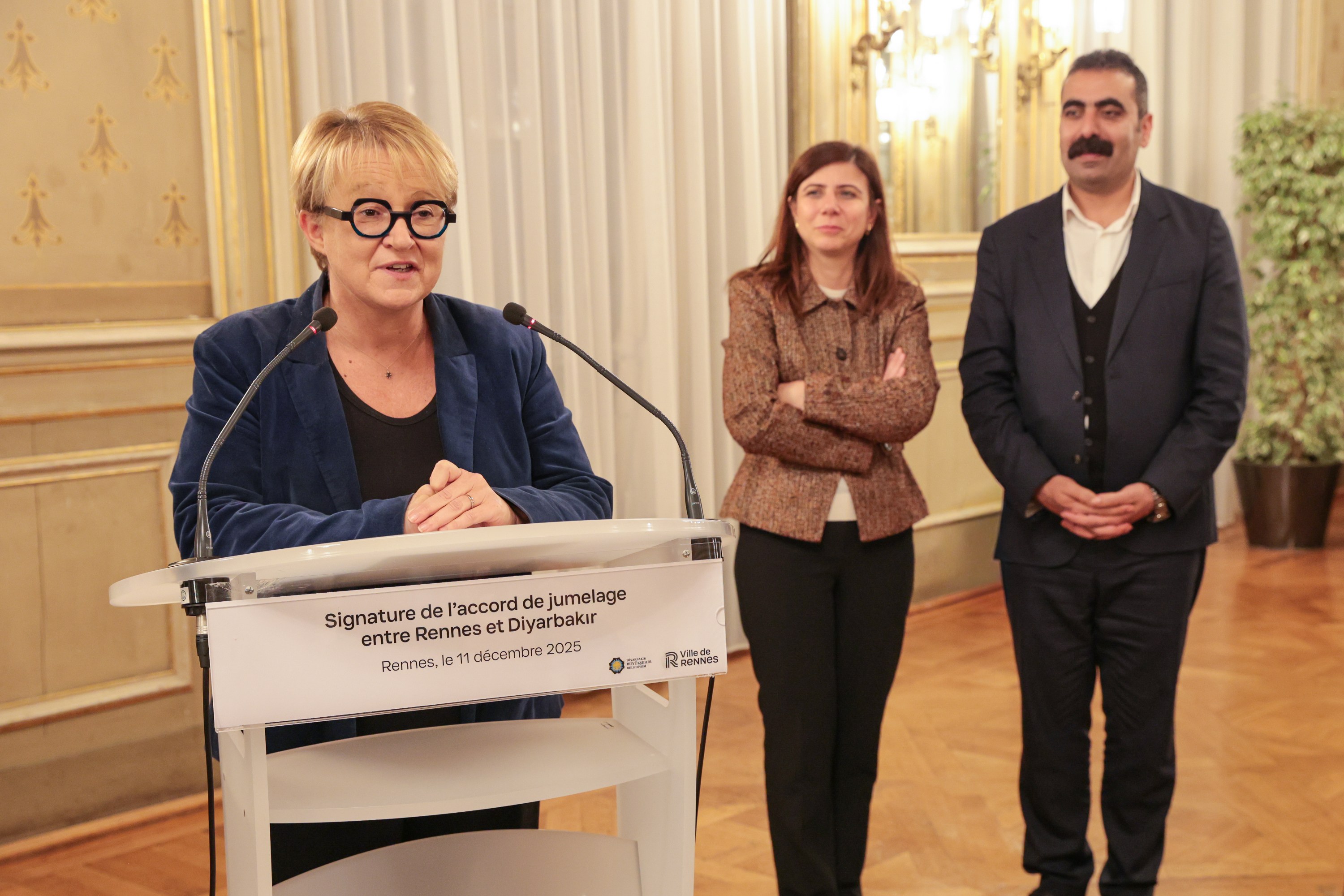
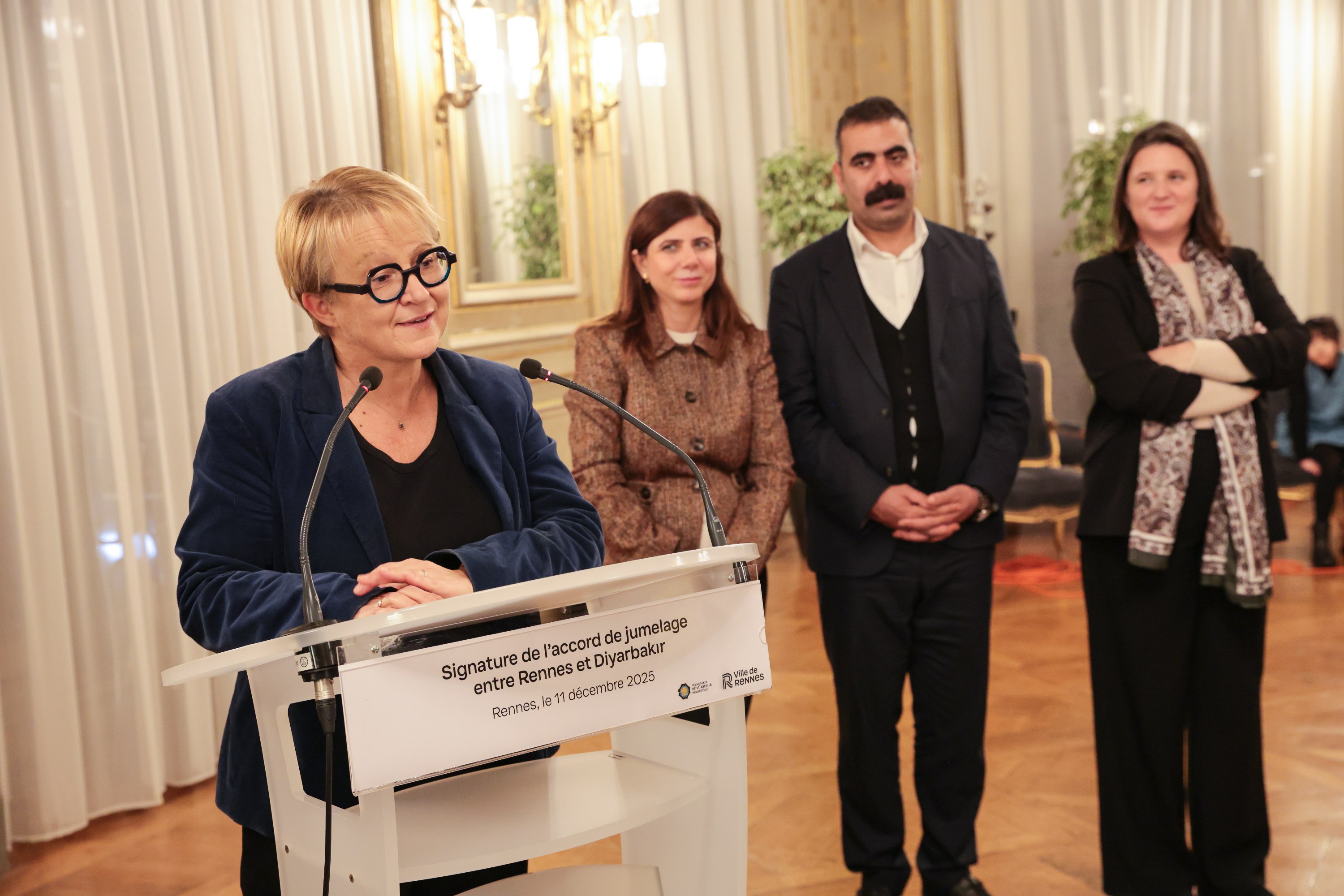
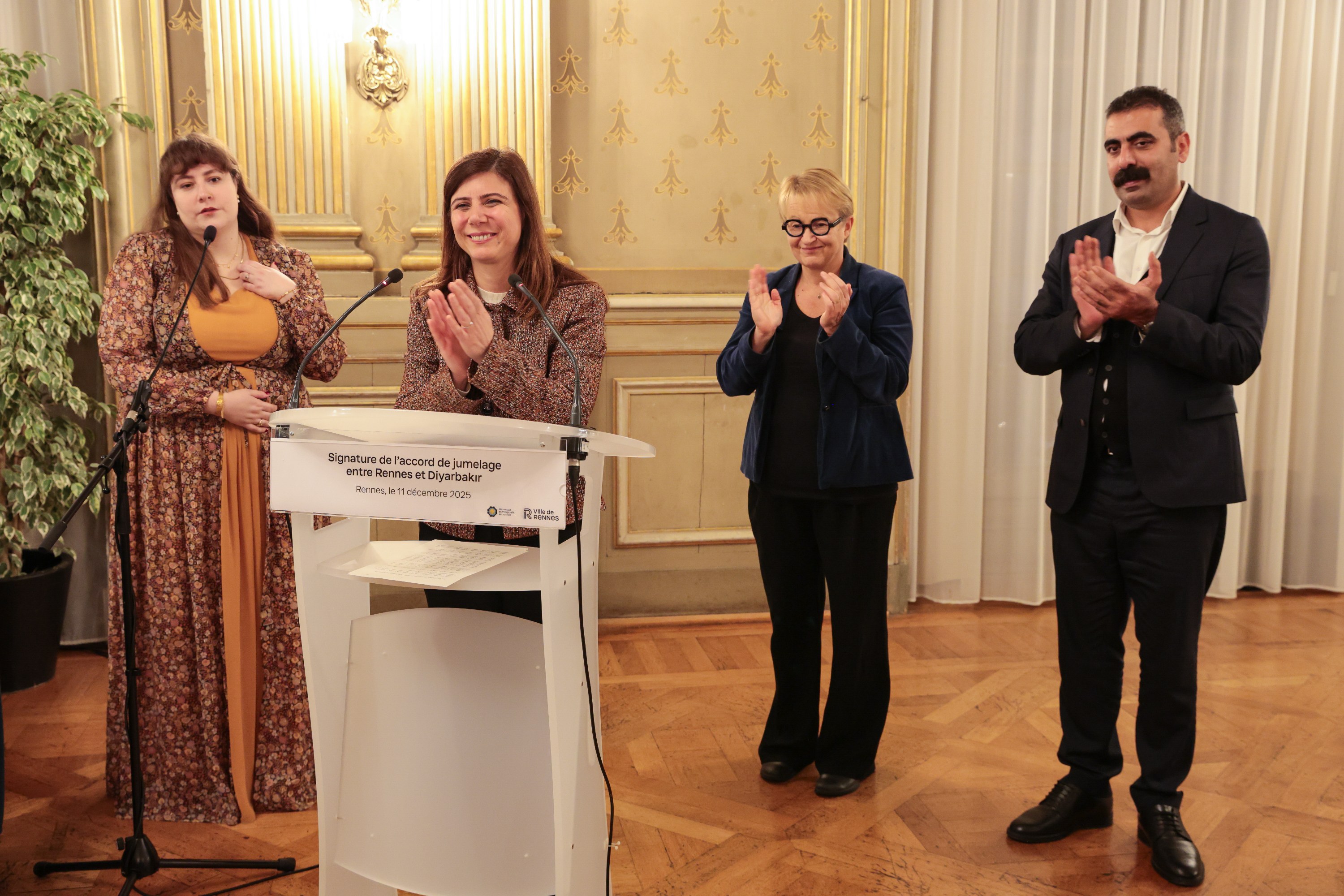
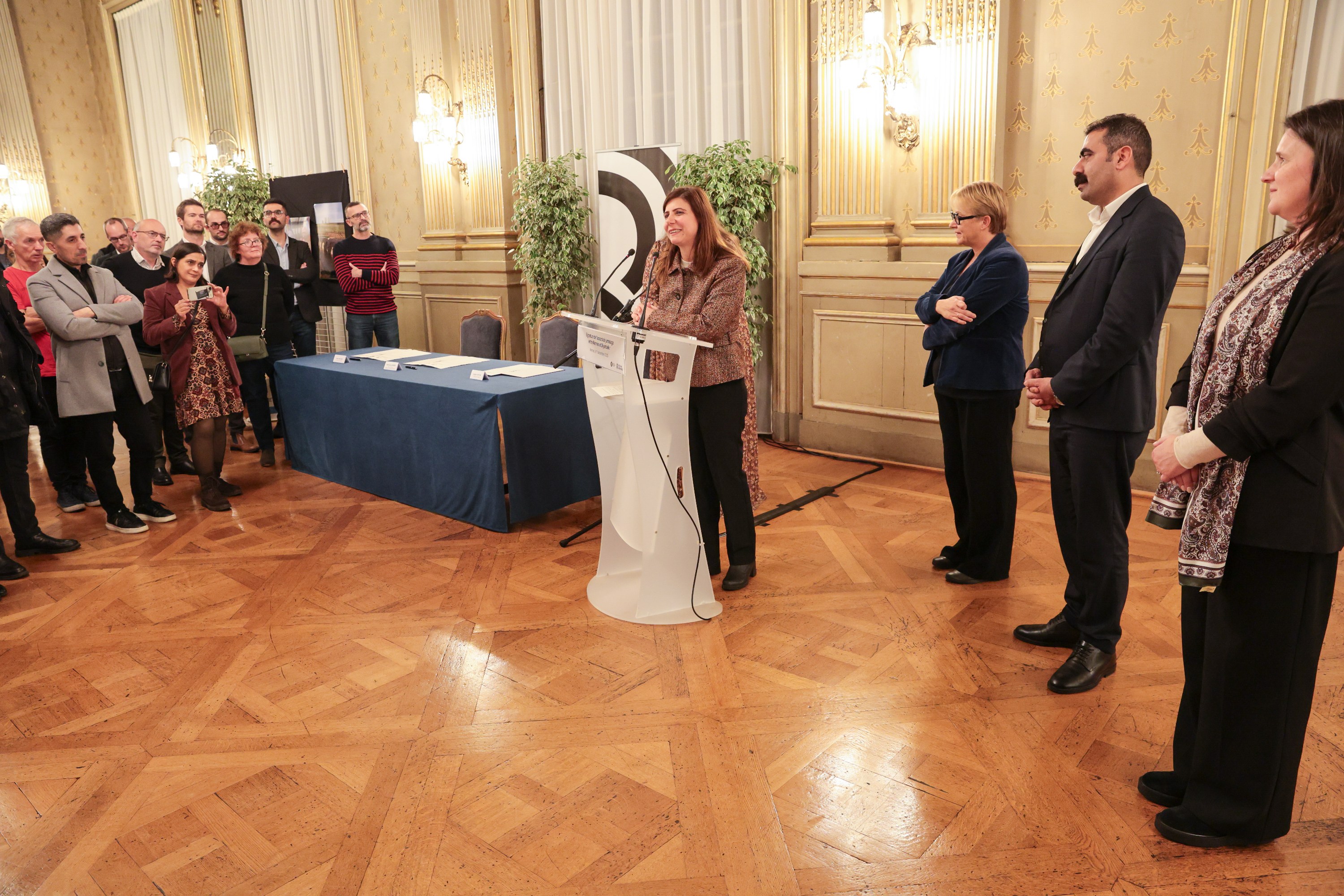
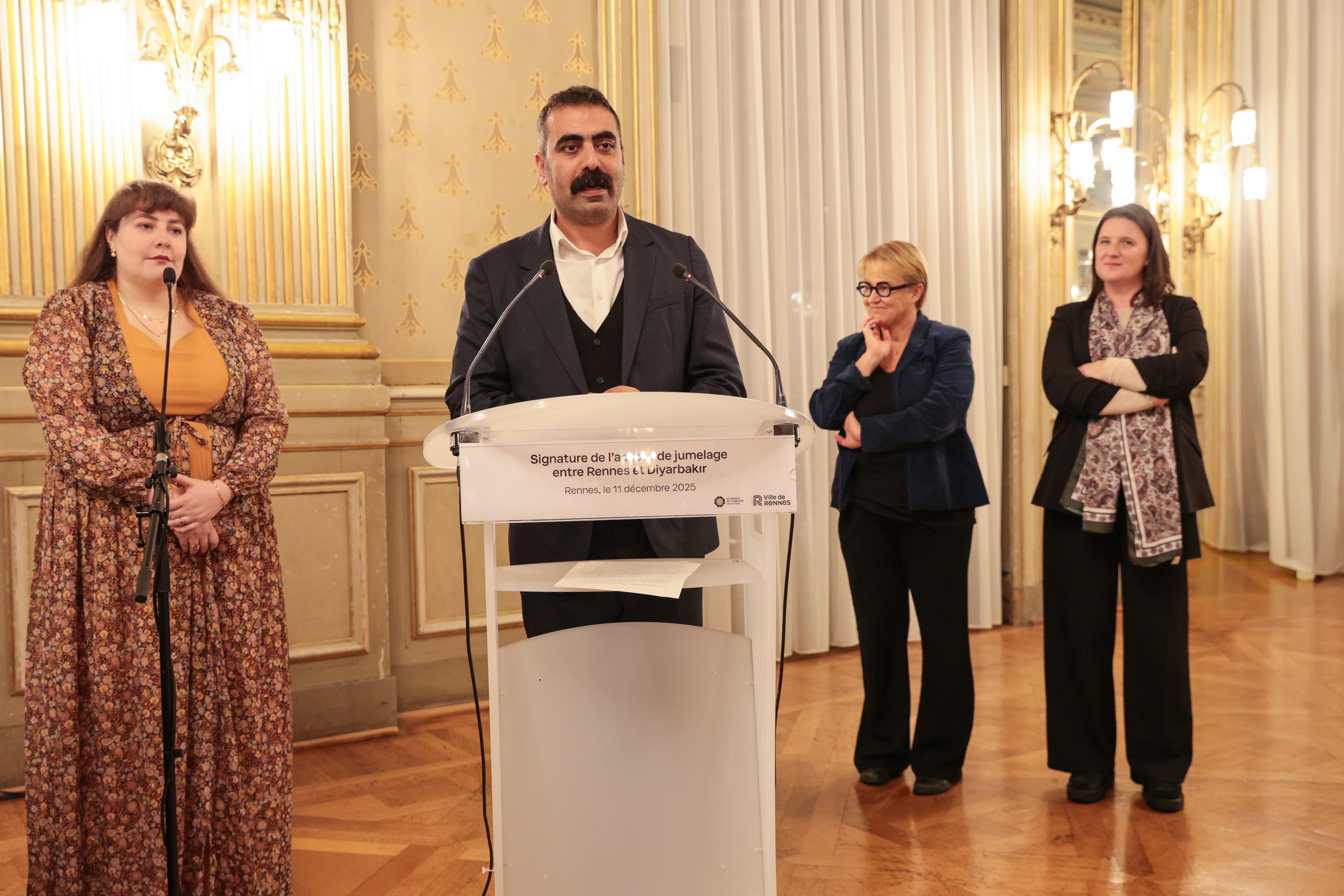
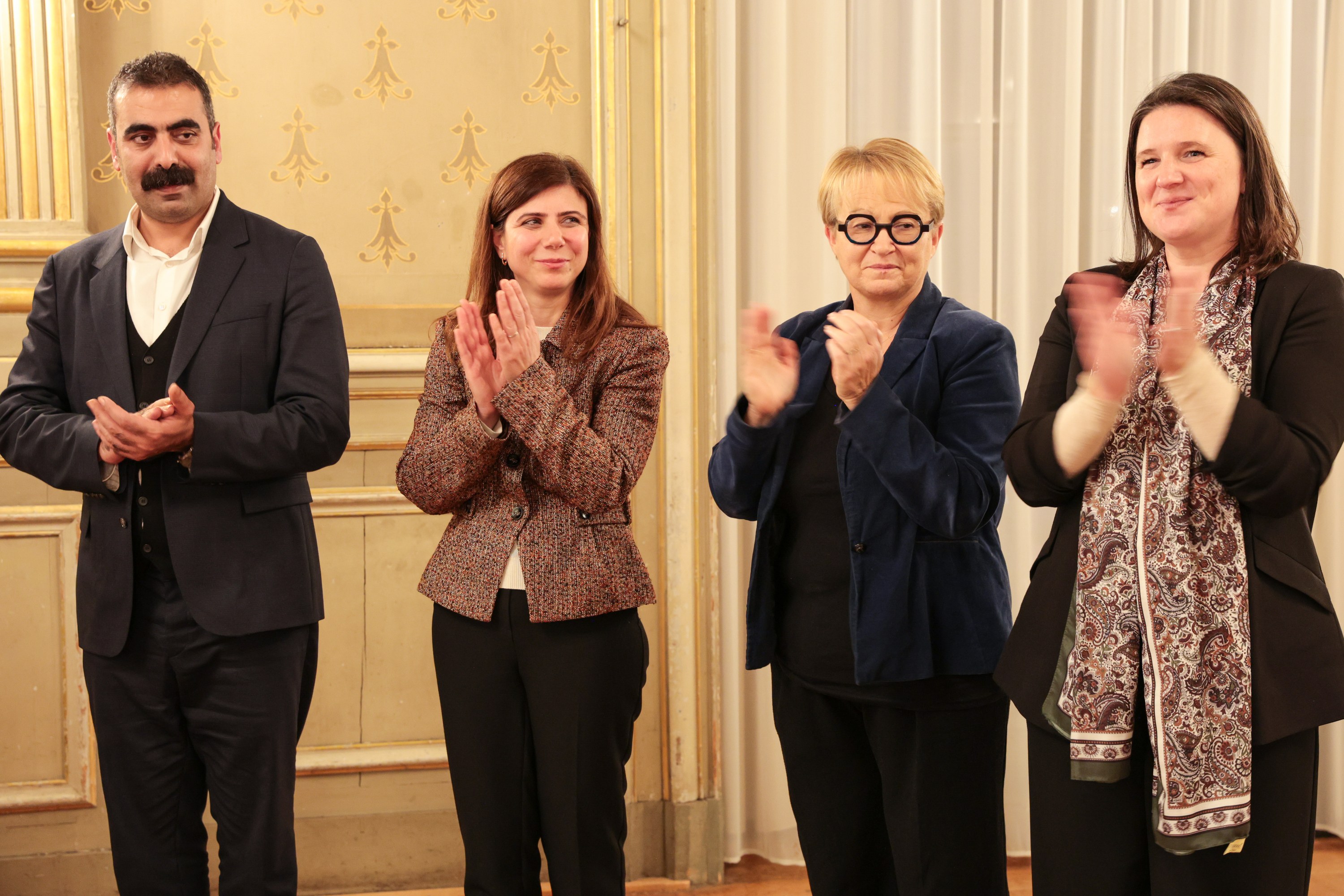
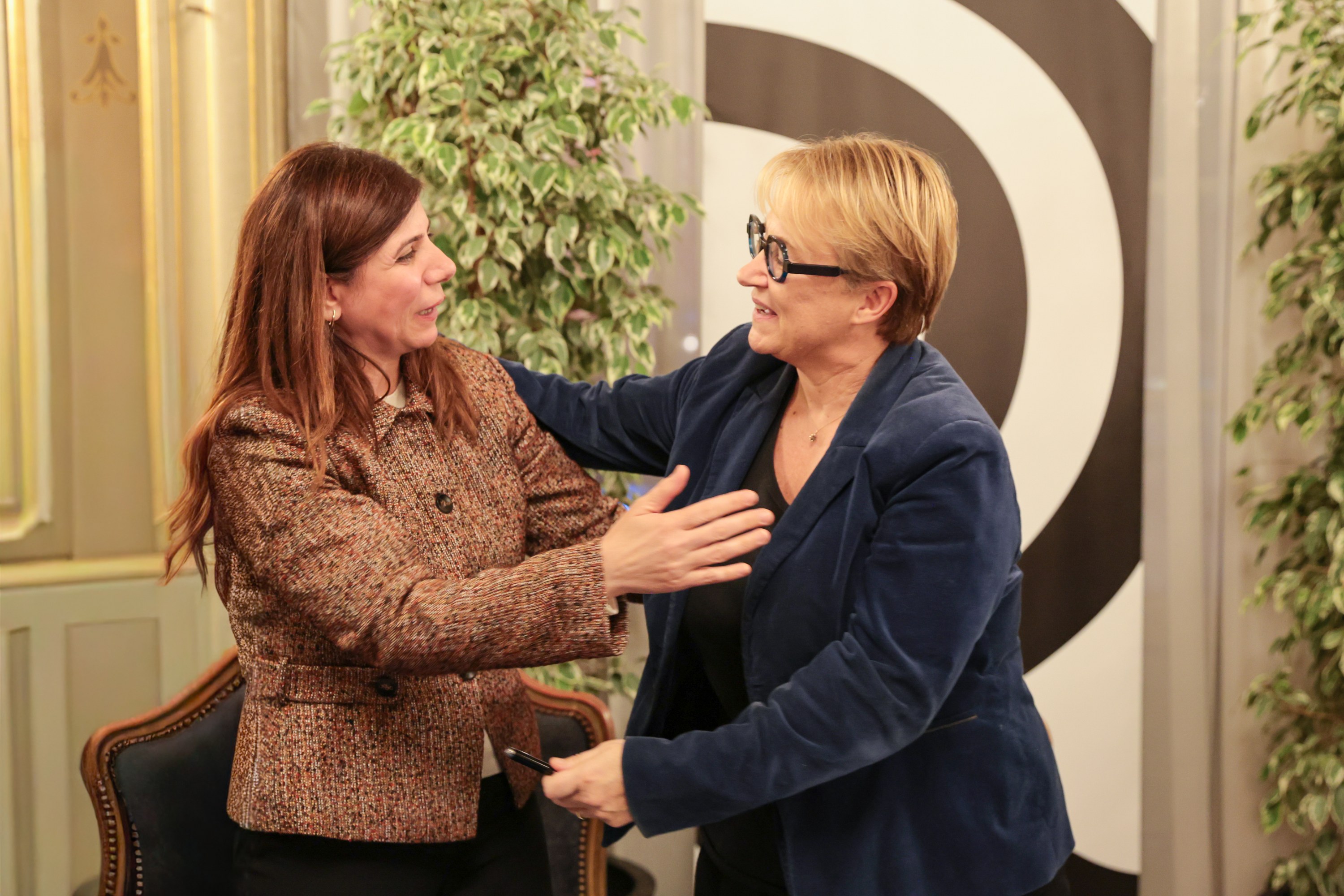
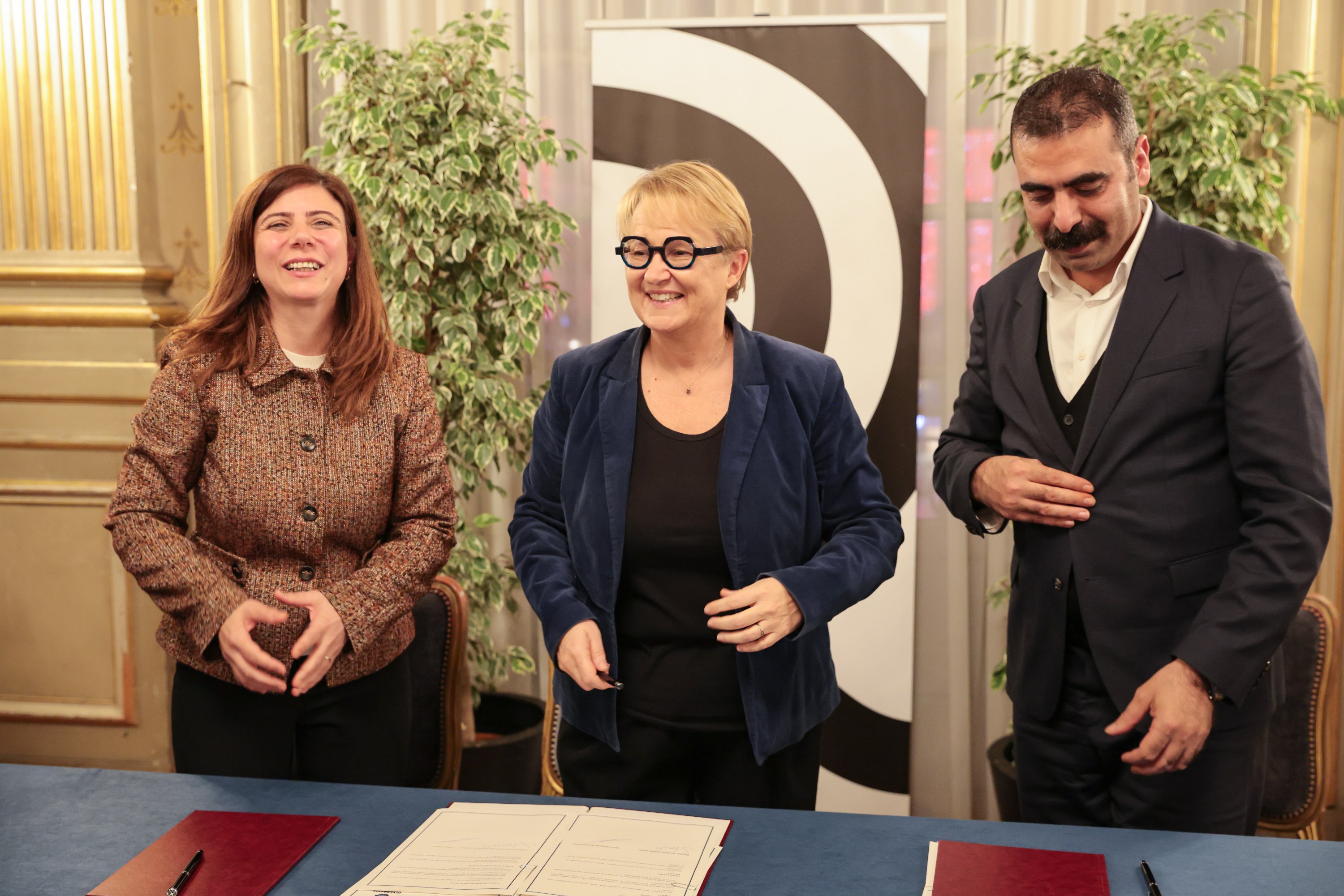
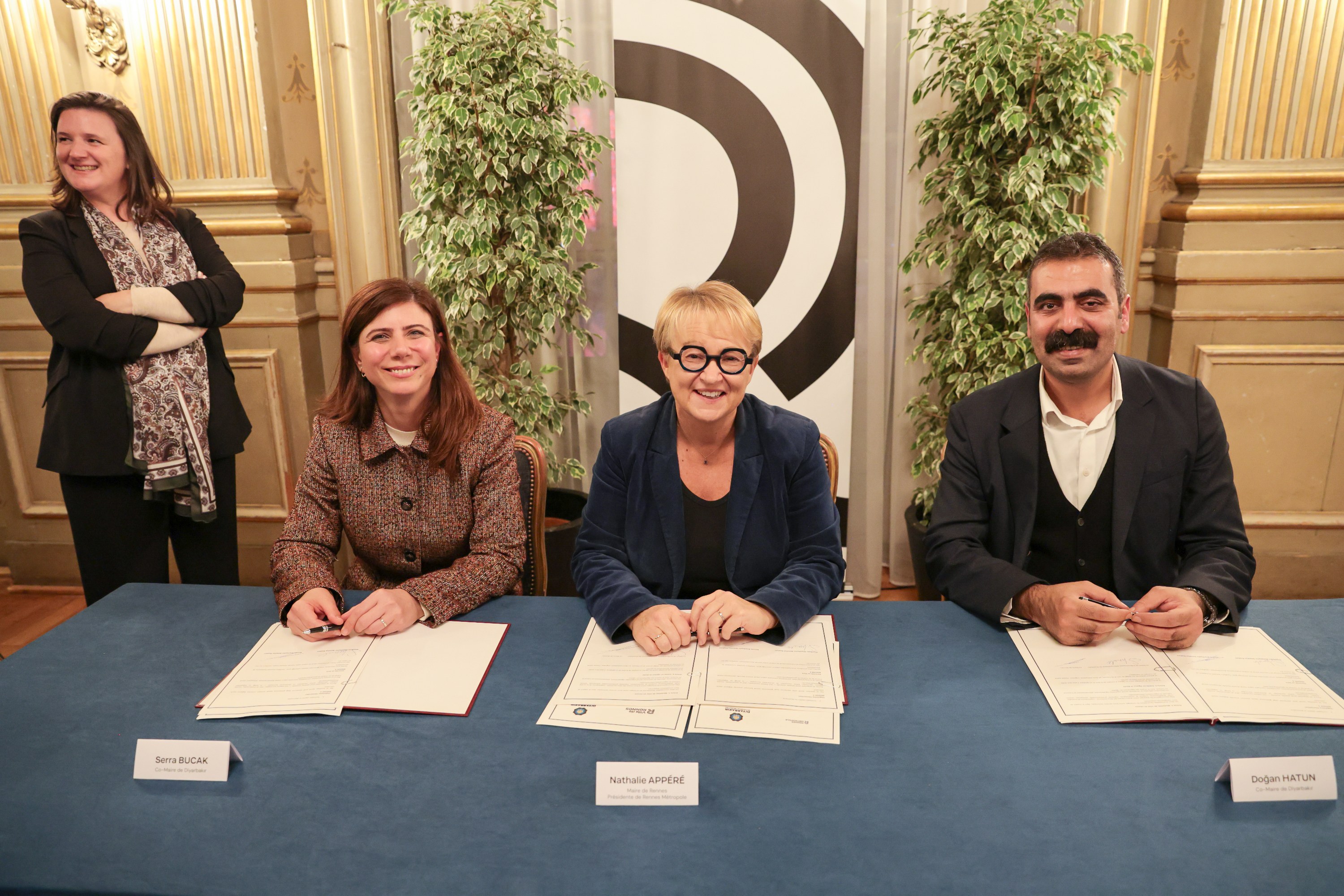
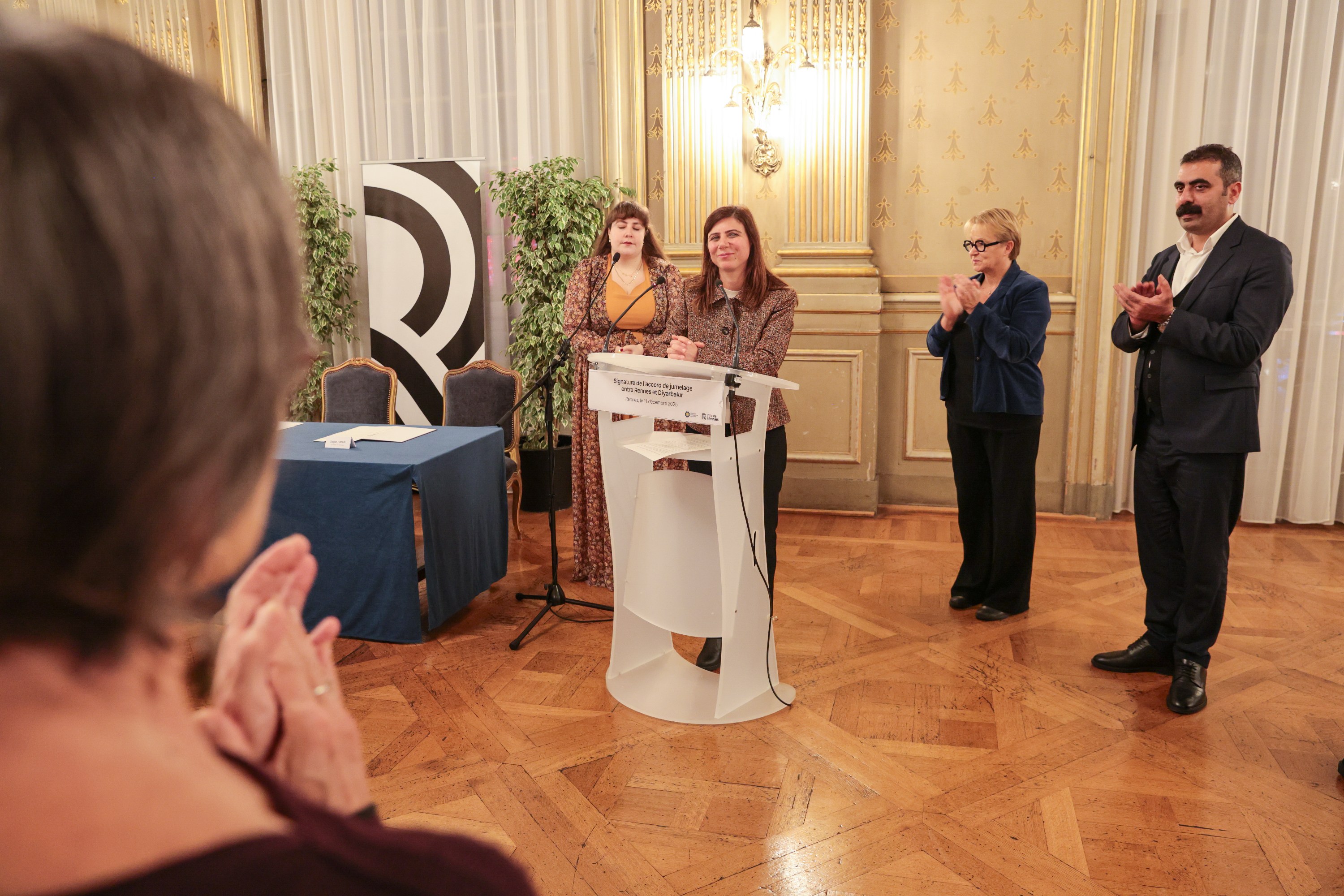
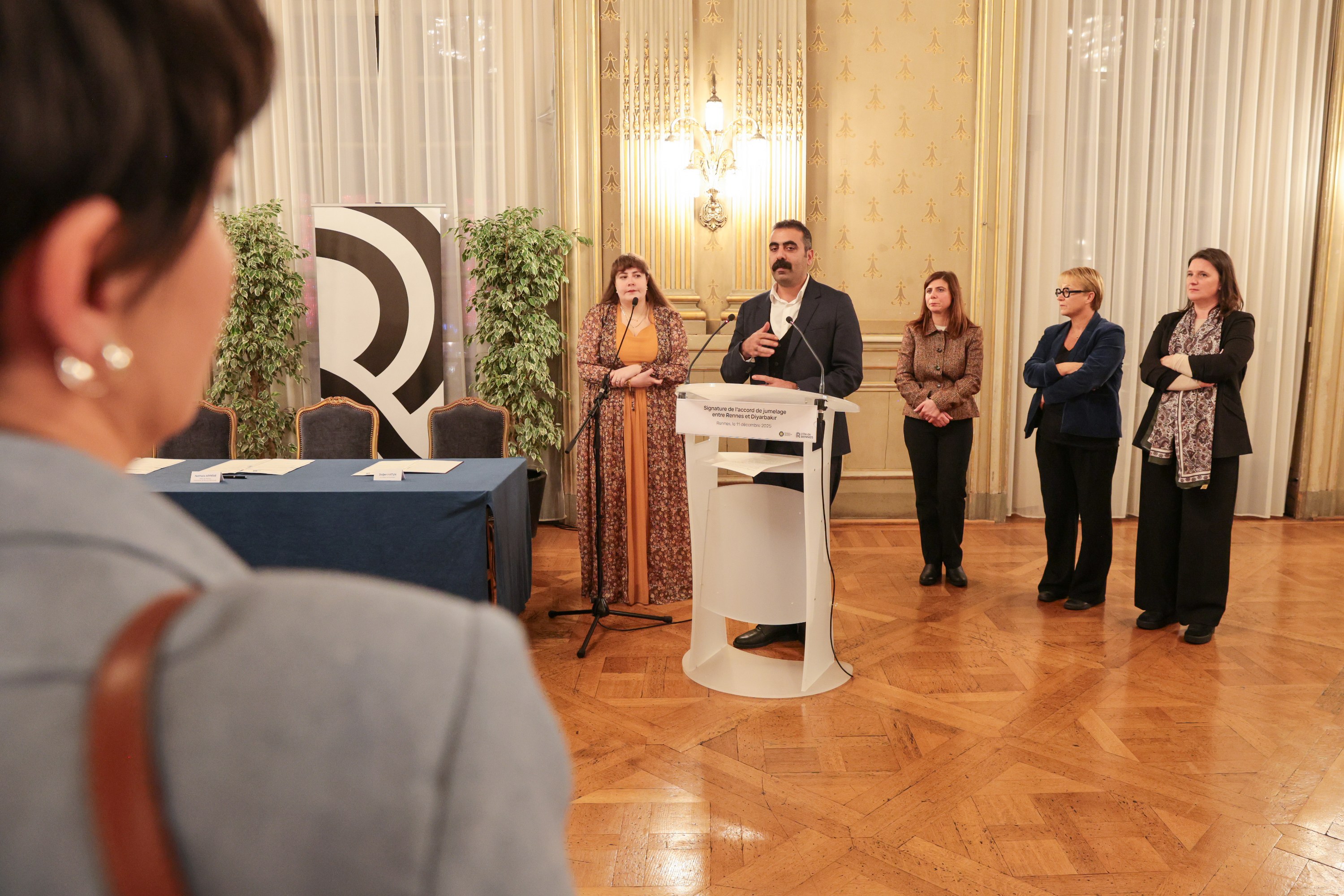
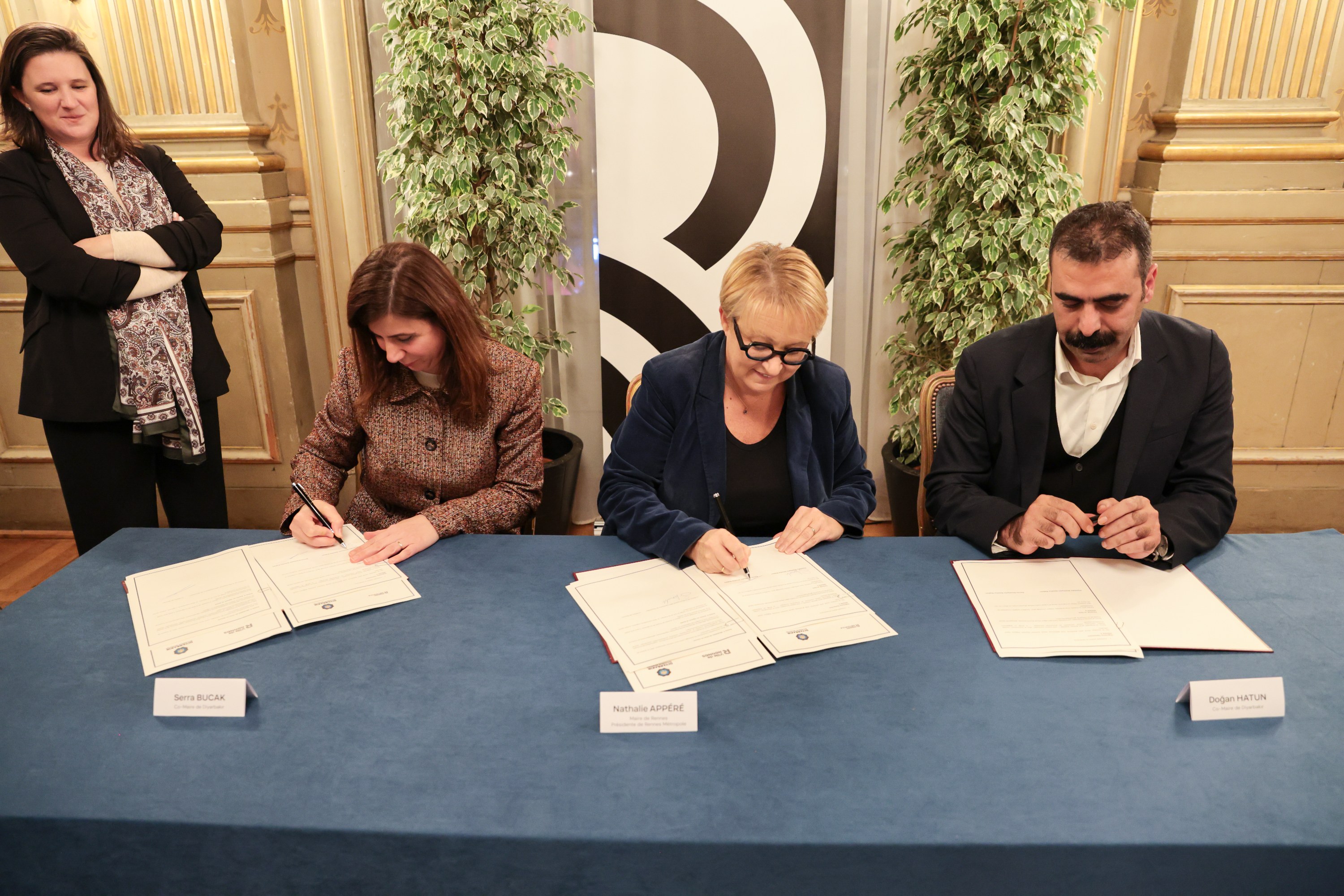
A sister-city protocol between Diyarbakır Metropolitan Municipality and the City of Rennes, France, was signed in Rennes. Co-Mayors Serra Bucak and Doğan Hatun said the protocol represents not only technical cooperation but also a shared commitment to egalitarian and democratic values, while Rennes Mayor Nathalie Appéré stated that a 40-year friendship has now been formalised through the agreement.
The sister-city protocol—aimed at developing joint work across a broad range of areas, from solid waste management to cultural cooperation—was signed by Diyarbakır Metropolitan Municipality Co-Mayors Serra Bucak and Doğan Hatun and Rennes Mayor Nathalie Appéré. The agreement is Rennes’ first sister-city protocol in 20 years, and also marks Diyarbakır Metropolitan Municipality’s first official international cooperation protocol.
‘This is your home now, too’
Speaking at the signing ceremony, Rennes Mayor Nathalie Appéré underlined that bringing people together around music and culture carries a universal meaning. Expressing her pleasure at hosting Co-Mayors Serra Bucak and Doğan Hatun and the delegation at the City Hall, Appéré said it was a great honour to welcome the Diyarbakır delegation to what they regard as “the people’s house”, adding: “This is your home now, too.”
‘A historic step has been taken’
Mayor Nathalie Appéré said that an almost 40-year friendship has now been formalised through this protocol, calling it a historic step that brings together the roots and destinies of the two cities. She noted that the agreement carries particular significance as it is the first sister-city protocol Rennes has signed in 20 years. Recalling that Rennes has a strong tradition of twinning, Appéré underlined that every partnership has its own distinct historical importance.
‘The process began in 1979’
Appéré said the sister-city protocol represents not only cooperation between two institutions, but also a sharing of values aimed at building a peaceful future between two peoples, adding that international relations are among Rennes’ core areas of work. Referring to the history of solidarity with Diyarbakır, she recalled that the process began in 1979, when buses were sent to the city following a call by Mehdi Zana, and deepened between 2009 and 2011 through the Ben û Sen neighbourhood reconstruction project. She added that ties were cut during the 2016 trustee (kayyım) period and the arrest of mayors, yet despite this they continued their struggle and maintained calls for solidarity against rights violations.
A partnership between peoples
Appéré said it was no coincidence that there was a desire to revive relations after the election of the Co-Mayors, noting that cooperation had already begun through practical projects such as waste separation. She stressed that this new phase represents a partnership extending from elected leaders to technical teams—and, most importantly, to the people of both cities.
‘A new chapter begins today’
In her remarks, Mayor Nathalie Appéré thanked the Brittany Kurdish Solidarity Association, noting that the association has long served as a bridge between the two cities. Saying that Diyarbakır and Rennes have the capacity to strengthen shared humanitarian and democratic values, she added: “A new chapter begins today; we will continue to inspire one another and enrich one another.”
Co-Mayor Bucak: This meeting carries great meaning
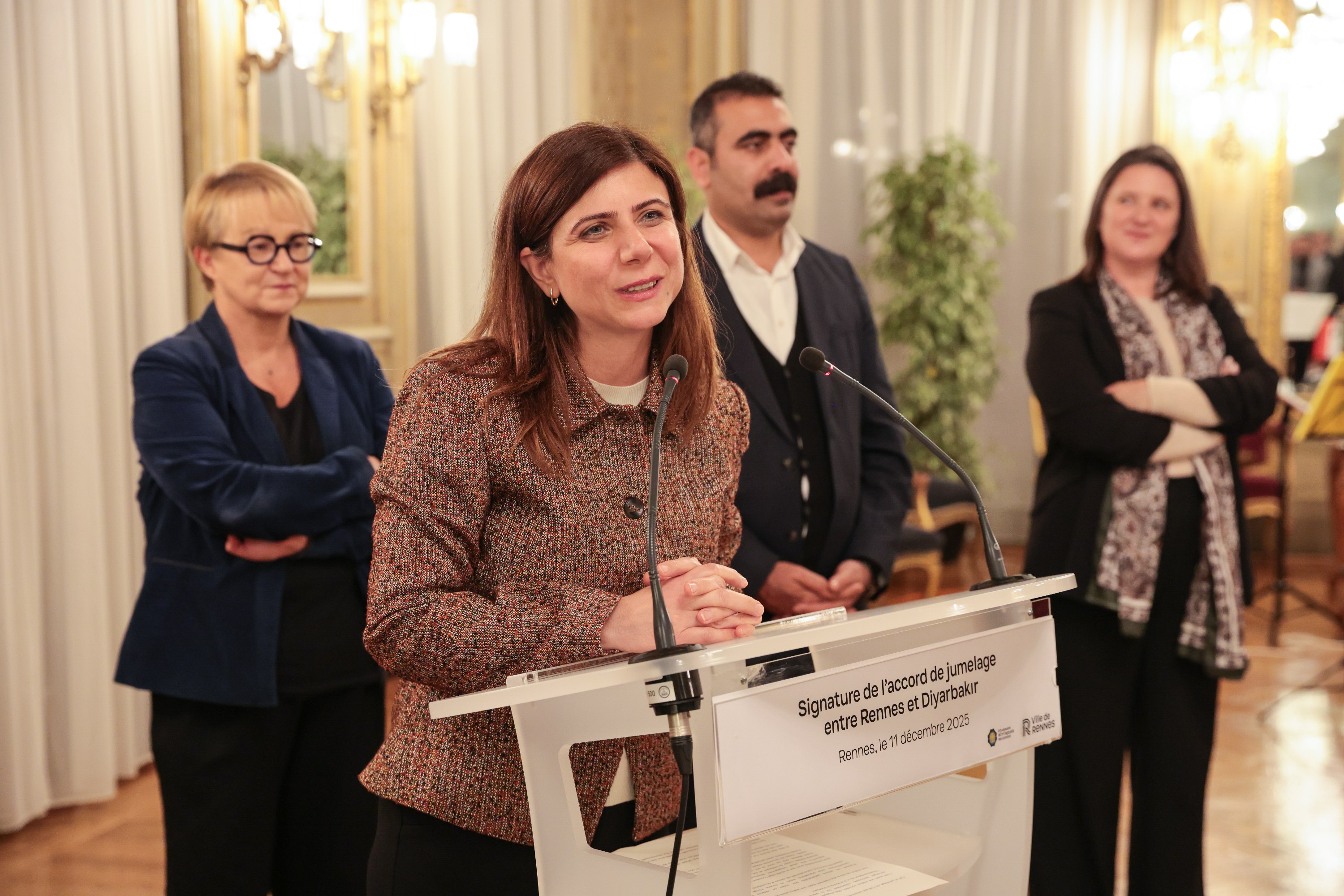
Co-Mayor Serra Bucak began by greeting all guests in the hall. She said the warm and friendly welcome from the City of Rennes was an honour, and noted that the meeting carries great significance not only for the two municipalities but also for the long-standing friendship and shared legacy of struggle between the Kurdish and Breton peoples. Bucak underlined that Rennes knows well the Kurdish people’s more than century-long struggle for democracy, freedom and existence against denial and assimilation, and said she believes solidarity will be carried forward by new generations as well.
A shared commitment to democratic values
Co-Mayor Bucak said that, after eight years during which the public will was disregarded under the trustee (kayyım) takeover, being welcomed in Rennes as elected co-mayors carried deep meaning for them. She stressed that the protocol represents not only technical cooperation but also a shared commitment to egalitarian and democratic values. Bucak added that exchange of experience between the two peoples—alongside the broader struggle for democracy and Kurdish women’s journey towards freedom—will mutually nourish and strengthen one another.
‘We have signed an international sister-city protocol for the first time’
Recalling that Diyarbakır Metropolitan Municipality had not previously had any international sister-city relationship, Bucak said this had not been possible due to policies of repression, but that they have now signed an international twinning protocol for the first time. “Rennes has become Diyarbakır’s first international sister municipality, and that is extremely precious to us,” she said.
Co-Mayor Hatun: Bridges of friendship have been built
Co-Mayor Doğan Hatun delivered her speech in Kurdish, drawing attention to the sacred value the Kurdish language holds for the people. Highlighting Amed’s historical and symbolic importance, Hatun recalled that Mehdi Zana—the first elected mayor of Diyarbakır—sent a letter to the people of France on the day he took office to ask for support, and that the first bridges of friendship with Rennes were built in those years. She said that this friendship has now evolved into a strong relationship, both institutionally and between the two peoples. Noting that Kurdish organisations in many places, including Rennes and Paris, have built links with local communities, she thanked all friends for their solidarity.
‘A bond of sisterhood has been forged’
Hatun stressed that the sister-city protocol signed with the City of Rennes is far more than a technical cooperation agreement, describing it as a genuine bond of sisterhood between two peoples. “Just as Amed means so much to us, Rennes now carries the same value,” she said, adding that the people of Rennes could also regard Diyarbakır as their home. Hatun noted that during her visit she saw signage in both French and Breton, describing this as an achievement of the struggle to protect cultural rights.
‘We wanted to share this culture with the people of Rennes’
Emphasising that the Kurdish people’s cultural heritage stretches back thousands of years, Hatun said the lands of Amed carry a 12,000-year-old civilisation and that even the name of their culture is rooted in the land—calling it a sacred legacy. Saying they wished to share this culture and language with the people of Rennes, she added: “We hope all of you will visit Amed, see this ancient culture where it lives, and honour it together.”
Hatun also said that despite decades of conflict in the Middle East, the Kurdish people have never sought war or bloodshed, and have always defended fraternity among peoples and progress. She added that the protocol is a reflection of this peaceful approach.
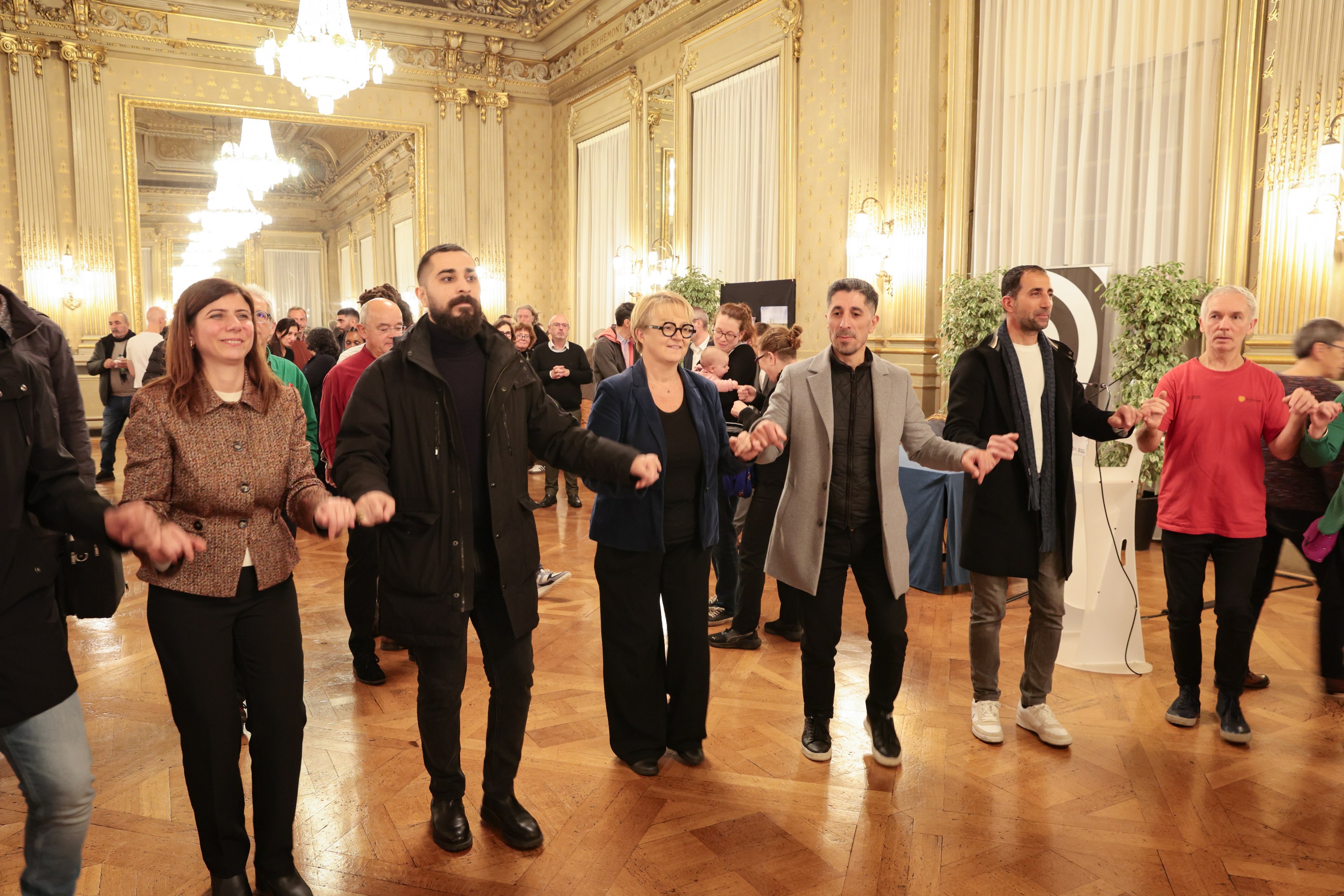
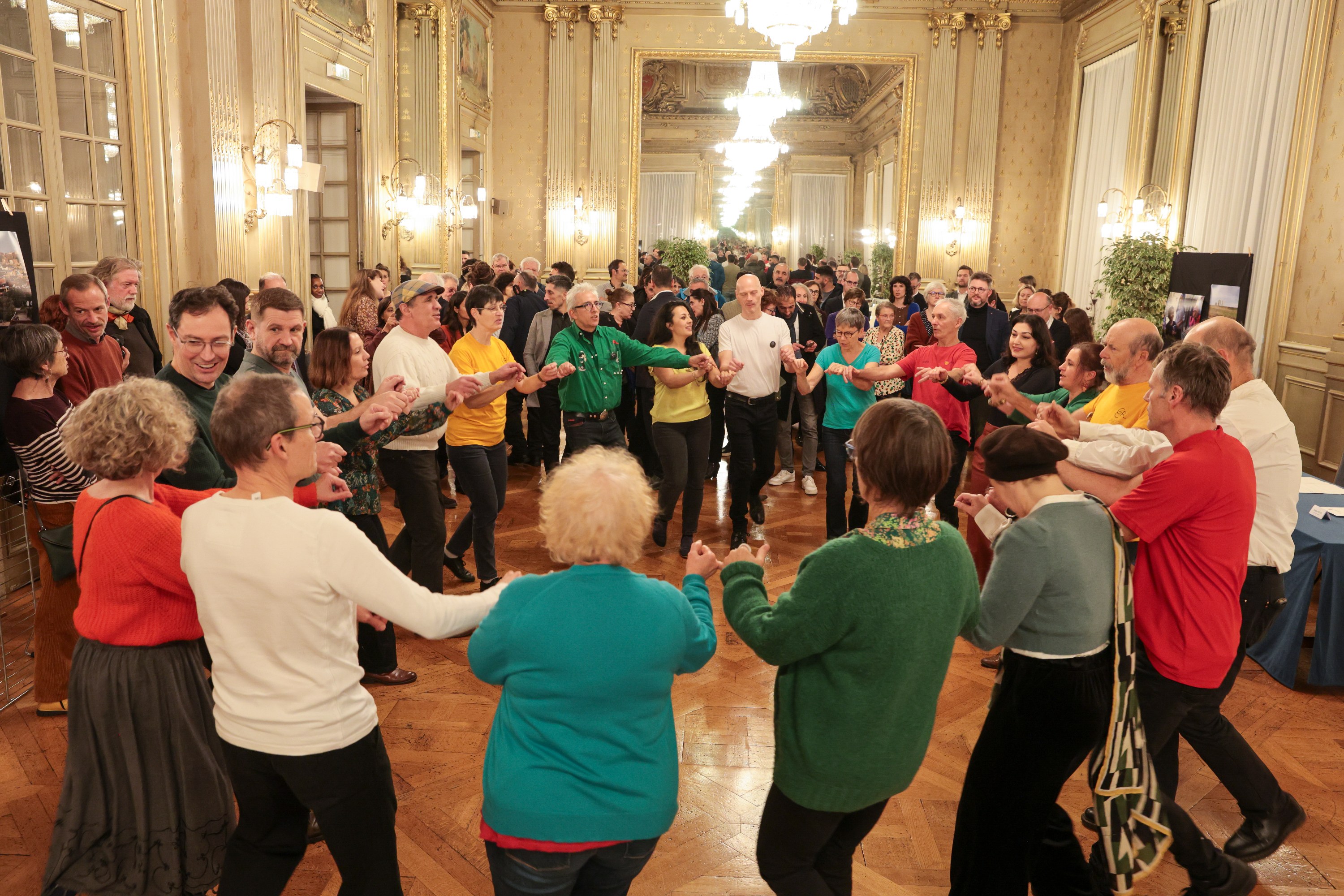
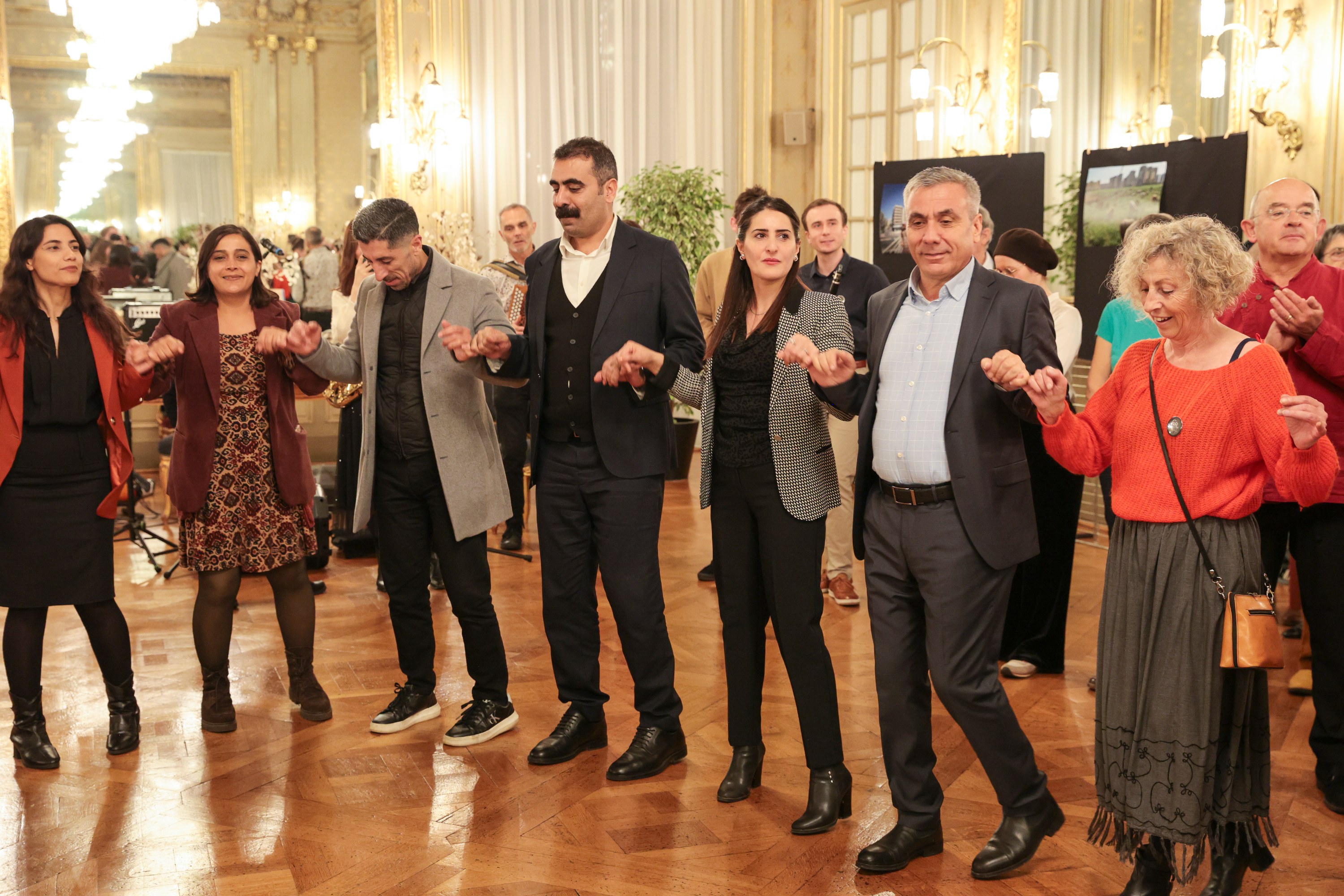
Following the signing ceremony, Co-Mayors Bucak and Hatun, Rennes Mayor Nathalie Appéré and participants joined hands for a halay dance.