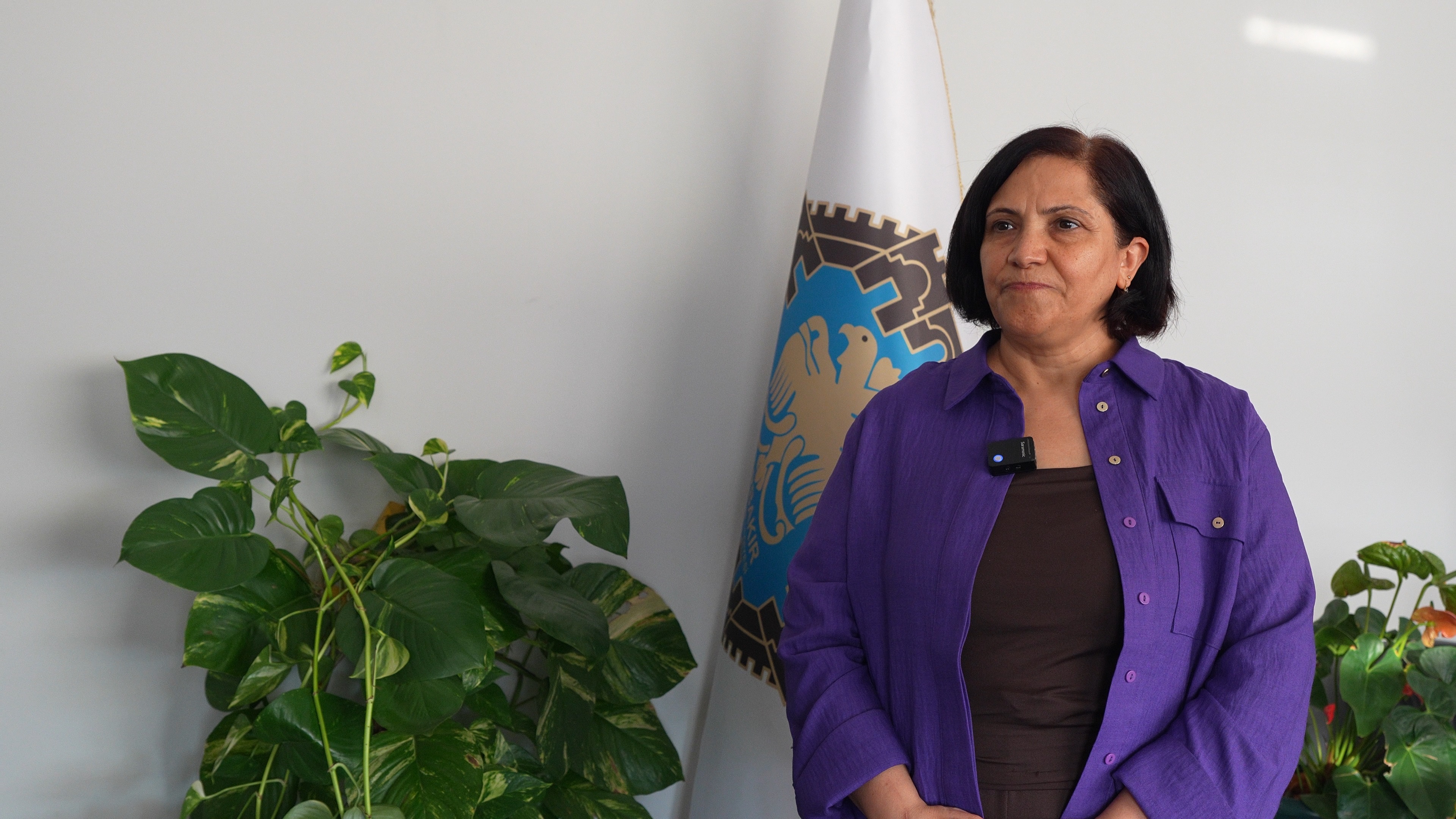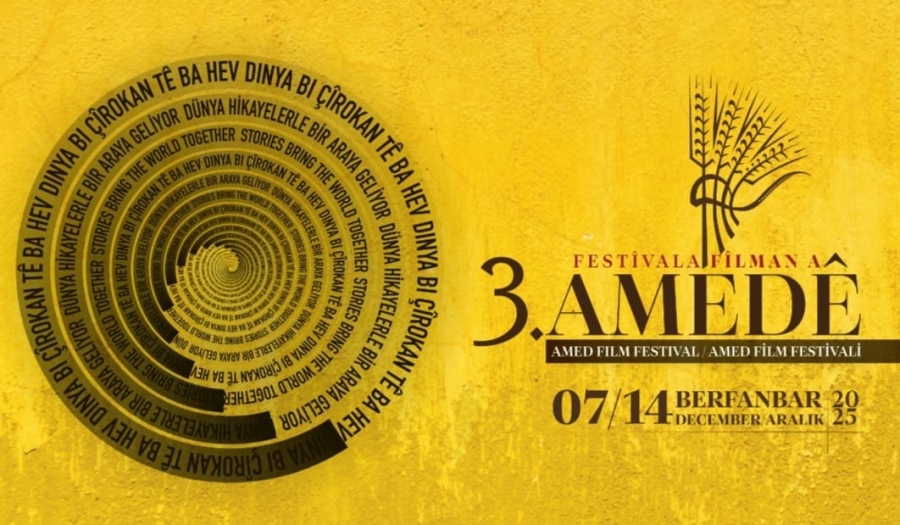
Diyarbakır Metropolitan Municipality’s 3rd Amed International Film Festival will return to Diyarbakır after an eight-year hiatus, bringing cinema lovers 84 film screenings alongside workshops, Q&A sessions and special selections. As the countdown begins, Head of the Department of Culture, Arts and Social Affairs Zeynep Yaş and festival coordinator Lisa Çalan invited the public to follow the festival.
Hosted by Diyarbakır Metropolitan Municipality, the 3rd International Amed Film Festival will run from 7 to 14 December, with a comprehensive programme featuring screenings of 84 films. Delivered by the Middle East Cinema Academy and Sînebîr, the festival will offer a rich line-up including national and international selections, masterclasses, workshops, talks and exhibition events.
Alongside a dedicated section titled “The Journey of Kurdish Cinema”, focusing on the past eight years of Kurdish filmmaking, the programme will also present productions from Turkish and world cinema. In addition, to support Kurdish-language screenplays, 15 projects will compete under the Sînebîr Project Fund. The festival’s opening film will be the documentary Kardeş Türküler, directed by Çayan Demirel and Ayşe Çetinbaş.
‘We’re feeling the excitement of the festival’
Festival coordinator Lisa Çalan said they are delighted to be bringing the 3rd Amed Film Festival back after eight years, underlining that the period has been difficult not only for the city and society in Türkiye, but also for Kurdish cinema. “It has been an extremely challenging time for Kurdish cinema in terms of asserting itself and reaching audiences,” Çalan said. “Our main focus at this festival is an eight-year panorama. Through short films, feature films and documentaries made during this period, we aim to bring Kurdish cinema back to audiences here in Amed.”
Recalling that directors had also become largely disconnected from one another during this time, Çalan said the festival would help rebuild networks of solidarity and create the conditions and space for renewed organisation and collective action.
Noting that festivals typically screen films from the past two years, Çalan continued: “For us, the journey of Kurdish cinema and the stories it tells matter—and that always remains relevant. Because Kurdish cinema addresses current issues head-on, it holds a central place in the festival’s main theme.”
Funding support for three projects
Çalan also noted that securing funding and project support is very difficult for Kurdish filmmakers. For this reason, she said, the festival will provide support for feature-length, documentary and short-film projects: “We will offer project support of one million lira for a feature film, 500,000 lira for a documentary and 300,000 lira for a short film. In this way, we will create space for filmmaking and begin a new phase of preparation for the years ahead.”
Joint selections put together
Stressing that their aim is both to expand networks of solidarity and to create space—especially for alternative and independent filmmakers—Çalan said: “When we look at the world, independent filmmakers are increasingly unable to reach audiences in cinemas because of digital platforms. That is why we have curated selections through a range of partnerships. With contributions from the Clermont-Ferrand Festival, Kino – German Film Days and DokuFest, we have built a strong programme. This kind of solidarity network not only creates room for festivals to grow further in the future, but also opens up opportunities for collaboration between directors. For us, these networks of solidarity matter.”
Saying that the public will shape the festival, Çalan noted that they will rebuild their audience base. “It is especially important that the younger generation watches these films and becomes a part of these stories—our motto reflects that: we say the world comes together through stories. Cinema, as a collective space, brings everyone together and is a way of creating new stories and new realities. The festival is one of the most important pillars of that,” she said.
‘Diyarbakır has missed days like these’
Head of the Department of Culture, Arts and Social Affairs Zeynep Yaş said the third Amed Film Festival would resume from where it left off—stronger than before—adding: “We have restarted this process in Diyarbakır with the spirit of a festival where we will encounter more stories of peace and fraternity.”
Yaş added that the festival will feature 84 feature-length films, shorts and documentaries, and that 15 screenplay projects across three categories will compete for project support—creating a foundation for new films to be produced. Noting that audiences will be able to watch films long awaited in Diyarbakır and across the region, Yaş said: “Diyarbakır has really missed days like these.”
‘We invite our residents to watch the films’
Noting that the city will, after many years, welcome guests arriving from across the world, Yaş said: “We hope this festival will help position the city—during this period and in the years ahead, alongside peace—as a natural set for hundreds of films to be shot here. That is why this gathering matters. We will have guests from all over the world. We want to welcome directors, film crews and producers, and bring them into an atmosphere where we can also introduce our own cultural heritage. Festivals are organised above all with this intention of bringing people together. We invite all our residents to come and watch these films.”
Yaş added that, under this year’s theme of “cultural memory”, the festival will begin with an exhibition on the story behind Yılmaz Güney’s film Yol. She also invited local residents to attend Ali Akbar Muradi’s concert and to watch the opening film, the documentary Kardeş Türküler.
Festival programme
You can access the one-week programme of the 3rd International Amed Film Festival here:
https://online.fliphtml5.com/iuxre/skul/