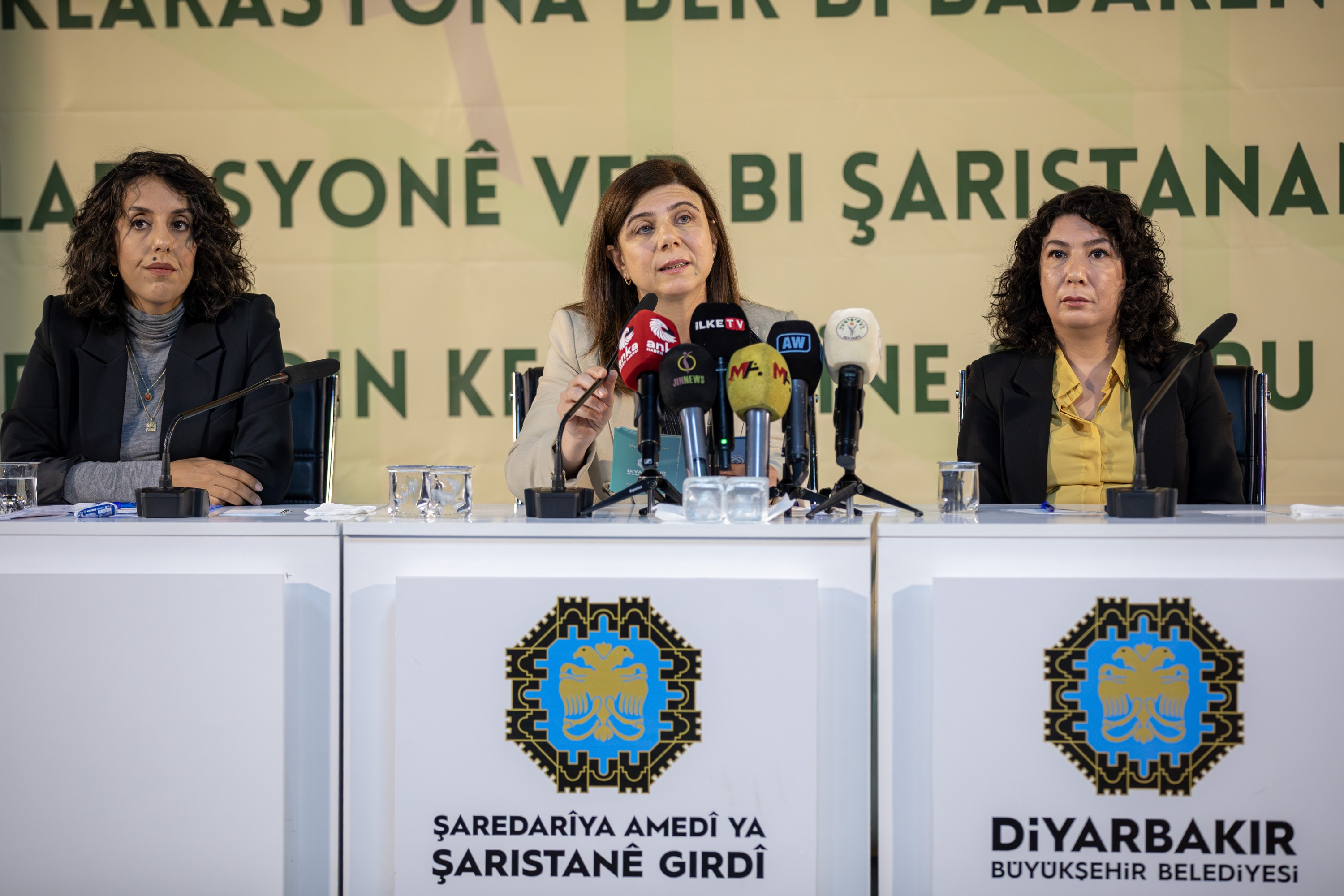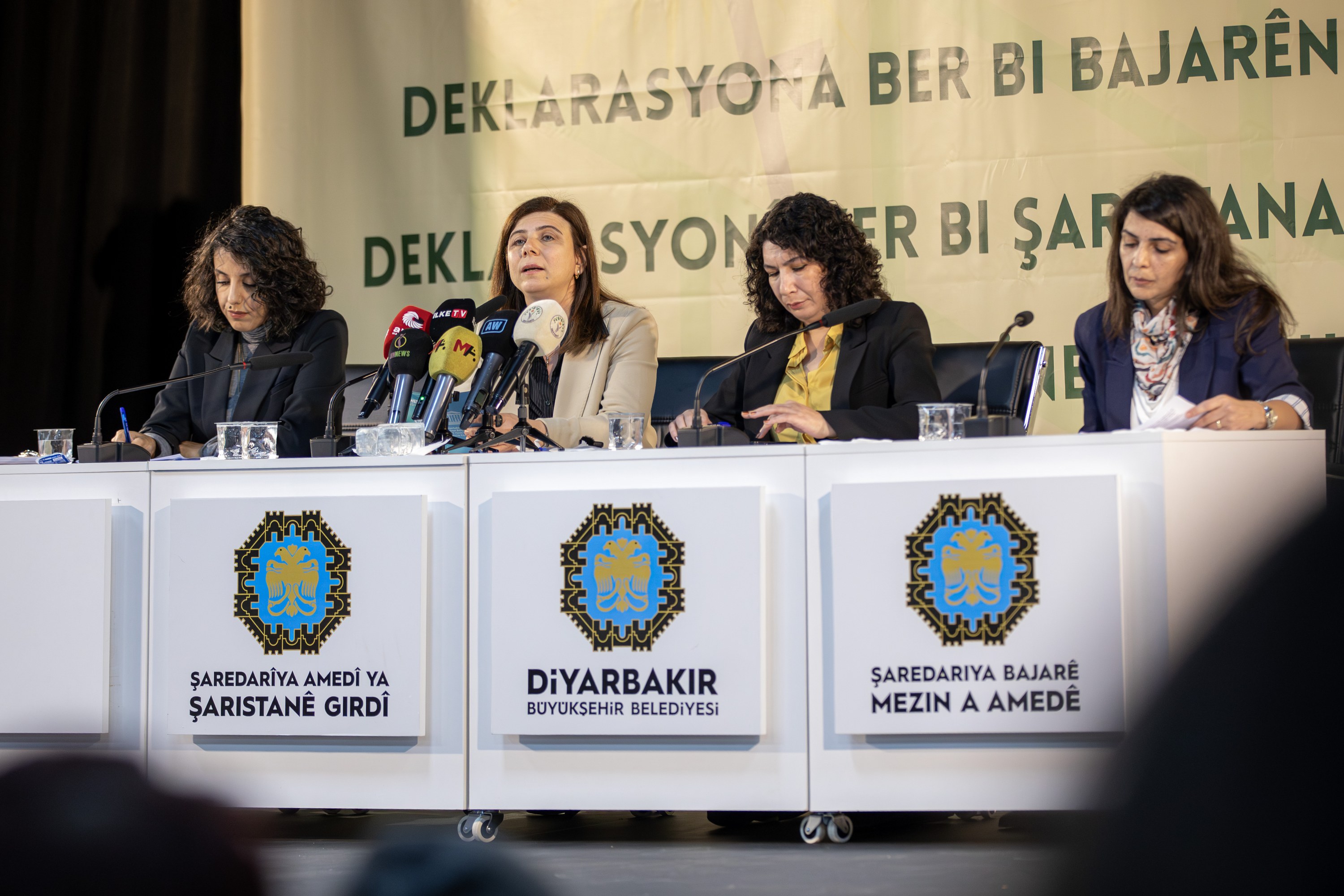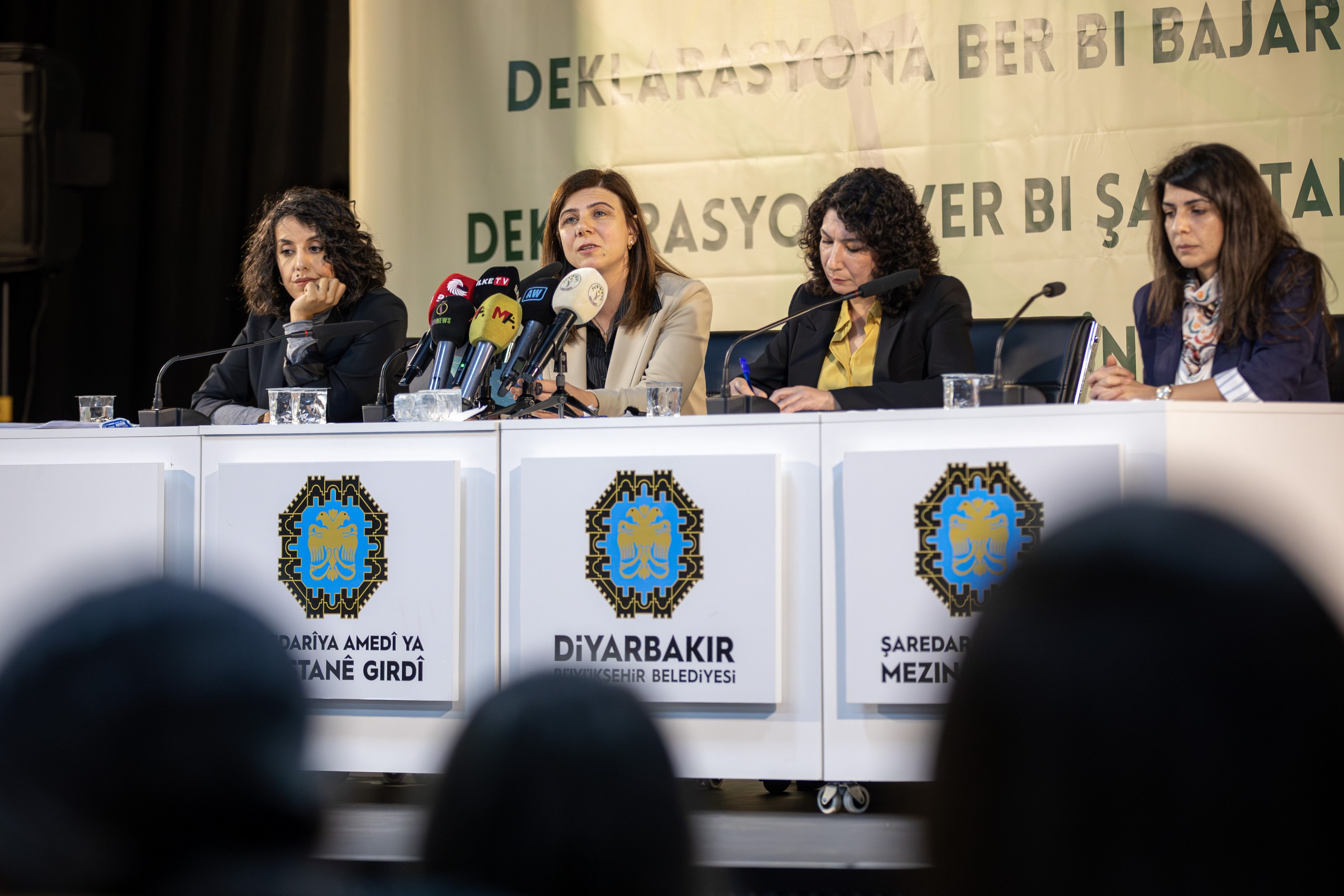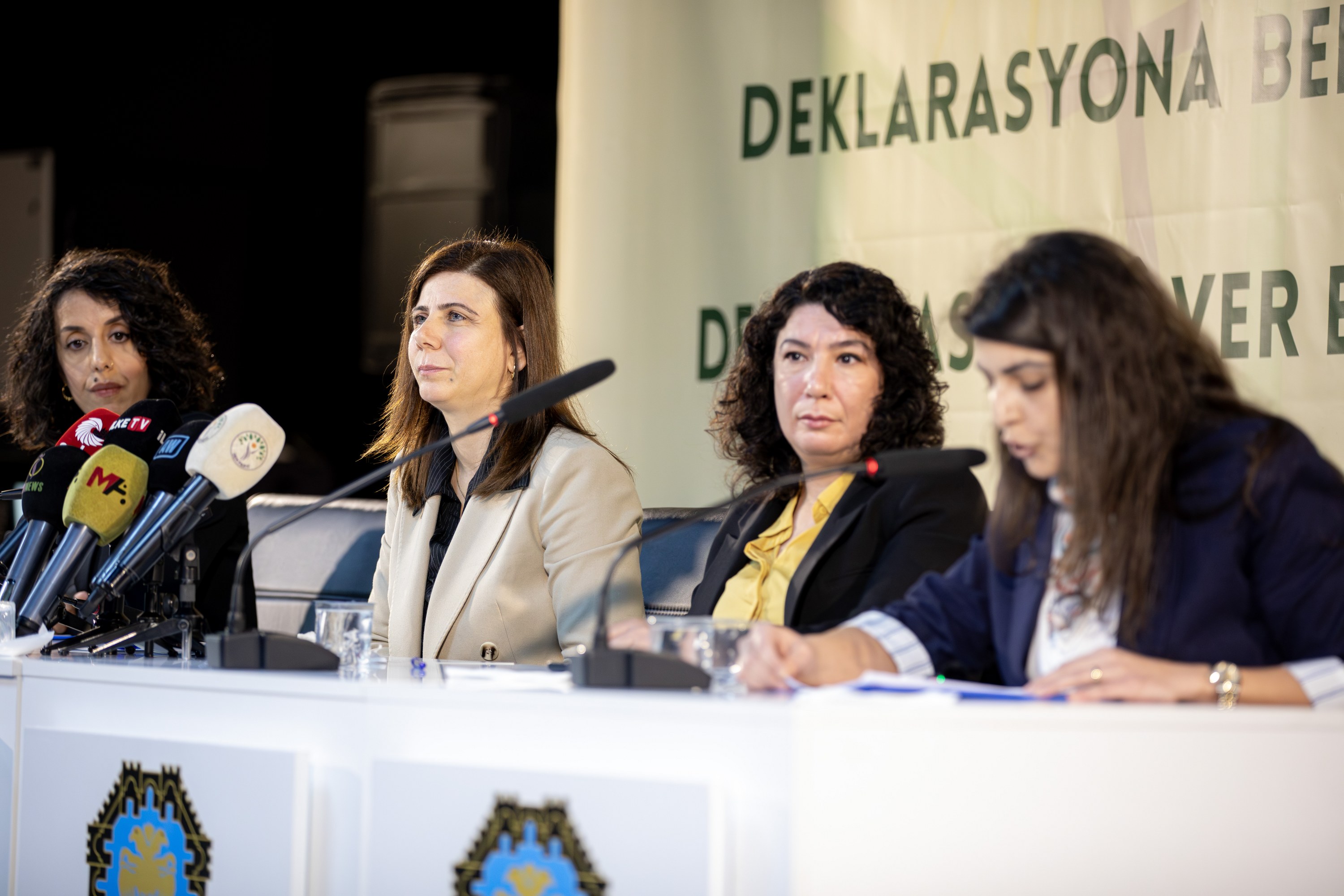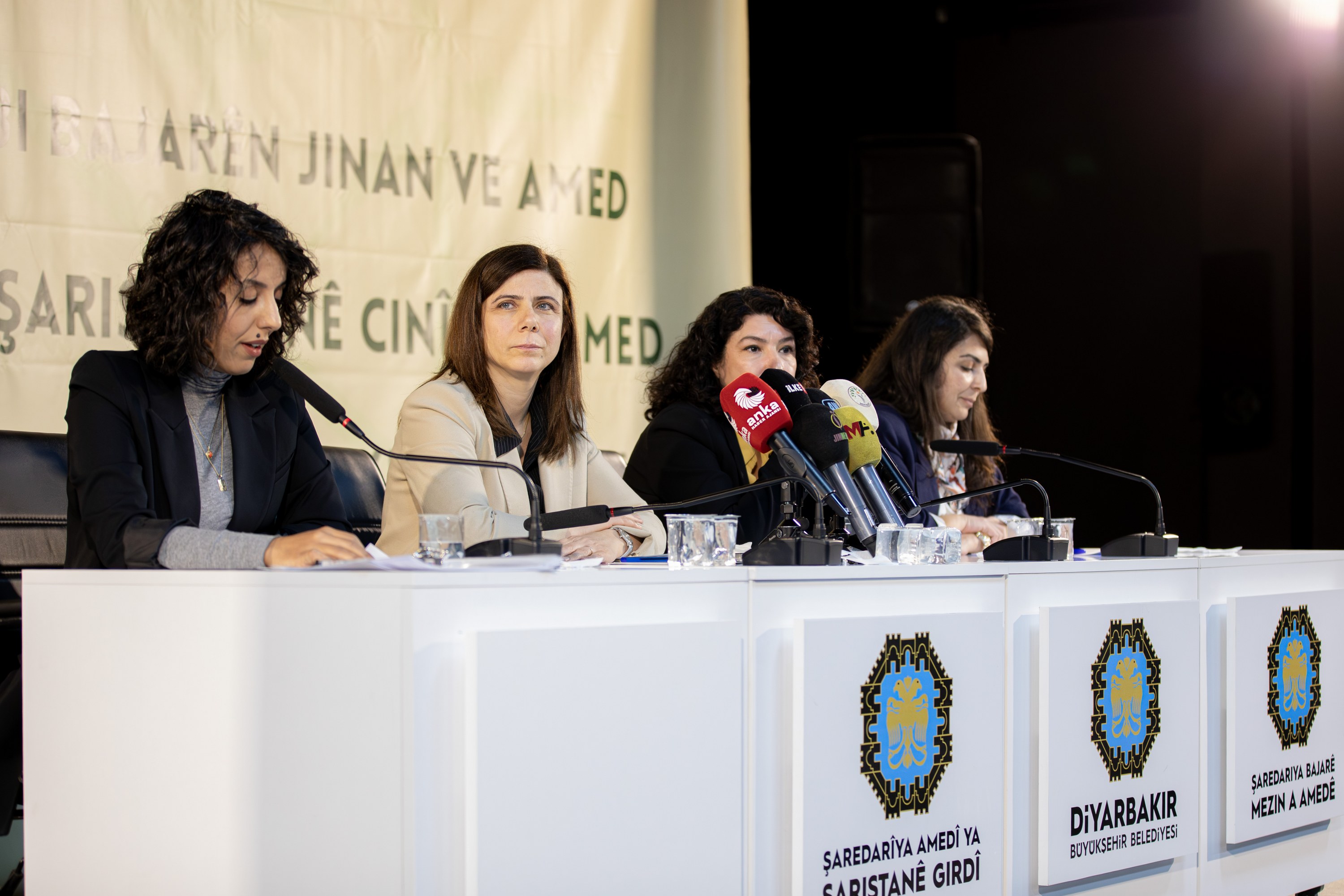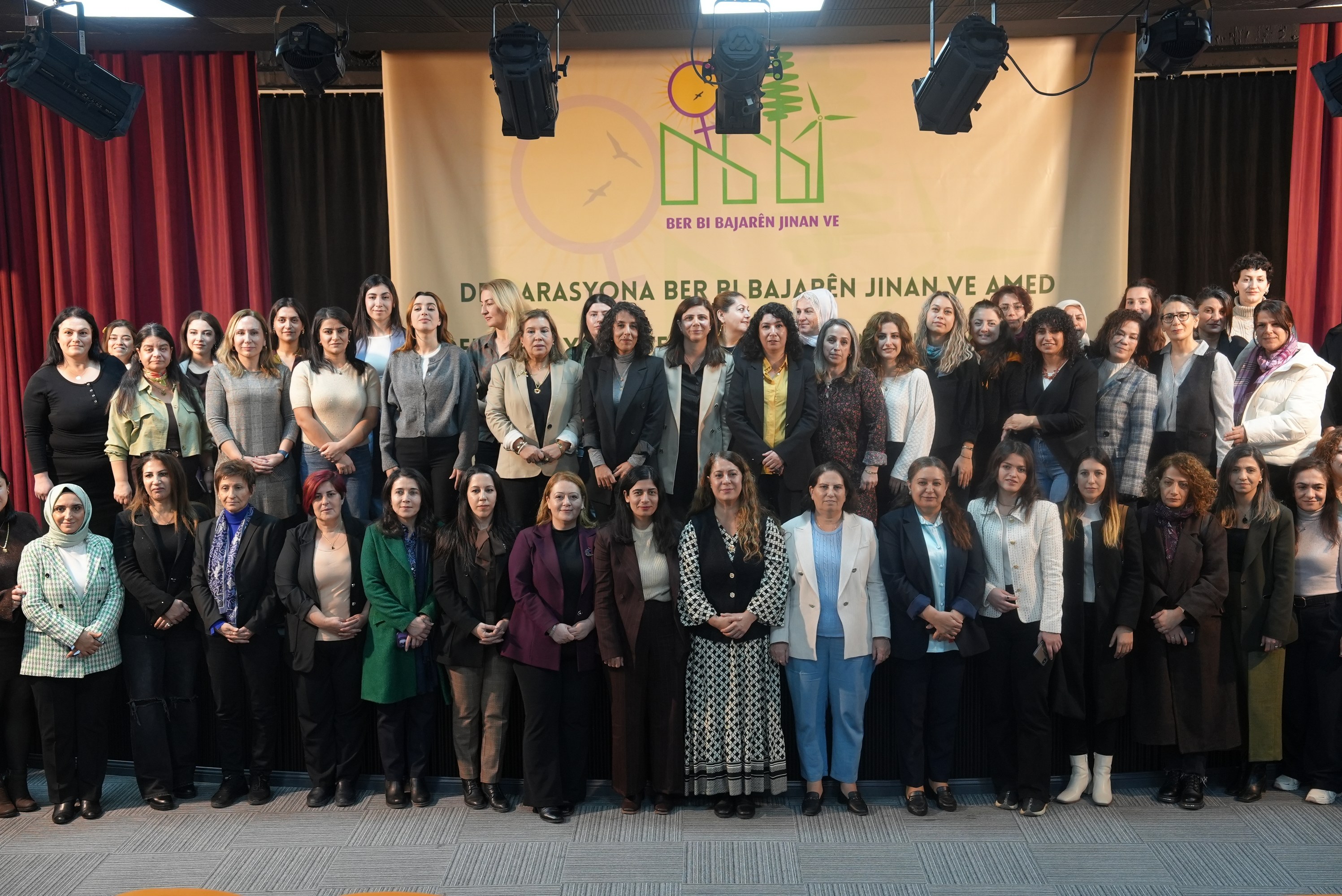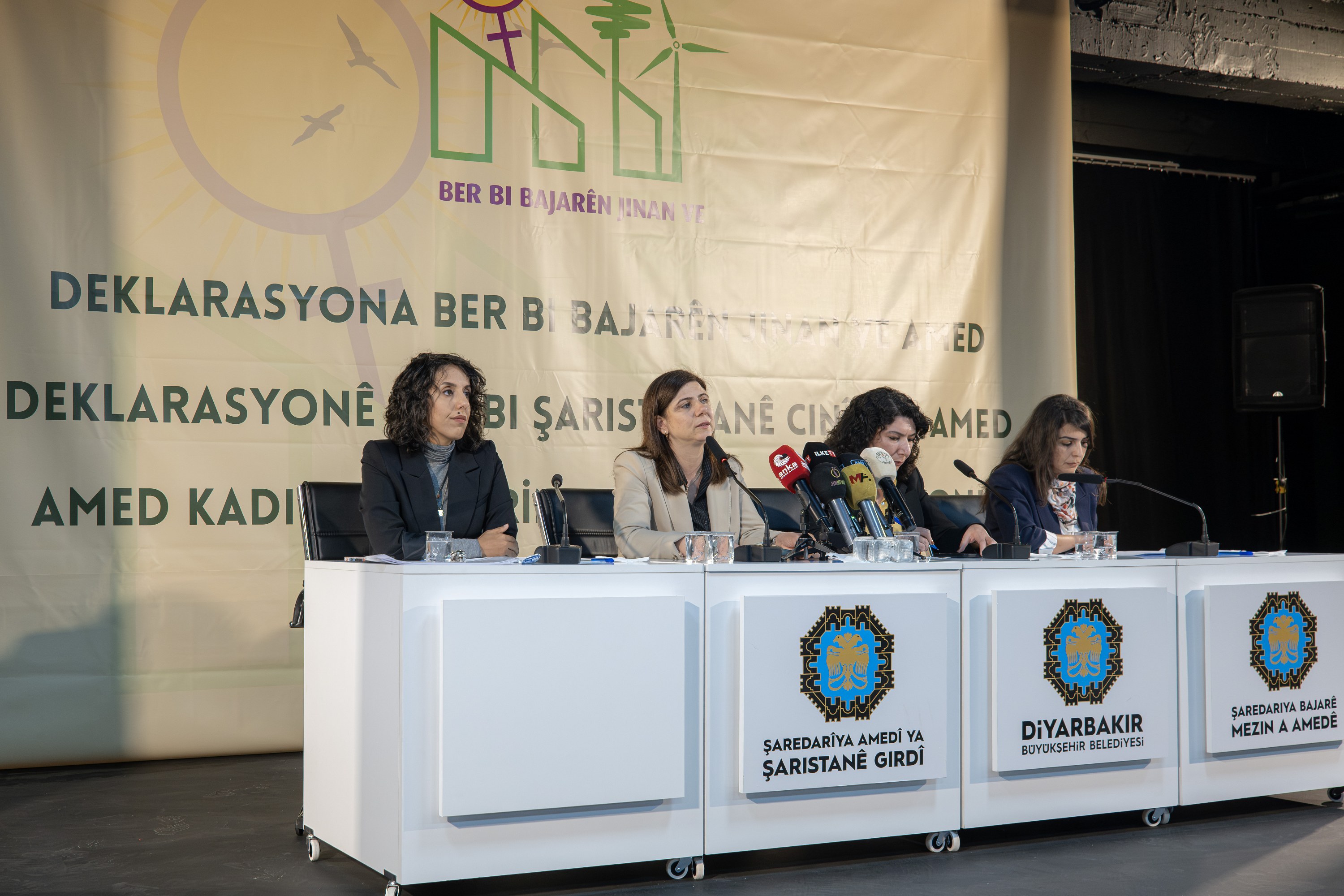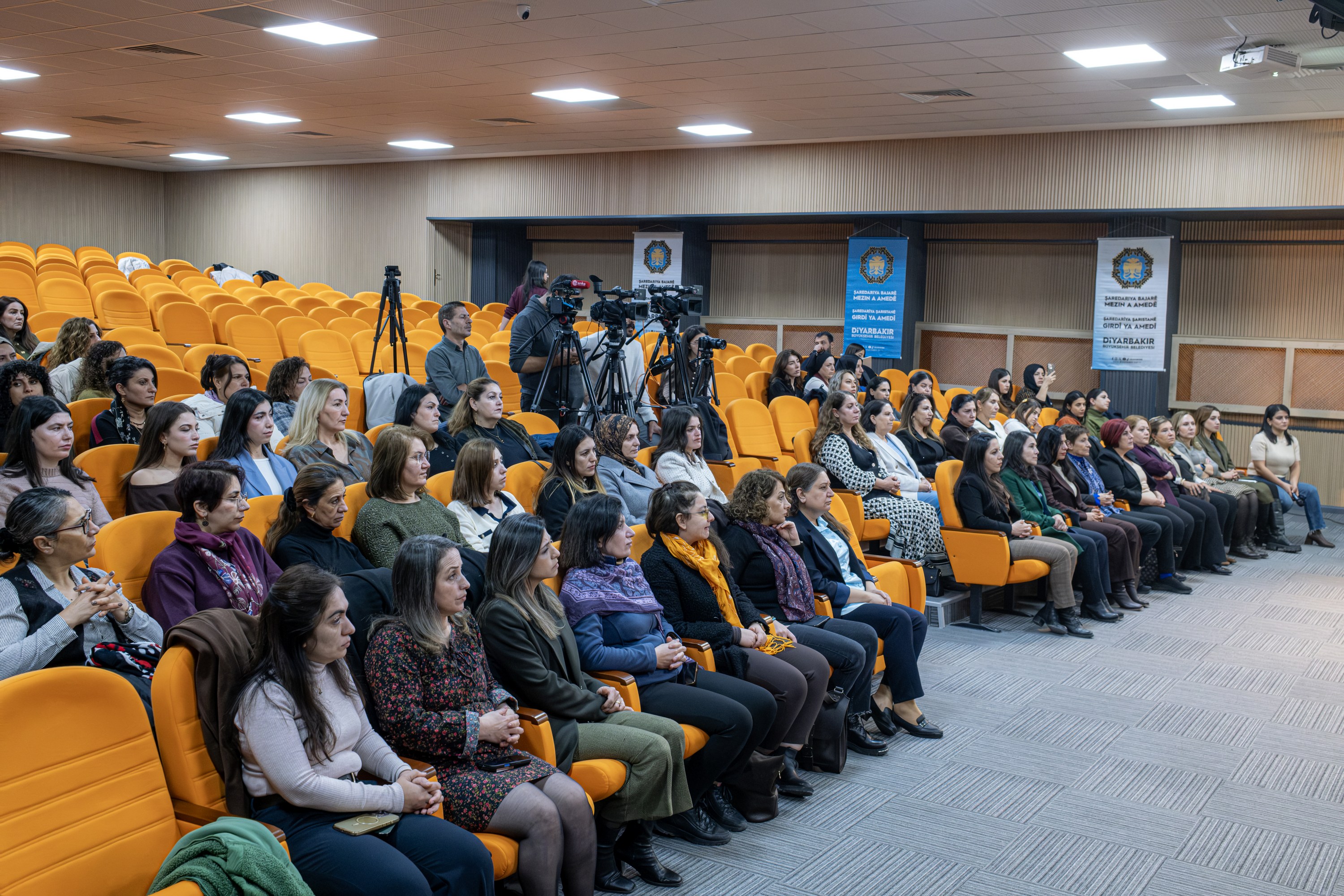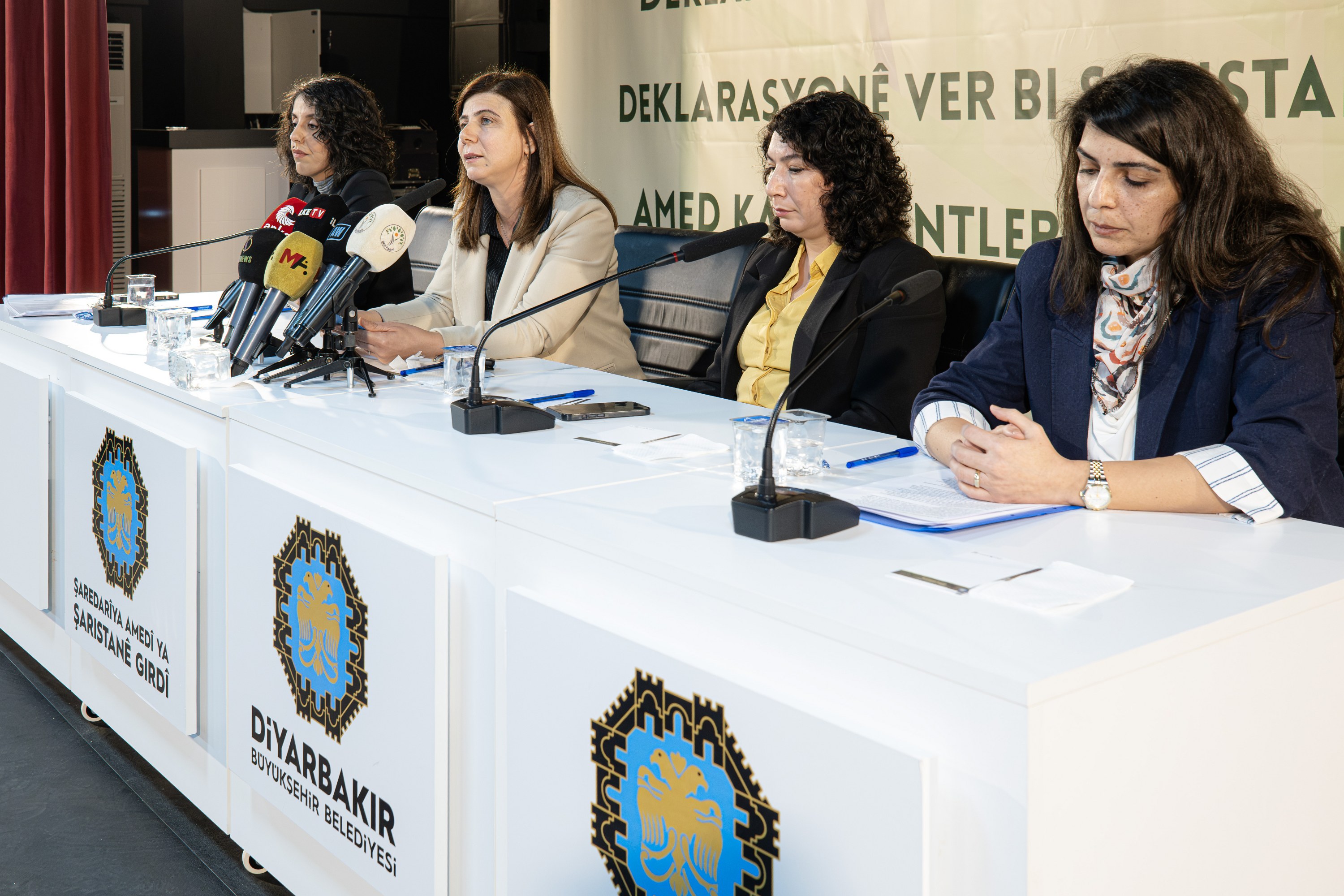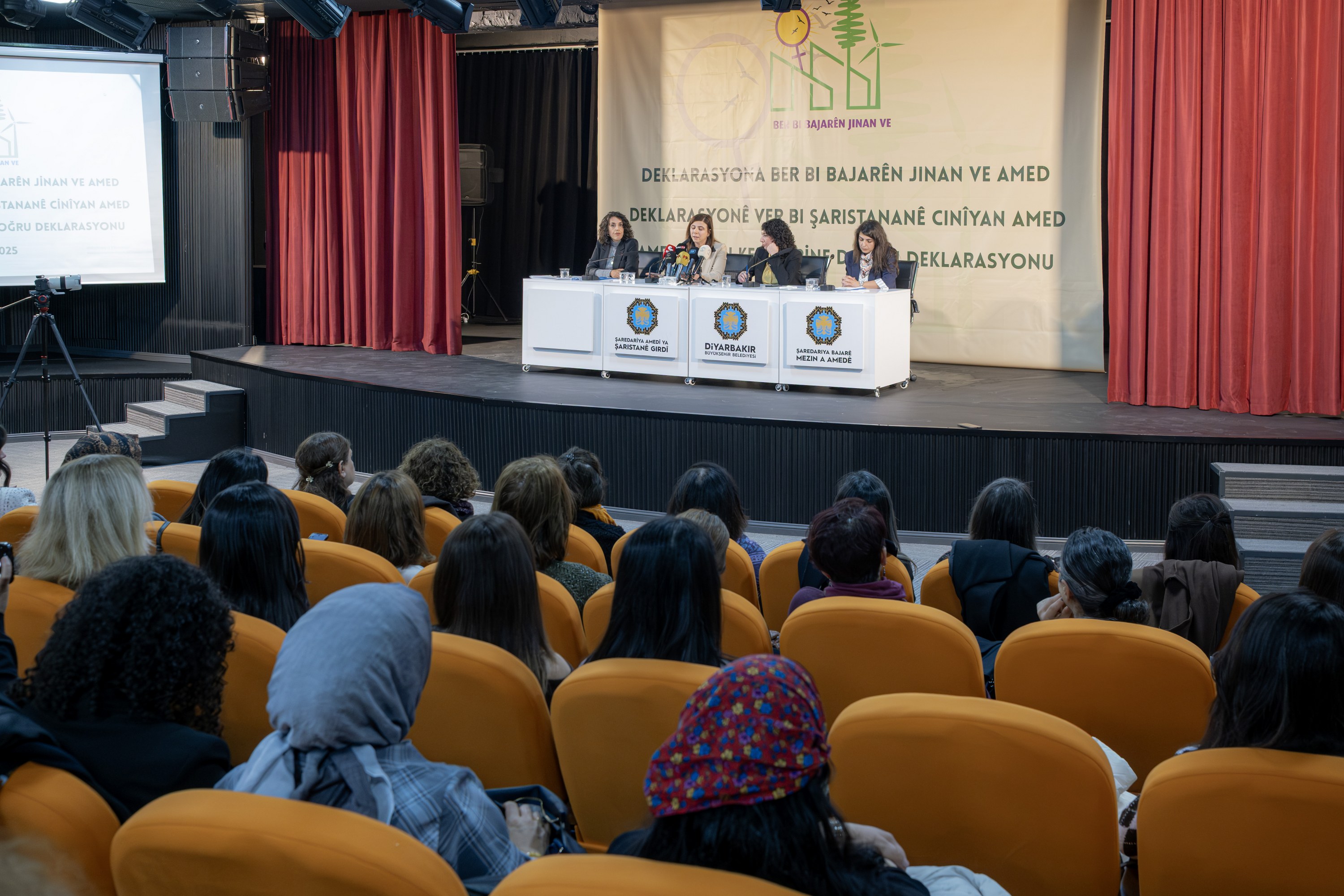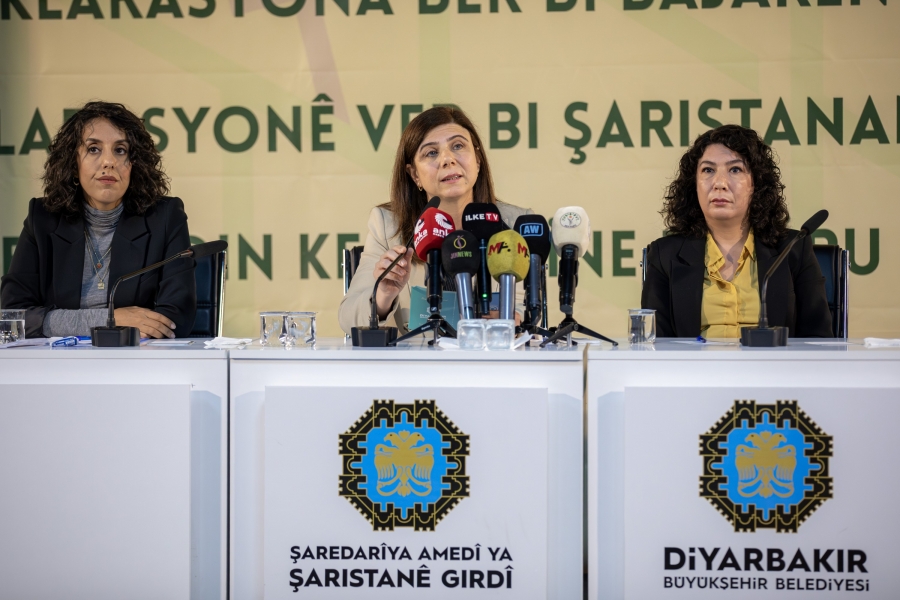
Diyarbakır Metropolitan Municipality Co-Mayor Serra Bucak attended the statement on the “Amed Declaration Towards Women’s Cities” and said: “We hereby declare our determination to rebuild this city with women—not in the name of women—through women’s reason, labour and memory; through women’s insistence on peace and democratic life.”
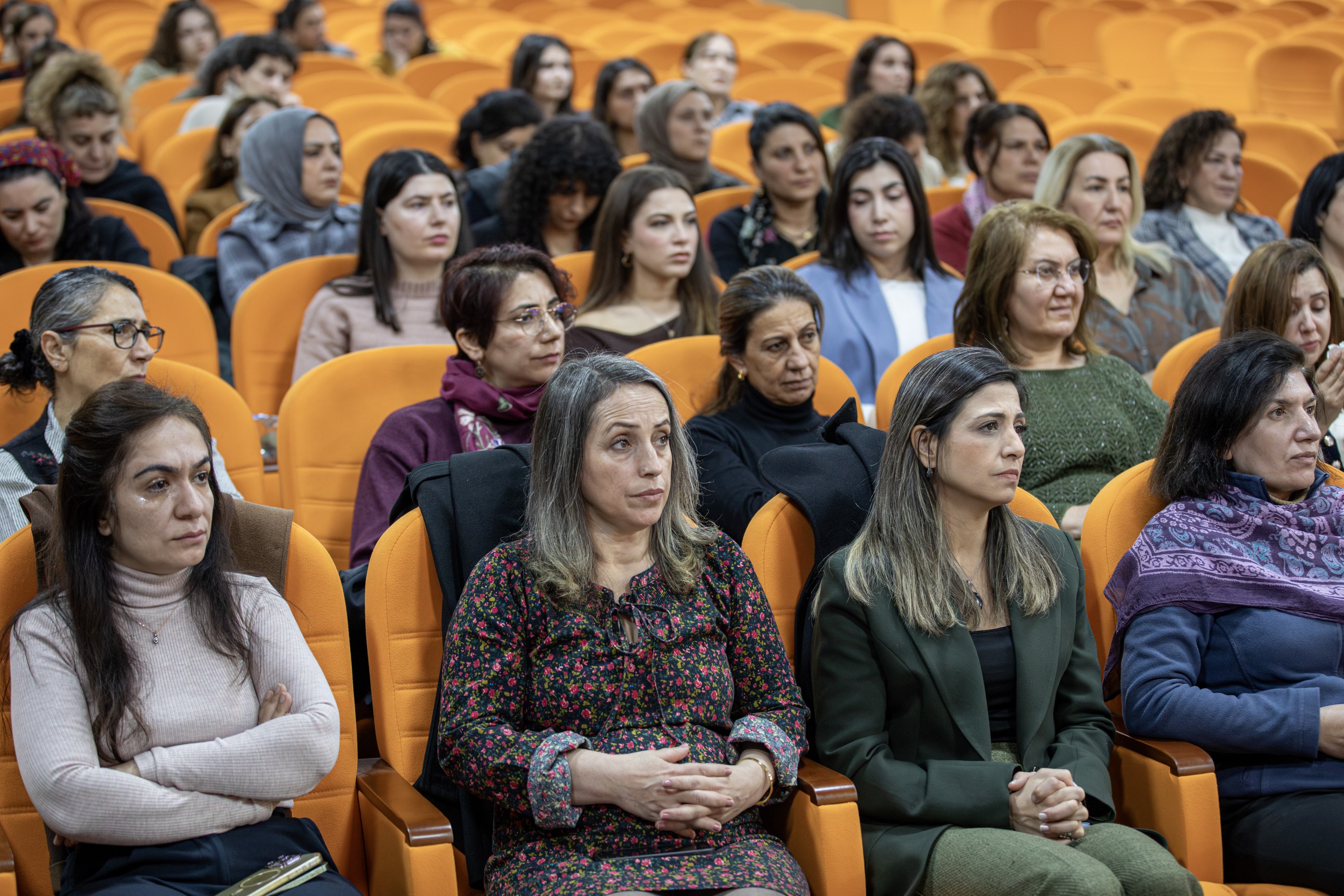
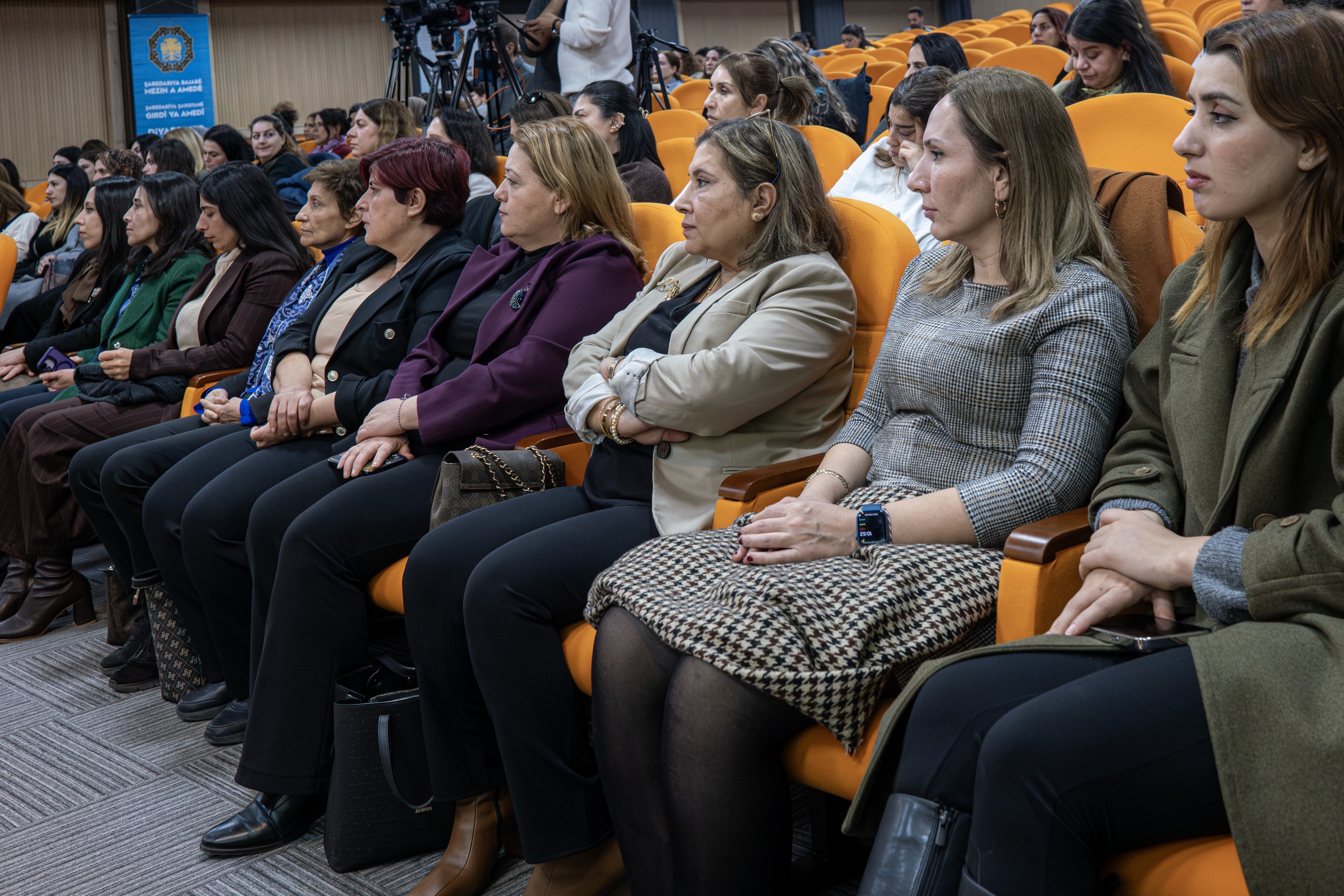
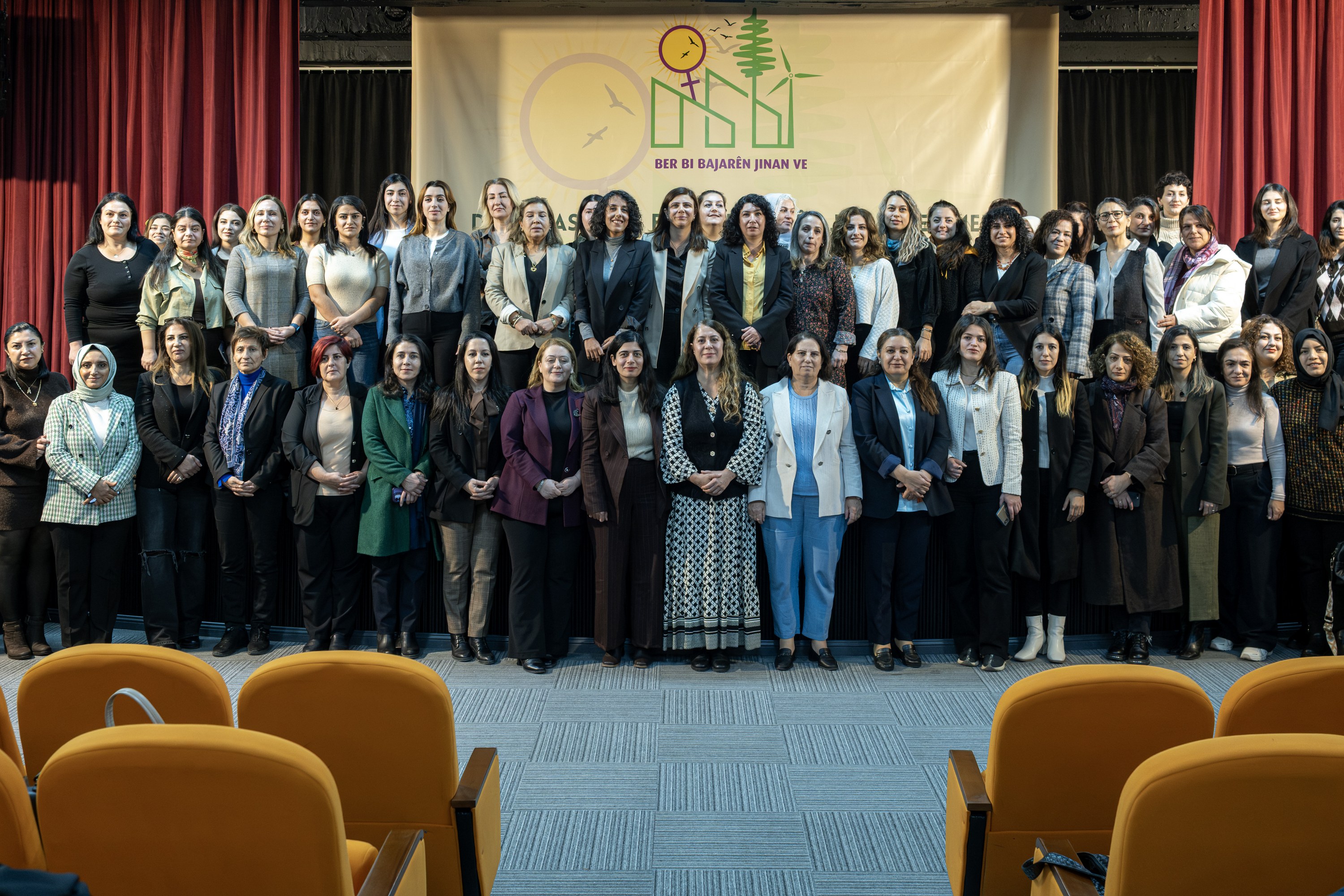
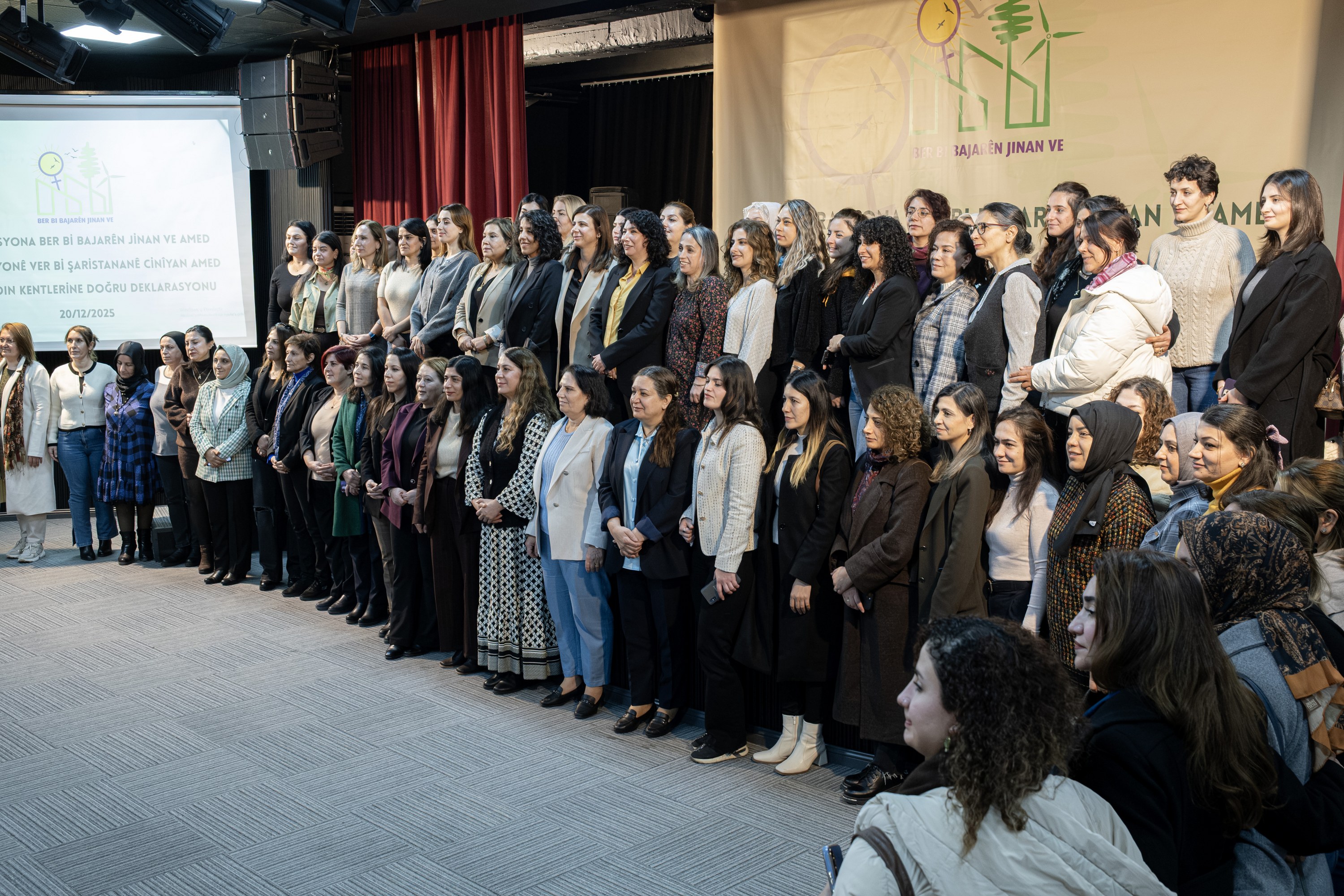
Hosted by the Metropolitan Municipality’s Department of Women and Family Services, the “Amed Declaration Towards Women’s Cities” was announced by the Diyarbakır Preparation Coordination Towards Women’s Cities. The announcement, held at the Ali Emiri Conference Hall, was attended by Diyarbakır Metropolitan Municipality Co-Mayor Serra Bucak; Halide Türkoğlu, Spokesperson of the Women’s Assembly of the Peoples’ Equality and Democracy Party (DEM Party); DEM Party Provincial Co-Chair Gülşen Özer; DBB Council Co-Spokesperson Demet Ceylan; Deputy Secretary General Zerin Türk; Head of the Department of Women and Family Services Özden Gürbüz Sümer; co-mayors of district municipalities; and representatives of women’s organisations.
The Turkish text of the declaration was read out by Selvi Tunç, Secretary General of the City Council, and the Kurdish text by Gülay Kılıç, a DBB Council Member.
Co-Mayor Bucak: We are fighting to change the mindset
In her address, Co-Mayor Serra Bucak stressed that they had not come together merely to share a declaration, but also to discuss how they would transform the city—Amed, Diyarbakır—into a women’s city, and what kind of local-government will they would bring into being.
Stating that for centuries cities have been governed through an entirely male-centred perspective—from transport to parks and gardens policies, from the approach to zoning and planning to the use of public spaces—Bucak said that although women are subjects who shape cities and contribute labour, they have been excluded from decision-making processes. Noting that they object to this situation, Bucak said: “As local authorities, from yesterday to today, we have been striving precisely to change this mindset. We stand for an understanding of the city that does not make women’s everyday lives harder but easier; that does not push women to the margins of the city but places them at its centre. We will continue to struggle, together with all components of the city, to put this understanding into practice—an understanding that makes women the subjects of the city.”
‘The declaration is our strongest pledge’
Drawing attention to gender equality, Co-Mayor Bucak stressed that the women’s-city perspective is not a project, but an approach that transforms every area of local government. Bucak said: “To the question of how we can rebuild cities through a women’s lens, we are giving the strongest answer with the declaration we announced today. A women’s city is not limited only to spaces designed for women; it is based on ensuring that women have a voice and decision-making power in every field, from the budget and transport to social policies and parks and gardens.”
An accessible city
Noting that a women’s city offers an inclusive model of living not only for women but for all sections of society, Bucak said: “A women’s city is an equal, fair and accessible city for children, older people, young people and disabled people as well. It describes a living space where solidarity, democracy and collective life are strengthened; where everyone feels safe, free and equal.”
Stating that announcing the declaration carries great excitement and responsibility, Co-Mayor Bucak said they have been continuing for two years their struggle to rethink the city through a women’s liberationist perspective. Bucak said they have been working, together with women’s coordination bodies, women’s assemblies and all women’s structures within local authorities, to develop a stronger roadmap.
‘We have paved the way for women to be more visible in public life’
Stating that they have set clear priorities in this process, Co-Mayor Bucak said they have been working to strengthen mechanisms to combat violence against women, to reopen women’s solidarity centres and the Alo Violence Hotline, and to enhance the capacity of shelters, adding that these centres provide women with legal and psychological support. Emphasising that thousands of women have taken part in work on gender equality and combating violence, Co-Mayor Bucak said: “We also underlined that violence against women is not only domestic violence within the home. For this reason, we provided multilingual counselling services at our women’s solidarity and life centres. Together we carried out briefings on Law No. 6284 and women’s health initiatives. We said that women’s safety and rights are a core priority of our city administration. We said that the vocational courses we opened in our life centres support women’s economic independence and productivity, and we increased both the number and the scope of these courses. Instead of traditional courses that reinforce sexist roles, we opened up new professional fields, and we are here to support their development and women’s experience in these areas—and we want to expand and develop these workshops. We also increased the number of crèches and playrooms within our local authorities and municipalities to ease women’s care burden, and we created public living spaces for children. We continued to expand and improve these public spaces for both women and children. Through the JINKART scheme, we took an important step in tackling poverty, while also supporting and enabling women to be more visible in public spaces and to participate more in public life. As part of our work to tackle poverty, we discussed in detail—together—workshops, cooperatives and proposals for new cooperatives in our debates and meetings towards women’s cities, as well as in our women’s economy and employment meetings. We also created spaces that strengthen women’s labour and solidarity. We organised women’s labour gatherings and culture and arts festivals.”
‘The cities are ours; the cities belong to women’
Concluding her remarks by emphasising that ensuring women can exist in the city equally, safely and freely is a core responsibility of local authorities, Co-Mayor Bucak said: “With this work—shaped by the views and suggestions that emerge after these meetings—we state clearly the following. The right of women to exist in the city in an equal, safe and free manner is the most fundamental responsibility of local government. However, we also declare clearly that we will build the women’s city together with all components of the city, from women’s organisations to city councils, from professional chambers to trade unions, from cooperatives to political parties. The women’s city declaration is not a text of wishes. It is also a call to struggle. This call is an invitation to women’s will to rebuild the city. And we are all candidates to grow this invitation and to develop the subjects of this invitation, and we will grow and develop this process together. We hereby declare our determination to rebuild this city with women—not in the name of women—through women’s reason, women’s labour, women’s memory, and women’s insistence on peace and democratic life, side by side with women. The cities are ours; the cities belong to women; the word is ours; we will build and develop women’s cities together, I say.”
A model of life based on equal representation
Halide Türkoğlu, Spokesperson of the DEM Party Women’s Assembly, said that the women’s city model is a way of life grounded in co-mayorship and equal representation, adding that over the past two years municipalities have once again become administrations run by the people and by women.
Amed Declaration Towards Women’s Cities
The declaration emphasised that women must be decisive in all decision-making processes, from urban planning and budgeting to collective memory and peace policies. It stated that creating cities that are accessible, safe, and free from violence and poverty is now an urgent need that can no longer be postponed.
Based on field research focused on violence and poverty, the declaration identified neighbourhoods where women are exposed to the harshest conditions, noting that women’s cities are an indispensable and non-deferrable necessity. In this context, an urgent call was made for local authorities to assume responsibility.
Among the core principles of the declaration are a women’s liberationist perspective; equal representation and co-mayorship; a life free from violence; an ecological and communal approach to local governance; the collectivisation of care; a local economy centred on labour and solidarity; and the right to a multilingual and multi-identity city. It was stressed that the women’s city approach draws on the constitutional principle of equality, CEDAW, the Beijing Declaration, the normative legacy of the Istanbul Convention, Law No. 6284, and international conventions.
It was stated that combating violence against women will be the central pillar of building a women’s city; and it was announced that multilingual women’s solidarity centres, 24/7 accessible helplines, women’s shelters, safe social housing, and women’s living spaces will be established. Planned steps also include expanding nurseries in every district that provide services in the mother tongue, establishing women’s health and life centres, and organising gatherings and festivals that will make women’s labour visible.
According to the declaration, the process will be implemented in three stages. Practices will begin with pilot neighbourhoods, expand to districts in the second stage, and in the final stage the city plan and the municipal budget will be comprehensively reorganised in line with the women’s city approach. It was stated that a Women’s City Assembly—bringing together the City Council, neighbourhood women’s assemblies and women’s organisations—will serve as the decision-making and monitoring mechanism.