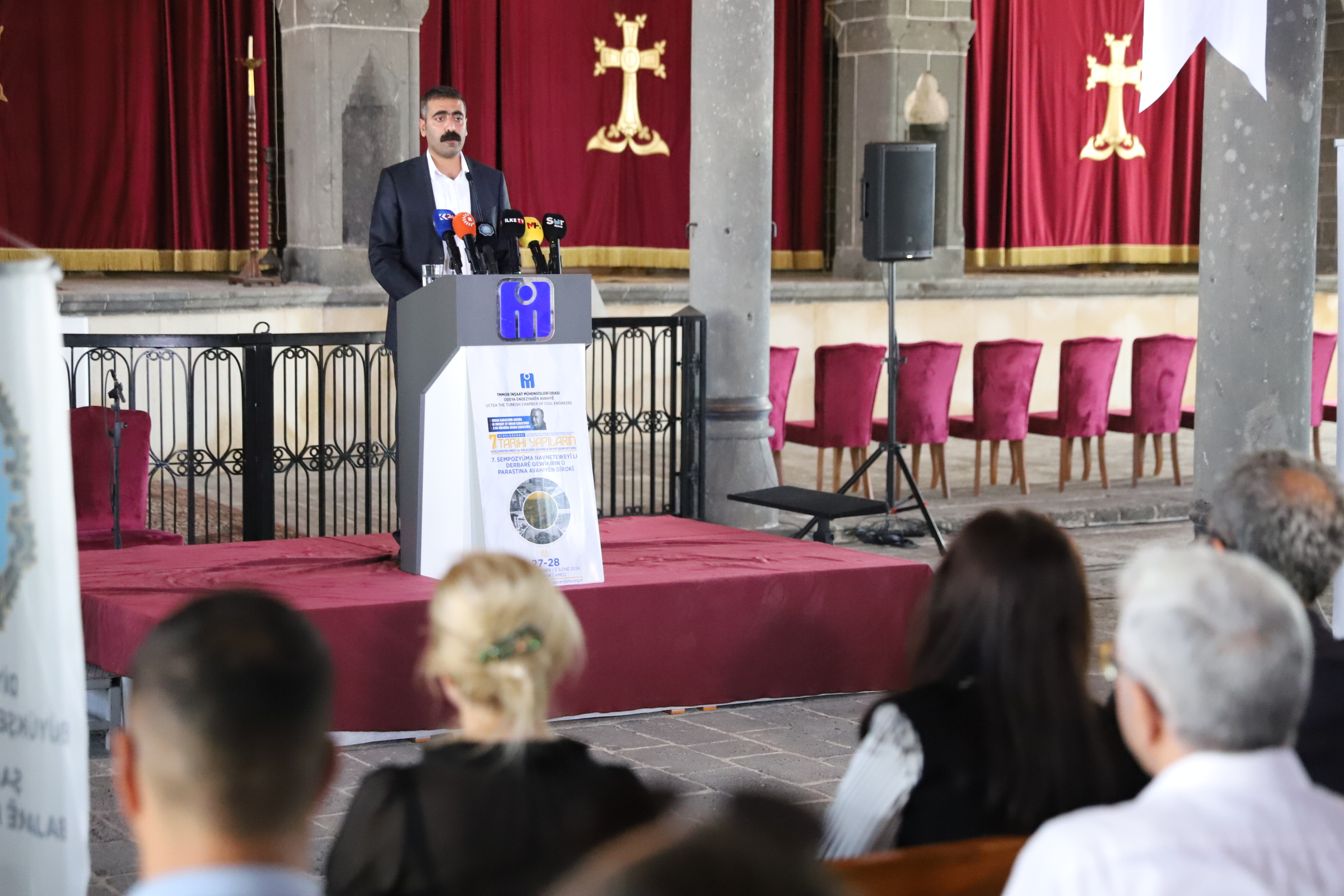
At the International Symposium on the Protection of Historical Structures, Diyarbakır Metropolitan Municipality Co-Mayor Doğan Hatun called on UNESCO, saying: “Let us protect these places together, in the way they ought to be.”
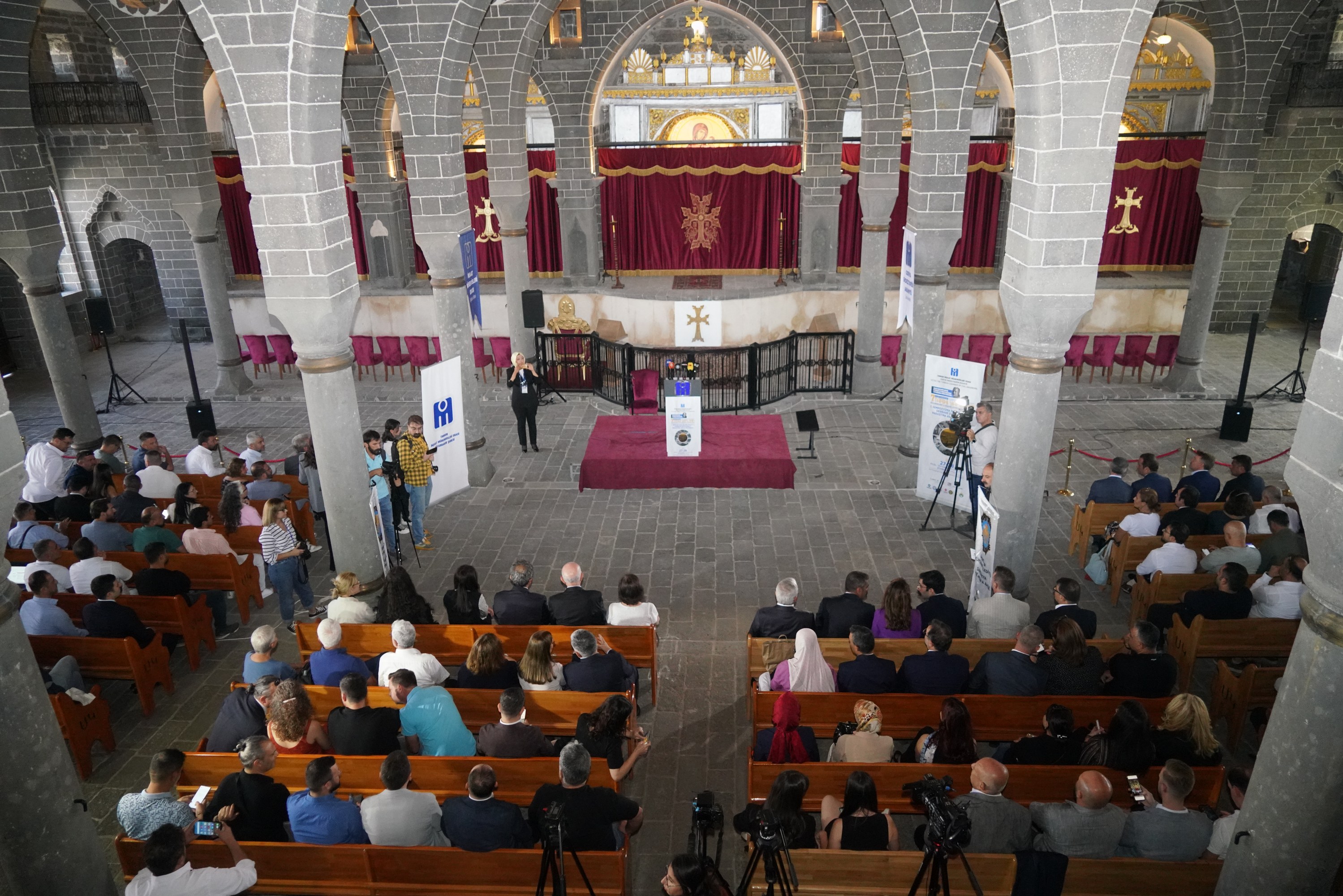
The 7th International Symposium on the Protection of Historical Structures and Their Safe Transfer to the Future was organised by the Diyarbakır and Ankara branches of the Chamber of Civil Engineers (İMO).
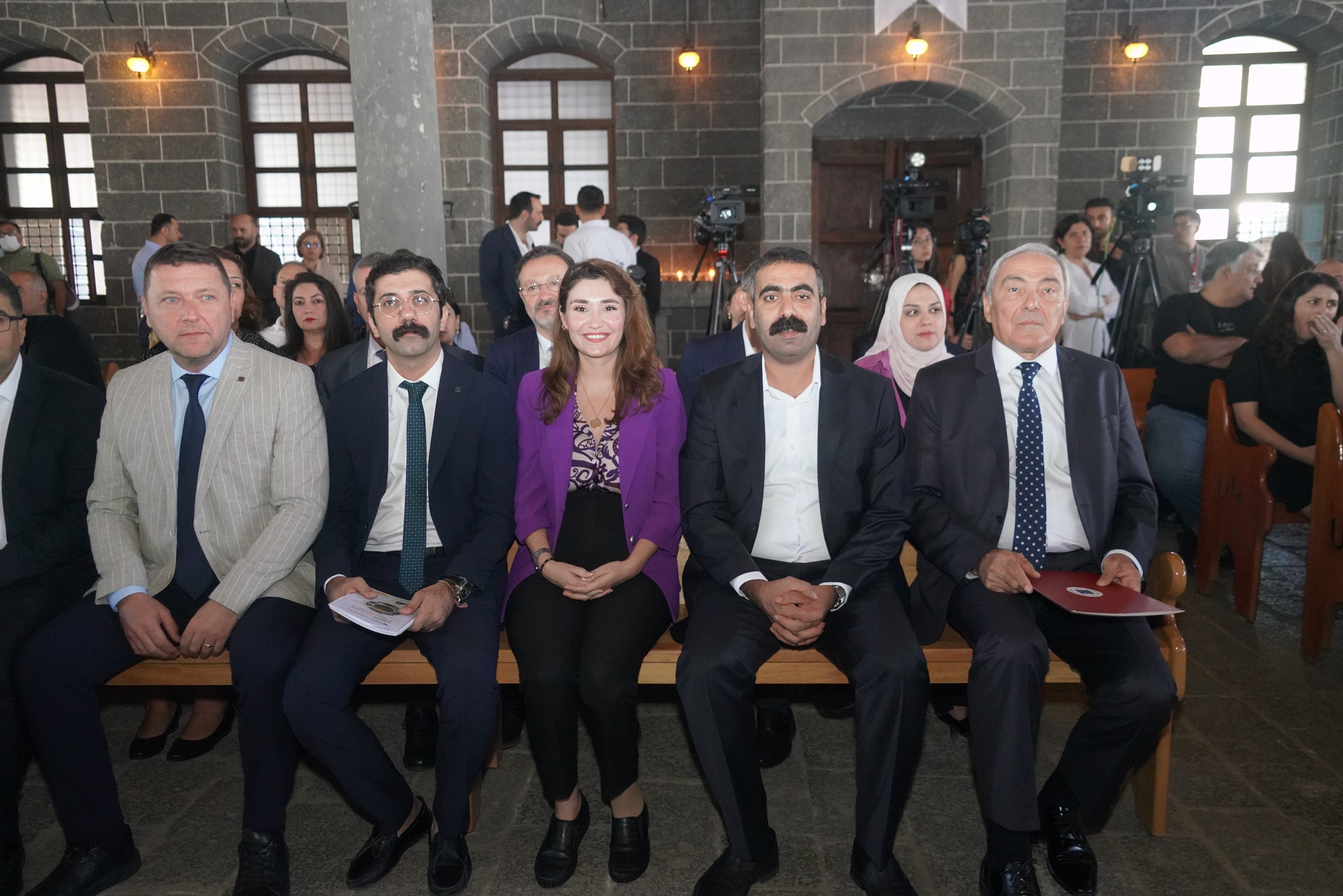
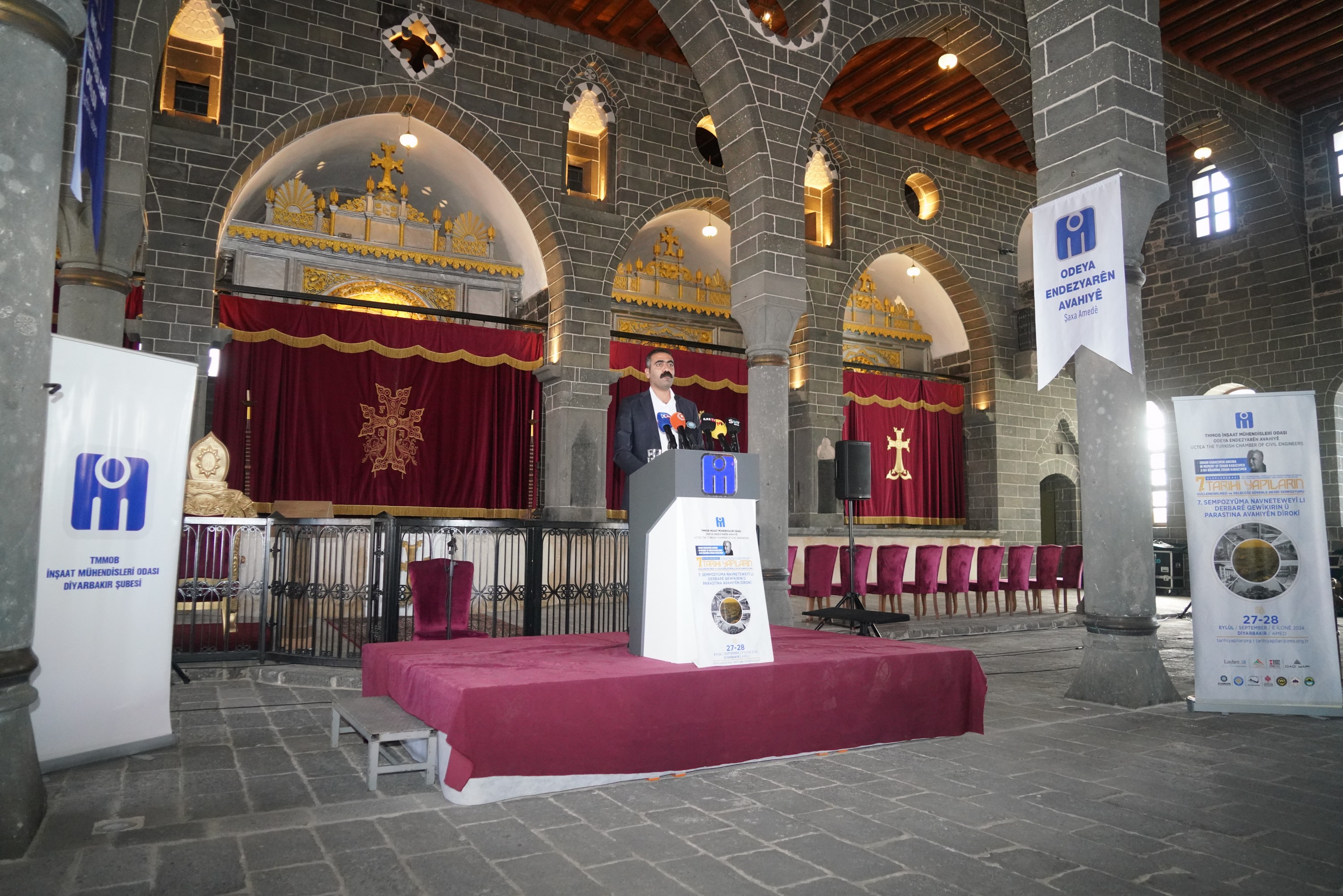
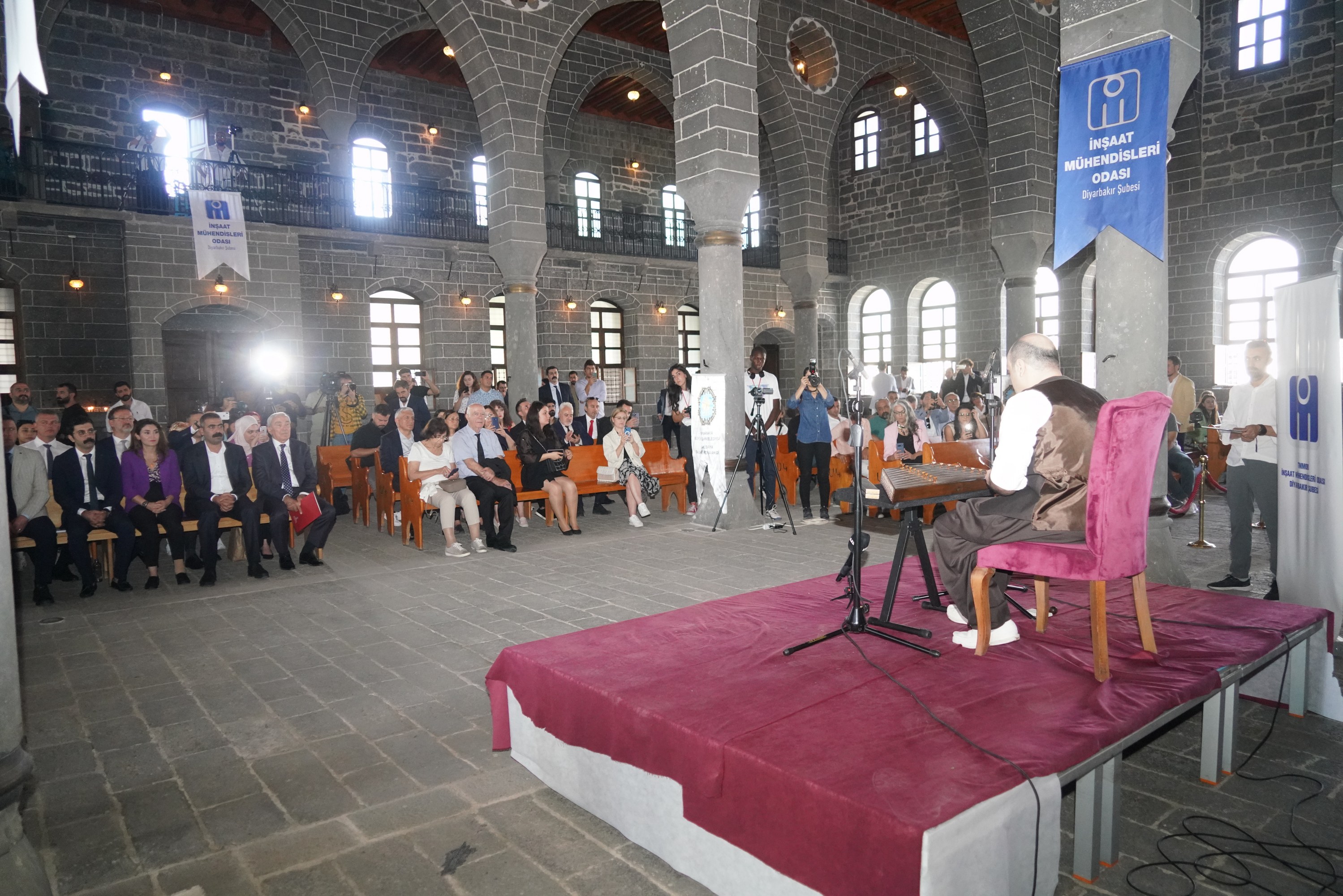
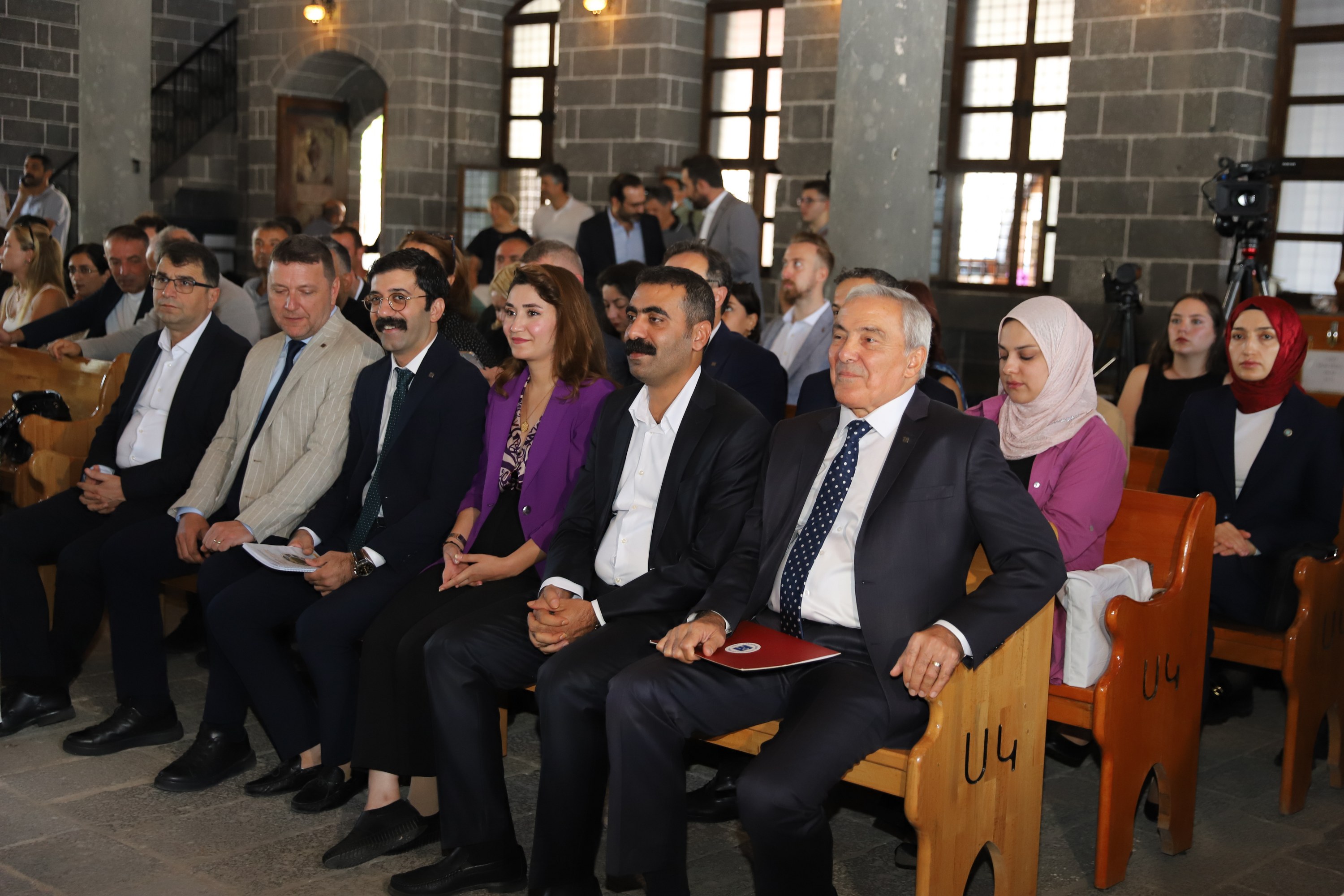
The opening of the two-day symposium, held at the Surp Giragos Church in Diyarbakır, was attended by Diyarbakır Metropolitan Municipality Co-Mayor Doğan Hatun, Sur Municipality Co-Mayor Fatma Gulan Önkol, Metropolitan Municipality Chief Executive Emrullah Gördük, Deputy Chief Executive Zerin Türk, Aziz Özdoğan, and Reşat Bakan, İMO Chair Nusret Suna, Head of the Civil Engineering Department at Dicle University Faculty of Engineering Zeynel Fuat Toprak, along with academics and representatives of civil society organisations.
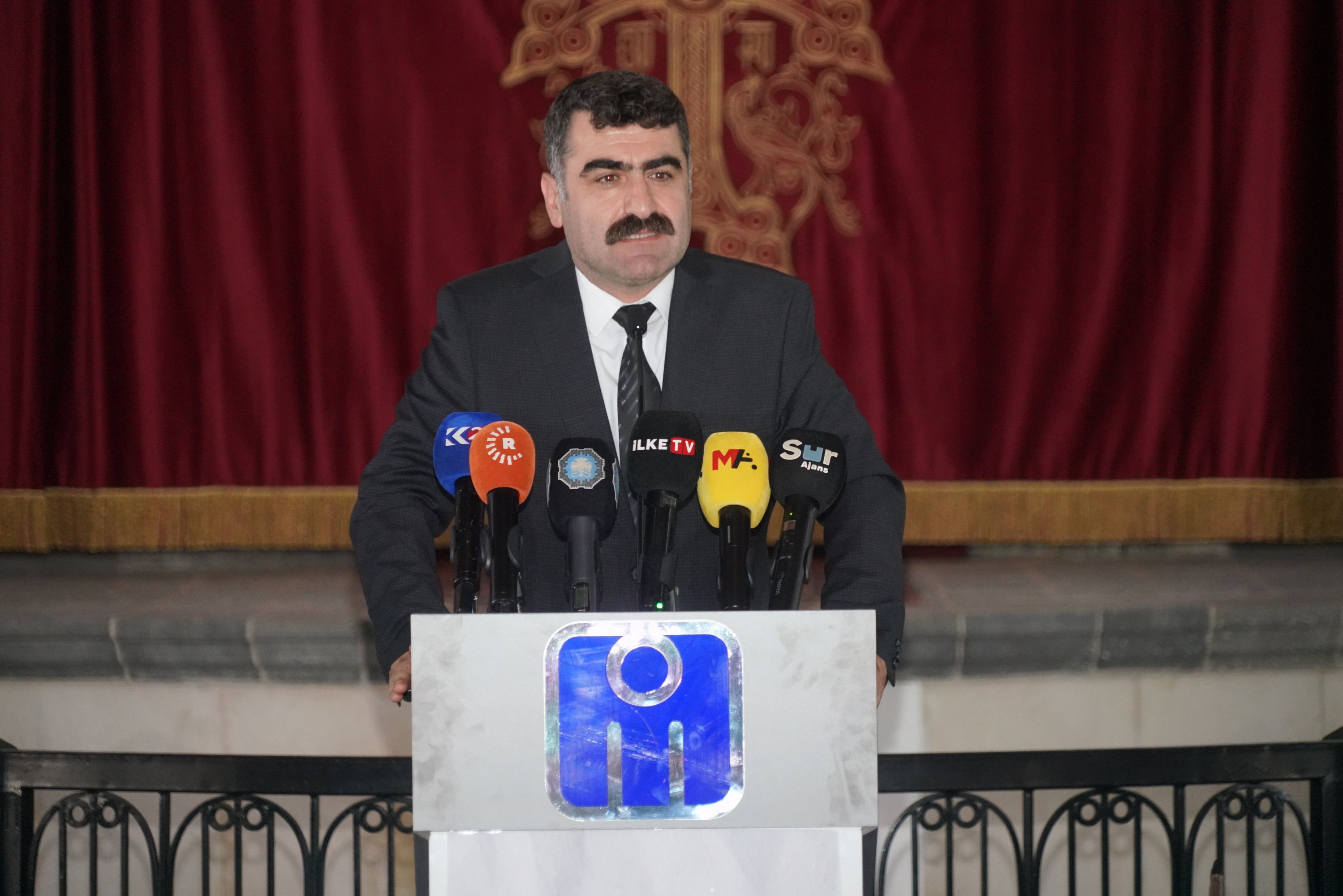
Delivering the opening speech on behalf of the Symposium Organising Committee, Prof. Dr. İdris Bedirhanoğlu greeted participants in three languages and emphasised the importance of protecting and strengthening historical structures.
Co-Mayor Hatun: Welcome to the ‘City of Memory and Love’
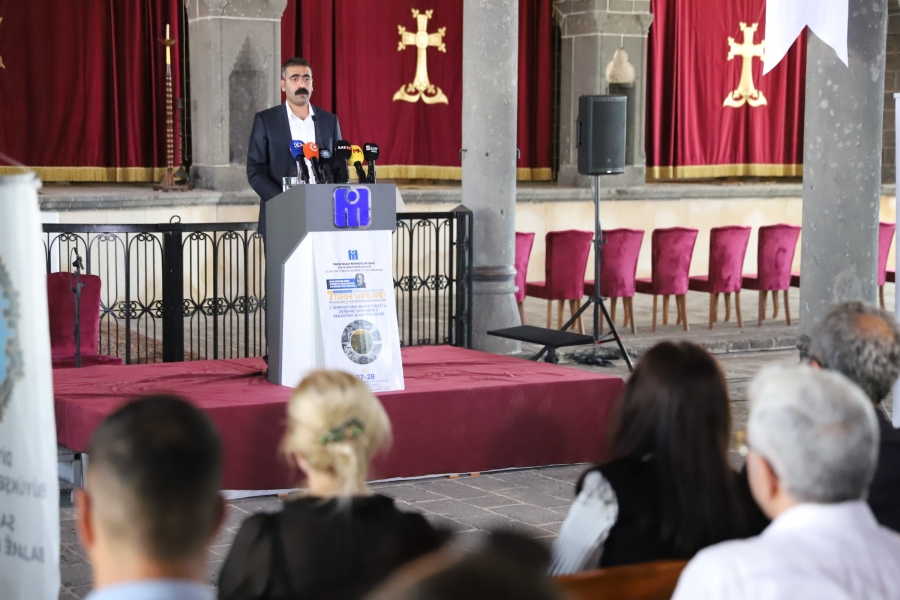
Diyarbakır Metropolitan Municipality Co-Mayor Doğan Hatun welcomed the symposium participants in Kurdish, saying “Welcome to the City of Memory and Love.” Hatun recalled that within the Chamber of Civil Engineers (TMMOB), they had struggled together for many years to ensure that historical structures were registered, brought to light, and not forgotten. He reminded that Amed has hosted 33 civilisations, and that traces of the transition to settled life 12,500 years ago may well be found in these lands, as confirmed by archaeologists at Kortik Tepe and Çayönü. Hatun also noted how Karacadağ basalt has left its mark over thousands of years, and how the persistence, determination, culture, and richness of the civilisations that lived here bear witness to the entire structure of the city.
‘The Statement I Made in 2017 Still Holds True’
Remembering Diyarbakır Bar Association President Tahir Elçi, who lost his life on 28 November 2015 in front of the Four-Legged Minaret while trying to prevent damage to historical and cultural structures, Co-Mayor Hatun said:
“This was the sentence I used in 2017: places that should have been cleaned and preserved with a toothbrush were destroyed with diggers and bulldozers. The sentence I uttered in 2017 as a TMMOB administrator still holds true today. To claim ownership of historical structures, merely to register, protect, and restore them is unfortunately not enough.”
A Call to UNESCO
Drawing attention to the current administration of UNESCO’s cautious stance regarding the protection of world cultural heritage, Co-Mayor Hatun said:
“Once again, from an international symposium, we would like to make a call to UNESCO. The inclusion of Diyarbakır Fortress and Hevsel Gardens on the World Cultural Heritage List in 2015 was an honour for us. However, we cannot protect this historical and cultural fabric merely by expressing concern. Let us protect these places together, in the right way and in the right place. For us, merely recording them is not a sufficient process.”
‘It Is the Tigris River That Has Left Us This History’
Emphasising that the 60-kilometre stretch of the Tigris River, from its source to Bismil, remains unlisencet, undefined, unnamed, and without status, Hatun continued:
“Hevsel Gardens are nothing without the Tigris River. They draw all their fertility and productivity from the Tigris. Today, it is the Tigris River itself, the fresh water source, the fertile lands of Mesopotamia, that has given us these historical structures and the traces of humanity’s transition to settled life 12,000 years ago.”
‘We Will Protect the City’s Historical and Cultural Structure’
Hatun noted that civil engineers are the pioneers in passing on the historical and cultural structures of buildings from generation to generation, stating:
“We will make science and technology the foundation of our local governments. In the light of science and technology, we will protect the historical and cultural fabric of our city together with professional chambers and civil society organisations.”
Following the opening speeches and a musical performance, the academic sessions of the symposium began at the Çand Amed Cultural and Congress Centre. The symposium presentations will be delivered in three languages (Turkish, Kurdish, and English).