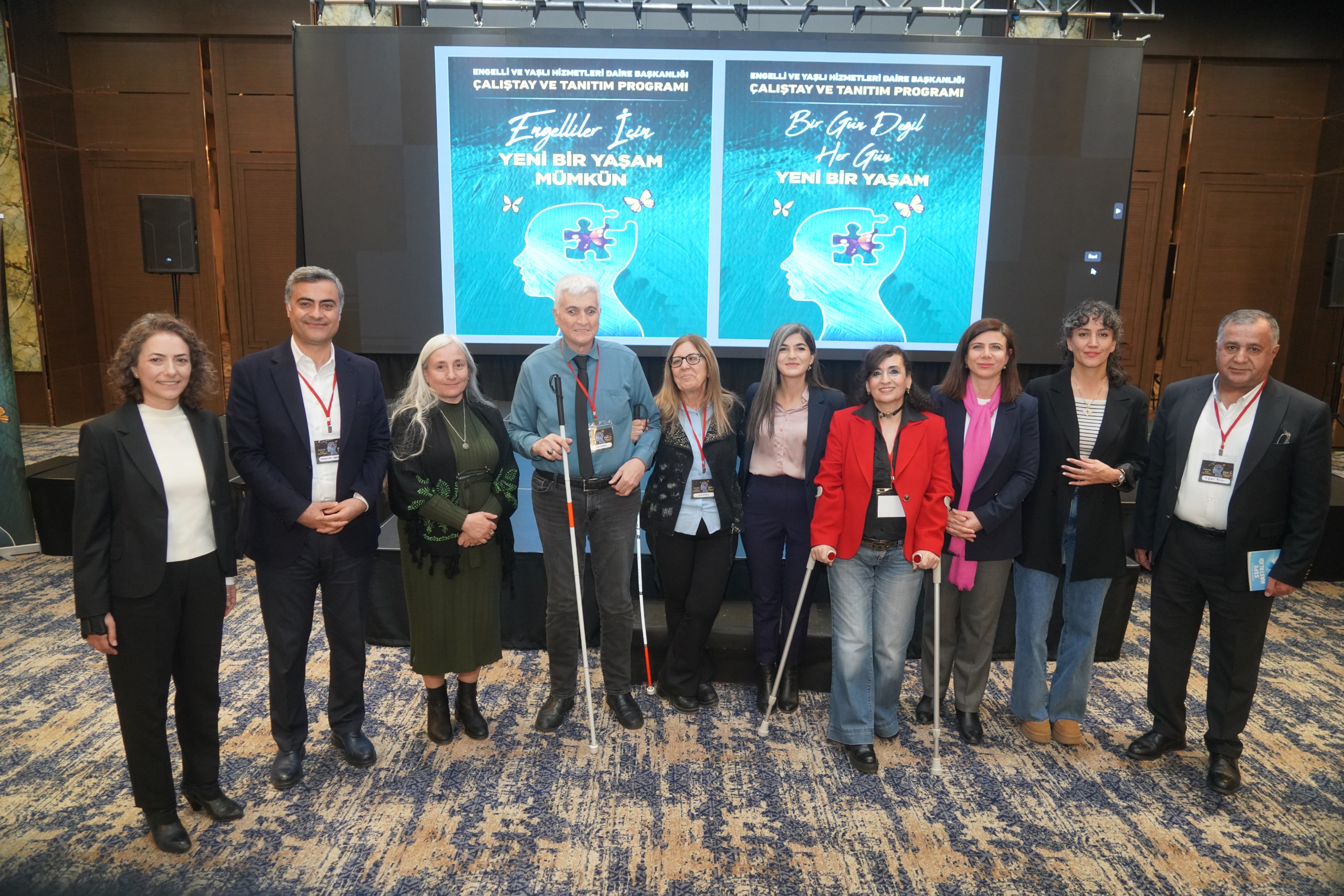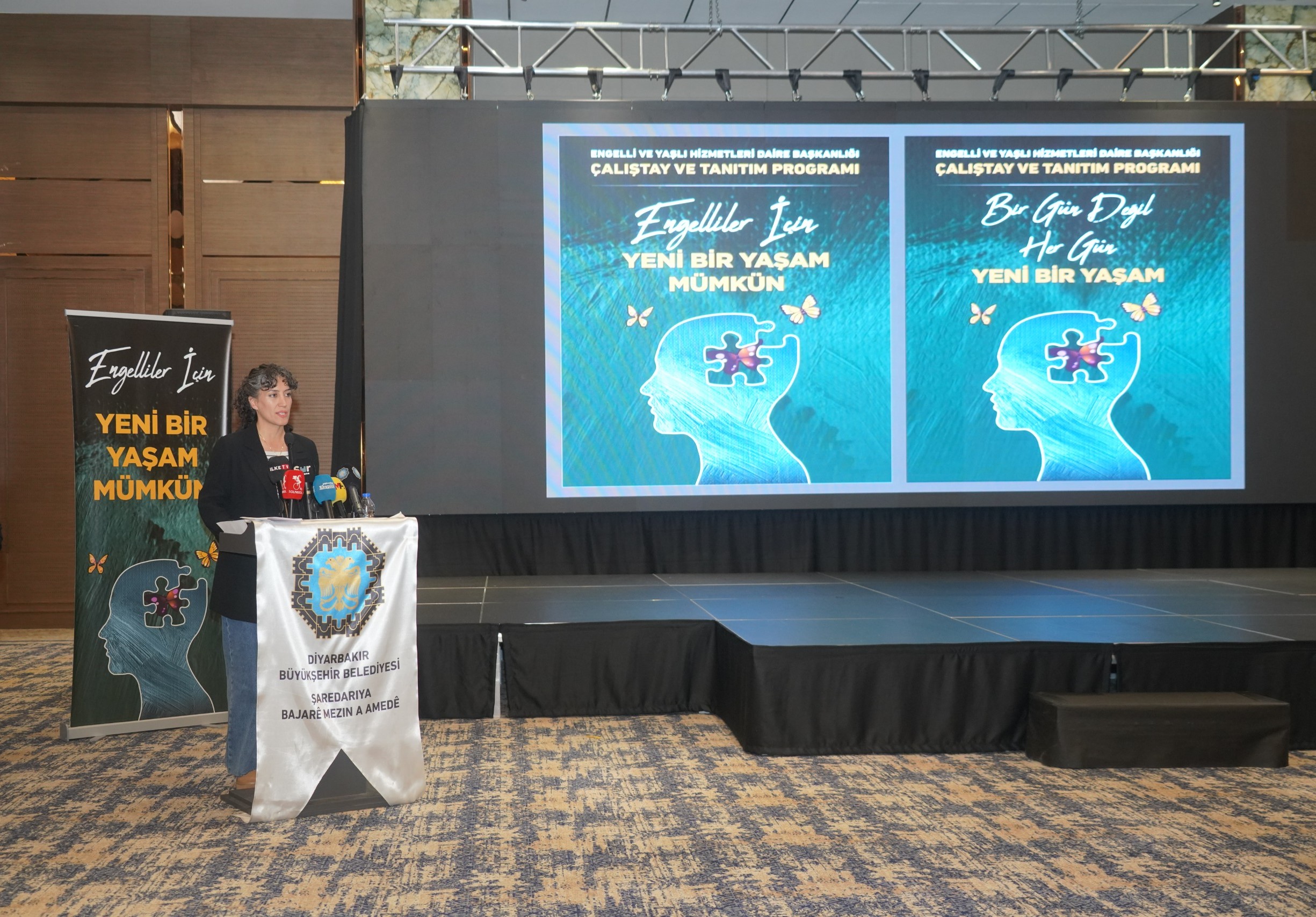
At the launch of the Regulation of the Department of Services for Persons with Disabilities and the Elderly of Diyarbakır Metropolitan Municipality, a position paper on municipal policies for persons with disabilities was announced.
The position paper on municipal policies for persons with disabilities was presented at the launch, attended by DEM Party Co-Chair Tuncer Bakırhan; Co-Mayors of Diyarbakır Metropolitan Municipality Serra Bucak and Doğan Hatun; Co-Mayors of Van Metropolitan Municipality Neslihan Şedal and Abdullah Zeydan; as well as municipal co-mayors, heads and representatives of associations for persons with disabilities.
The content of the position paper
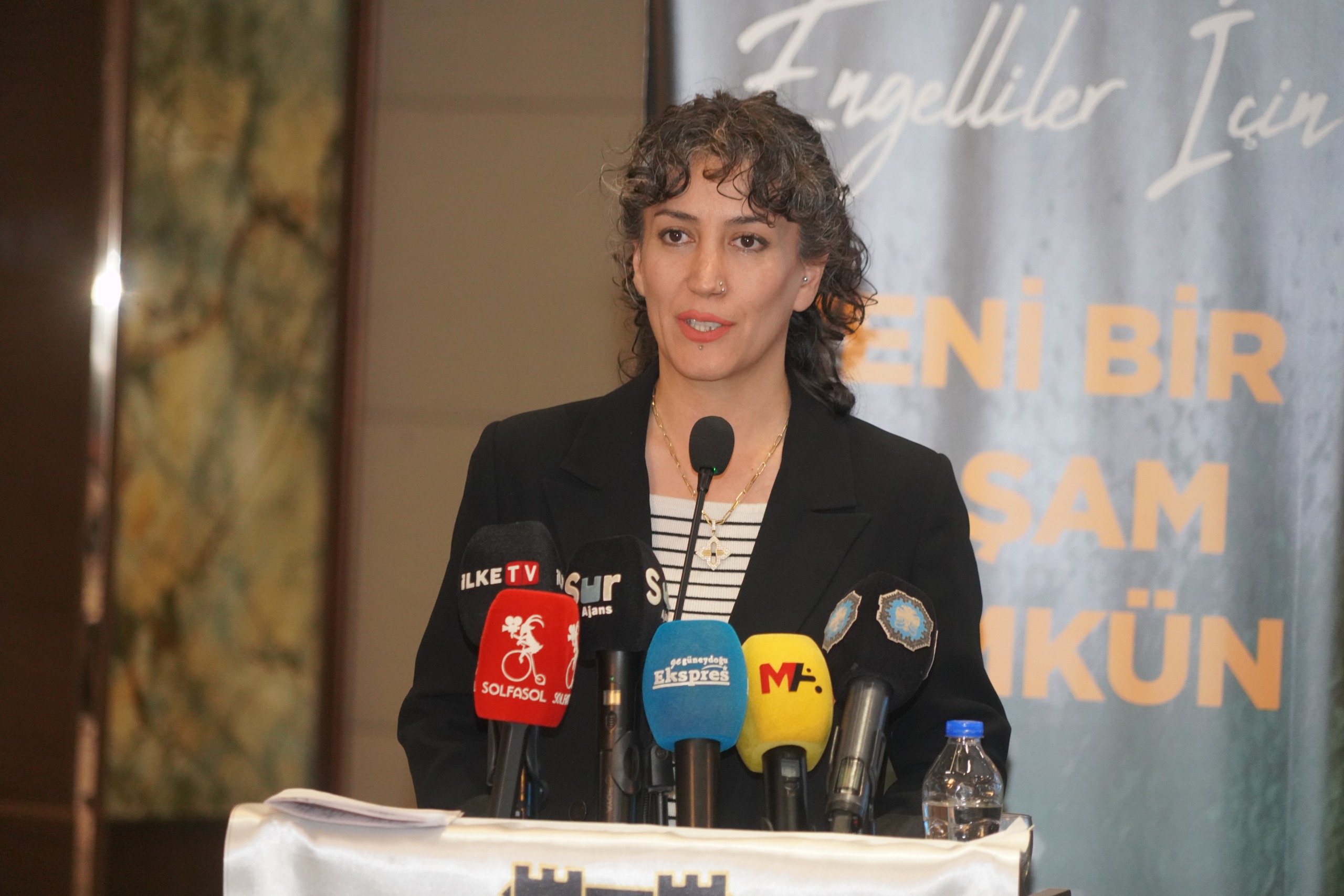
The position paper contains certain decisions regarding the policy of DEM Party municipalities towards persons with disabilities. The position paper, announced by Canan Kebenç Özkan, Co-Spokesperson of the DEM Party Democratic Local Administration Council, states that the scope of the policy includes: determining them periodically in collaboration with disabled councils and representatives, cooperating with other institutions and organisations active in the field of disability, ensuring that all service units, educational and service materials, websites, buildings and public transport vehicles, roads, crossings, pavements and other living areas are accessible and universally designed, prioritising accessibility criteria in building permits and licensing procedures, identifying the demographic information of all persons with disabilities living within the service boundaries, separating data according to the principle of intersectionality, and providing services based on this data, using sign language, ADIS (alternative and augmentative communication systems), etc. to reach all disability groups when providing services, and providing the necessary equipment and personnel support for this purpose, employing persons with disabilities in accordance with the legal employment quota, taking into account differences in abilities, and carrying out activities to develop these mechanisms, conducting training for all personnel at regular intervals on topics such as the rights of persons with disabilities, positive attitudes and behaviour towards persons with disabilities, and access to services for persons with disabilities, conducting public awareness campaigns to reduce ableism, taking measures required by humanitarian law and international human rights law to protect and ensure the safety of persons with disabilities in situations of armed conflict, humanitarian emergencies, earthquakes and other natural disasters, and supporting the necessary mechanisms to increase the opportunities for independent living for persons with disabilities.