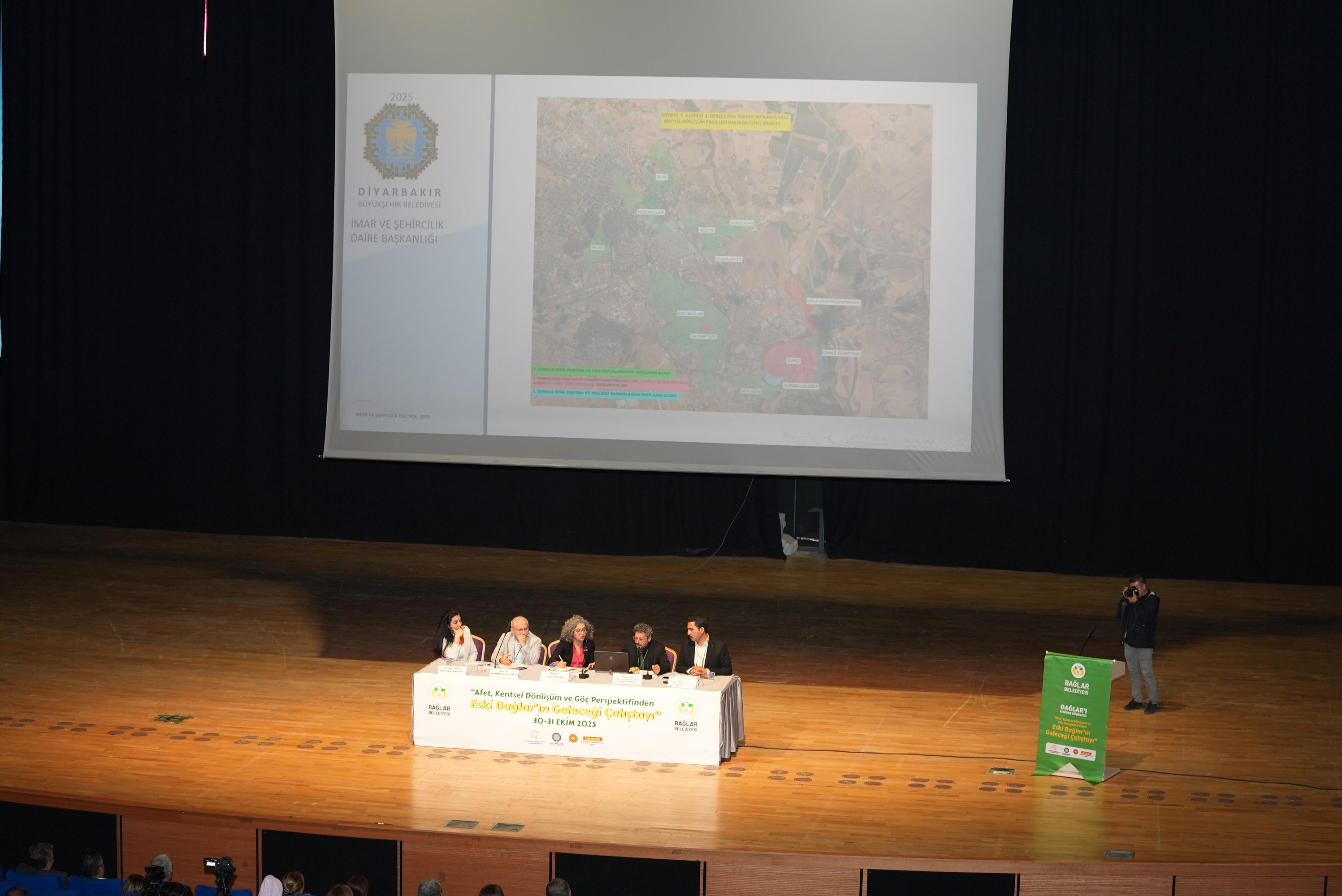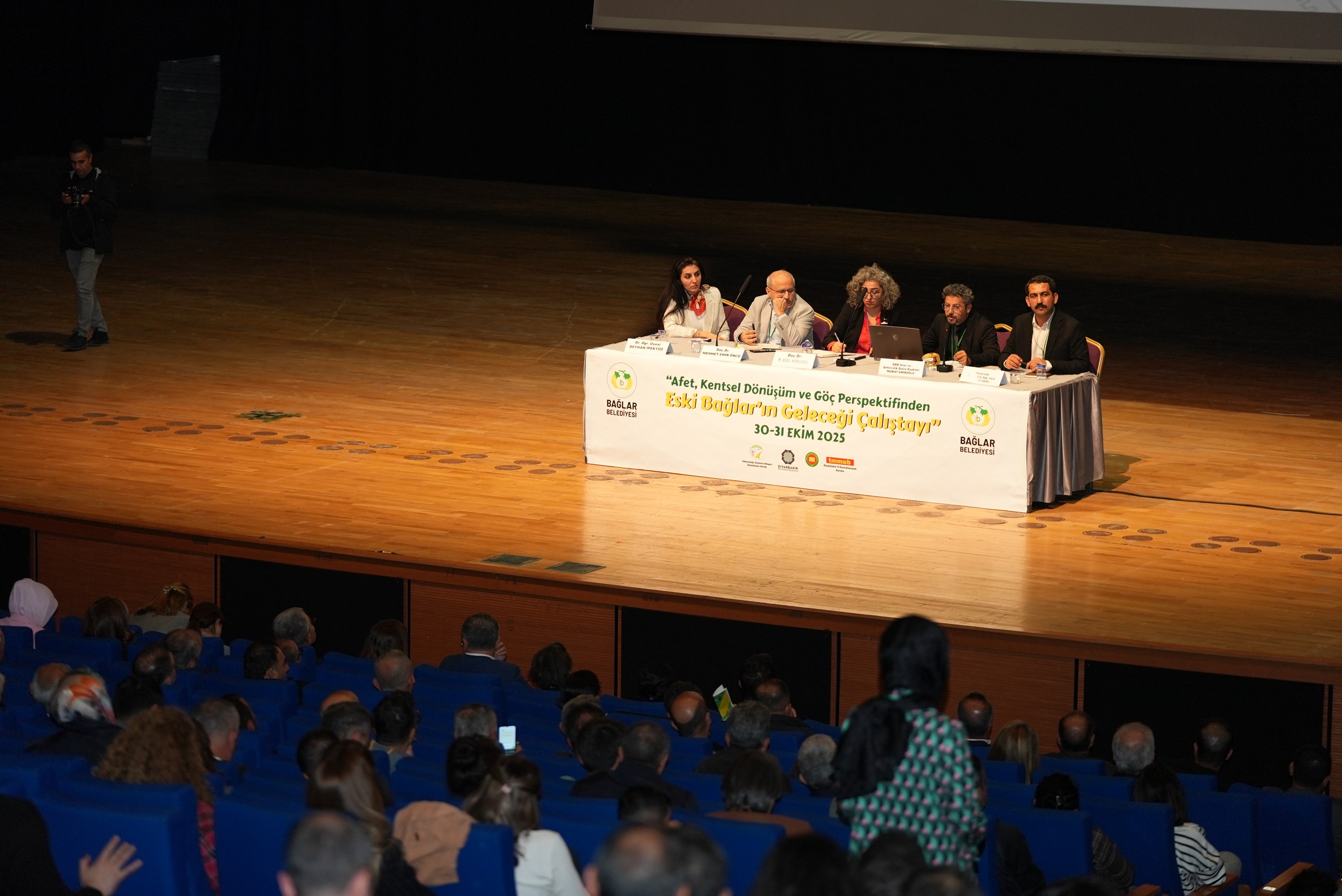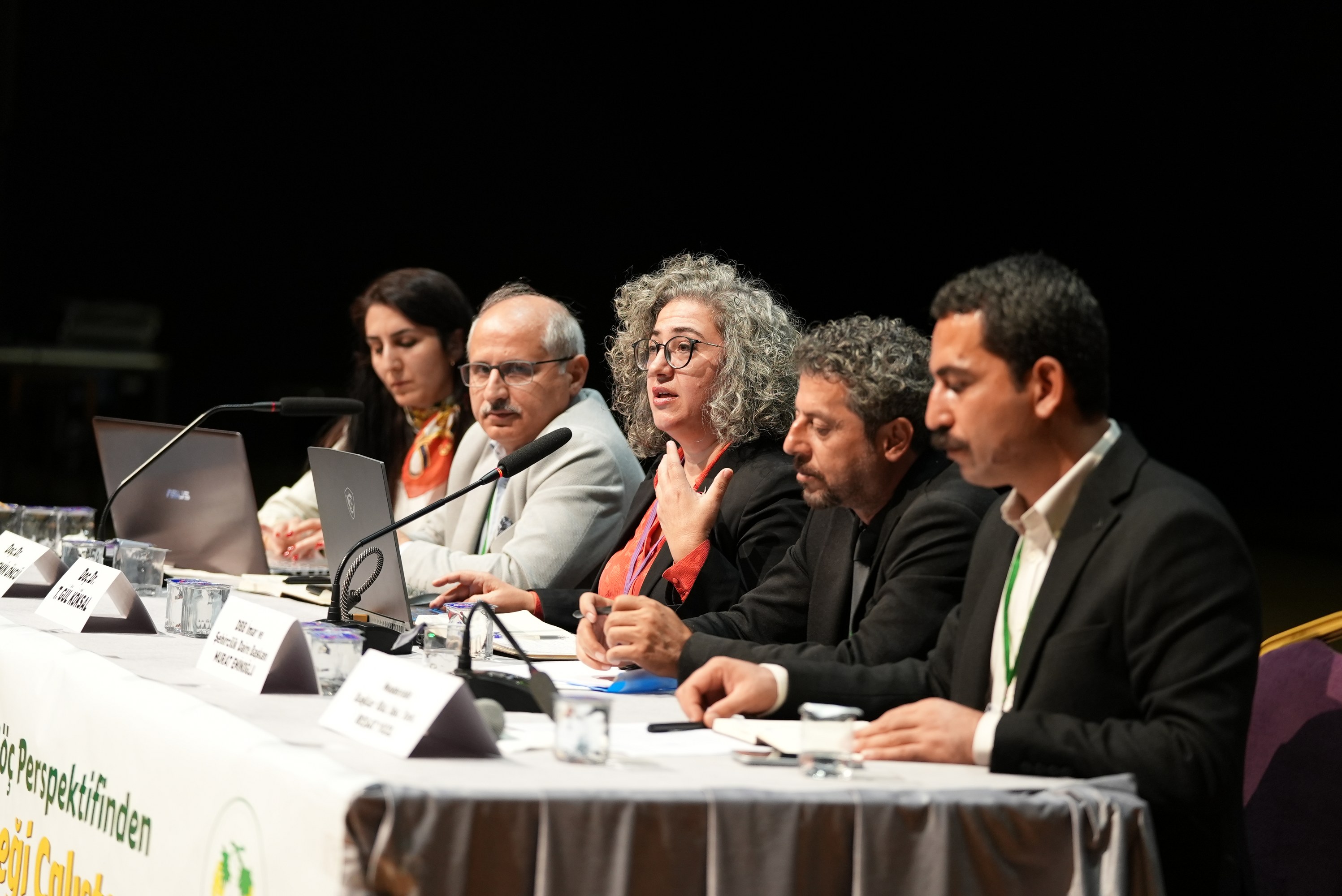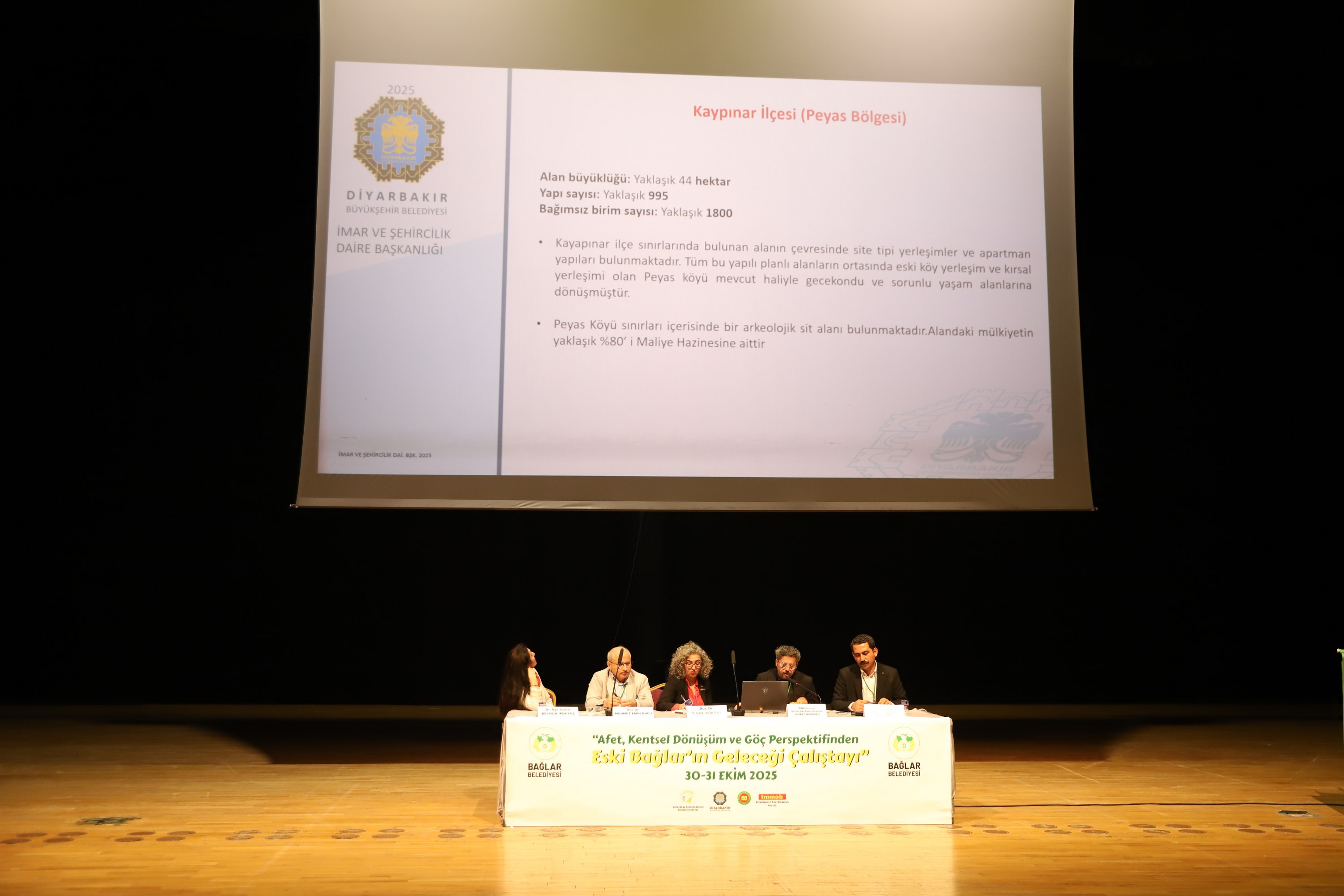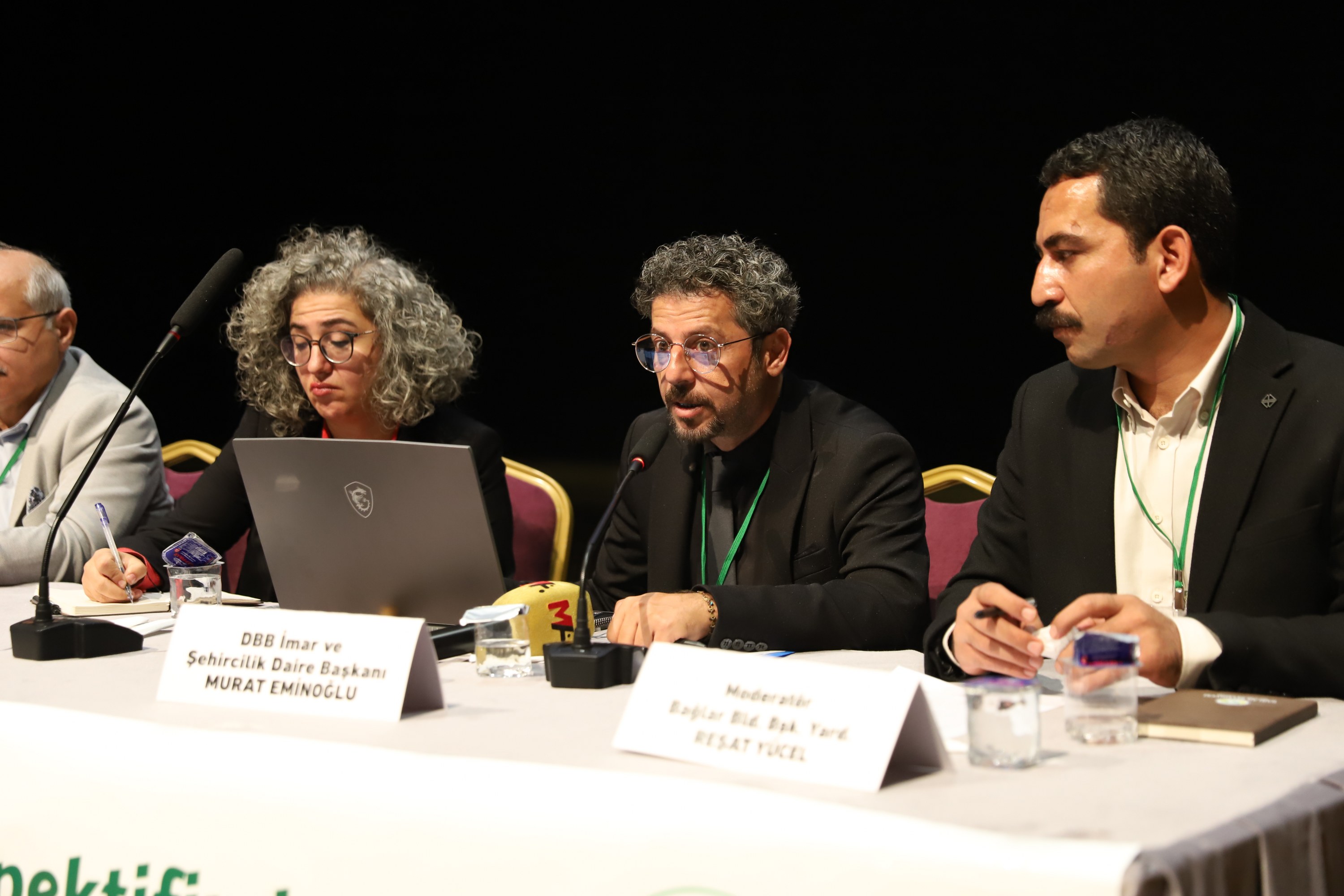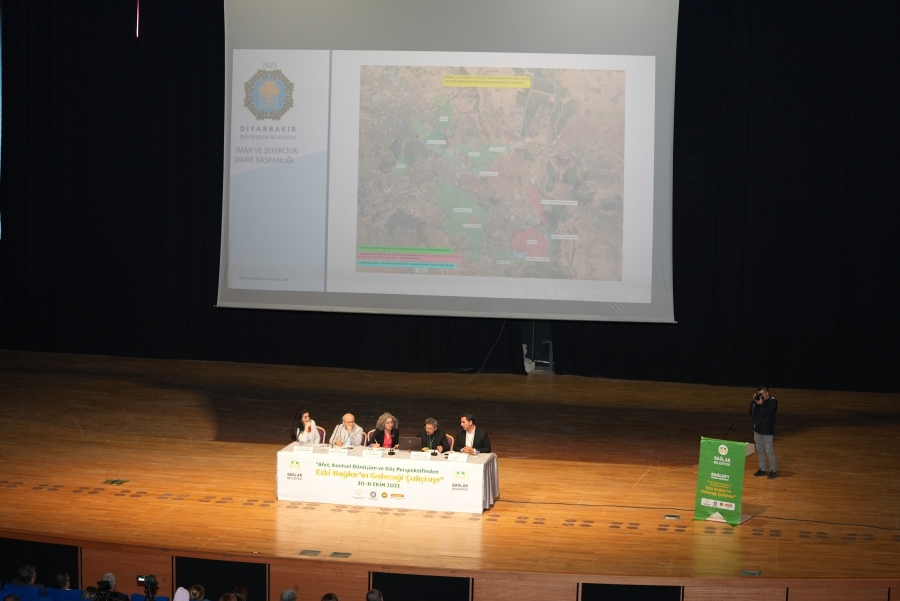
At the “Future of Old Bağlar from the Perspective of Disaster, Urban Transformation and Migration” workshop, Diyarbakır Metropolitan Municipality’s Head of Planning and Urban Development, Murat Eminoğlu, listed the areas across the city that face first-degree disaster risk, identifying Old Bağlar as the district most urgently requiring transformation.
Speaking in the first session of the workshop organised by Bağlar Municipality, Eminoğlu drew attention—under his presentation titled “A general view at Diyarbakır scale”—to the city’s historical development, the zones under disaster risk, and the need to renew Old Bağlar.
Assessing Diyarbakır’s planning processes within a historical frame, Eminoğlu outlined how planning experiences since the 1930s have shaped urban growth. He underlined that, with rapid migration from the 1950s onwards, the city was exposed to unplanned construction; in particular, the Bağlar area expanded from the 1960s on uncontrolled, across jointly owned (hisseli) plots. “Beyond the main transport corridors, multi-storey housing zones have formed along narrow streets into which ambulances, fire engines and similar vehicles struggle to enter. As this area lies within a second-degree earthquake zone, it poses a risk. The building stock here is not only structurally unsafe in terms of resilience; it is also physically inadequate and unhealthy. Almost all the buildings have reached the end of their economic life and present a serious threat to life and property,” he said.
‘It is the city’s most dense and most problematic area’
Saying, “Old Bağlar, with its 11 neighbourhoods, a population of 259,000, 12,746 buildings and 77,000 independent units, is today the city’s most dense and most problematic area,” Eminoğlu stressed that Bağlar lies in a second-degree earthquake zone and poses risks not only due to a degraded, structurally unsound building stock but also because of deficits in social and technical infrastructure, high population density and socio-economic problems. On Old Bağlar’s development plans, Eminoğlu stated: “The 1/5000-scale Master Development Plan approved in 2008 for the Bağlar area sought to lay the groundwork for plan decisions and principles that would enable urban transformation projects. However, in line with the area’s evolving needs, both the 1/5000-scale Master Plan and the 1/1000-scale Implementation Development Plans were re-prepared in three stages between 2021 and 2023 and brought into force.”
Structural, legal and sociological challenges
Continuing with the example of the Kaynartepe Neighbourhood urban transformation area, Eminoğlu outlined the structural, legal and sociological obstacles facing the process. He noted that highly fragmented (multi-share) ownership, deadlocks in conciliation processes, and the situation of tenant and rent-free households complicate transformation.
‘Citizen participation is essential’
Eminoğlu underlined that, when planning Old Bağlar’s future, citizen participation, social support mechanisms and trust are at least as important as the technical plans.
‘Creating safe environments is our core objective’
Recalling that Old Bağlar is one of Diyarbakır’s eight priority areas under disaster risk, Head of Planning and Urban Development Murat Eminoğlu said: “Within the boundaries of Diyarbakır province, areas requiring improvement to enhance quality of life have been identified, taking into account criteria such as ground conditions, the technical adequacy of buildings, planning and permitting status, the physical condition of structures, and limitations in social and technical infrastructure. In this framework, eight areas across the city (Old Bağlar; Peyas Neighbourhood; Huzurevleri Neighbourhood; Şılbe; Aziziye–Gürdoğan–Cumhuriyet neighbourhoods; Ben û Sen; Suriçi–Alipaşa–Lalebey–Cevatpaşa; and Feritköşk–Dicle neighbourhoods) stand out as first-degree disaster-risk zones. In these areas, creating safe, healthy and liveable environments, and addressing both existing physical conditions and social needs with an integrated approach, are among our core objectives.”
Academics delivered presentations
In the session, Architect and Conservation Specialist Assoc. Prof. T. Gül Köksal presented “Urban improvement instead of urban transformation; An alternative to mainstream planning: Bağlar”; Assoc. Prof. Mehmet Emin Öncü of Dicle University presented “Structural assessment of the existing building stock in Bağlar district”; and Dr. Beyhan İpekyüz, Head of Dicle University’s Transport Department, presented “Preparations prior to transformation in Bağlar district: Transport”.