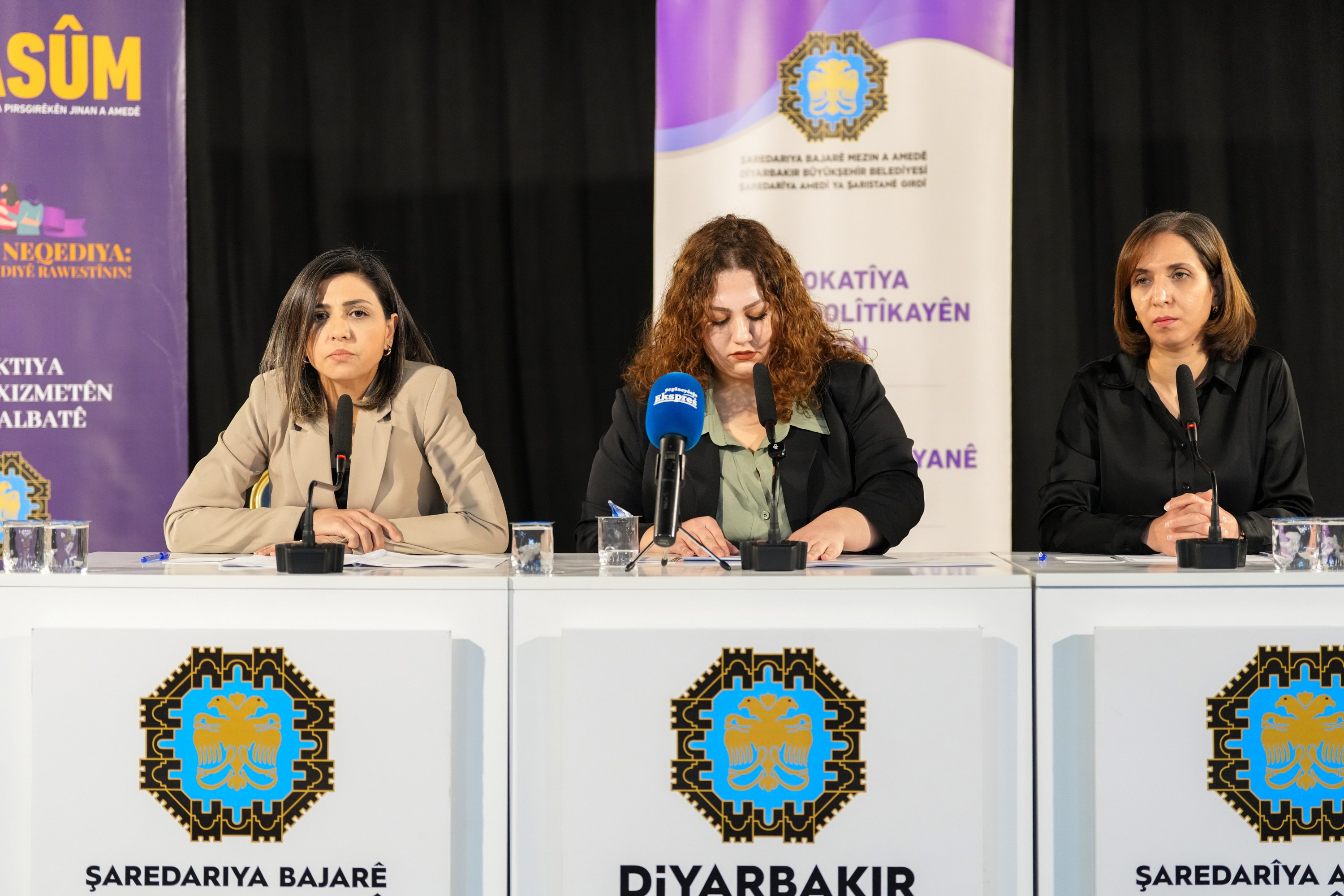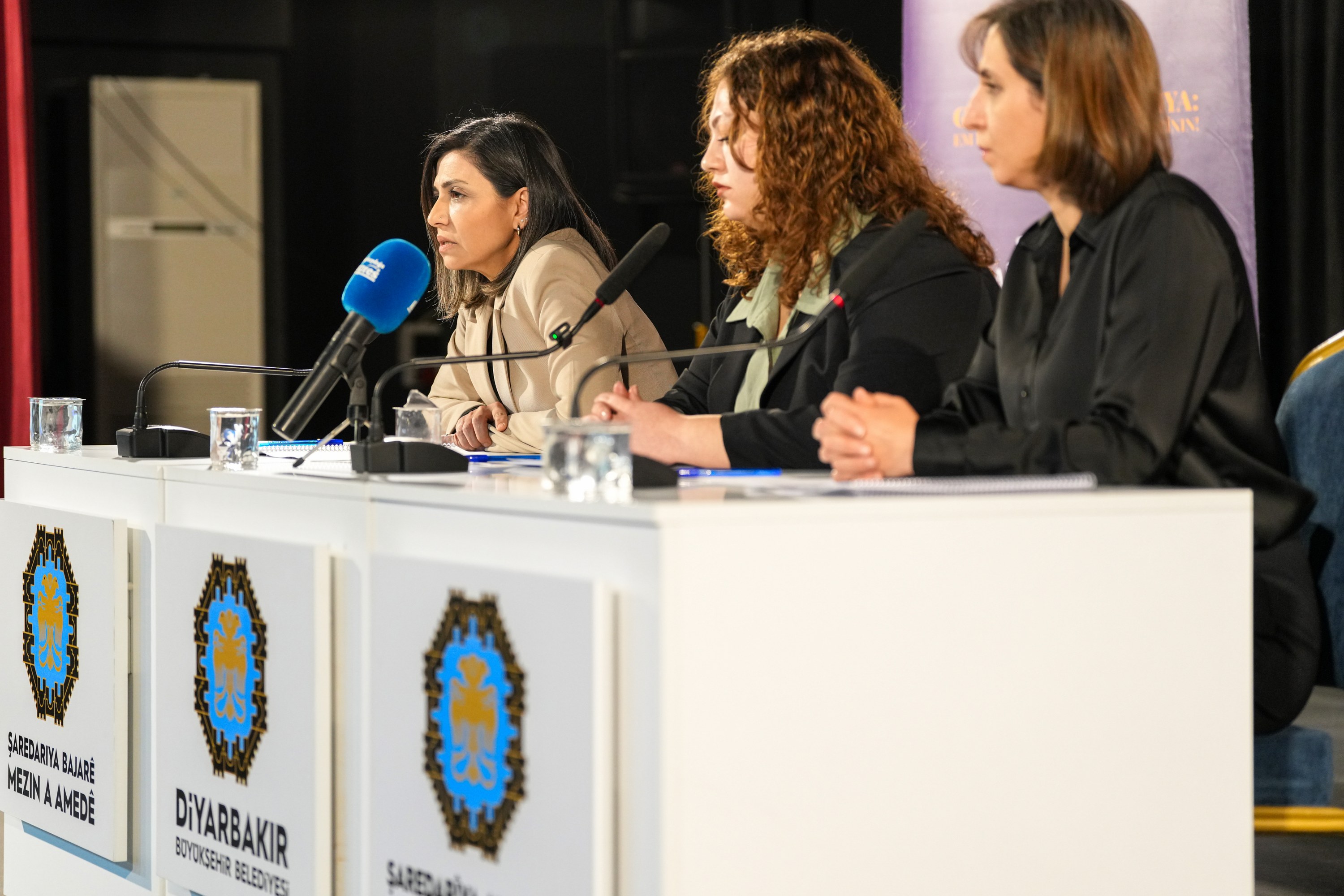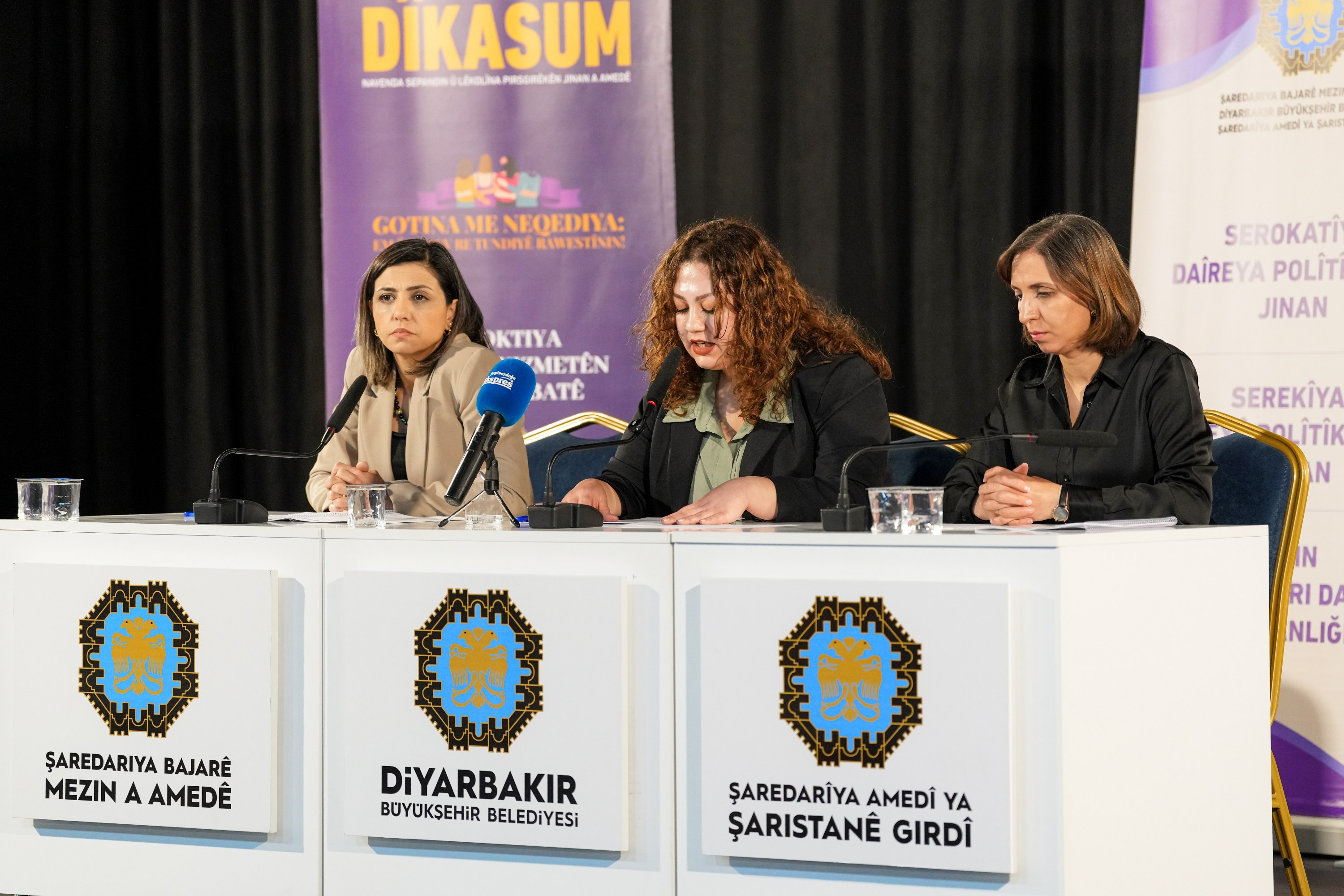
Diyarbakır Metropolitan Municipality (DBB) has made public a detailed report showing that 258 women submitted applications due to violence. The municipality shared comprehensive data on the forms of violence women were subjected to, the reasons for applications, risk assessments, and the applicants’ requests.
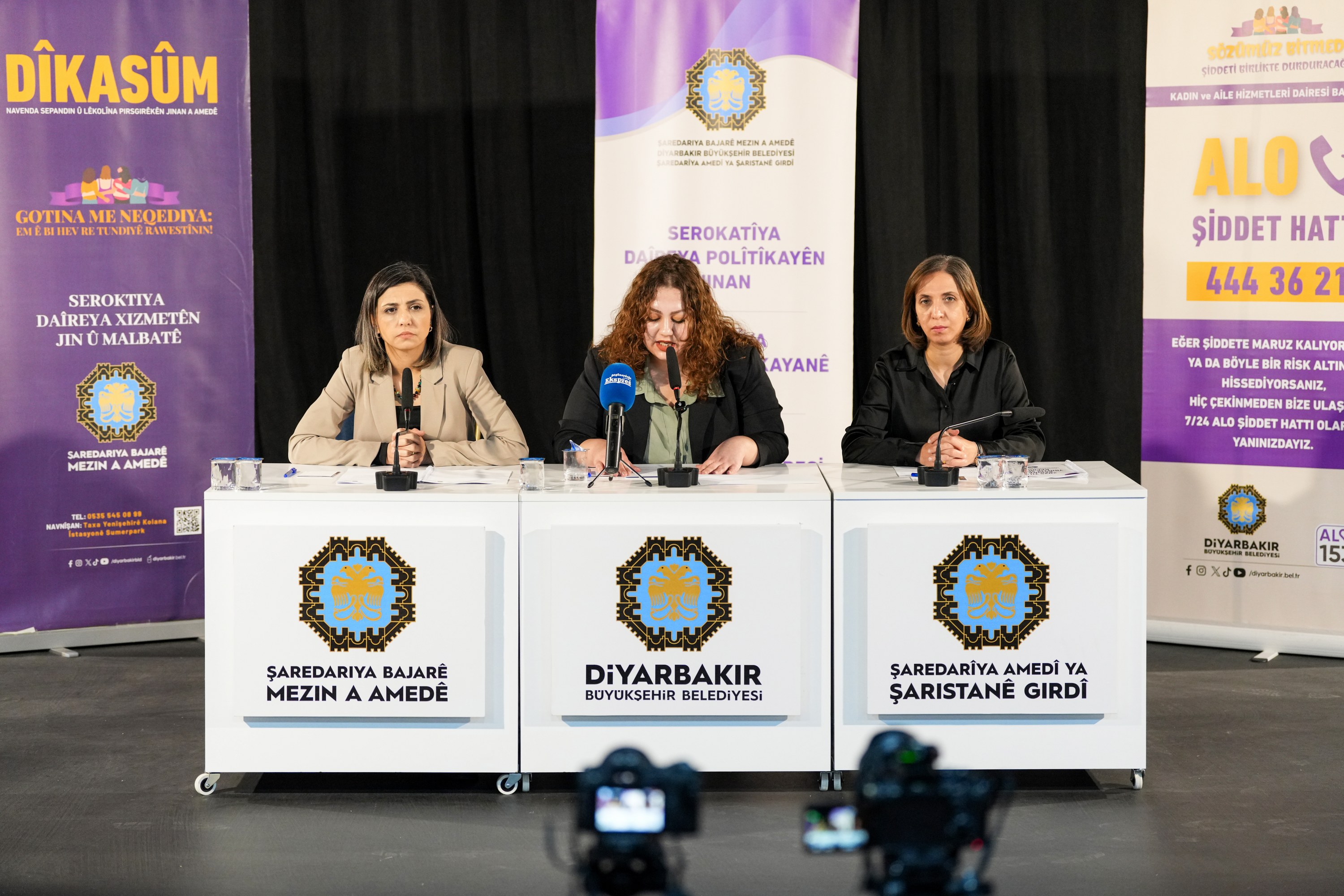
The Department of Women’s Policies presented the Violence Against Women Report—prepared on the basis of applications received from women throughout 2025—at a public meeting held at the Ali Emiri Conference Hall.
Özden Gürbüz Sümer: “These data provide a roadmap for the city”
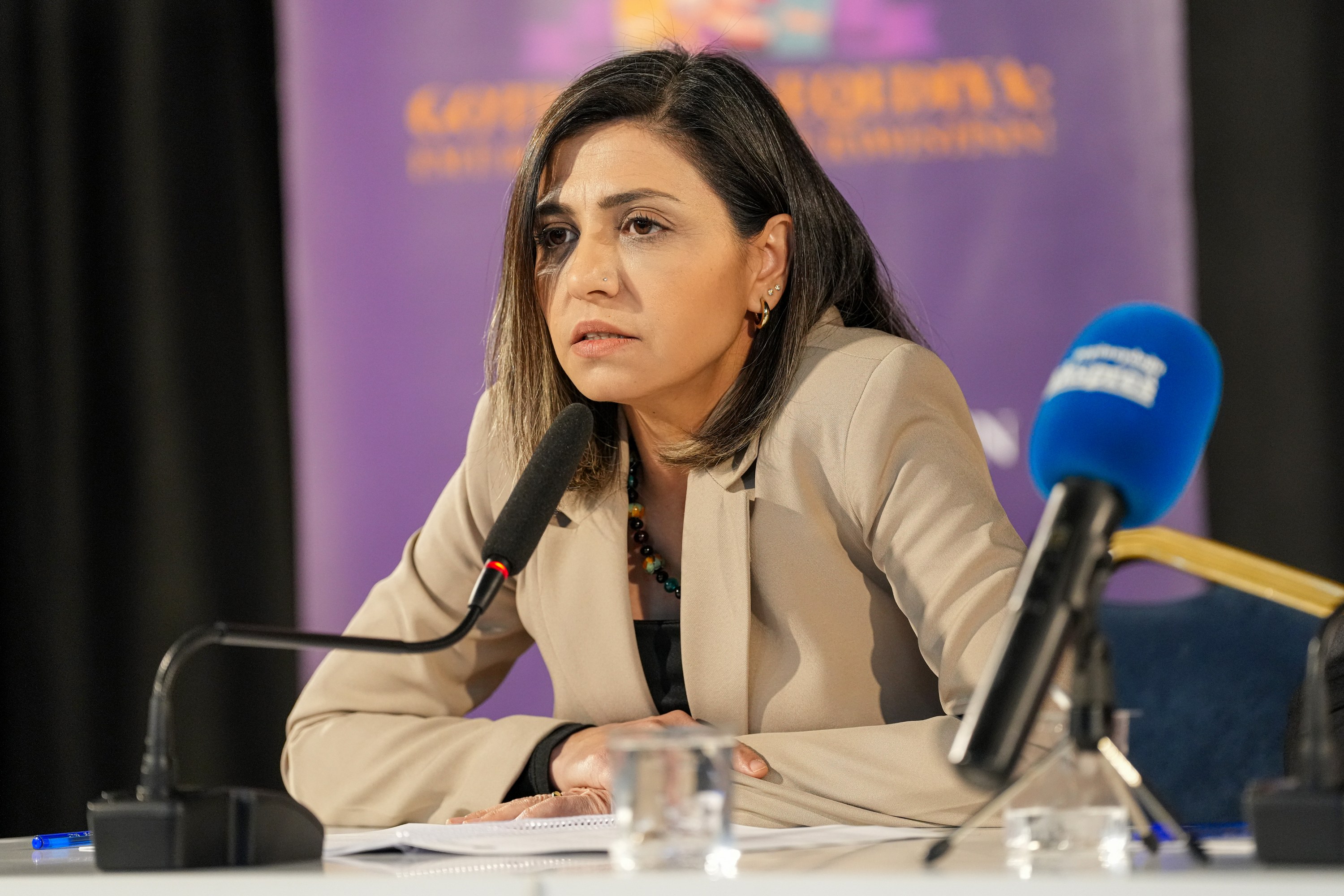
Speaking at the meeting, Özden Gürbüz Sümer, Head of the Department of Women’s Policies, underlined that DİKASUM is not only significant for Diyarbakır Metropolitan Municipality but is also a vital women’s health, counselling and solidarity centre for the wider region. Recalling that the centre was rendered ineffective during the trustee (kayyum) period, Sümer said that since reopening, the counselling centre has, within a year, become a point of access where women can apply regarding all forms of gender-based violence, and where urgent referrals and interventions are carried out.
Sümer stressed that the published figures should not be seen merely as statistics, adding that the report both evaluates activities carried out to date and offers a robust roadmap for future work. She also stated that they want the report to serve as guidance for civil society organisations and public institutions working in this field across the city.
Highest demand is for economic and psychological support
In the report prepared on the basis of data from the Diyarbakır Women’s Issues Research and Implementation Centre (DİKASUM), the Women’s Shelter, and the Alo Violence Hotline—units operating under the Department of Women’s Policies—it is underlined that violence against women is not an individual matter but a structural problem rooted in gender inequality.
According to the report, 393 applications were received in 2025: 352 were submitted to DİKASUM and 41 to the Alo Violence Hotline. While 274 applications have been concluded, follow-up continues for 119 cases. It was noted that this indicates violence is not a one-off incident but a long-term phenomenon requiring sustained monitoring.
Among the women who applied, 165 requested economic support and 123 requested psychological support. The high level of demand for economic support was said to demonstrate a direct link between women’s poverty and violence. Applications for psychological support, meanwhile, highlighted the impact of violence on women’s mental health and everyday life.
In terms of the reasons for applying, the report records that 142 women applied due to economic violence, 94 due to psychological violence, and 32 due to physical violence. The comparatively low number of applications relating to sexual and digital violence was assessed as potentially stemming from social pressures that make it difficult for women to speak openly about what they have experienced.
30 women at risk of life-threatening harm
The report found that 30 of the women who applied are at risk in terms of their personal safety. It also noted that 176 women have caring responsibilities, indicating that women are having to cope not only with violence but also with multiple burdens such as childcare as well as caring for older and ill family members.
The report further states that 206 women are not in paid employment, only 35 are in work, and 161 women are not receiving any form of economic support. It was emphasised that these figures make visible both the barriers to economic independence and gender inequality.
258 women and 173 children stayed in the shelter
Over the course of 2025, the shelter accommodated 258 women and 173 children. It was reported that 207 women applied to the shelter due to a history of violence, while 51 applied due to housing needs. The highest volume of applications came from women aged 26–33 and 18–25.
Among women staying in the shelter, 167 were subjected to psychological violence, 132 to physical violence, 41 to economic violence, 17 to sexual violence and 2 to digital violence. The data indicate that violence is a widespread problem affecting all age groups.
“88% of violence occurs within the family”
The report notes that the vast majority of applications fall within the scope of domestic violence, stating that 88% of the violence takes place within the family—defined as the “private sphere”. It was underlined that this points to violence against women as a structural issue that must be addressed through public policy.
In the concluding section, the Department of Women’s Policies stressed the need to strengthen rights-based, equality-driven and women-centred policies in combating violence, to expand the number of shelters and solidarity centres, and to scale up programmes that support women’s economic independence.
The statement added: “Women’s right to life, safety and to build a life free from violence is non-negotiable. We will continue to take responsibility in the fight against violence against women through policies that put women at the centre.”