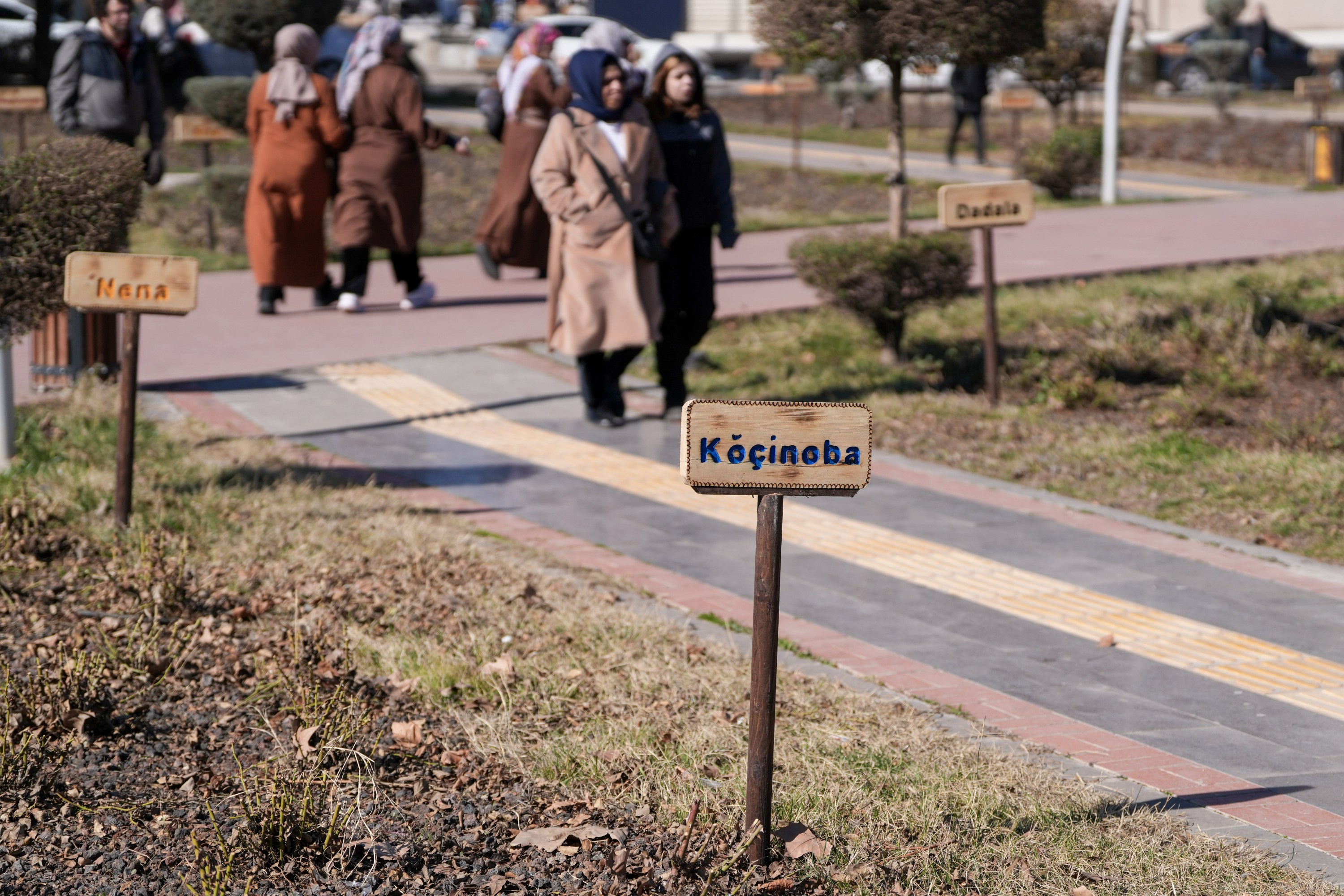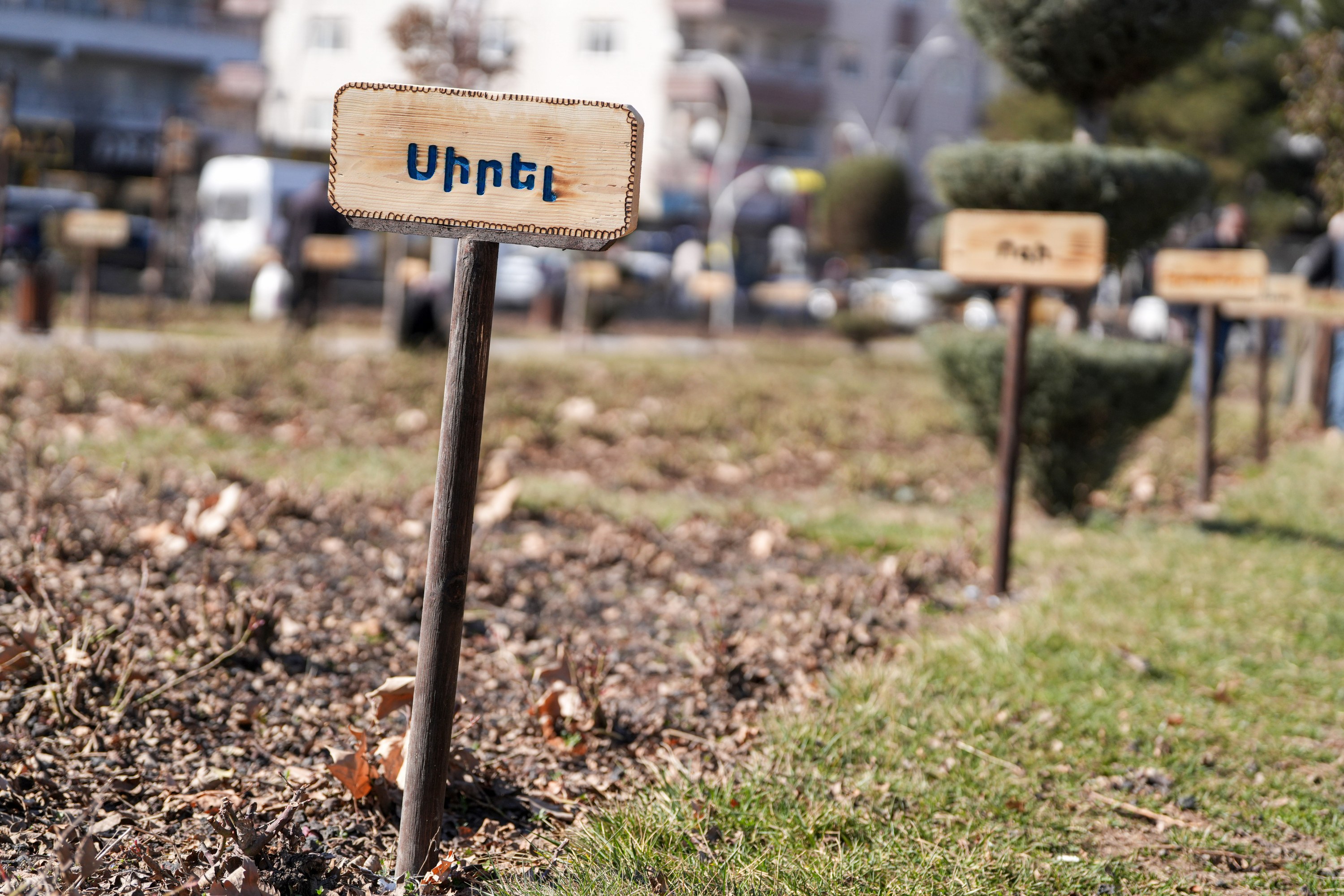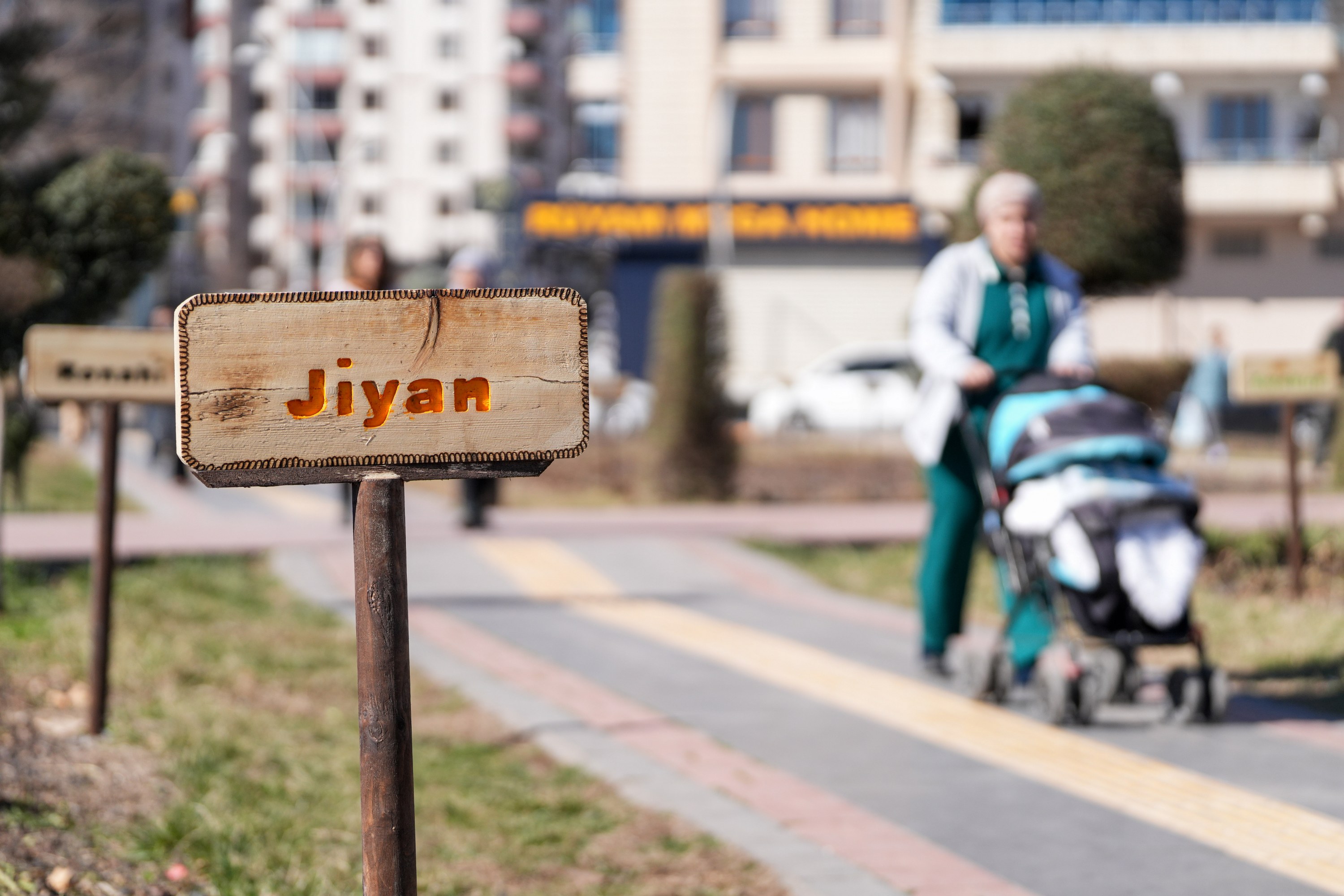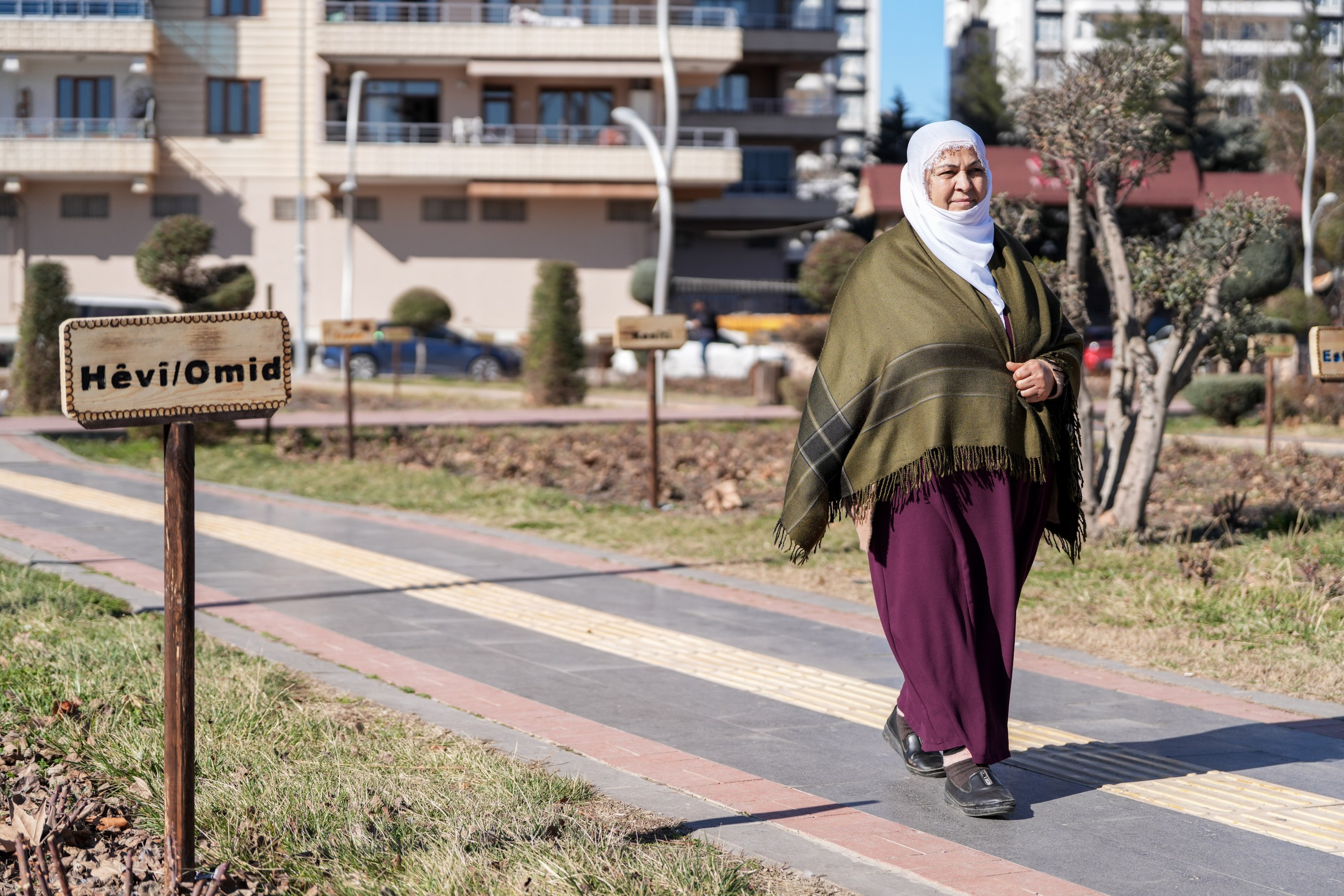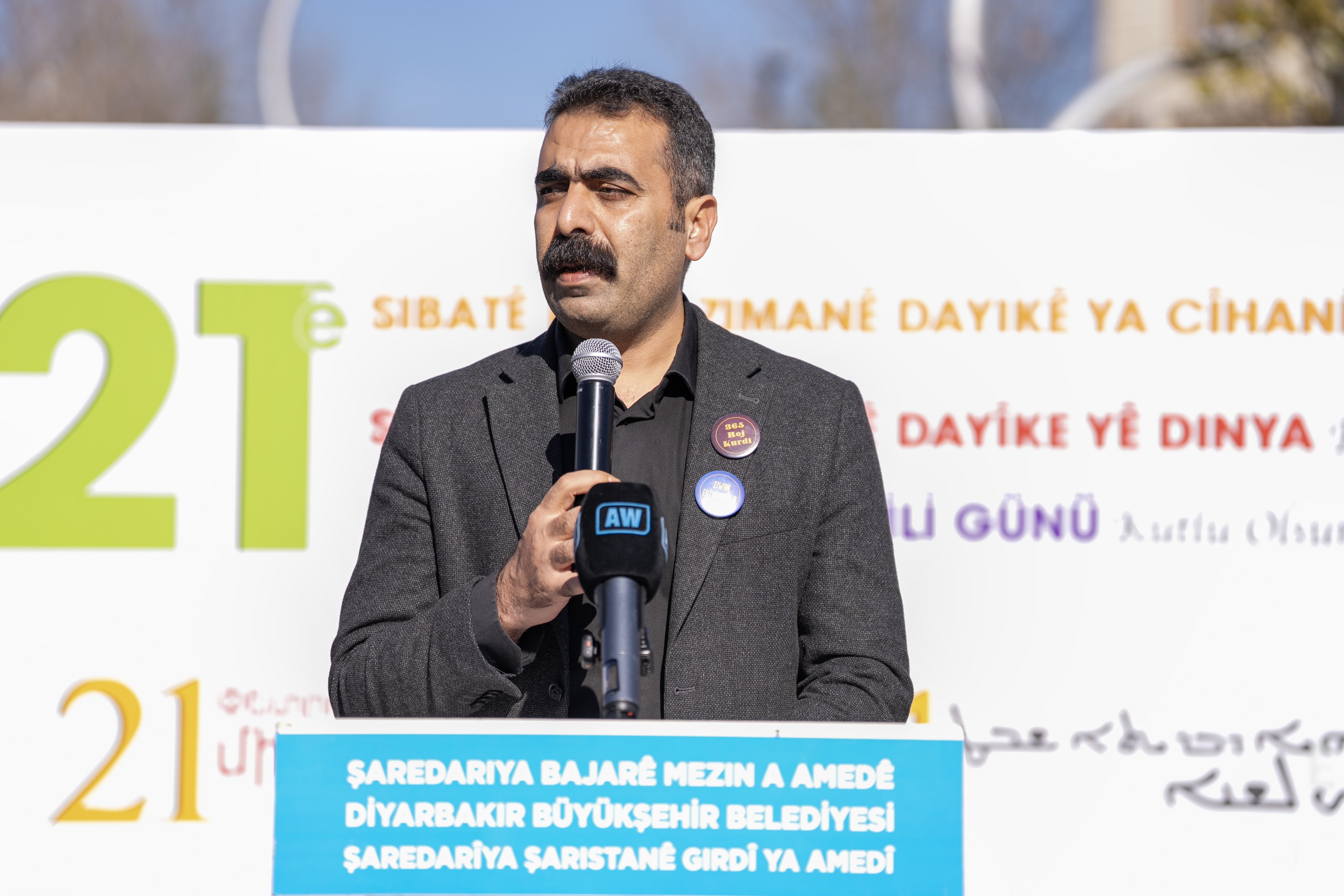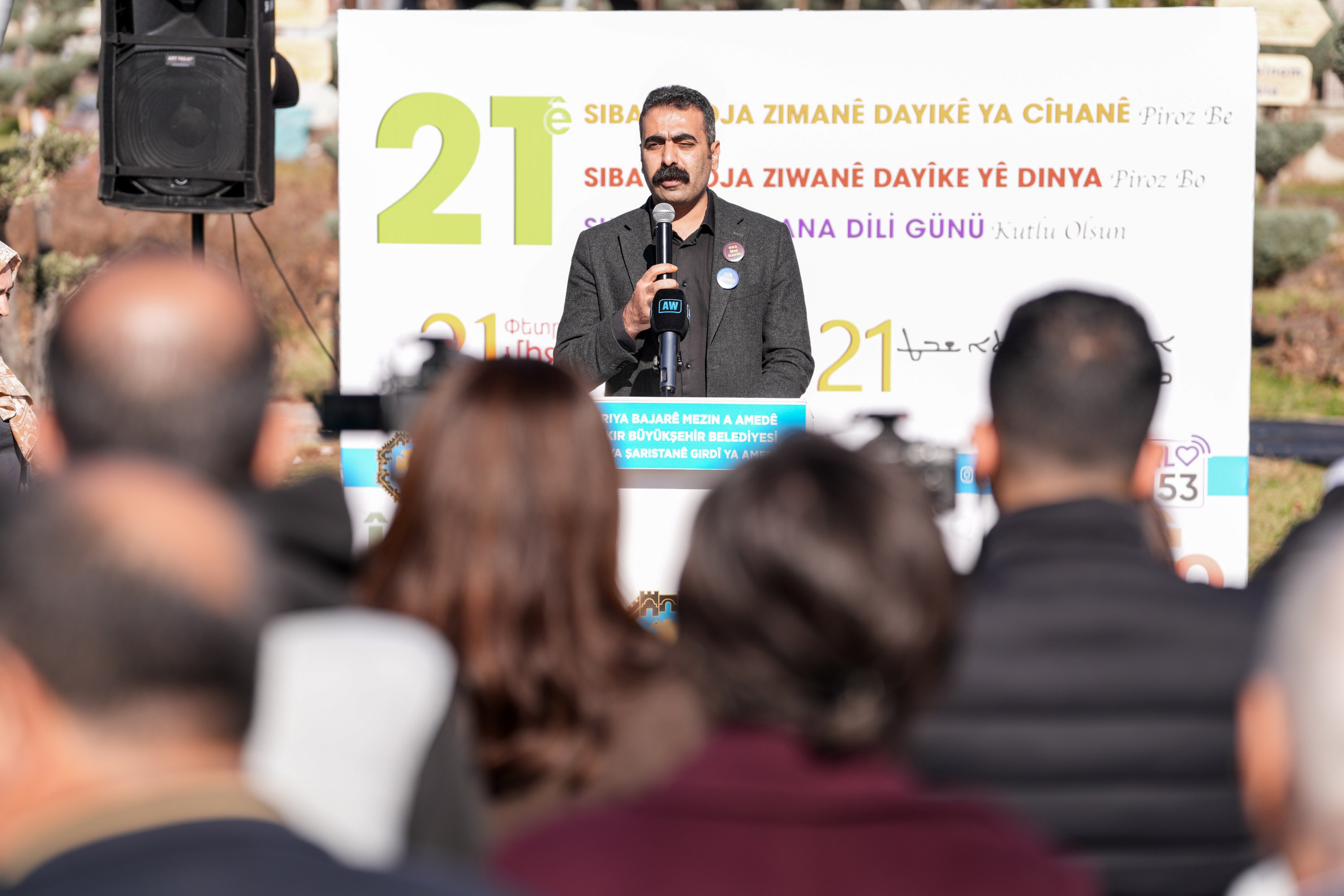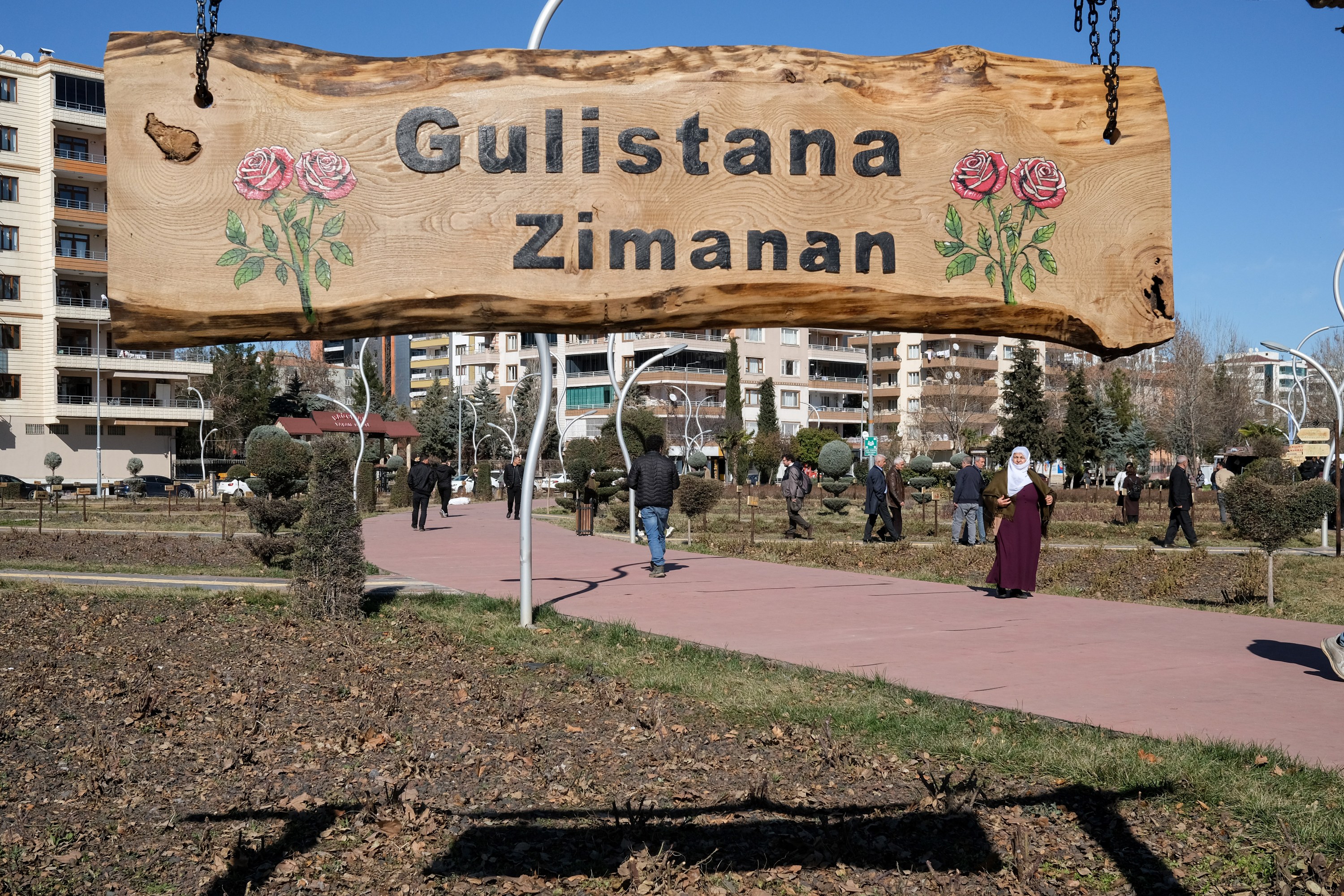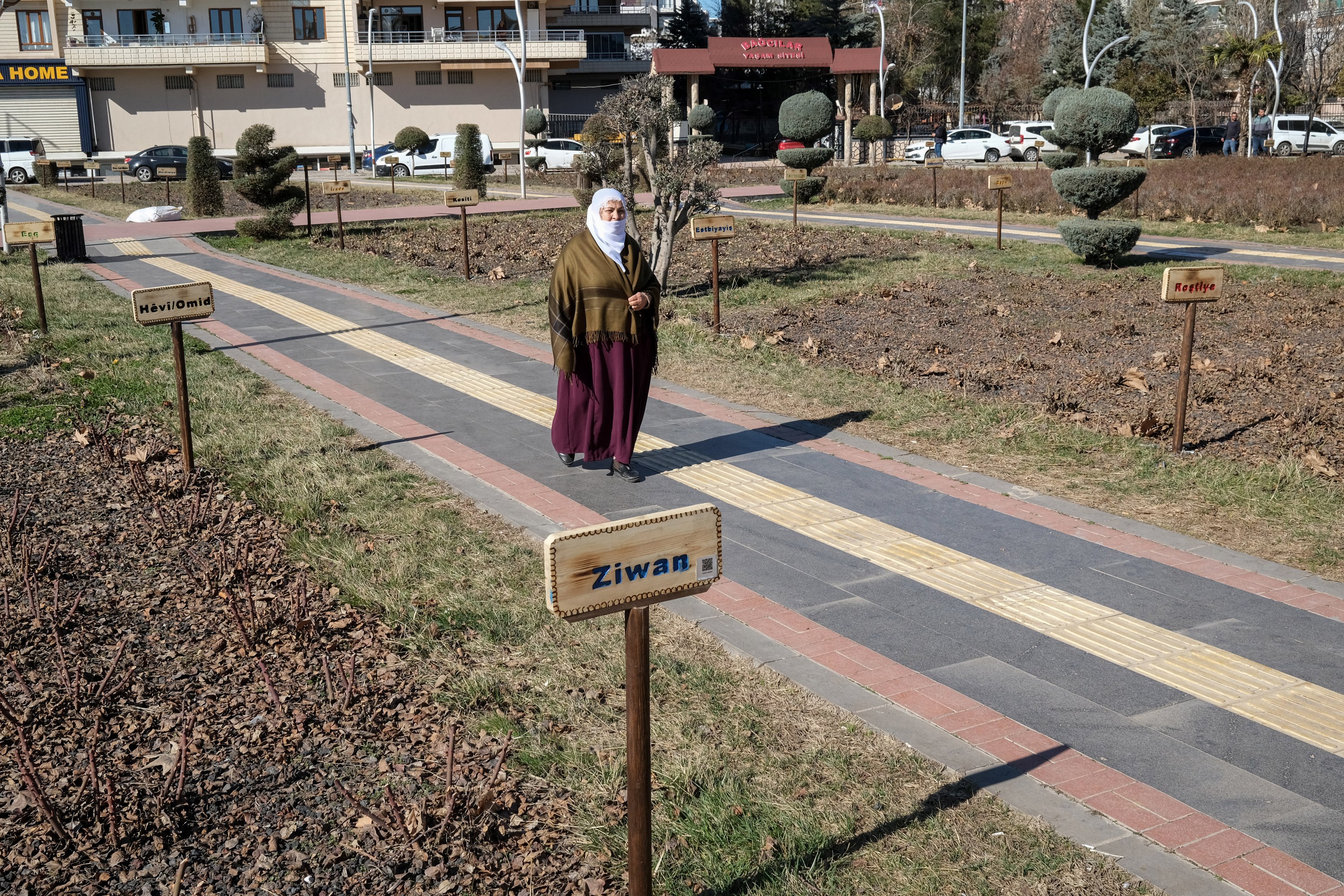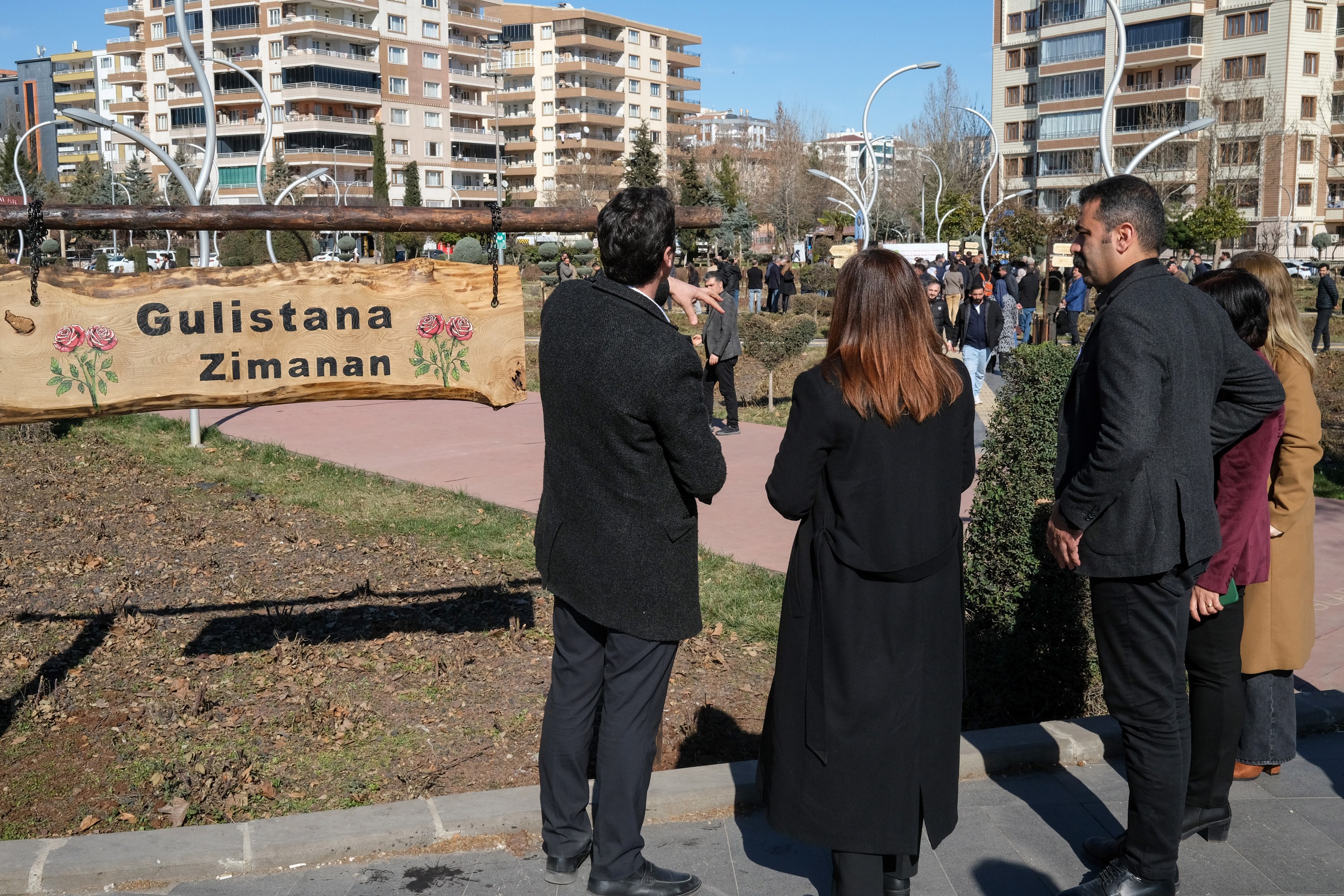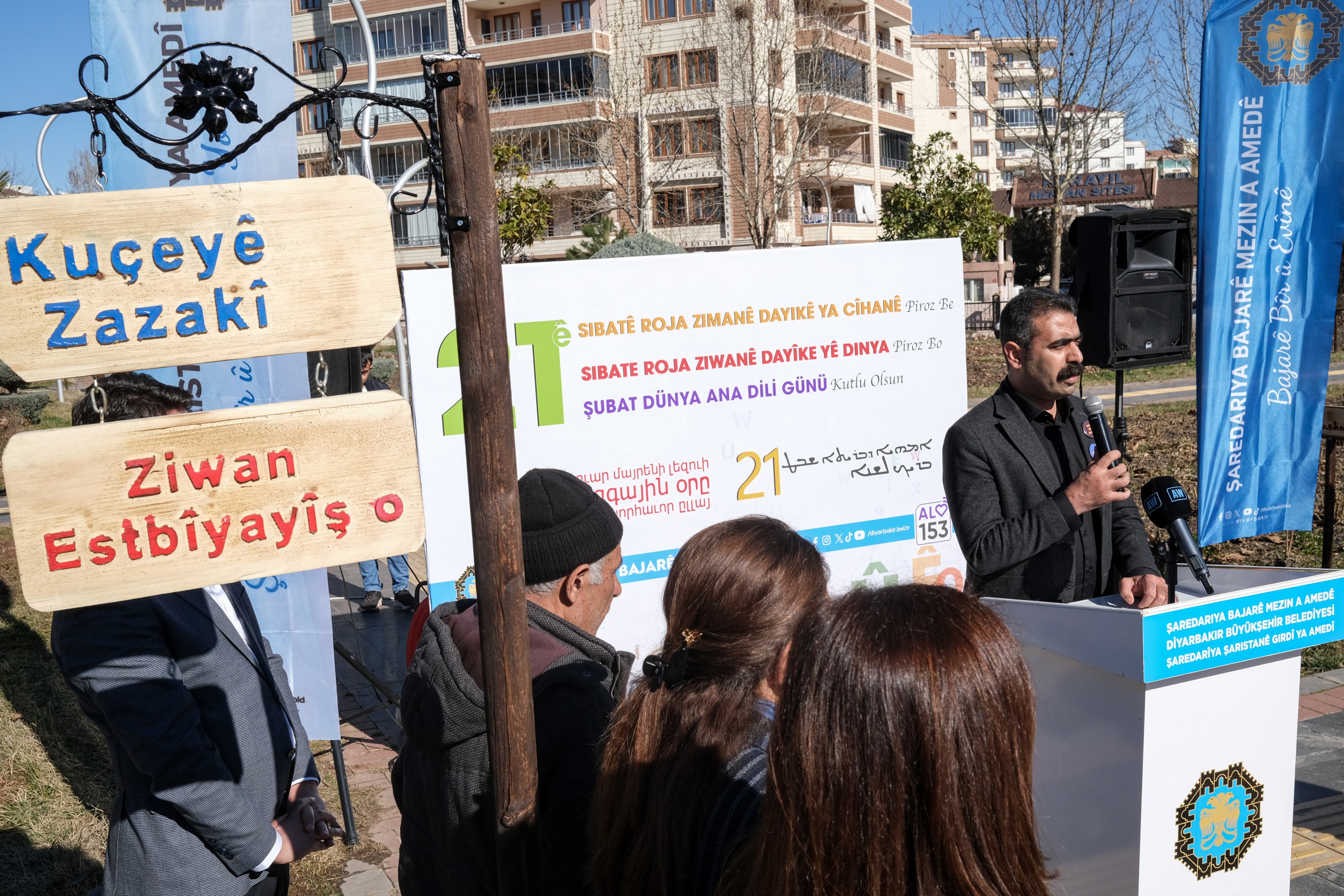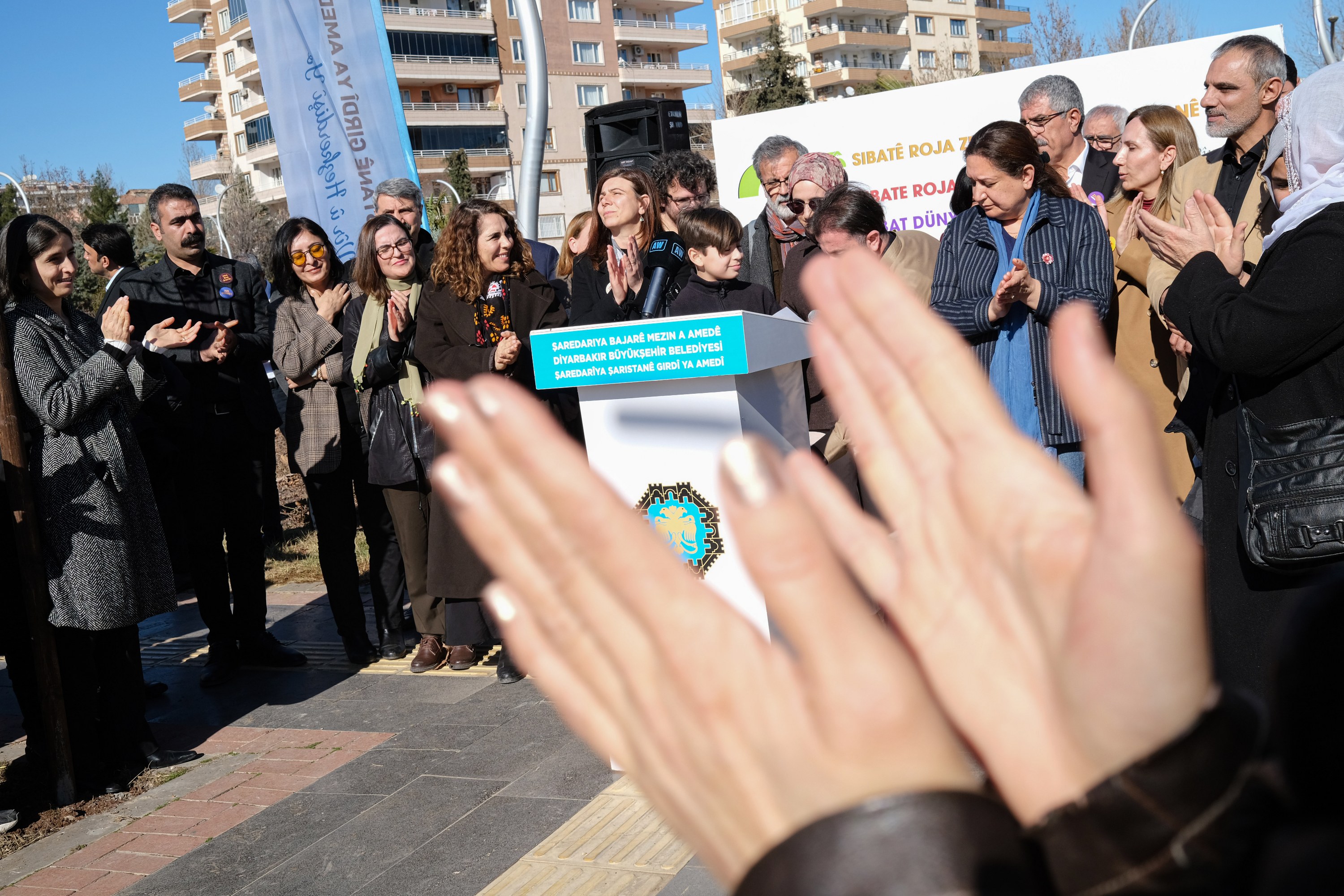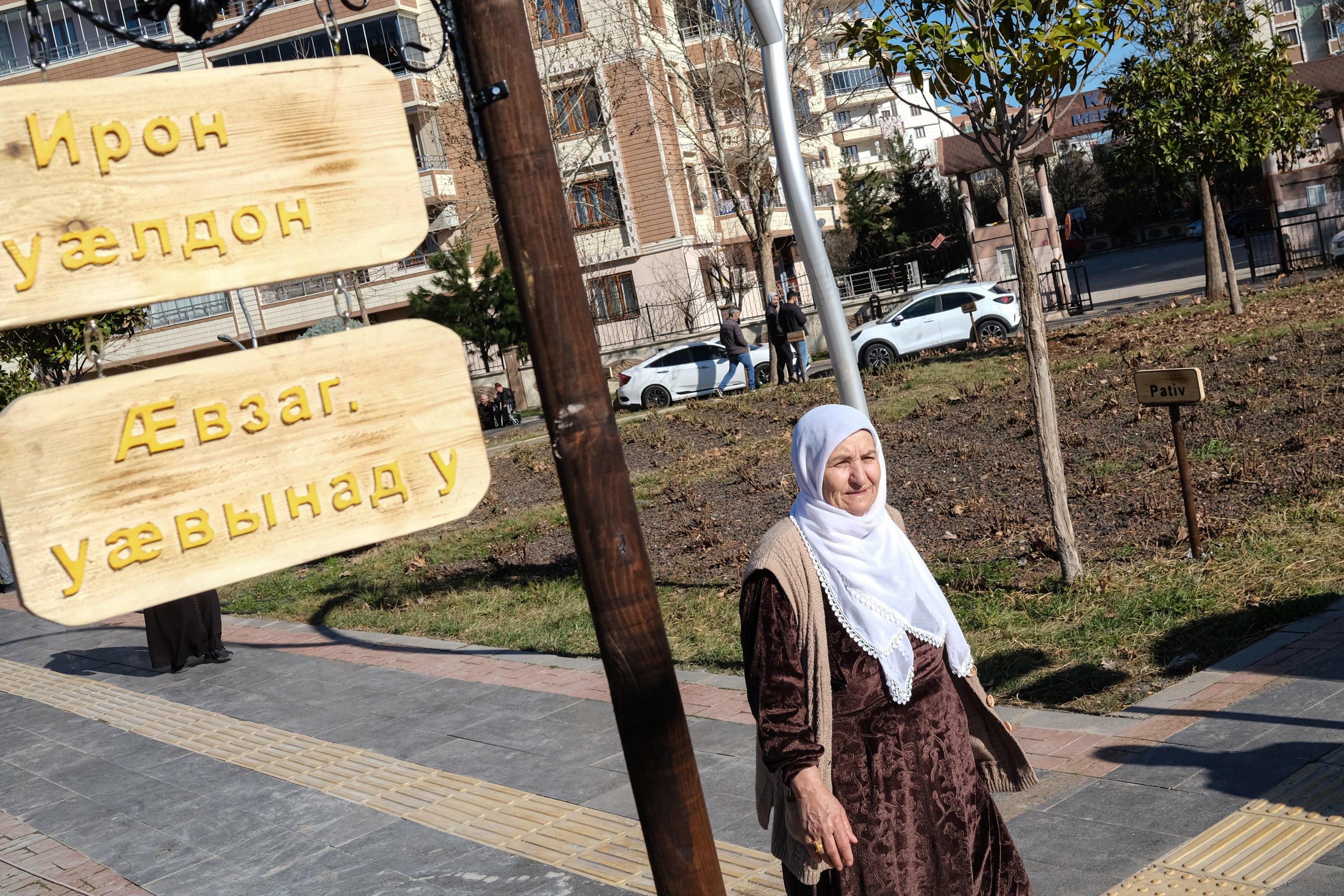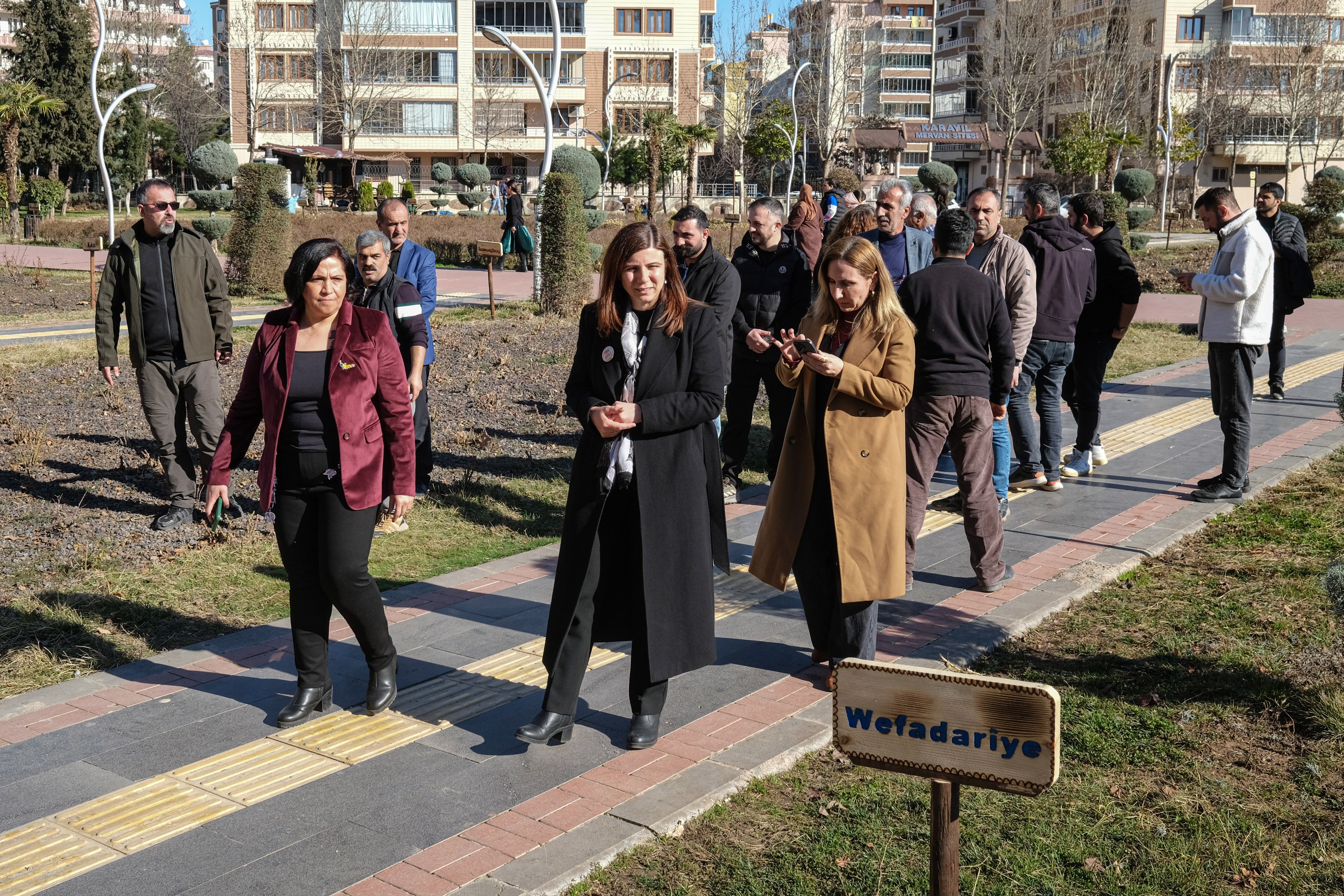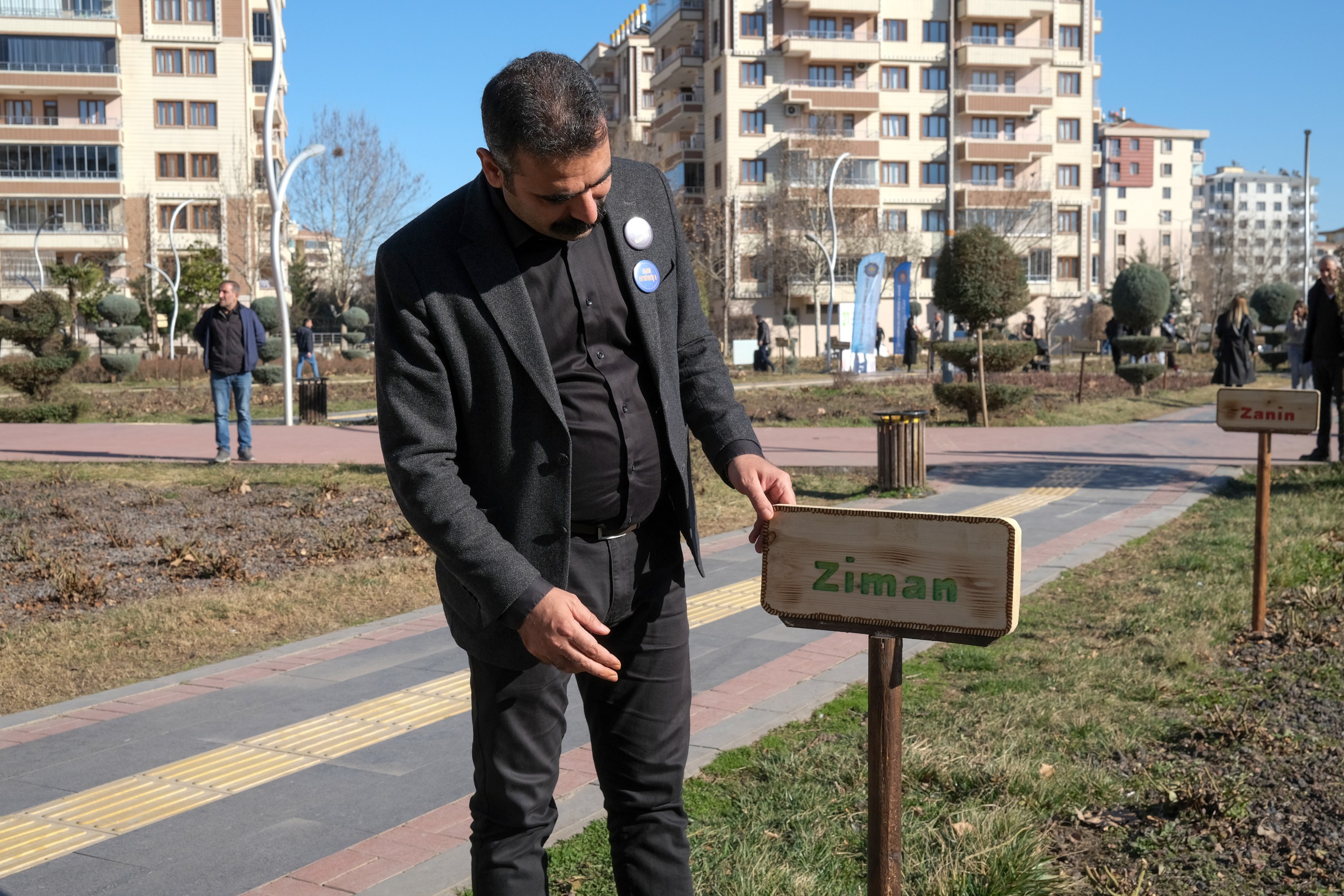
Diyarbakır Metropolitan Municipality Co-Mayors Serra Bucak and Doğan Hatun attended a ceremony held as part of the 21 February International Mother Language Day events, marking the renaming of Gül Bahçesi (Rose Garden) in Bağlar district as “Gulistana Zimanan (Rose Garden of Languages)”. Within the park, streets were created in the names of 10 different endangered languages and multilingual signs were installed.
The work carried out in Gül Bahçesi in Bağlar district was completed through the cooperation of the Language Protection and Development Branch Directorate, operating under the Municipality’s Department of Culture, Arts and Social Affairs, and the Language Rights Monitoring, Documentation and Reporting Network (DHİBRA). As part of 21 February International Mother Language Day, the park was renamed “Gulistana Zimanan (Rose Garden of Languages)”; streets were created and named after 10 different endangered languages.
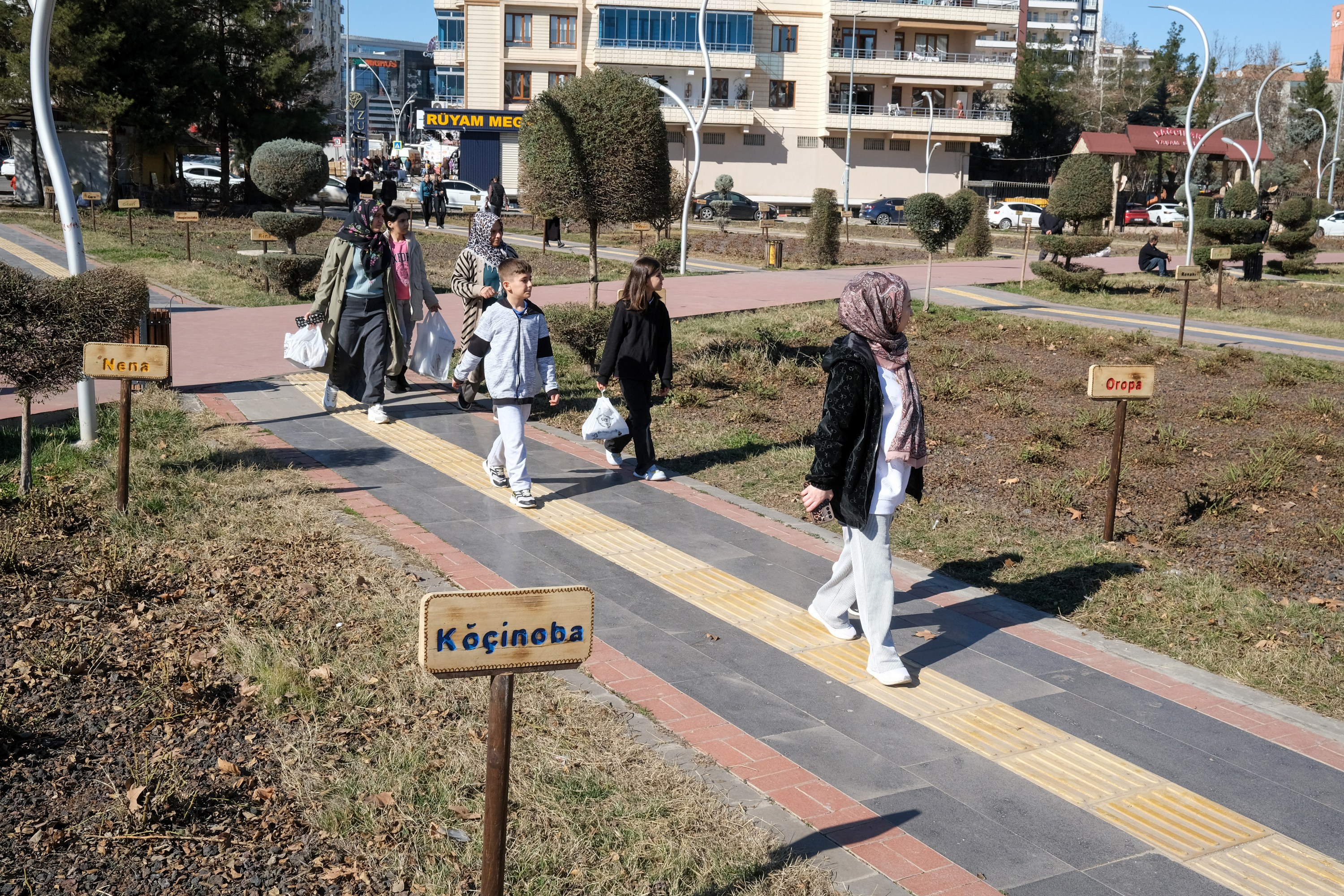
It was stated that the work carried out in the park aims to draw attention to stateless and endangered languages and to make these languages more visible. The park consists of 10 streets, each representing a different language. The street signs feature the name of the relevant language, as well as the phrase “Language is Existence”, the slogan of this year’s International Mother Language Day on 21 February.
Signs installed on every street
On each street, signs displaying 20 words representing that language were installed. QR codes were added to the signs so that visitors can access translations of the words in Kurmancî, Kirmanckî, Turkish and English. Through these QR codes, visitors can also obtain information about the relevant languages. It was also noted that the park design prioritised naturalness and aesthetics, with wood used as the primary material.
Names of the streets in the park
The streets in the park are named as follows: Kurmanci Street, Kirmancki Street, Armenian Street, Syriac Street, Abkhaz Street, Circassian Street, Laz Street, Hemshin Street, Romani Street and Ossetian Street.
Ceremony held
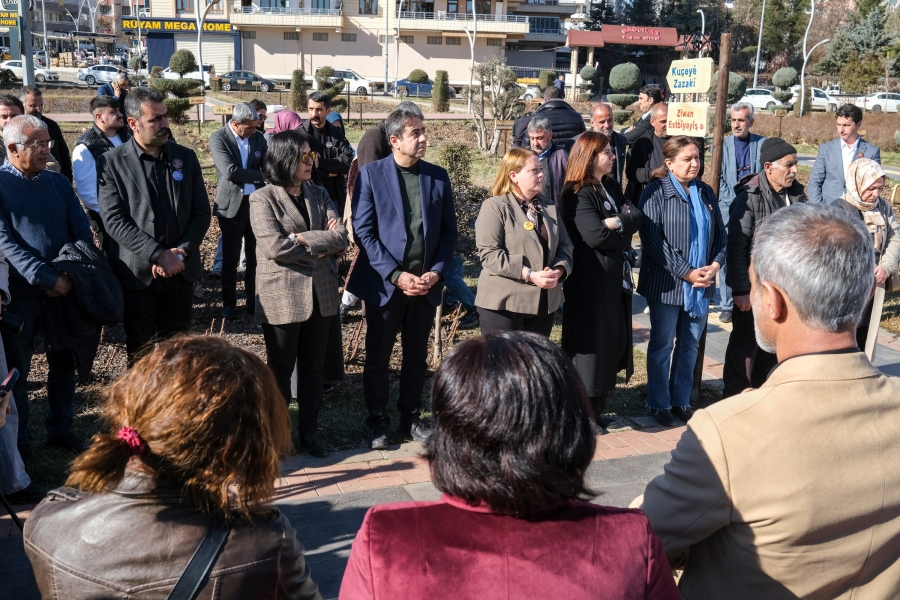
A ceremony was held to mark the refurbishment works carried out in the park. In addition to Diyarbakır Metropolitan Municipality Co-Mayors Serra Bucak and Doğan Hatun, those attending included Bağlar Municipality Co-Mayors Leyla Ayaz and Sıraç Çelik; Kayapınar Municipality Co-Mayors Berivan Gülşen Sincar and Cengiz Dündar; Peoples’ Equality and Democracy Party (DEM Party) MPs Ceylan Akça, Adalet Kaya and Serhat Eren; DEM Party Provincial Co-Chairs Gülşen Özer and Abbas Şahin; council members, heads of department, representatives of civil society organisations, and local residents.
Co-Mayor Hatun: Responsibility must be taken
Speaking at the opening of the programme, Co-Mayor Doğan Hatun said that responsibility must be assumed to prevent languages from disappearing. Hatun said:
“The work carried out here today is rooted in a history stretching back thousands of years. It concerns languages that are now used less frequently and have either reached the point of extinction or have been pushed into the background after being ignored by certain authorities. For this reason, on the occasion of 21 February, we sought to draw attention to the fact that dozens of languages within the borders of Türkiye are on the verge of disappearing and are facing cultural destruction, and we underlined that a grave responsibility must be assumed to ensure that these languages do not disappear.”
‘All languages are dignified’
Emphasising that linguistic diversity is a sign of cultural richness, Hatun said:
“As is known, there is officially only one language in this country. Today, in this park, we have brought attention to 10 of those languages that are under threat of extinction. This is a highly comprehensive piece of work. We adorned every street in this park with the colour and voice of a language; we gave each street the name of a language and wrote the signs with words from that language. As Diyarbakır’s municipalities, our call to all peoples whose languages face the danger of extinction is this: they must protect their languages. We also call on those in positions of responsibility: all languages are dignified. The more languages a country has, the richer that country is, and the deeper its culture. If you protect only one language, you interrupt that country’s cultural, artistic and linguistic richness; you suppress the different voices and colours of the country. This park can be a fine example of multiculturalism and multilingualism for all of Türkiye.”
‘The aim is to make languages visible’
Tahir Baykuşak, Head of the Language Protection and Development Branch, said the park had been prepared with the aim of making endangered languages visible. Baykuşak stated that a declaration prepared in 25 languages would be read in Kurdish and Turkish, and drew attention to the importance of languages becoming languages of education and gaining recognised status in order to be preserved.
‘We will work harder for multilingualism’
Bağlar Municipality Co-Mayor Leyla Ayaz also said that local authorities would work more intensively to develop multilingual services. She stated that preserving the city’s linguistic diversity is among their priorities, and described the park as a new step in this field.