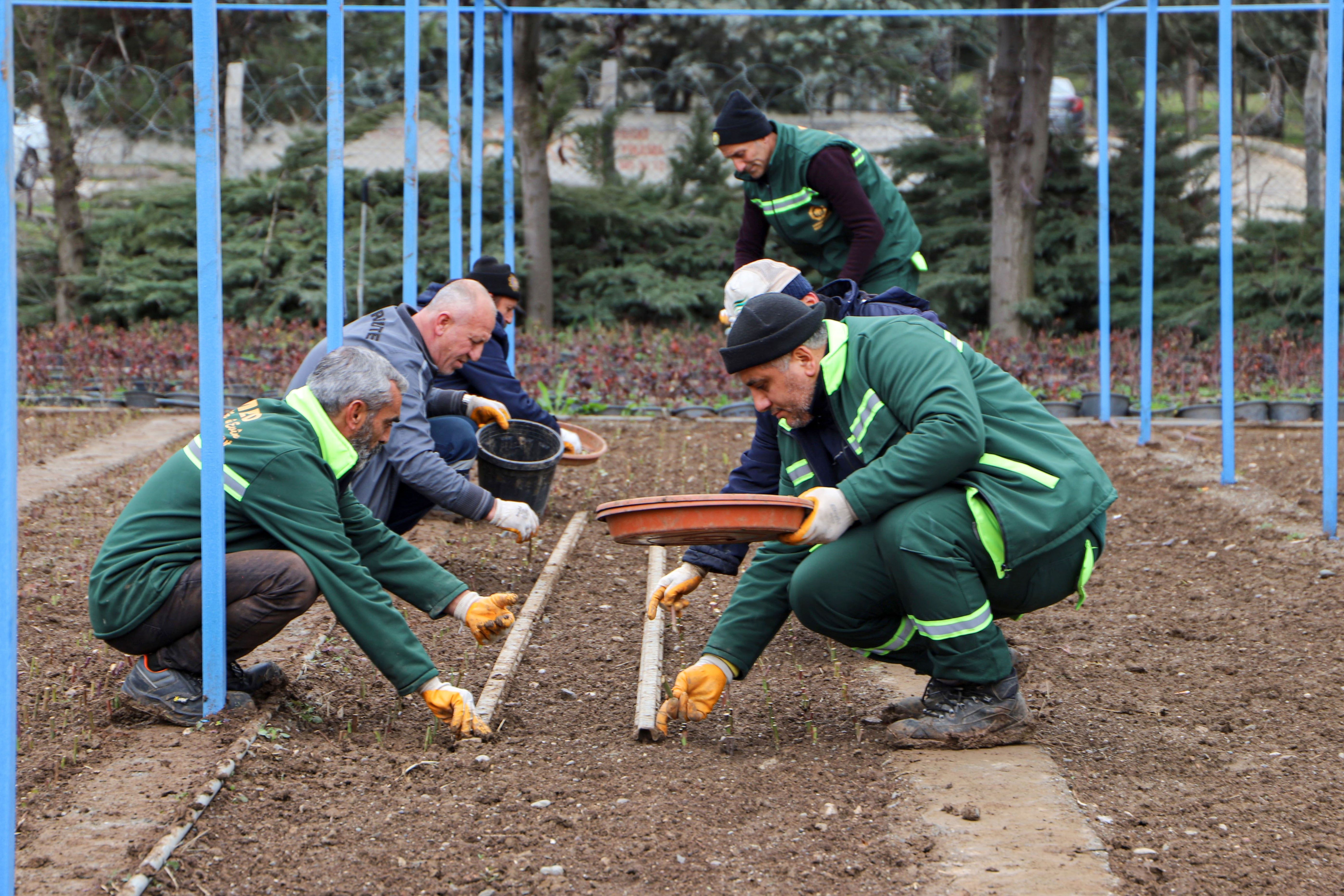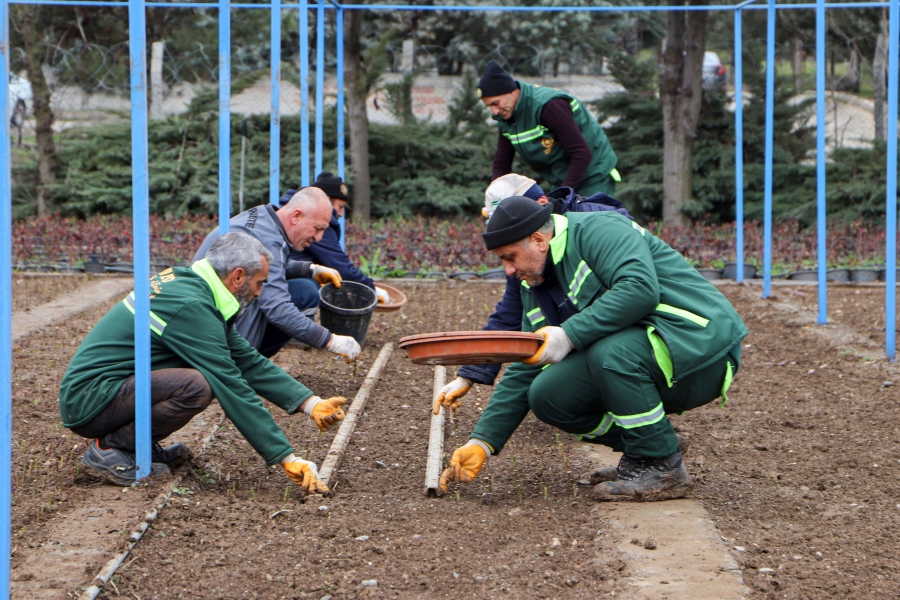
Diyarbakır Metropolitan Municipality has launched work to produce 25,000 roses of different varieties by turning cuttings collected from green areas into saplings, to be used in the city’s central reservations and junctions.
The Department of Parks and Gardens has begun producing roses in different varieties and colours suited to the city’s climate, which make a significant contribution to the aesthetic quality of central reservations and junctions. Meeting a large share of the city’s plant needs through the Nursery Unit in Yenişehir district, the Department of Parks and Gardens carried out fieldwork for rose production and collected cuttings from designated areas.
Roses decorate central reservations and junctions
Teams process the roses of different varieties and colours collected in the field at the Nursery Unit. Once the roses grown in greenhouses are ready for planting, they are used in central reservations and junctions across Bağlar, Yenişehir, Kayapınar and Sur districts.
The Department of Parks and Gardens, which each year increases its in-house production of Yediveren, Muhammediye and Meyland rose varieties, also purchases some of the plants that play an important role in the city’s landscape aesthetics from external suppliers.
Roses are planted in February and March
Having collected around 25,000 rose cuttings from green areas this year, the Department of Parks and Gardens will also purchase a number of rose varieties from outside suppliers in line with its planning. The roses that are grown and purchased began to be planted by teams with the arrival of February and March.
Tree, shrub and flower production also continues
The Department of Parks and Gardens is also continuing the production of various types of trees, flowers and shrubs at its Nursery Units located at two separate sites.
Providing information on the work being carried out, Agricultural Engineer Hakan Turhan, who works at the Department of Parks and Gardens, said they had collected rose cuttings from areas under the responsibility of Diyarbakır Metropolitan Municipality as well as from Gül Bahçesi (Rose Garden), which belongs to Bağlar Municipality, and were placing them in propagation trays at the production facility in an effort to root them.
‘Roses take root in 4 to 8 weeks’
Turhan stated that the rose cuttings collected in the field by teams begin to root after 4 to 8 weeks. He underlined that maintenance work — including irrigation, fertilisation, spraying and weed removal — continues from October to November, after which the cuttings turn into saplings.
Production capacity increased to 25,000
Turhan said, “Once the roots of our rose saplings have developed, we include them in the 2027 planting programme so that they can be used in central reservations and junctions. The transformation of a rose cutting into a sapling covers a period of one and a half years. While rooting work was carried out for 10,000 rose cuttings last year, we increased the number to 25,000 this year.”
‘The aim is to produce roses at low cost’
Turhan added that the aim of this work is to produce rose saplings at low cost, while also decorating the city with roses grown by the municipality itself.