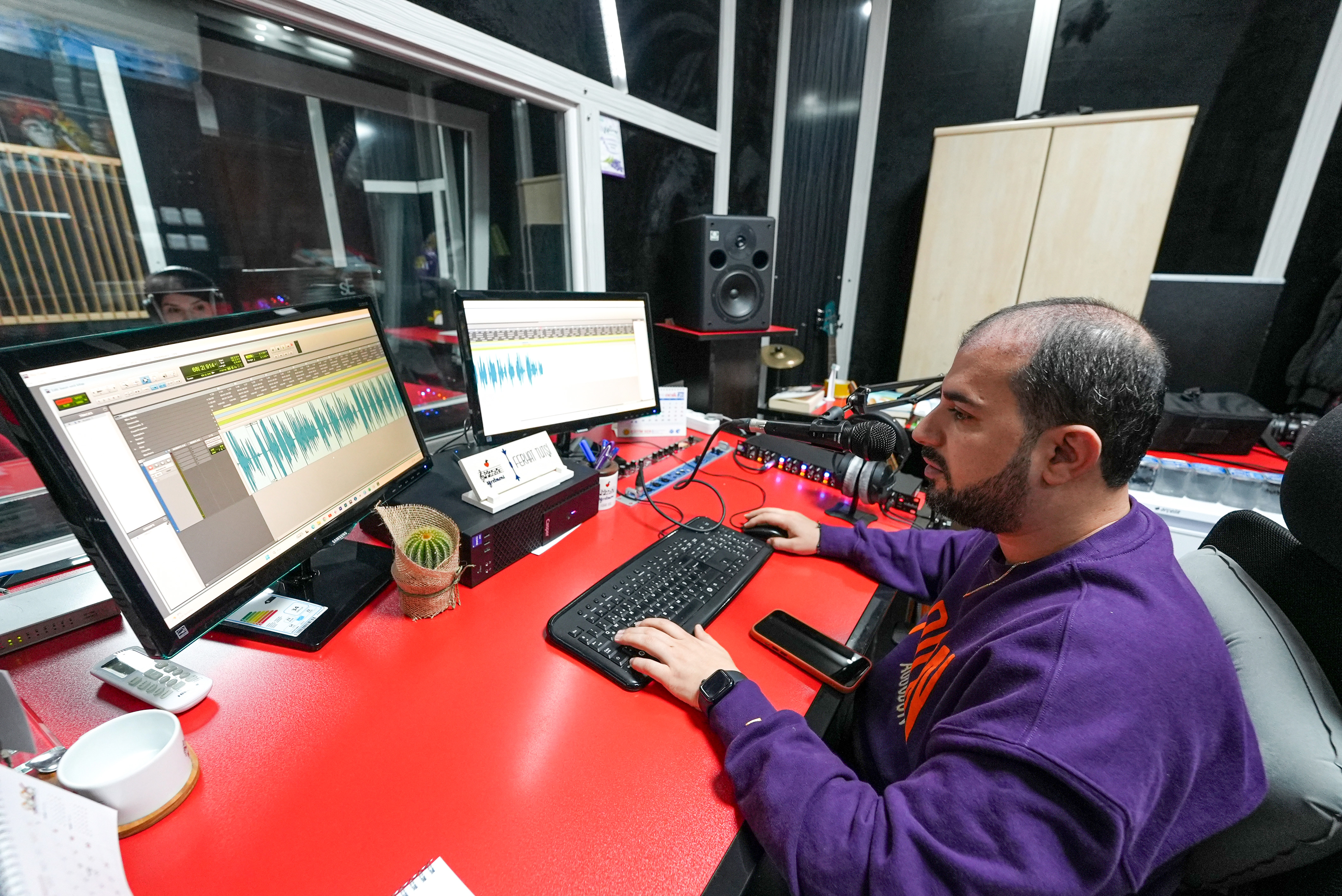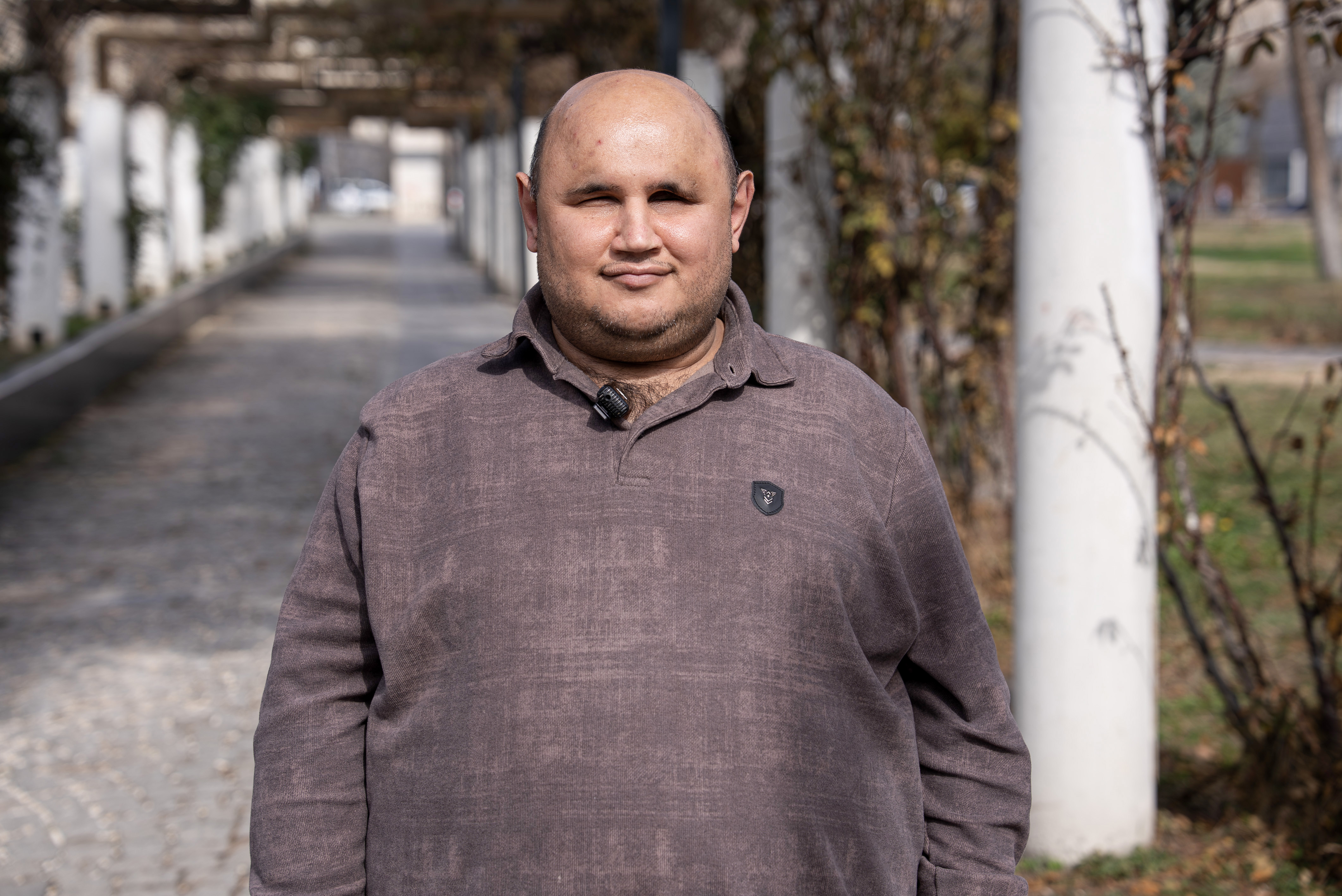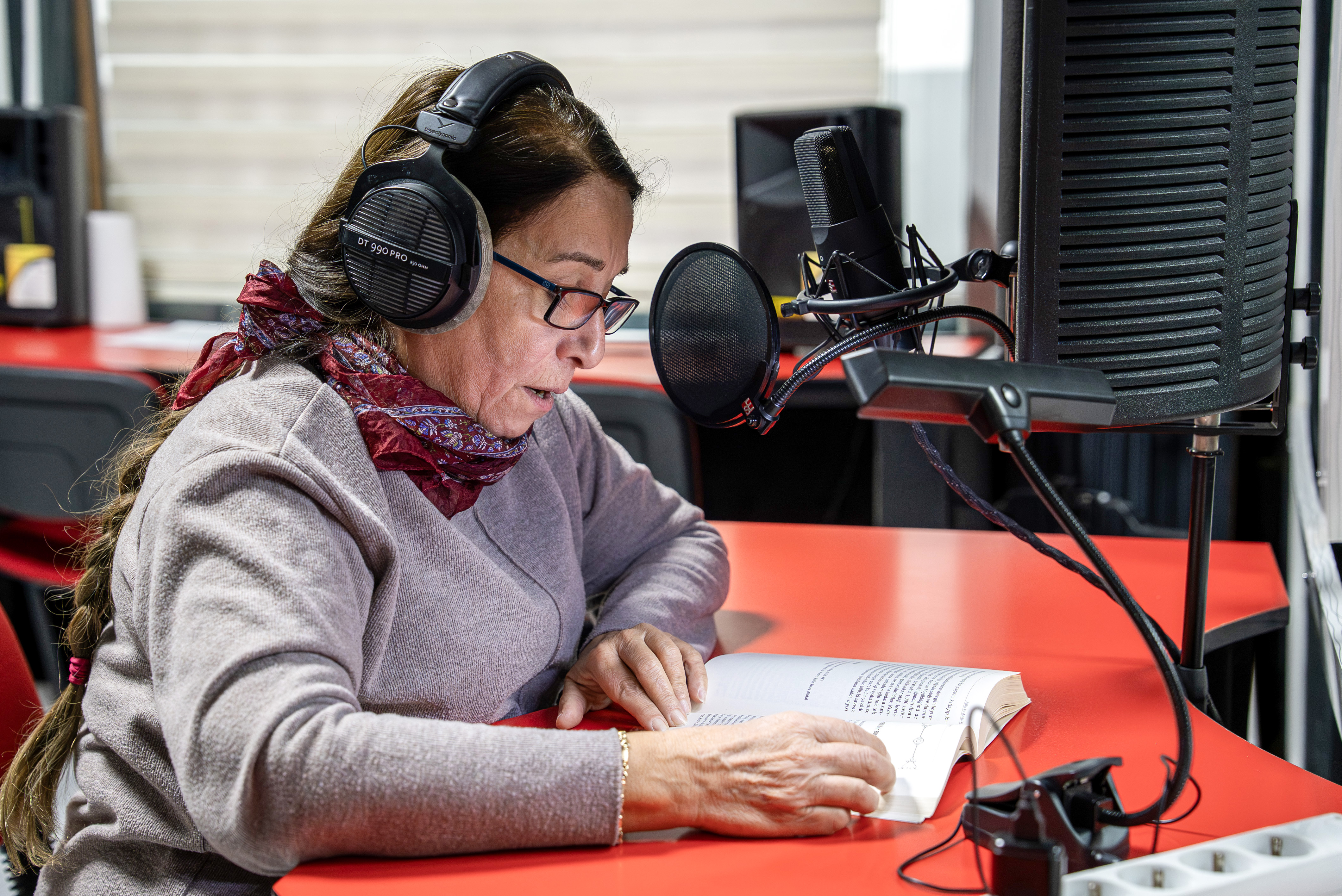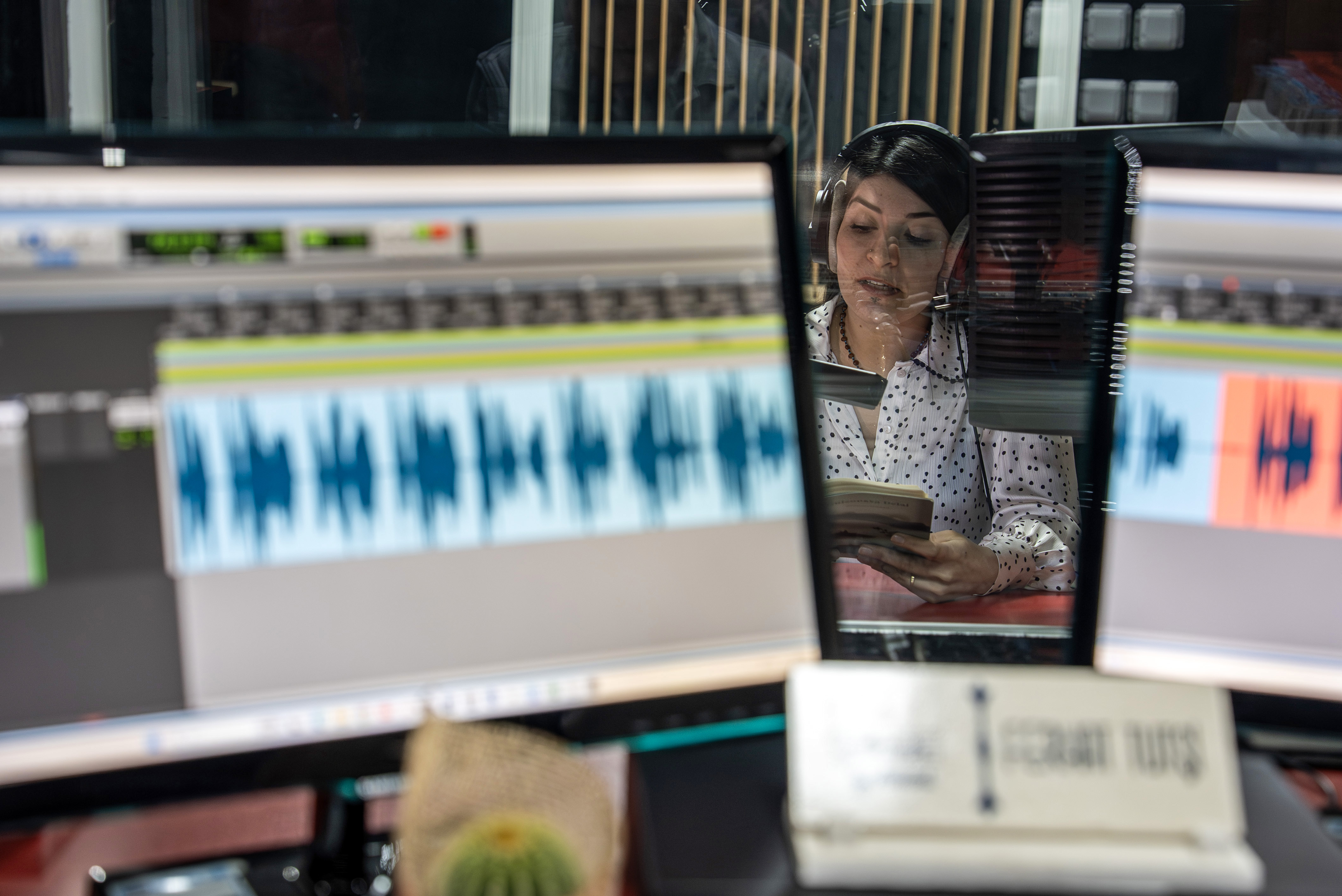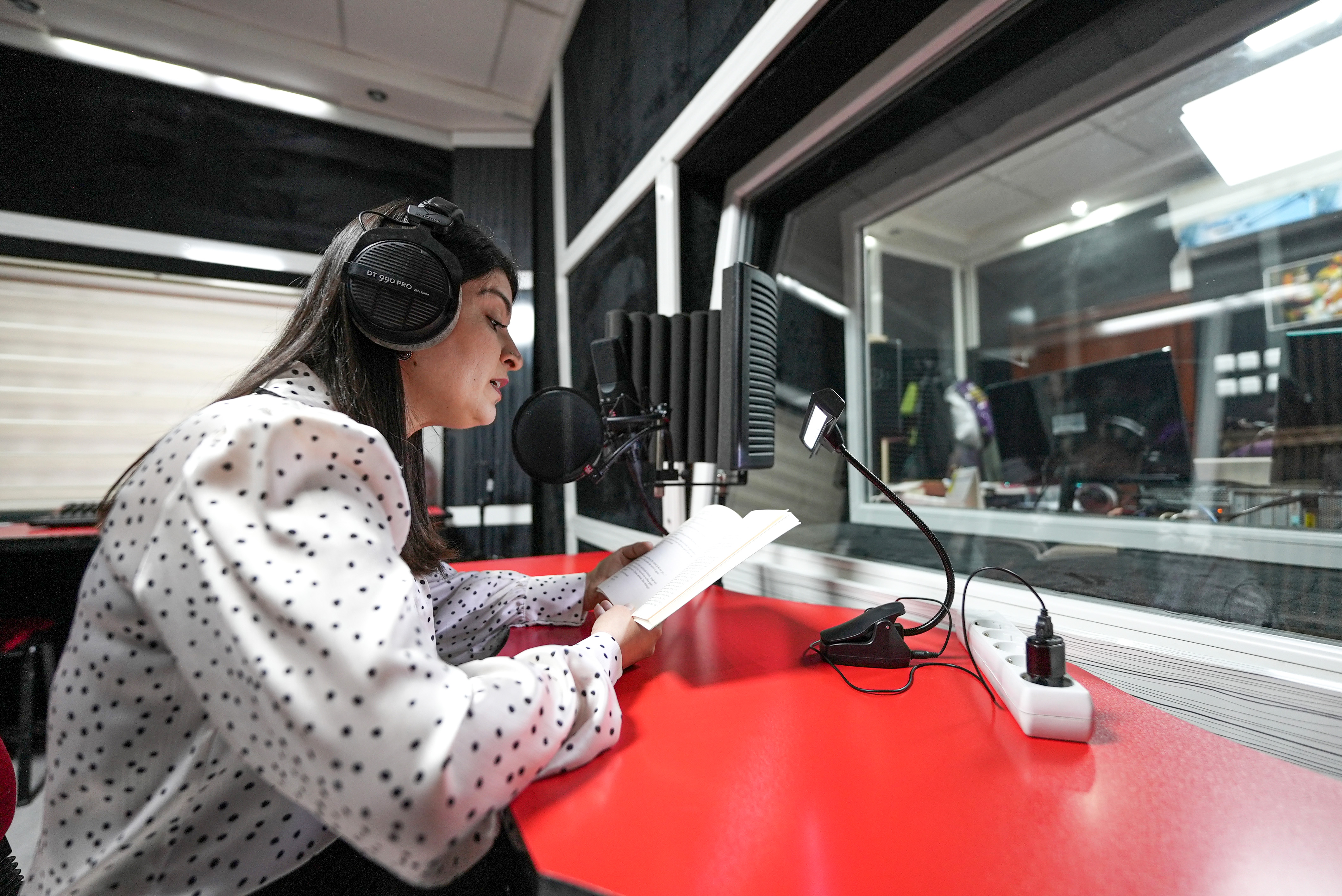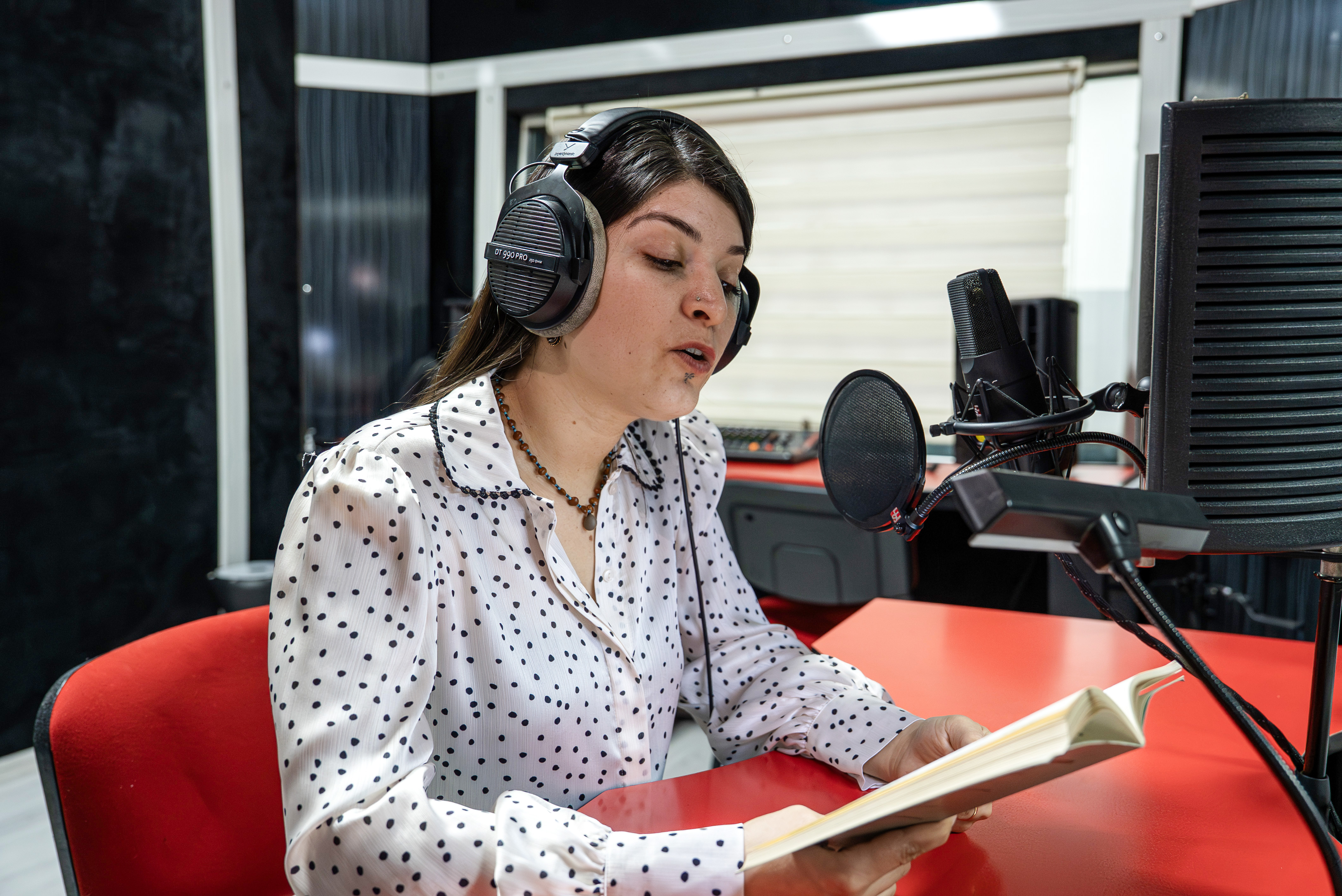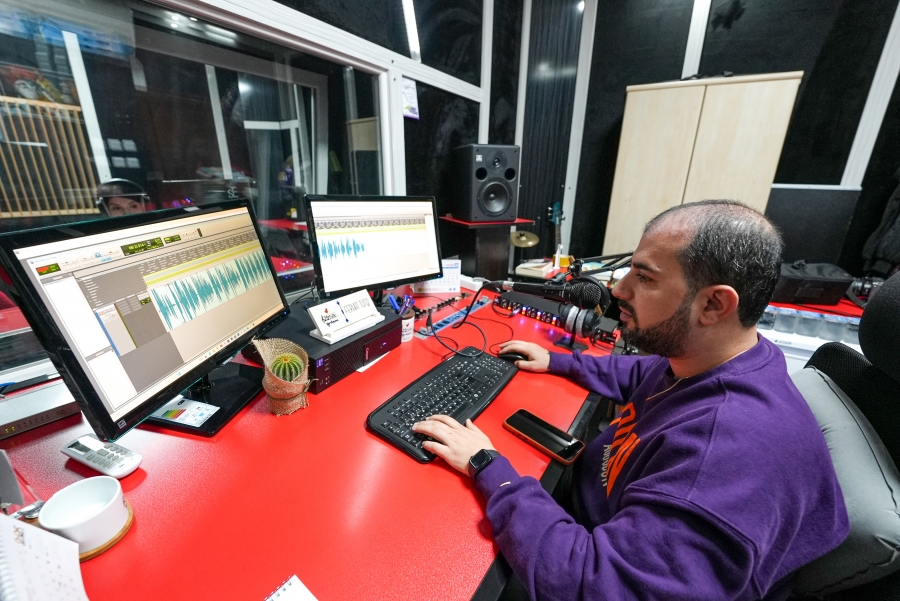
At the Audio Library, which has resumed operations at Sümerpark Common Living Space for visually impaired people, 66 volunteers recorded 31 books in five months. Calling for more volunteers for the library, which will provide services in two languages, library coordinator Abdülmecit Yılmaz said this work — an important need for visually impaired people — has increased accessibility.
The Department of Disability and Elderly Services relaunched the Audio Library Project after an eight-year break in order to ensure visually impaired people can access written materials and to provide services in an equal, independent and safe manner. Work is being carried out on a voluntary basis in the audio studio established at Sümerpark Common Living Space under the motto “Accessible Common Living.”
As part of the project, reading materials such as textbooks, short stories, poems and novels are being recorded for visually impaired residents. The archived recordings will be made available to the public through Diyarbakır Metropolitan Municipality’s website and the Amida Public Library.
66 volunteers recorded 31 books
Abdülmecit Yılmaz, coordinator of the Audio Library, said that the library records not only novels and storybooks but also books that make life easier for disabled people or help them prepare for exams. Stating that this is an important and beneficial initiative, Yılmaz underlined that it has improved accessibility.
Providing information on the work, Yılmaz said:
“We started around five months ago. At the beginning of the project, we received support from civil society organisations and from colleagues in our municipality’s departments, especially those working in the field of culture. We took applications and quickly moved into a regular book-recording process. At present, we have a total of 66 registered volunteers. The number of books recorded by these 66 volunteers is 31.”
To provide services in two languages
Yılmaz stated that the recorded books will soon be published in the “Accessible Audio Library” section within the Amida Public Library, which is set to be launched shortly. He noted that users are registered in the system with a disability report, and that access to the books is provided in this way.
Emphasising that they attached importance to making the project multilingual when establishing the library, Yılmaz said:
“People have the right to read and access books in their own mother tongue. Since the right to one’s mother tongue is an indispensable right for all of us, services also need to be designed accordingly. At present, books are being read and recorded in Kurmancî, Turkish and Zazaki.”
Members with disabilities will be able to download books
Yılmaz said they saw the Audio Library as one of the first projects that needed to be implemented after the establishment of the Department of Disability and Elderly Services, and that they therefore launched the project swiftly. He added that, as the technical infrastructure is strengthened in the coming period, a more comprehensive database could be created via an application and website.
He also stated that there is currently a database under the culture unit and that recordings are being added there, noting that the system operates within certain rules due to copyright restrictions. Yılmaz said the books can currently be made available free of charge only for visually impaired residents, and added that broader access may be possible if copyright fees are paid.
Noting that visually impaired residents can benefit from the existing archive until the necessary conditions are in place, Yılmaz said that once the system is completed, memberships will be approved on the basis of disability reports and users will be able to download books digitally.
Call for volunteers
Inviting residents to volunteer for the recording work, Yılmaz said applications are made to the Audio Library of the Department of Disability and Elderly Services and require the completion of an application form. He added that, after the application, suitable reading plans are prepared for applicants and a schedule is arranged according to each volunteer’s availability.
‘We want our people to support this work’
Nurcihan Yılmaz, a volunteer with the Audio Library, said that disabled people face difficulties in many areas of life, and added:
“For this reason, we need to shoulder and ease their burden, even if only a little. This is a very valuable initiative. I believe such work will open up a path of development for them. More work of this kind is needed. Those who want to take part should support it by setting aside part of their time. We want our people to support this work.”