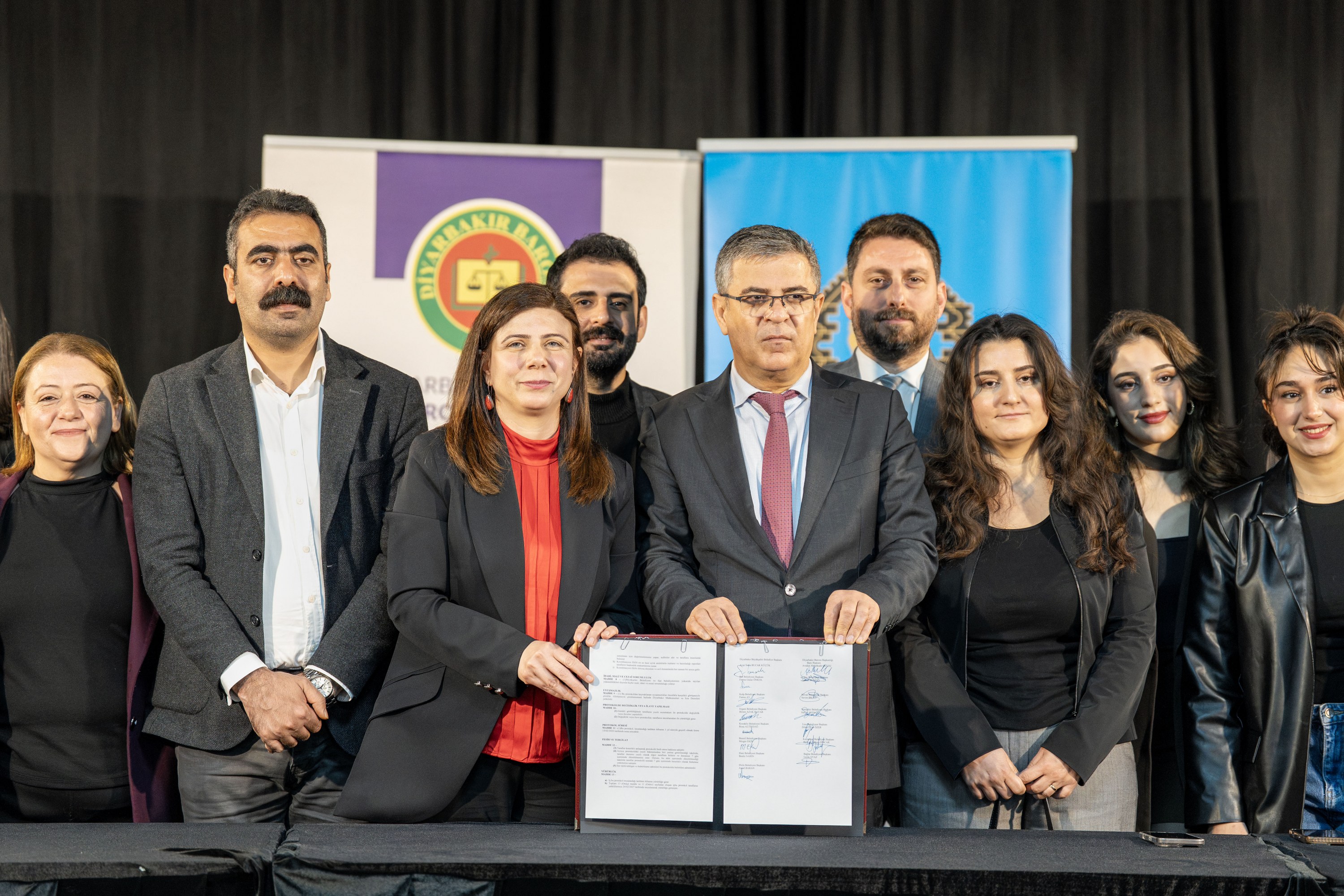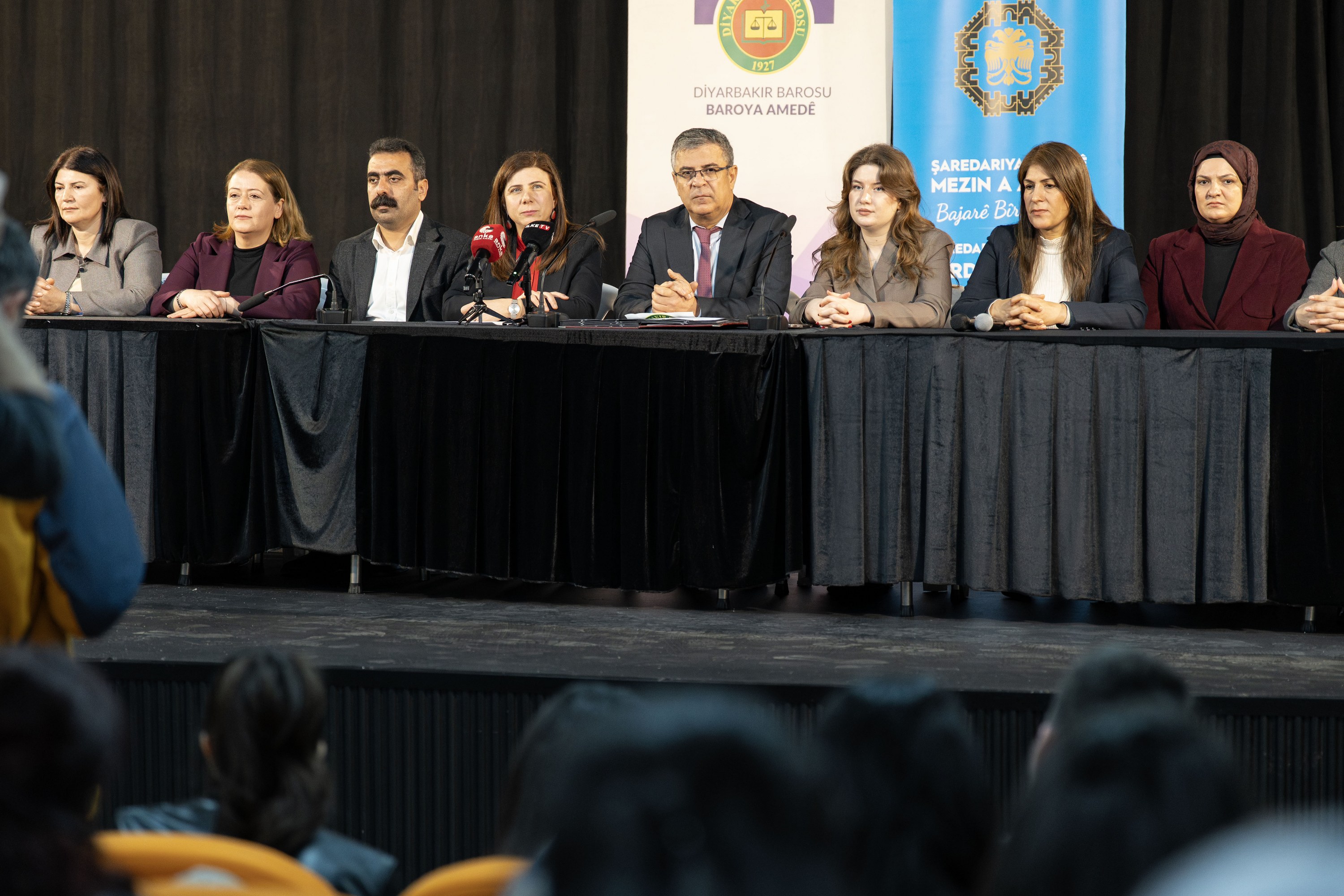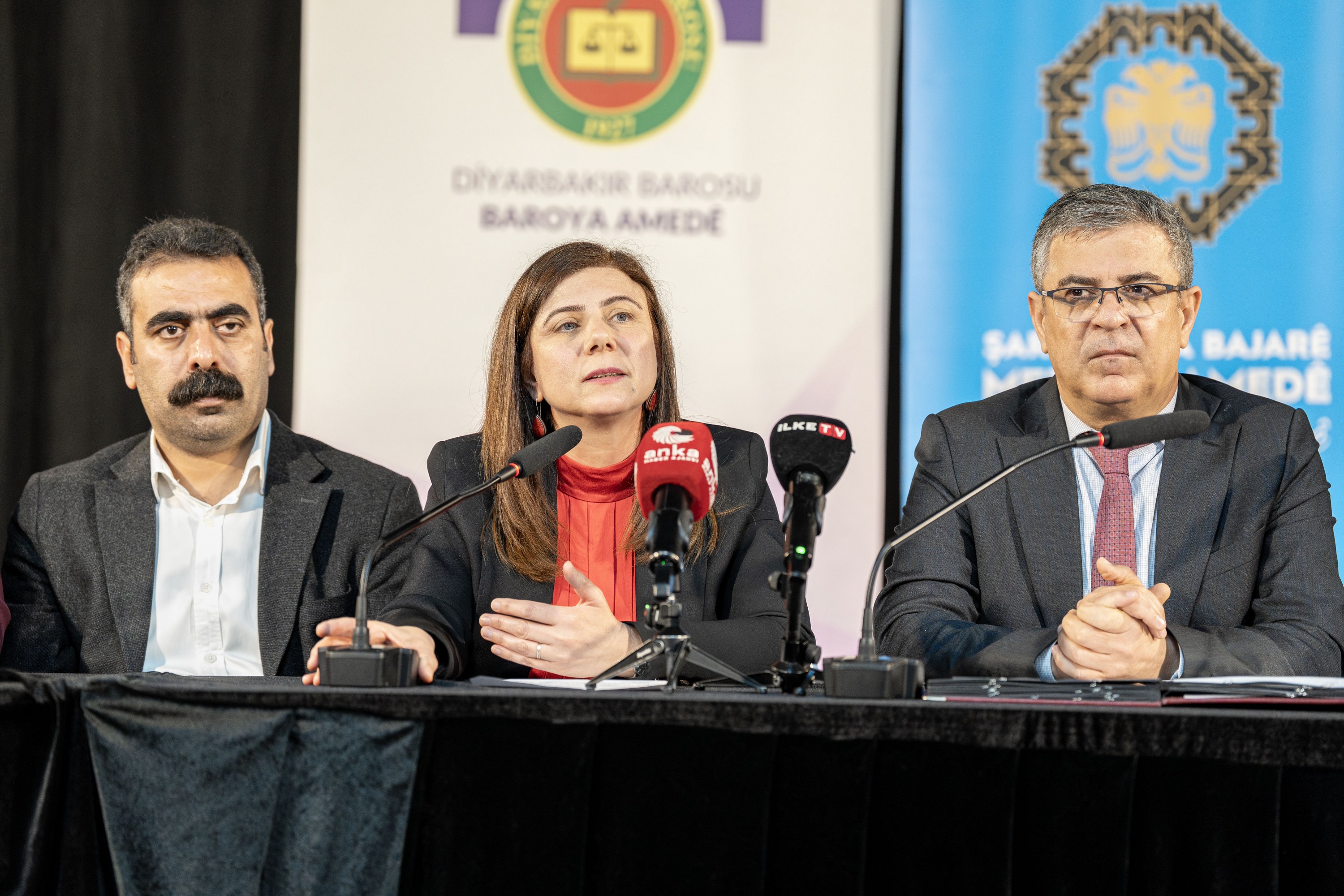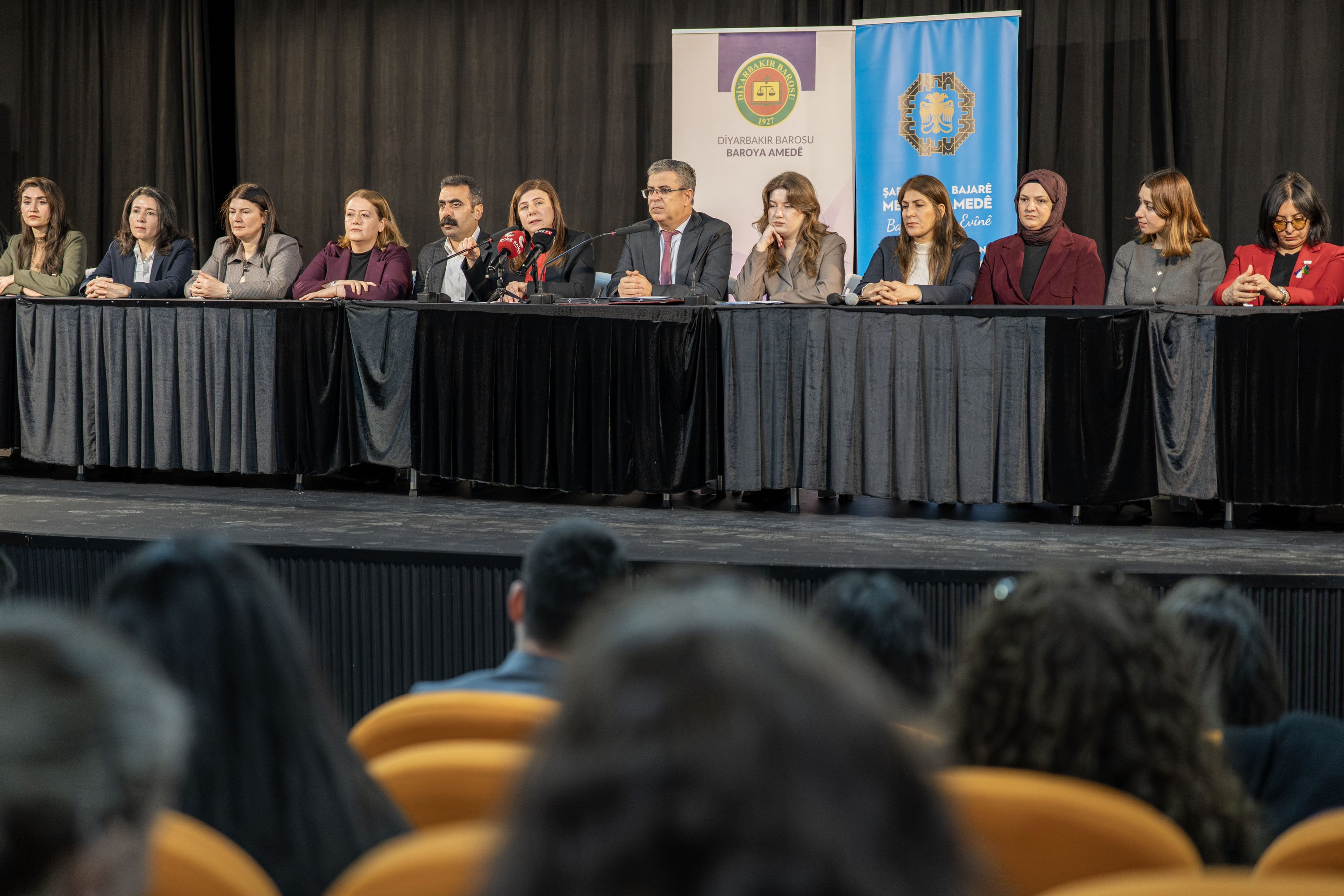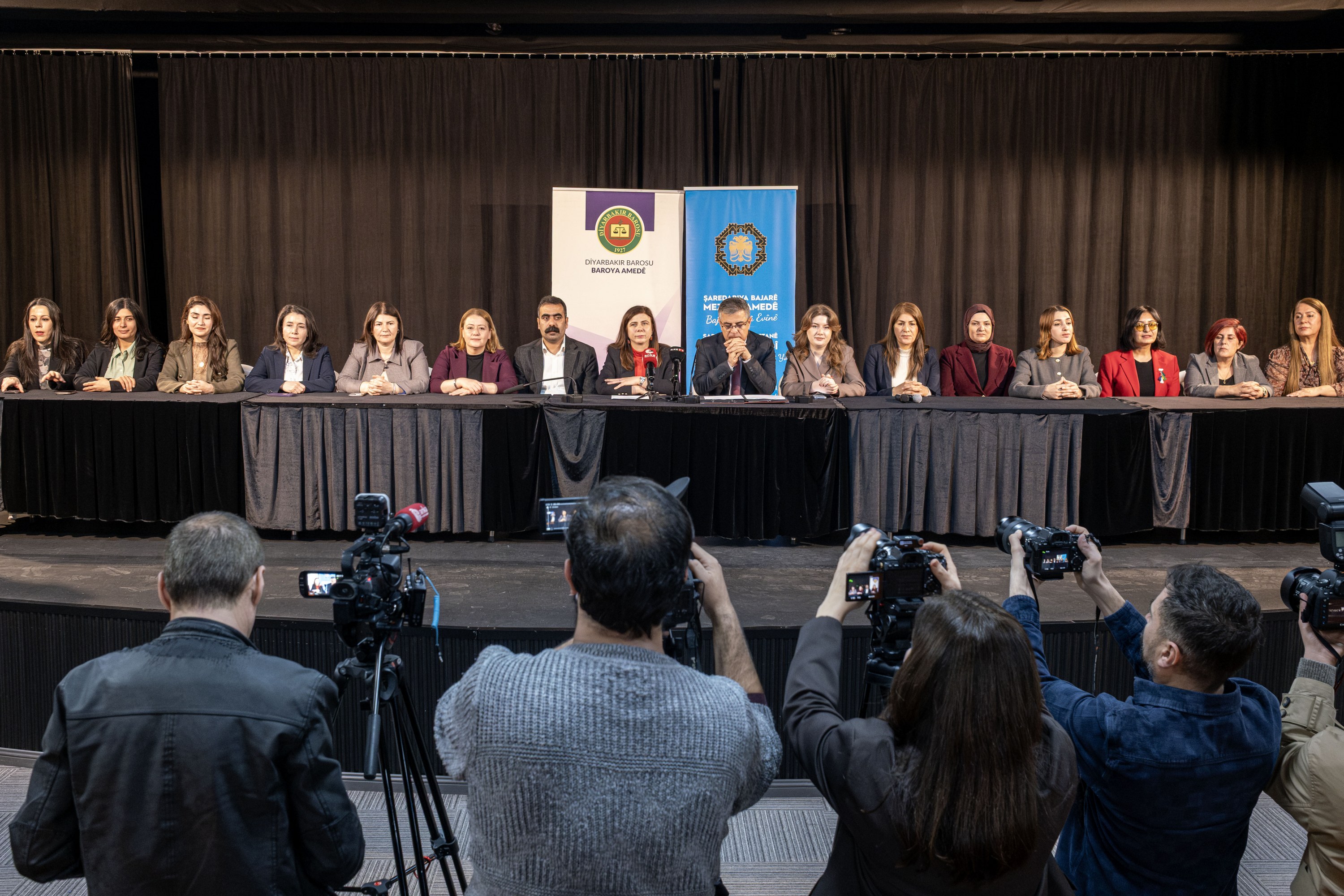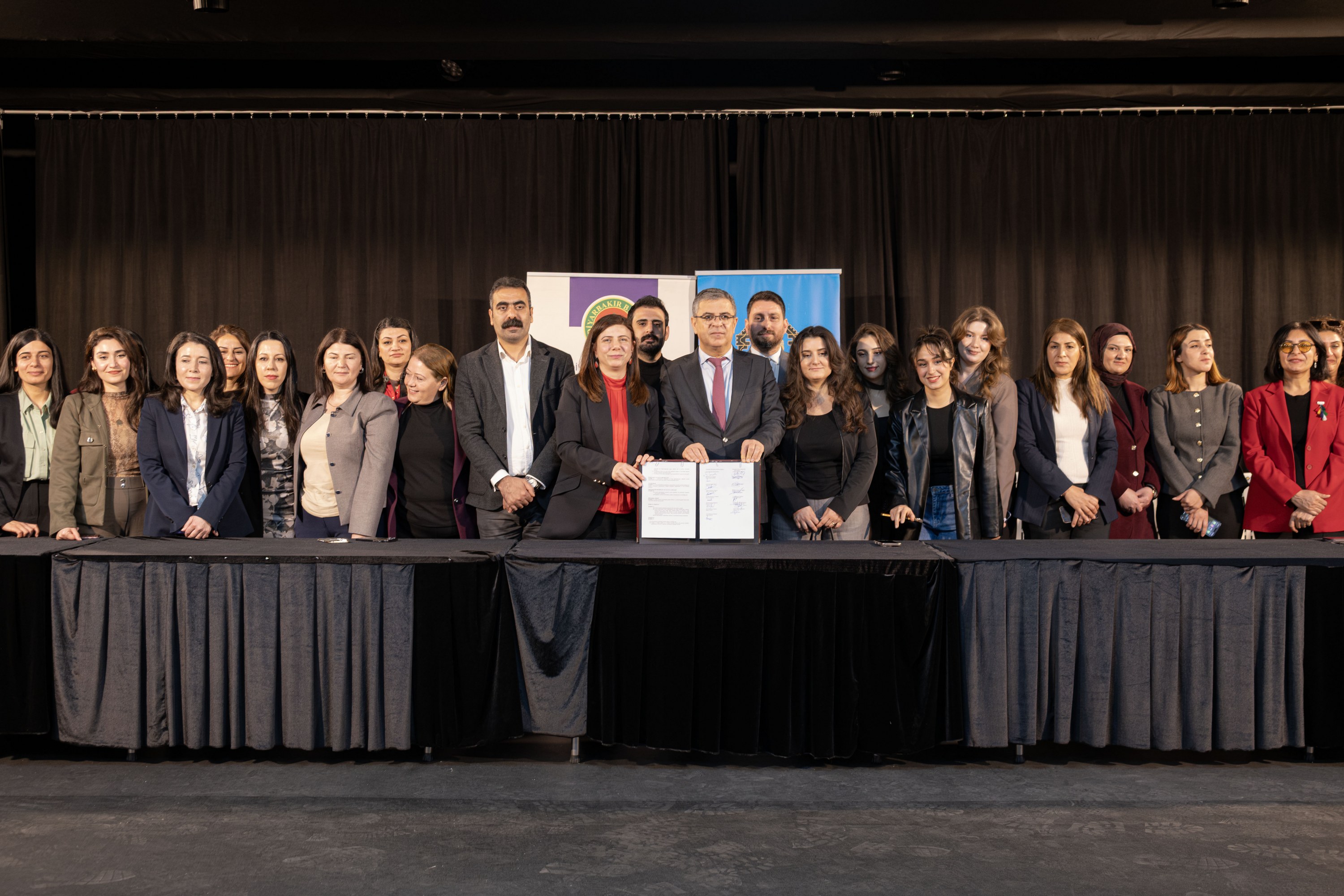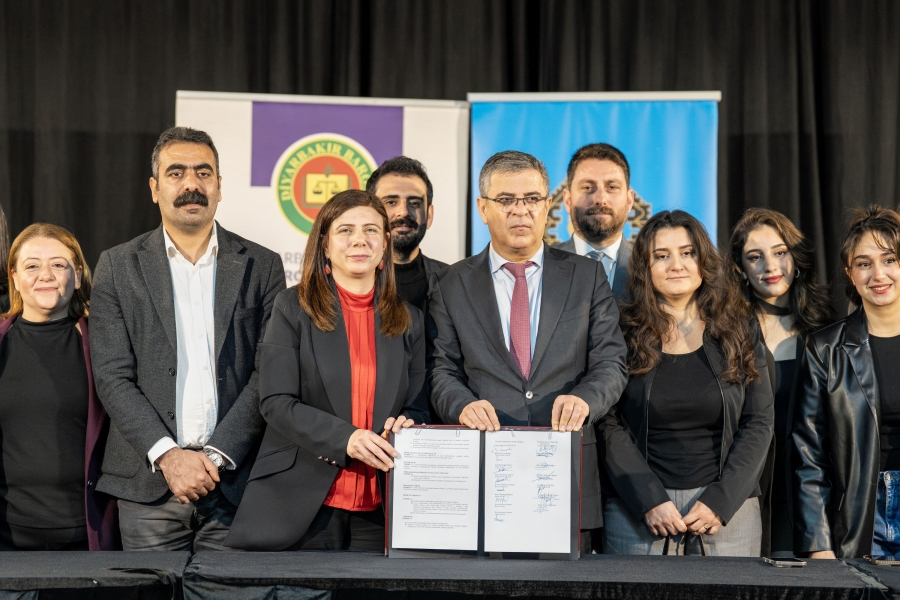
A cooperation protocol was signed between Diyarbakır Metropolitan Municipality (DBB), 13 district municipalities, and the Diyarbakır Bar Association as part of efforts to combat violence against women. Speaking on the protocol, Co-Mayor Serra Bucak underlined that Diyarbakır is a city that carries the living memory of the women’s struggle, and stressed their determination to expand women’s rights advocacy through institutional strength.
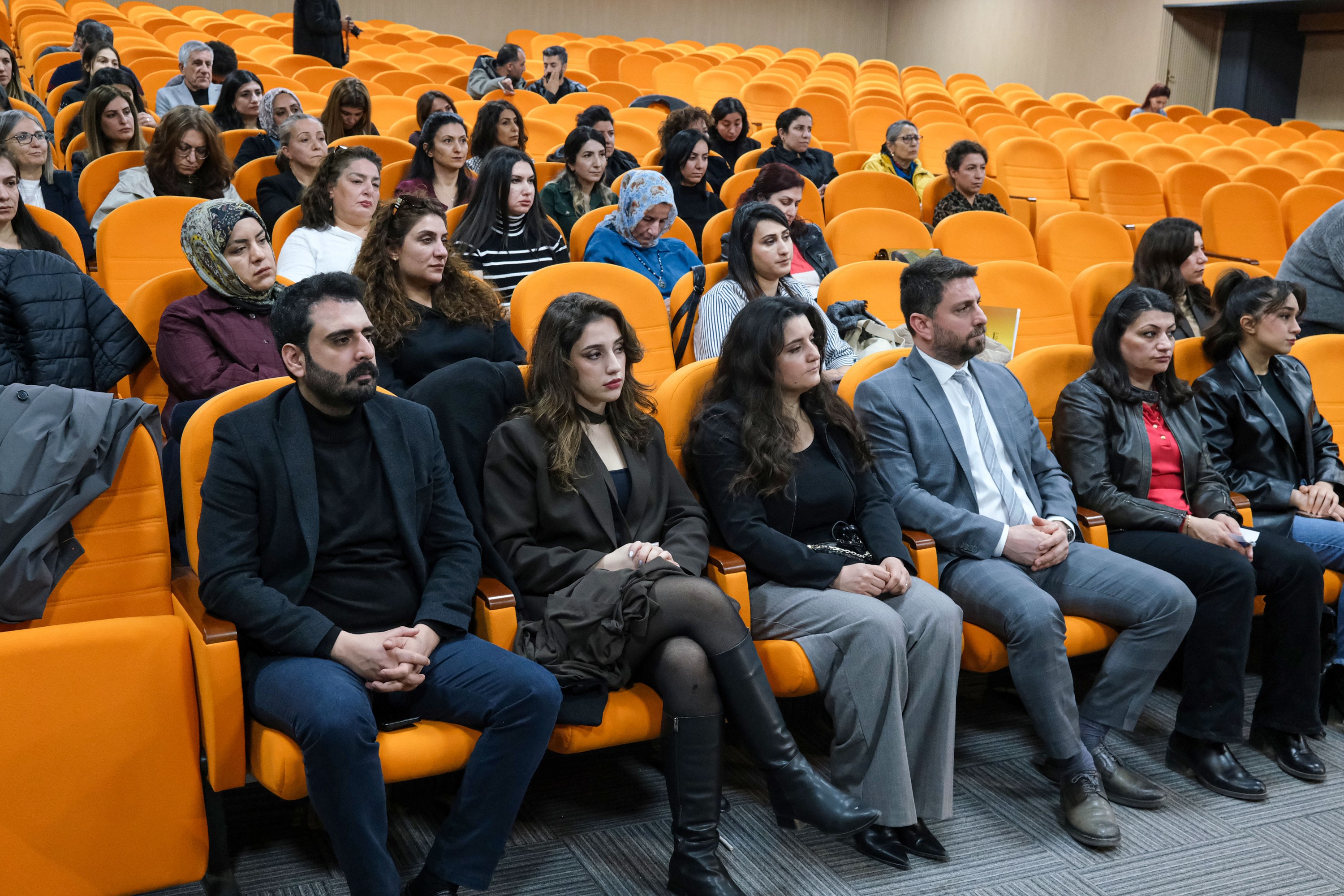
The cooperation protocol was signed between Diyarbakır Metropolitan Municipality, the 13 DEM Party-run district municipalities in the city, and the Diyarbakır Bar Association with the aims of facilitating women’s access to justice, strengthening rights-based support mechanisms, and providing institutional support for gender equality at the level of local government. The signing ceremony took place at the Ali Emiri Conference Hall. Attendees included DBB Co-Mayors Serra Bucak and Doğan Hatun; Diyarbakır Bar Association President Abdülkadir Güleç; co-mayors of the district municipalities; DBB Deputy Secretary General Zerin Türk; Head of the Department of Women’s Policies Özden Gürbüz Sümer; representatives of civil society organisations; members of the Diyarbakır Bar Association; members of the Bar Association’s Women’s Rights Centre; and women serving in the women’s directorates of the district municipalities.
‘An example of social municipalism’
Addressing the ceremony, Diyarbakır Bar Association President Abdülkadir Güleç said the protocol would further strengthen DBB’s example of social municipalism. Recalling that they had achieved a first in Türkiye through a previous protocol signed with DBB, Güleç stated: “Today, we will be carrying out the second. As the Bar Association, we will undoubtedly take women’s access to justice to a far stronger level through this protocol. We thank all the women involved and DBB. May it bring good fortune and positive outcomes for women. I hope that in the next protocol process we will reach a point where we can meet the full range of needs of all women.”
‘A joint declaration of responsibility that puts women’s right to life first’
Co-Mayor Serra Bucak noted that the protocol, signed by DBB and 13 district municipalities, is a joint declaration of responsibility that places women’s right to life at its centre. She said that, as a continuation of the first step taken in 2024, they are moving forward together this year to ensure that women can benefit from the legal aid system in a more accessible and more rights-based manner.
Free support in divorce, maintenance and custody cases
Emphasising that the protocol is based on the assignment of free-of-charge legal counsel in cases concerning divorce, spousal maintenance and child custody, Co-Mayor Bucak underlined that the process is intended to be carried out in a sustainable, rights-based framework. “This year, we have added another important mechanism to the protocol,” she said. “To produce rapid, joint solutions to problems encountered on the ground and to make it easier for women to access justice, we have established a Coordination Team. The Coordination Team will provide guidance on court fees and notary costs, develop a shared framework on how the legal process should be pursued, and contribute to ensuring that women do not abandon their pursuit of justice due to economic hardship by supporting the necessary steps.”
‘A holistic service will be put in place’
Stressing that justice cannot be delivered without recognising women’s lived realities, Co-Mayor Bucak said they are therefore addressing poverty criteria not in a narrow, technical sense, but together with conditions such as precarious work, economic dependency and the cycle of violence. She added that municipalities’ social assessments, women’s statements and living conditions, and legal aid criteria will be considered as a whole, and that a holistic service will be implemented.
‘We are moving forward with a system that puts women’s perspective at the centre’
Stating that the approach institutionalised through the protocol is one that takes women’s statements as the basis, does not judge or question them, and shapes the process around their needs, Co-Mayor Serra Bucak said:
“We are continuing on this path with a holistic system that does not separate social support from legal support and that places women’s perspective at the centre. Diyarbakır is a city that carries the living memory of the women’s struggle. For us, the vision of a ‘women’s city’ is not a slogan; it is a requirement of our responsibility. This protocol is the expression of a solidarity model in which women can access justice more easily, do not give up seeking their rights for economic reasons, and are not left alone in the face of violence. We are determined to walk this path together and to expand women’s rights struggle with institutional strength.”
‘Justice is real when it is accessible’
İrem İlhan, a representative of the Diyarbakır Bar Association Women’s Rights Centre, said the legal aid protocol is the symbol of a broad solidarity, adding: “Justice is real when it is not a privilege, but an accessible right.”
Following the speeches, the protocol was signed to applause.
What does the protocol cover?
The protocol notes that violence against women is a widespread and severe human rights violation affecting women worldwide. It underlines that the issue arises as a consequence of gender-based discrimination and inequality, and that its roots run deep within the fabric of society.
The protocol also draws attention to the fact that, in Türkiye, in line with international standards, provisions added to Article 10 of the Constitution explicitly stipulate that women and men have equal rights, and emphasises that the state is obliged to ensure this equality is realised in practice.
Within this framework, the protocol underlines that in Diyarbakır—a city that has historically hosted women’s struggles and has embraced the vision of a “women’s city”—strengthening women’s access to justice is regarded as an important part of the democratisation process. It stresses that the protocol aims to: strengthen counselling and legal support services for women subjected to violence; ensure that women benefit effectively and equally from legal aid services; provide gender equality and combating violence against women trainings—delivered by the Diyarbakır Bar Association—for Diyarbakır Metropolitan Municipality as well as central and outlying district municipalities; and establish coordination and cooperation mechanisms at the institutional level.
Overall, the protocol seeks to facilitate women’s access to justice, strengthen rights-based support mechanisms, and provide institutional backing for gender equality at the level of local government.