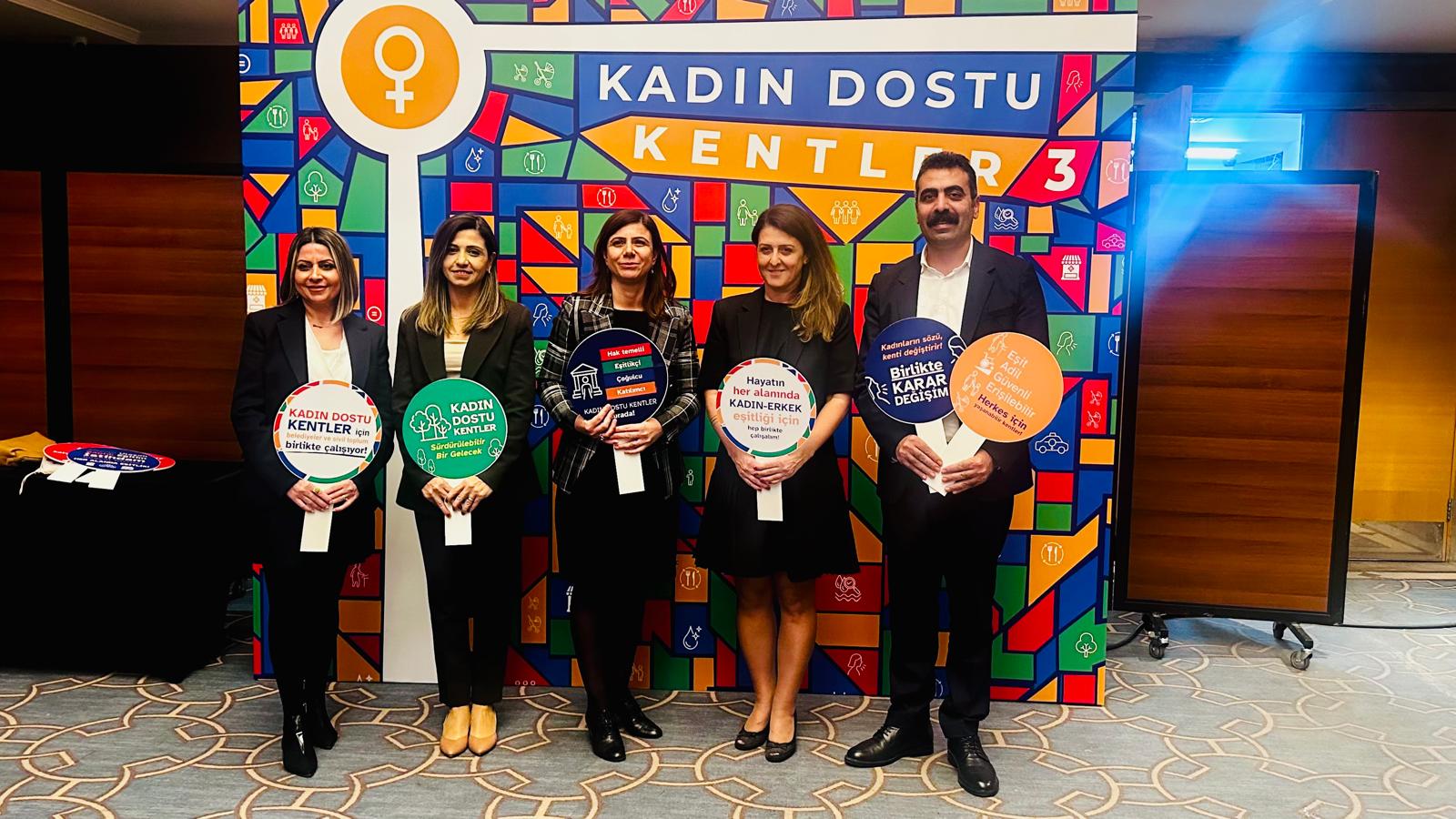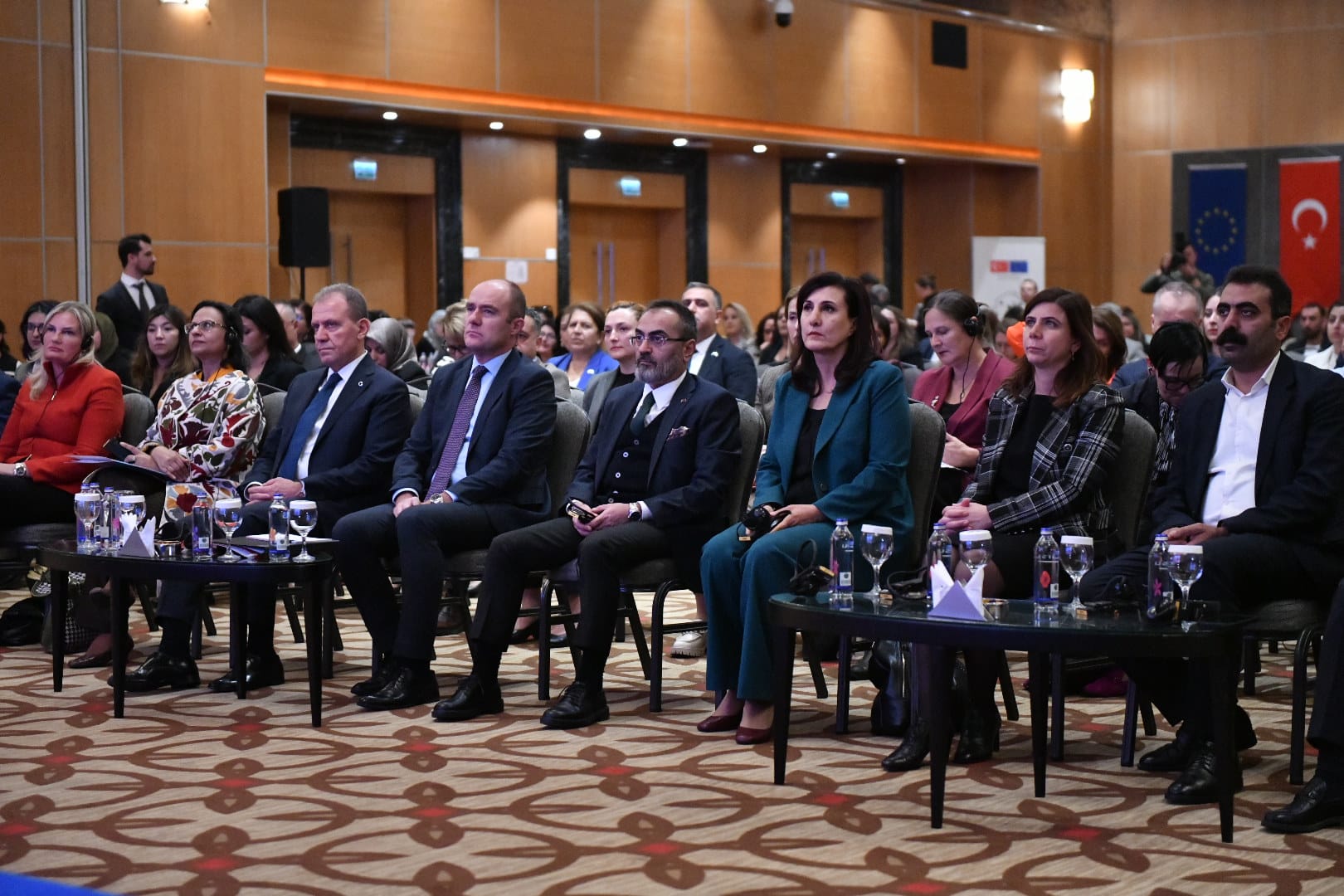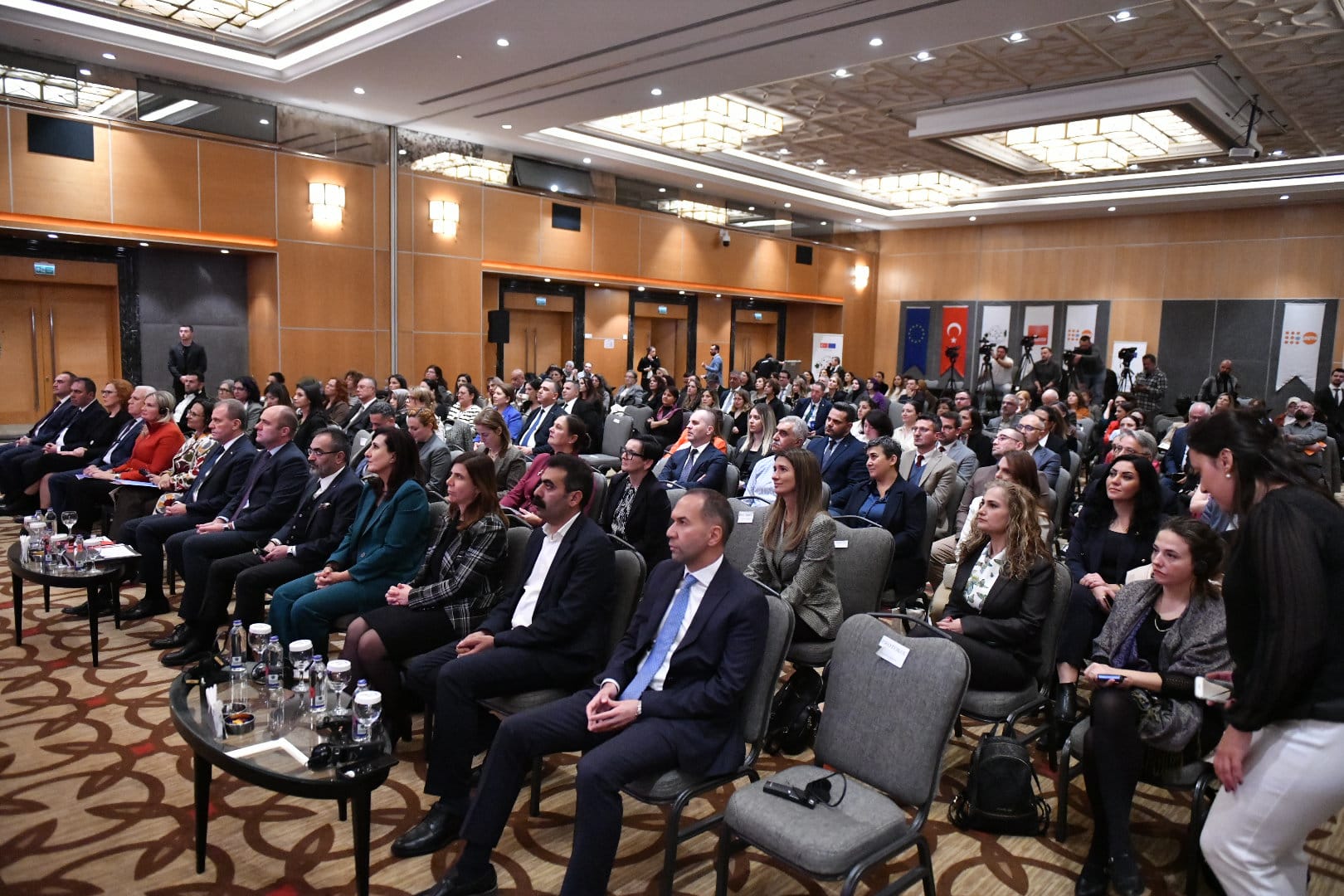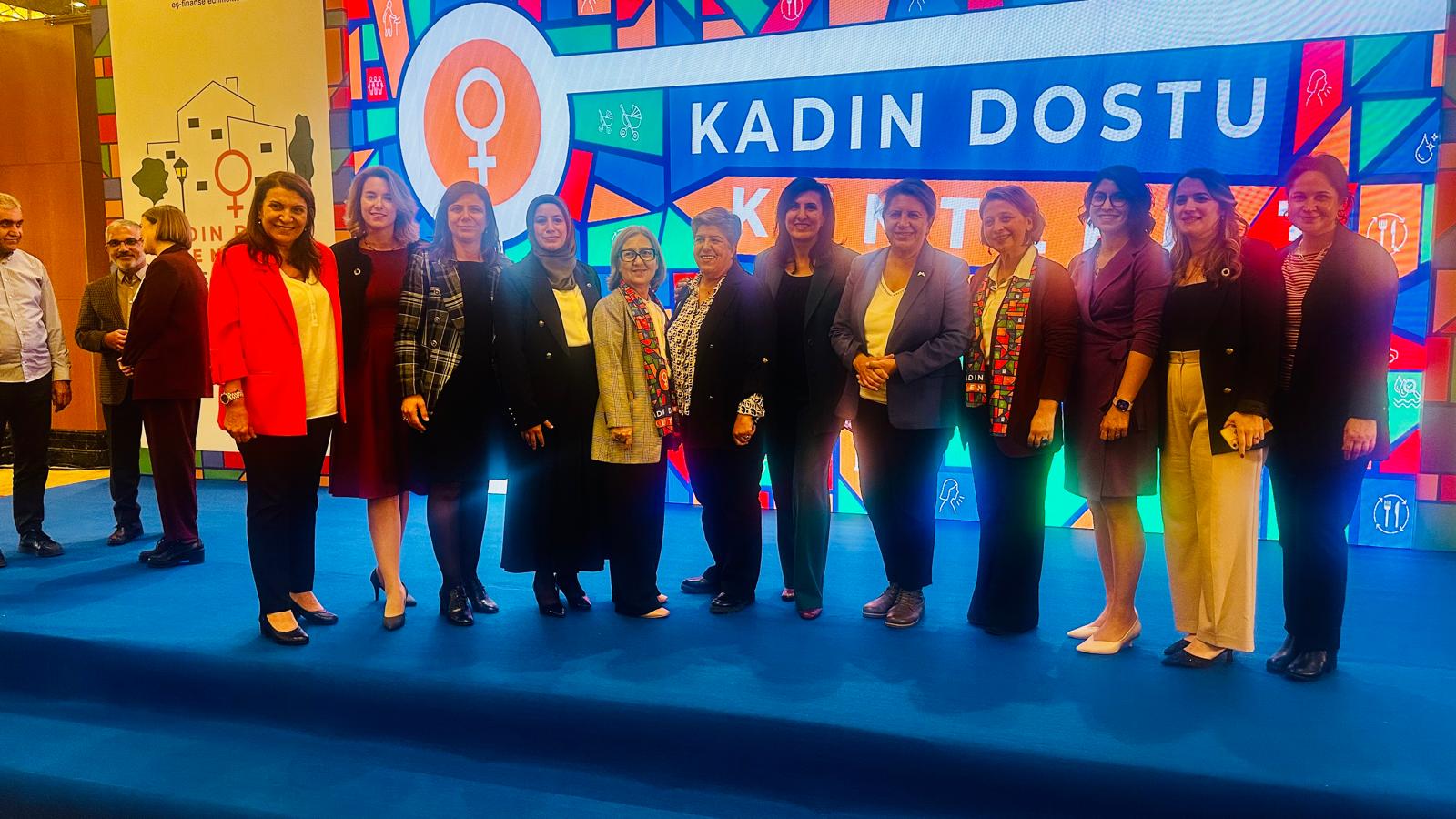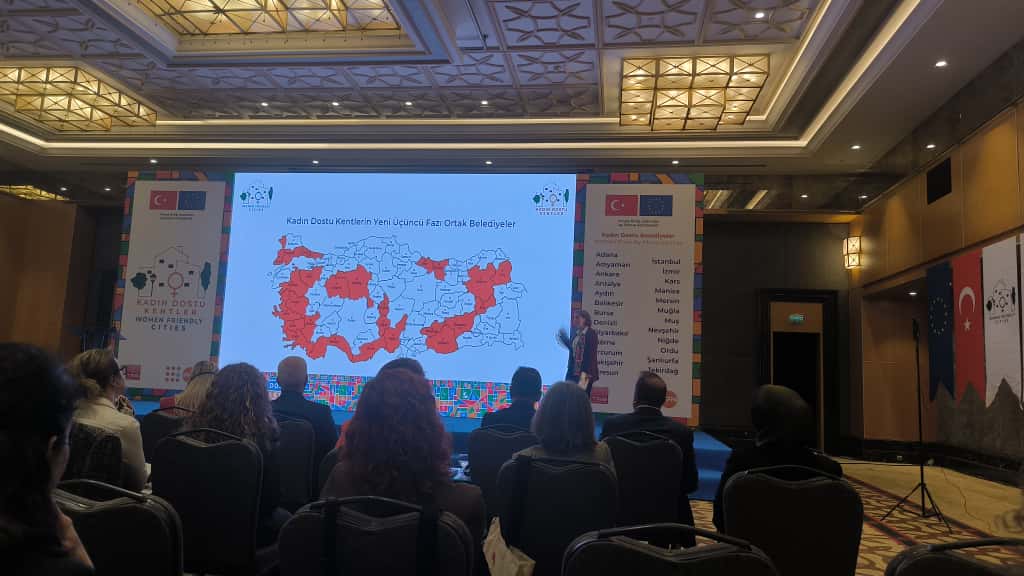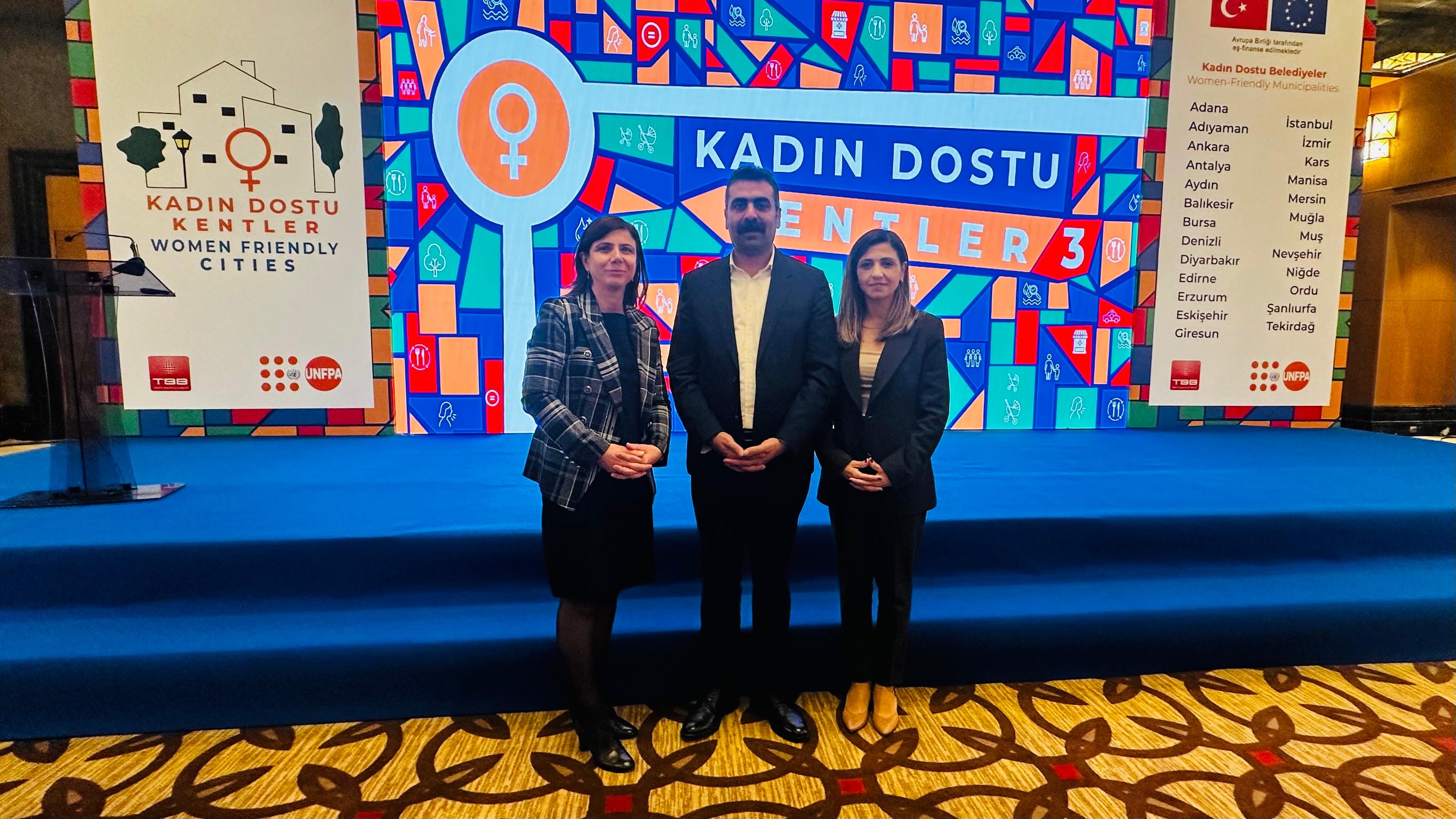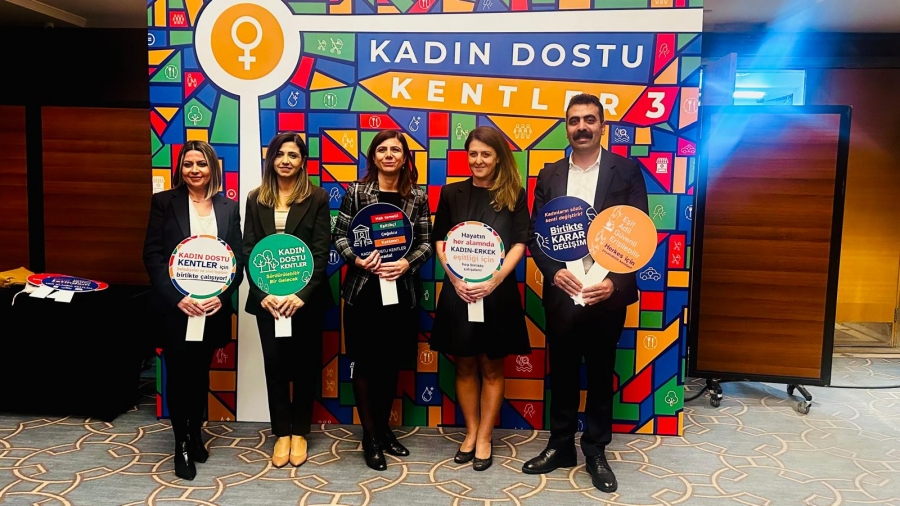
Diyarbakır Metropolitan Municipality Co-Mayors Serra Bucak and Doğan Hatun attended the launch of the “Women-Friendly Cities 3 Project,” which aims to ensure that women participate in urban life on an equal, safe and effective basis. The programme will be implemented in 25 cities, including Diyarbakır.
Funded by the European Union (EU), delivered in partnership with the Union of Municipalities of Türkiye (TBB) and implemented by the United Nations Population Fund (UNFPA), the project launch took place at a hotel in Ankara. The event was attended by Co-Mayors Serra Bucak and Doğan Hatun, Özden Gürbüz Sümer, Head of the Department of Women and Family Services, and representatives of the municipalities included in the project.
At the launch, Özlem Çalışkan, Programme Manager for UNFPA Türkiye’s Women-Friendly Cities Programme, gave a presentation on the project’s implementation and details. Following a short film on Women-Friendly Cities, TBB Deputy Chair and Mayor of Mersin Metropolitan Municipality Vahap Seçer, UNFPA Türkiye Representative Mariam Khan, Jurgis Vilcinskas from the EU Delegation to Türkiye, and Bülent Özcan, Director-General for Financial Cooperation and Project Implementation at the Ministry of Foreign Affairs Directorate for EU Affairs, each delivered remarks. The speeches highlighted the importance of the Women-Friendly Cities Project and underlined that equality begins at the local level.
It covers 25 cities
The programme covers Adana, Adıyaman, Ankara, Antalya, Aydın, Balıkesir, Bursa, Diyarbakır, Denizli, Edirne, Erzurum, Eskişehir, Giresun, İstanbul, İzmir, Kars, Malatya, Manisa, Mersin, Muğla, Nevşehir, Niğde, Ordu, Şanlıurfa and Tekirdağ, aiming to ensure women’s equal participation in all municipal services and decision-making processes.
What was done in the first two phases?
Across 2006–2010 and 2011–2015, the programme first in 6 and then in 12 municipalities established Local Equality Mechanisms (LEMs)—units, commissions and coordination structures designed to increase women’s access to services and rights and to advance gender equality.
Through these mechanisms, municipalities prepared and implemented Local Equality Action Plans (LEAPs) that set concrete, needs-based objectives and activities for women.
In both phases, the knowledge and skills of local public institutions and local women’s civil society organisations on gender equality were strengthened, as was cooperation between them.
What will be done?
In the third phase of the Women-Friendly Cities Programme, which began in December 2024 and will run for three years, the aim—this time across 25 provinces—is to strengthen the knowledge, skills and partnerships of municipalities and civil society organisations so as to embed a pluralistic, participatory and inclusive approach to local governance and to advance gender equality at the local level. In this context:
•Sustainable establishment of Local Equality Mechanisms (LEMs) in the 25 partner municipalities, and strengthening of existing mechanisms;
•Empowering CSOs and ensuring/increasing their effective participation in inclusive local policies focused on gender equality;
•Developing regular, constructive and sustainable cooperation between municipalities and CSOs;
•Carrying out technical work to disseminate an egalitarian, participatory and inclusive approach to governance nationwide at the local level together with all stakeholders.
In line with these objectives, multi-faceted, multi-stakeholder programme activities have been planned for the three-year period, taking into account the different roles and needs of all programme partners.
1.Capacity building and technical assistance:
UNFPA will design the Women-Friendly Cities Training Programme, which will be rolled out in 25 provinces to municipal and civil society representatives through both online and in-person modules.
In addition, technical assistance will be provided throughout the programme period to both local authorities and civil society organisations.
2.Expansion of Local Equality Mechanisms:
In the partner municipalities, Local Equality Units, Equality Commissions and Equality Boards will be established, and Local Equality Action Plans (LEAPs) will be prepared. Throughout these processes, coordination with local municipalities will be ensured and CSOs will receive technical guidance and capacity support.
3. Project development and implementation
Civil society organisations (CSOs) will be supported with technical guidance to design projects for implementing the LEAPs.
Selected projects will receive financial and technical support during implementation and will be carried out in collaboration with municipalities.
4. Exchange of experience and joint learning
Through regional conferences and workshops, the sharing of good practice, challenges encountered and proposed solutions between municipalities and CSOs will be encouraged.
5. Policy development
A Women-Friendly Cities Implementation Handbook and Checklist, together with Monitoring and Evaluation Guides, will be produced during the programme.
At the end of the programme, a Women-Friendly Cities Policy Paper will be prepared.
6. Communication and advocacy
Visibility, communication and advocacy activities will be undertaken to disseminate good practice and outputs from the programme to wider audiences.